Security Tip: Holiday Phishing Scams Are Rising – Spot and Report
As the holiday season picks up, online scams aimed at colleges rise fast. We’re seeing more fraudulent emails, texts, and phone calls targeting Trinity students, faculty, and staff. These messages often look credible and impersonate supervisors, campus offices, job recruiters, or familiar companies.
You protect yourself and Trinity’s systems when you stay alert during this busy period.
What we’re seeing right now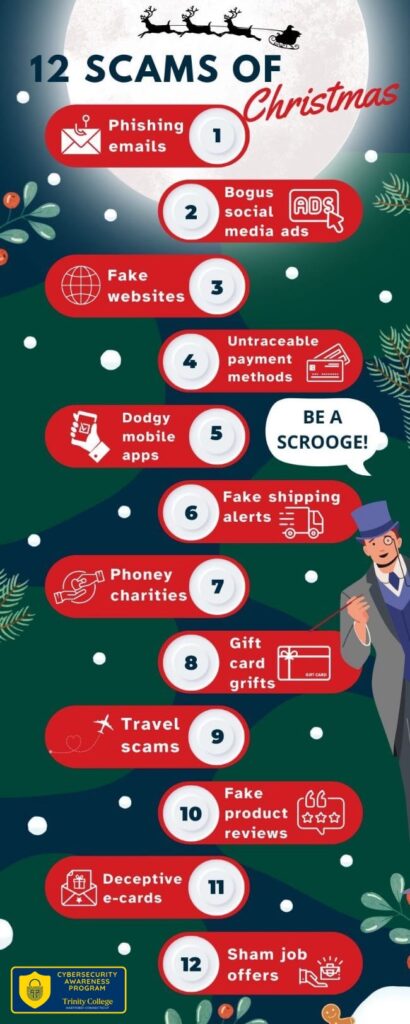
Attackers lean on urgency and familiarity. Many of these messages are crafted with AI, making them look clean and professional. If a message pushes you to move quickly or appears to come from someone you know, pause and verify before taking action.
Common examples include:
- Shipping, package, or account alerts: Messages informing you of a missed delivery or urgent account issue that create a sense of urgency and ask you to click a link.
- Giveaway scams: Messages from a donor “moving” and giving away high-value items like pianos, laptops, cameras, guitars, or watches, followed by a request to text a number and pay a shipping fee.
- Gift card scams: Messages that appear to come from a supervisor or colleague asking you to urgently buy digital gift cards for them.
- Fake IT support calls: Imposters claiming to be from IT support and trying to gain access to your device.
- Spoofed leadership emails: Fake messages using look-alike addresses or slightly altered sender names.
- Phony job offers: “Work-from-home,” “research assistant,” and “seasonal” roles offering quick pay and requesting personal or banking information.
How to protect yourself
- Slow down and verify the sender. If something feels off, even just slightly, double-check the sender’s email address or reach out to the sender directly using known contact information.
- Don’t click unexpected links. Hover first to preview the URL or navigate to the site manually.
- Never share passwords, Duo codes, or financial information. UW will never ask you for this information over email or the phone.
- Check for small red flags. Even with the use of AI, scams often contain misspellings, odd phrasing, unfamiliar phone numbers, or unusual requests that can act as warning signs.
What to do if you spot a suspicious message
Report it immediately. Quick reporting protects the Trinity community and helps stop wider targeting. Don’t worry about being wrong.
- Report Phishing with the Phish Alert Button
- Forward suspicious emails as an attachment to [email protected]
- This preserves the technical details IT needs to investigate.
Wanna Test Your Phishing Knowledge?
Take the Google Phishing Quiz Developed by Jigsaw!
Spot The Fish by Egress, a KB4 company