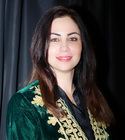
 Homeira Qaderi is an Afghan writer, scholar of Persian literature, and educator. She earned her Ph.D. in Persian Literature from Jawaharlal Nehru University in New Delhi, India. She has taught Persian literature at universities in Afghanistan and most recently served as a Lecturer at Yale University. She was a Fellow at Harvard University’s Radcliffe Institute for Advanced Study and an Academic Freedom Fellow at the Moynihan Center at the City College of New York (CUNY).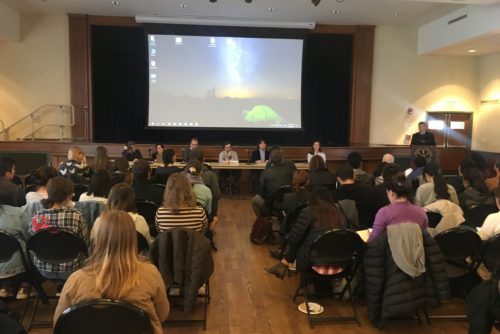
Visiting Scholars
CUGS has hosted visiting scholars through a variety of programs since 2008. Learn more about past and present CUGS visiting scholar programs.
 Garth A. Myers is Director of the Center for Urban and Global Studies and the Paul E. Raether Distinguished Professor of Urban International Studies. Myers earned a Ph.D. in Geography (1993) from UCLA with an allied field in Urban Planning. He has an M.A. (UCLA, 1986) in African Area Studies, with Geography and Urban Planning as the major and minor fields, and a B.A. with Honors in History from Bowdoin College, with concentrations in African and African-American History. He has taught at the University of Kansas, University of Nebraska-Omaha, Miami University (Ohio), California State University at Dominguez Hills, and UCLA. Myers is comfortable with large lecture classes and small seminars. His teaching philosophy rests on a belief in student engagement; the best learning takes place in engaged classrooms, where the professor facilitates student discussion and debate. Myers has conducted research in Kenya, Tanzania, Malawi, Zambia, South Africa, Finland, and the UK over the past 20 years, and he regularly uses his research to inform his teaching. Garth A. Myers is Director of the Center for Urban and Global Studies and the Paul E. Raether Distinguished Professor of Urban International Studies. Myers earned a Ph.D. in Geography (1993) from UCLA with an allied field in Urban Planning. He has an M.A. (UCLA, 1986) in African Area Studies, with Geography and Urban Planning as the major and minor fields, and a B.A. with Honors in History from Bowdoin College, with concentrations in African and African-American History. He has taught at the University of Kansas, University of Nebraska-Omaha, Miami University (Ohio), California State University at Dominguez Hills, and UCLA. Myers is comfortable with large lecture classes and small seminars. His teaching philosophy rests on a belief in student engagement; the best learning takes place in engaged classrooms, where the professor facilitates student discussion and debate. Myers has conducted research in Kenya, Tanzania, Malawi, Zambia, South Africa, Finland, and the UK over the past 20 years, and he regularly uses his research to inform his teaching.Contact: [email protected] |
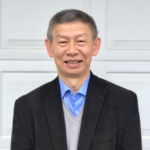 Xiangming Chen served as founding Dean and Director of Urban and Global Studies and Director of the Center for Urban and Global Studies at Trinity College, Connecticut from 2007-2019. He is currently Director of the Urban Studies Program and the Paul E. Raether Distinguished Professor of Global Urban Studies and Sociology. He also holds the positions of Distinguished Guest Professor at in the School of Social Development and Policy at Fudan University in Shanghai and Adjunct Professor at the Graduate School of the Shanghai Academy of Social Sciences in Shanghai, China. He is an Honorary Research Fellow at the Beijing Academy of Social Sciences. He has taught at Yale University, and received fellowships and grants from the American Council of Learned Societies, the American Sociological Association, the Chiang Ching-kuo Foundation for International Exchange, the Open Society Institute, and the Regional Studies Association. He received his B.A. from Beijing Foreign Studies University and his Ph.D. in sociology from Duke University. He is a co-author, with Anthony Orum, of The World of Cities: Places in Comparative and Historical Perspective (Blackwell, 2003); the author of As Borders Bend: Transnational Spaces on the Pacific Rim (Rowman and Littlefield, 2005); the editor of and primary contributor to Shanghai Rising: State Power and Local Transformations in a Global Megacity (University of Minnesota Press, 2009); the lead editor, with Ahmed Kanna, of Rethinking Global Urbanism: Comparative Insights from Secondary Cities (Routledge, 2012); a co-author, with Anthony Orum and Krista Paulsen, of Introduction to Cities: How Place and Space Shape Human Experience (Wiley-Blackwell, 2012, second edition, 2018); the lead editor, with Nick Bacon, of Confronting Urban Legacy: Rediscovering Hartford and New England’s Forgotten Cities (Lexington Books, 2013); and a co-editor, with Sharon Zukin and Philip Kasinitz, of Global Cities, Local Streets (Routledge, 2015; Chinese edition, 2016; Korean edition, 2017; and lead author, with Julie Tian Miao and Xue Li, The Belt and Road Initiative as Epochal Regionalization (Regional Studies Association, 2020). Xiangming Chen served as founding Dean and Director of Urban and Global Studies and Director of the Center for Urban and Global Studies at Trinity College, Connecticut from 2007-2019. He is currently Director of the Urban Studies Program and the Paul E. Raether Distinguished Professor of Global Urban Studies and Sociology. He also holds the positions of Distinguished Guest Professor at in the School of Social Development and Policy at Fudan University in Shanghai and Adjunct Professor at the Graduate School of the Shanghai Academy of Social Sciences in Shanghai, China. He is an Honorary Research Fellow at the Beijing Academy of Social Sciences. He has taught at Yale University, and received fellowships and grants from the American Council of Learned Societies, the American Sociological Association, the Chiang Ching-kuo Foundation for International Exchange, the Open Society Institute, and the Regional Studies Association. He received his B.A. from Beijing Foreign Studies University and his Ph.D. in sociology from Duke University. He is a co-author, with Anthony Orum, of The World of Cities: Places in Comparative and Historical Perspective (Blackwell, 2003); the author of As Borders Bend: Transnational Spaces on the Pacific Rim (Rowman and Littlefield, 2005); the editor of and primary contributor to Shanghai Rising: State Power and Local Transformations in a Global Megacity (University of Minnesota Press, 2009); the lead editor, with Ahmed Kanna, of Rethinking Global Urbanism: Comparative Insights from Secondary Cities (Routledge, 2012); a co-author, with Anthony Orum and Krista Paulsen, of Introduction to Cities: How Place and Space Shape Human Experience (Wiley-Blackwell, 2012, second edition, 2018); the lead editor, with Nick Bacon, of Confronting Urban Legacy: Rediscovering Hartford and New England’s Forgotten Cities (Lexington Books, 2013); and a co-editor, with Sharon Zukin and Philip Kasinitz, of Global Cities, Local Streets (Routledge, 2015; Chinese edition, 2016; Korean edition, 2017; and lead author, with Julie Tian Miao and Xue Li, The Belt and Road Initiative as Epochal Regionalization (Regional Studies Association, 2020).View Dr. Chen’s extended bio and faculty profile. Contact: [email protected] |
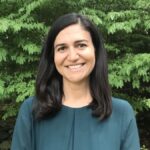 Laura Humm Delgado is Assistant Professor in Urban Studies. She is an urban planning scholar and former practitioner. She received a Master in City Planning and a PhD in Urban and Regional Planning from the Massachusetts Institute of Technology, and she previously worked for the City of Boston researching affordable housing, homeownership, land use, and abandoned properties. Her research focuses on housing and community development, including the role of community-based organizations and public agencies, in U.S. cities. Her most recent research looks at public libraries and how they draw on community resources to facilitate immigrant integration at the neighborhood level. Previously, her research has addressed the foreclosure crisis, gentrification, and homelessness. She has experience teaching housing and community development, research methods, urban planning history and theory, and GIS at MIT and Boston University. As a teacher, she values discussion-based classes and encourages students to incorporate experiential learning into their coursework. Laura Humm Delgado is Assistant Professor in Urban Studies. She is an urban planning scholar and former practitioner. She received a Master in City Planning and a PhD in Urban and Regional Planning from the Massachusetts Institute of Technology, and she previously worked for the City of Boston researching affordable housing, homeownership, land use, and abandoned properties. Her research focuses on housing and community development, including the role of community-based organizations and public agencies, in U.S. cities. Her most recent research looks at public libraries and how they draw on community resources to facilitate immigrant integration at the neighborhood level. Previously, her research has addressed the foreclosure crisis, gentrification, and homelessness. She has experience teaching housing and community development, research methods, urban planning history and theory, and GIS at MIT and Boston University. As a teacher, she values discussion-based classes and encourages students to incorporate experiential learning into their coursework.Contact: [email protected] |
 Shoshana Goldstein is Assistant Professor of Urban Studies. She is an academic and urban planner with a master’s in international affairs from the New School, where she focused on the comparative urban development experiences of India and China, and a PhD in City and Regional Planning from Cornell University, with specializations in international planning, South Asian History, and Landscape Architecture. Her research investigates histories of urban planning in India and North America, exploring themes of mobility justice, housing precarity, and placemaking among marginal and migrant communities. Prior to earning her doctorate, Goldstein worked for the India China Institute and as a consultant for the United Nations Department of Economic and Social Affairs and UNICEF. She has taught intro and advanced GIS for planners, courses on migration, infrastructure, and housing. Contact: [email protected] Shoshana Goldstein is Assistant Professor of Urban Studies. She is an academic and urban planner with a master’s in international affairs from the New School, where she focused on the comparative urban development experiences of India and China, and a PhD in City and Regional Planning from Cornell University, with specializations in international planning, South Asian History, and Landscape Architecture. Her research investigates histories of urban planning in India and North America, exploring themes of mobility justice, housing precarity, and placemaking among marginal and migrant communities. Prior to earning her doctorate, Goldstein worked for the India China Institute and as a consultant for the United Nations Department of Economic and Social Affairs and UNICEF. She has taught intro and advanced GIS for planners, courses on migration, infrastructure, and housing. Contact: [email protected] |
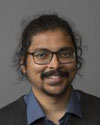 Mushahid Hussain is Visiting Assistant Professor in Urban Studies. He is an academic and a researcher trained in historical sociology and political economy, with a PhD in Development Sociology from Cornell University, and master’s degrees in sociology and economics from Binghamton University and Jawaharlal Nehru University (India), respectively. His research examines the relationship between past and contemporary dynamics of capitalist development and social change in Bangladesh and the Global South more broadly. Hussain’s writings have investigated themes in histories of decolonization, globalization, and international development, labor precarity and social movements, postcolonial nationalisms, social scientific knowledge production and state-making, social theory, and urban political ecology. Hussain’s courses build on his substantive research as well as methodological interests in developing a comparative, historical, and interdisciplinary lens on urban social life. He has taught introductory and advanced courses in sociology, development studies, theory, and research methods. In the classroom, Hussain encourages open dialogue, student participation, and well-informed thinking. Contact: [email protected] Mushahid Hussain is Visiting Assistant Professor in Urban Studies. He is an academic and a researcher trained in historical sociology and political economy, with a PhD in Development Sociology from Cornell University, and master’s degrees in sociology and economics from Binghamton University and Jawaharlal Nehru University (India), respectively. His research examines the relationship between past and contemporary dynamics of capitalist development and social change in Bangladesh and the Global South more broadly. Hussain’s writings have investigated themes in histories of decolonization, globalization, and international development, labor precarity and social movements, postcolonial nationalisms, social scientific knowledge production and state-making, social theory, and urban political ecology. Hussain’s courses build on his substantive research as well as methodological interests in developing a comparative, historical, and interdisciplinary lens on urban social life. He has taught introductory and advanced courses in sociology, development studies, theory, and research methods. In the classroom, Hussain encourages open dialogue, student participation, and well-informed thinking. Contact: [email protected] |
|
Qaderi is the author of several books, including Dancing in the Mosque: An Afghan Mother’s Letter to Her Son, which was selected by Kirkus Reviews as one of the Best Nonfiction Books of 2020. Her essays and fiction have appeared in TIME, the Los Angeles Review of Books, the Wilson Center, and Feminist Dissent. She has also held senior advisory positions in Afghanistan’s Ministries of Education and Social Affairs. Her teaching and research focus on Persian literature, gender, war and displacement, cultural memory, and the relationship between literature and social change. http://homeiraqaderi.com Contact: [email protected]
|
 Nehal Amer is a cultural anthropologist whose research examines urban political economy, speculative development, and the production of space in the Middle East. She previously served as the Marina Fernando Guest Lecturer in International and Global Studies at City College of New York. She received her M.A. in Modern Middle Eastern and North African Studies from the University of Michigan, Ann Arbor, and earned her Ph.D. in Cultural Anthropology from the CUNY Graduate Center, where her dissertation explored speculation, real estate, and the urban political economy of Egypt’s new desert cities. Nehal Amer is a cultural anthropologist whose research examines urban political economy, speculative development, and the production of space in the Middle East. She previously served as the Marina Fernando Guest Lecturer in International and Global Studies at City College of New York. She received her M.A. in Modern Middle Eastern and North African Studies from the University of Michigan, Ann Arbor, and earned her Ph.D. in Cultural Anthropology from the CUNY Graduate Center, where her dissertation explored speculation, real estate, and the urban political economy of Egypt’s new desert cities.
Her research engages neoliberalism, inequality, housing, financialization, infrastructure, and securitization, as well as questions of crisis, temporality, and subjectivity. She is currently developing her dissertation into a book manuscript, Barren Speculation: Corporate Urbanization and Subjectivity in Egypt’s Desert Frontiers. Her teaching focuses on urban ethnography, political economy, development, urbanisms in the Global South, with particular expertise in the Middle East and North Africa. Contact: [email protected] |
CUGS has hosted visiting scholars through a variety of programs since 2008. Learn more about past and present CUGS visiting scholar programs.