Past Medal Recipients
Read about the about the past recipients of the President's Medal for Science and Innovation.
2025–2026: D. Holmes Morton IDP’79, H’90
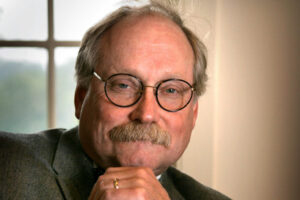 Pediatrician and geneticist D. Holmes Morton, M.D., IDP’79, H’90 received Trinity’s Presidential Medal for Science and Innovation on February 11, 2026.
In 2012 during a John D. and Catherine T. MacArthur Foundation Fellowship (2007-2012), Morton founded a second clinic with his brother Paul, the Central Pennsylvania Clinic—A Medical Home for Special Children and Adults, in Belleville, Pennsylvania. Similar clinics modeled after the Mortons’ ideas are found in Ohio, Kentucky, Wisconsin, and Indiana, with more in development. The clinics are non-profit, Plain Community-supported medical centers that provide care for children and adults with complex medical problems arising from inherited predispositions to disease—a form of medical practice that Victor McKusick, M.D., physician in chief at Johns Hopkins and chair of the Human Genome Project, called “genomic medicine.”
Morton has published dozens of peer-reviewed research papers in journals including Pediatrics, Current Treatment Options in Neurology, Molecular Genetics and Metabolism, Brain, Journal of Pediatrics, Pediatric Transplant, Nature, and Gene Reviews.
In recognition of his work, Morton received 10 honorary degrees—the first from Trinity College in 1990 and most recently from Juniata College in 2024—and the Albert Schweitzer Prize for Humanitarianism in 1993. He was named one of Time magazine’s “Heroes of Medicine” in 1997. In 2006 he was awarded a John D. and Catherine T. MacArthur Fellowship “genius grant” for helping rural communities to revolutionize service, research, prescriptions, and outcomes for clinical treatment of rare genetic diseases. He has been featured in The Wall Street Journal, The New York Times, and a PBS-documentary by Jean Snedegar, Inspiring West Virginians: In Search of Meaningful Work. CNN reported on the COVID-19 testing laboratory he co-founded with Dr. Regina Lamendella, professor of molecular biology at Juniata College, and her students that provided 4,000 CLIA-certified tests per week for regional schools and nursing homes, and featured tests for the virus that accommodated horse and buggy drive-through.
2024–2025: Kaja LeWinn ’98
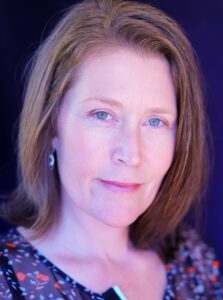 Kaja LeWinn is professor of psychiatry and behavioral sciences at the University of California, San Francisco, was presented with the Presidential Medal for Science and Innovation on October 30, 2024. She graduated Phi Beta Kappa from Trinity College with a major in behavioral neuroscience and went on to earn a doctoral degree from the Harvard School of Public Health in Social Epidemiology. She was then selected for the prestigious Robert Wood Johnson Health and Society Scholars program. In her work, she integrates perspectives from epidemiology, psychology and neuroscience to identify the modifiable physical and social exposures that matter most for child neurodevelopment and mental health. Driven by a strong conviction that all children should have the opportunity to realize their full potential, much of her work focuses on underrepresented and understudied populations. She is a leader of several regional and national epidemiological studies, including the National Institutes of Health funded ECHO Consortium, which follows over 30,000 U.S. children and their families. She has authored over 130 peer reviewed publications, and her work has been featured in the Atlantic, NPR, Fortune, and other news outlets.
2023–2024: Eric R. Fossum ’79, H’14
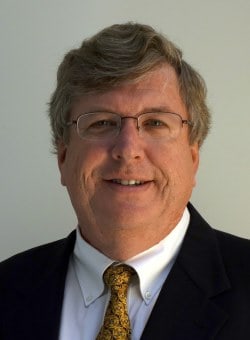
Eric R. Fossum ’79, H’14 received Trinity’s first Presidential Medal for Science and Innovation on February 28, 2024.
Fossum majored in physics and engineering at Trinity. He went on to earn an M.S. and a Ph.D. in engineering and applied science from Yale University.
Fossum is the John H. Krehbiel Sr. Professor for Emerging Technologies at the Thayer School of Engineering at Dartmouth College, director of Thayer’s Ph.D. Innovation Program, and vice provost for entrepreneurship and technology transfer at Dartmouth.
In 2017, Fossum won the prestigious Queen Elizabeth Prize for Engineering, considered by many as engineering’s Nobel Prize. He invented the CMOS active pixel image sensor used in almost all cell-phone cameras, webcams, many digital-still cameras and in medical imaging, among other applications. He worked at the NASA Jet Propulsion Laboratory and was CEO of two successful high tech companies and is a serial entrepreneur. He has published more than 300 technical papers and holds 180 U.S. patents.
A Trinity trustee from 2014 to 2022, Fossum has served on the College’s Board of Fellows, STEM Advisory Board, and Engineering Advisory Council. He was honored with Trinity’s Alumni Achievement Award in 2004, an honorary doctor of science degree in 2014, and the Alumni Medal for Excellence in 2017. He currently serves on the Entrepreneurship Center Advisory Board.
