Filmmaker Paul Schrader Visits Trinity to Discuss Creative Collaboration
Content
Story
Posted
By
Andrew J. Concatelli
Category
Academics
Academy Award-nominated writer and director Paul Schrader spoke recently at Trinity College about his filmmaking career and his creative collaborations with a close friend, the late writer Russell Banks.
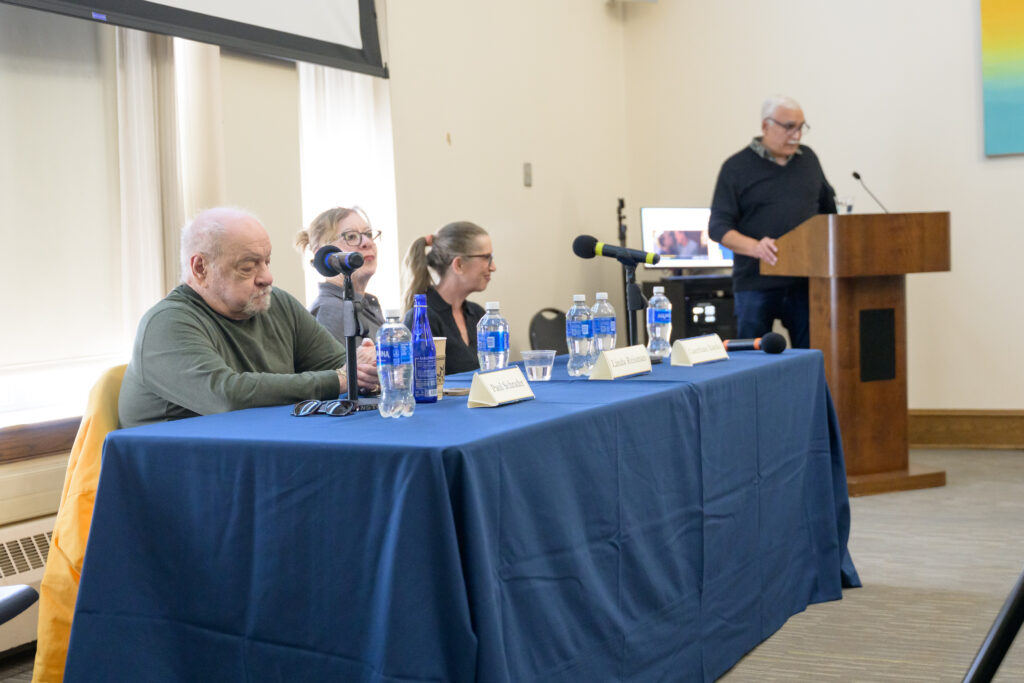
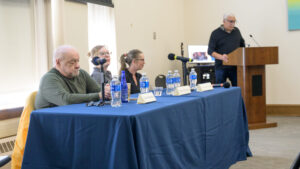
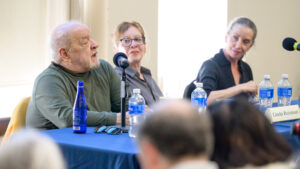
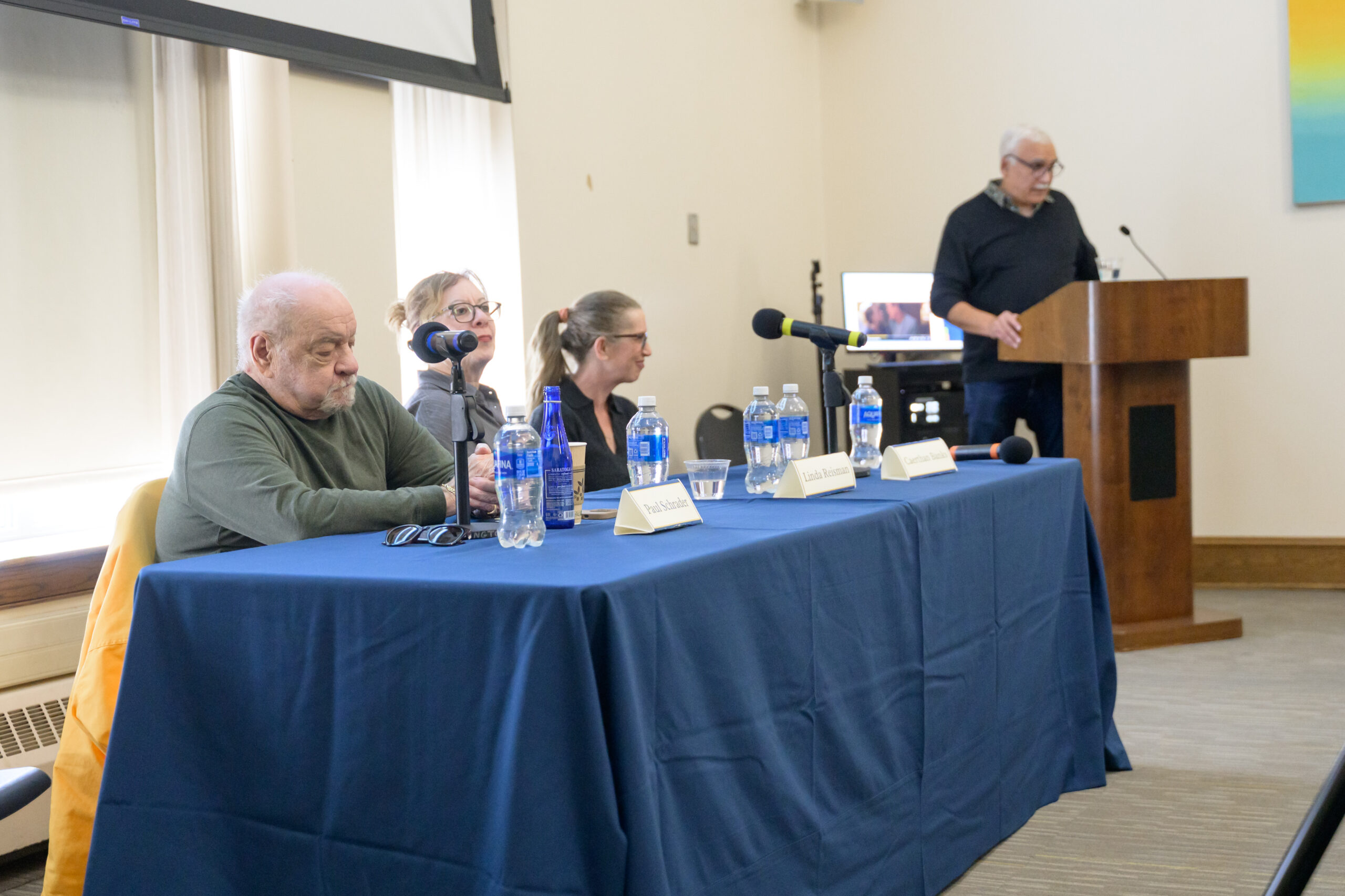
Prakash Younger, associate professor of English and director of Trinity’s Film Studies Program (right) leads the discussion with filmmakers (l-r) Paul Schrader, Linda Reisman, and Caerthan Banks. Photos by Nick Caito.
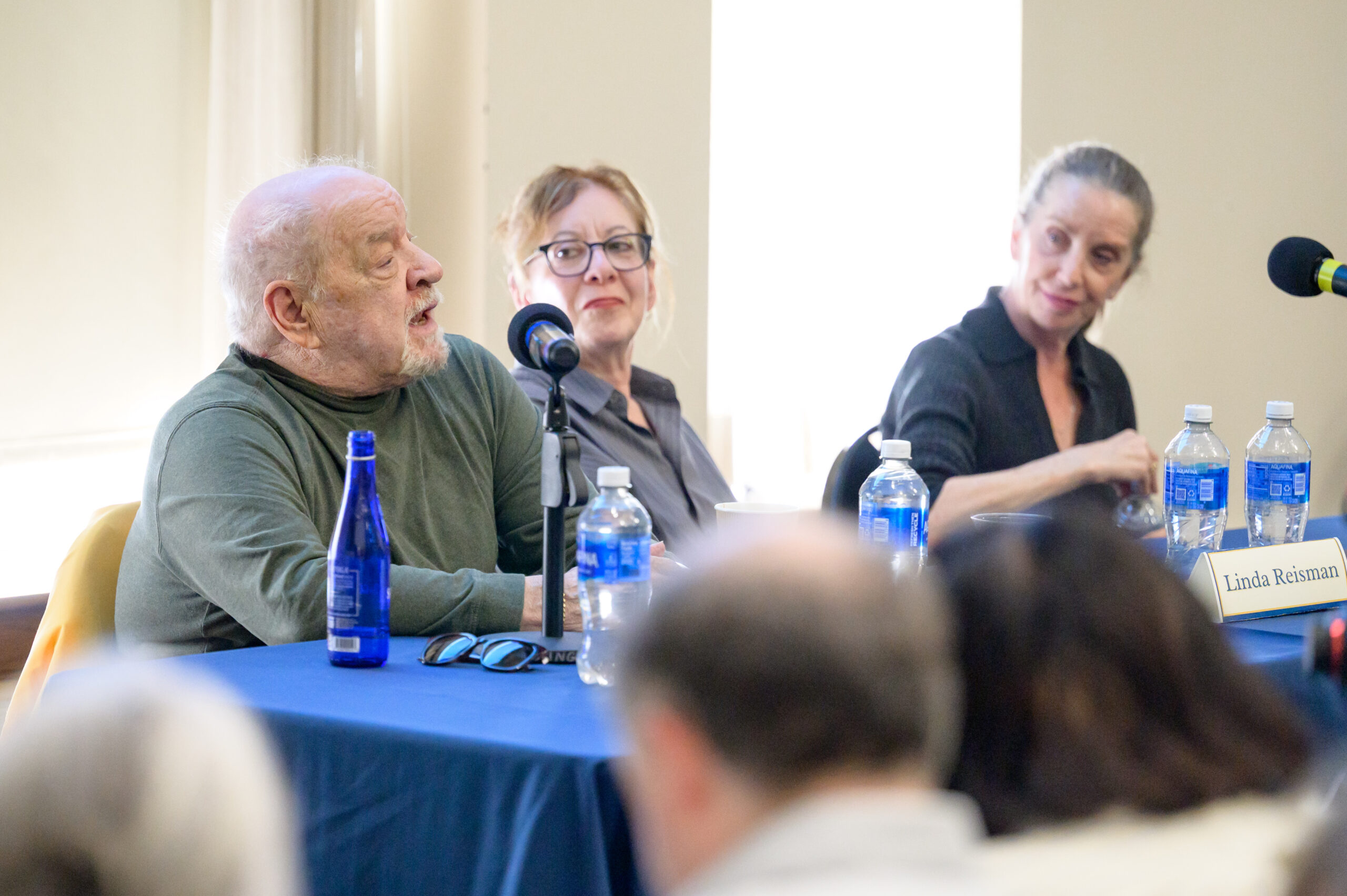
Joining Schrader on March 5, 2026, for a midday panel discussion, an evening screening of his film Affliction (1997), and a Q-and-A session were Banks’ daughter, Caerthan Banks, and producer Linda Reisman. This was the final screening in a monthlong Schrader and Banks retrospective film series at Cinestudio, the not-for-profit independent film theater located on Trinity’s campus.
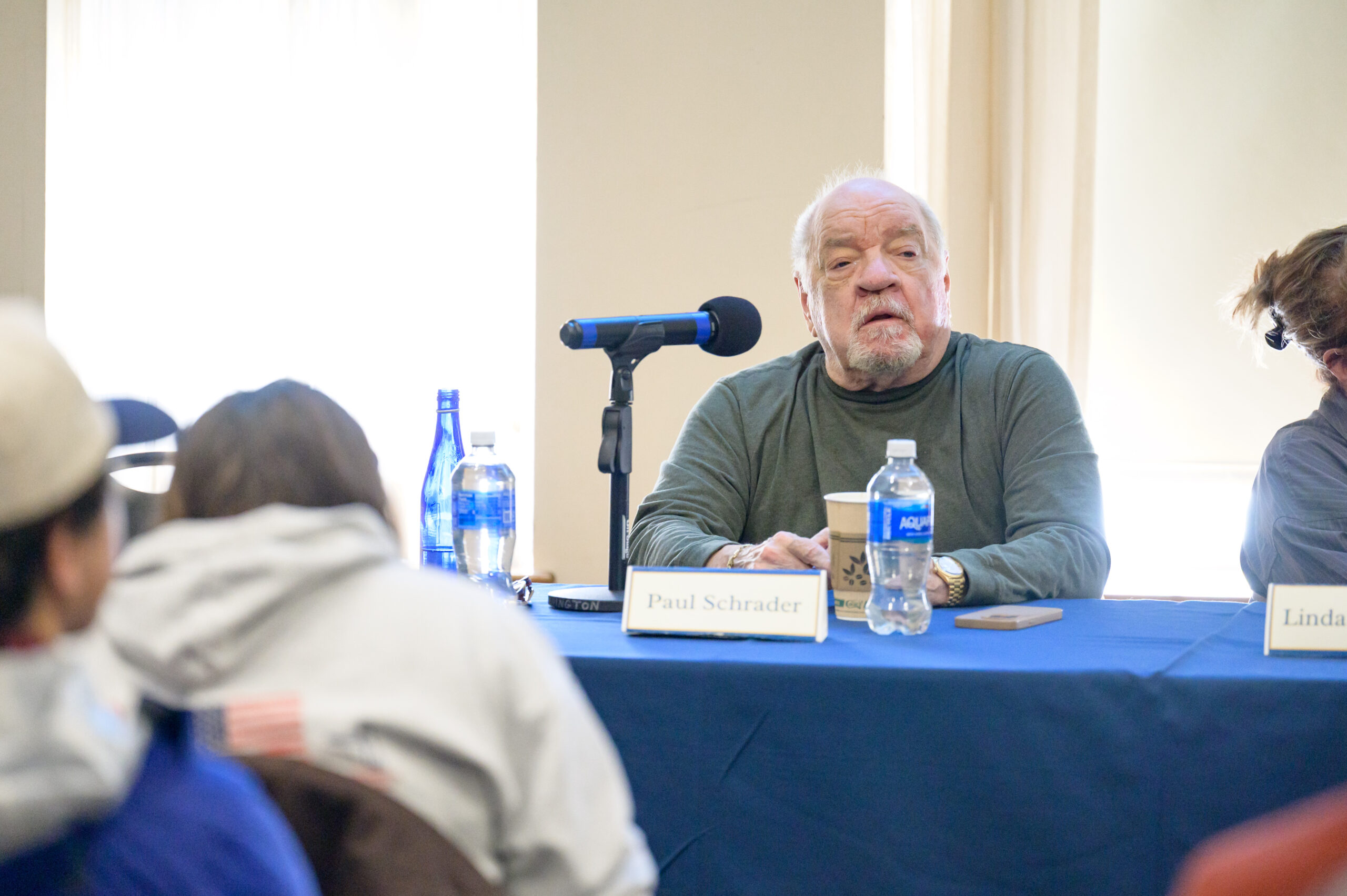
In the afternoon panel discussion, Schrader talked about how he adapted novels for the screen by shifting the narrative tone and telling the story through a particular character. Schrader added that film can manipulate how an audience experiences time in a way that literature cannot. “You can’t control how fast a book is being read, but you can control how a film is being seen, to some degree,” said Schrader, who explained that he likes to use silence and pauses in his films. “They say music is really about what happens between the notes… I think dialogue is what happen between the lines,” he said.
Schrader first became known as a Hollywood screenwriter for his work with director Martin Scorsese on films including Taxi Driver (1976) and Raging Bull (1980). He went on to write and direct dozens of films, including Affliction and Oh, Canada (2024), both of which were based on novels written by Russell Banks. Schrader earned an Academy Award nomination for the original screenplay of First Reformed (2017), which he also directed.
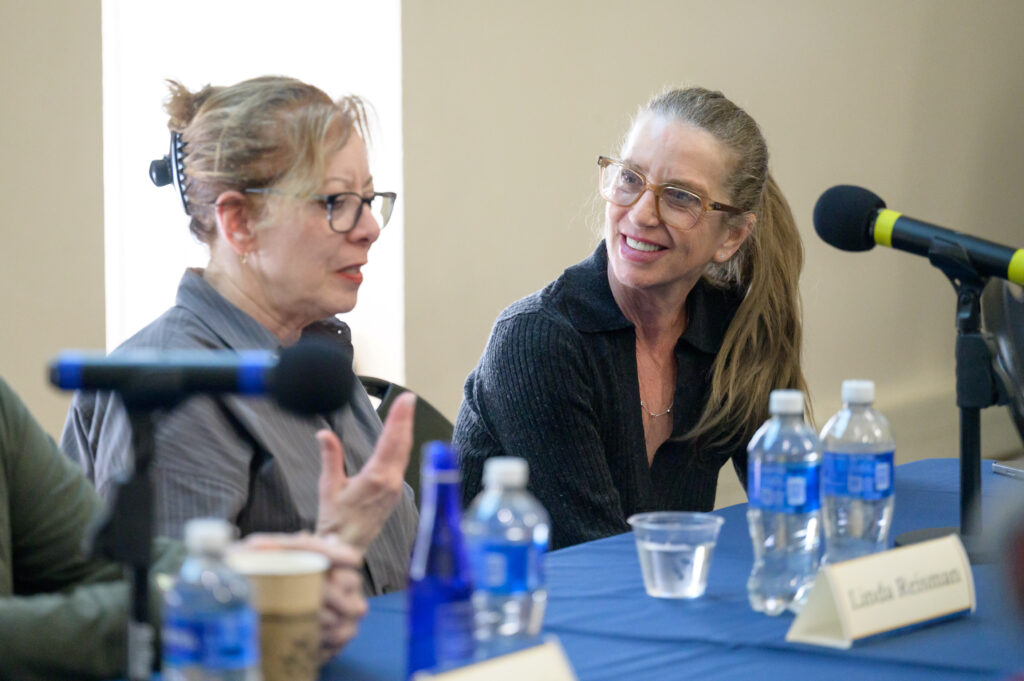
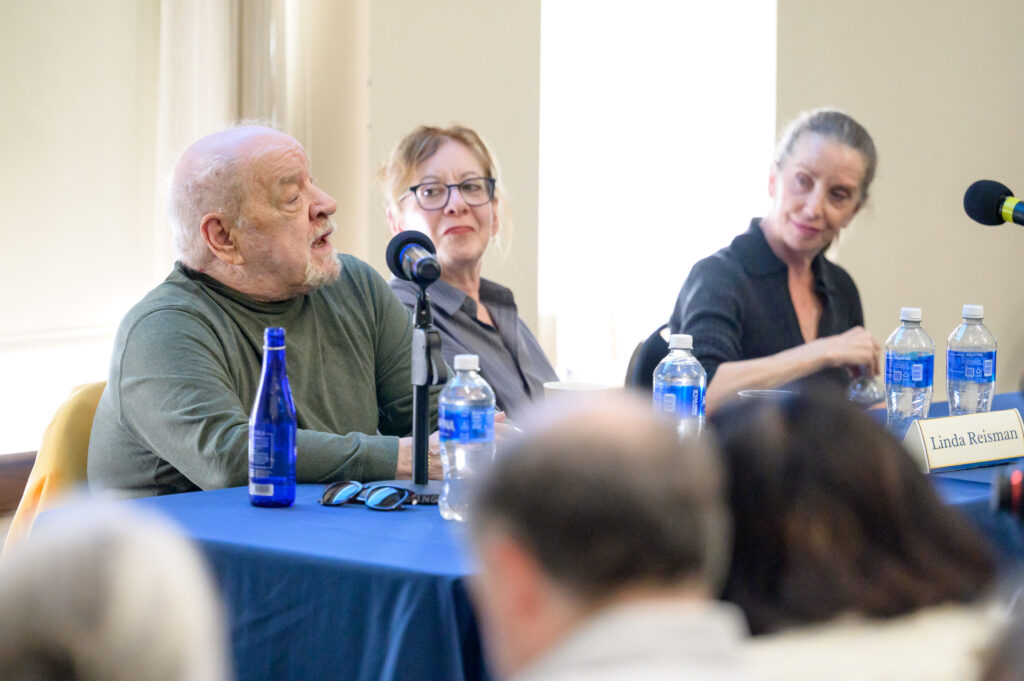
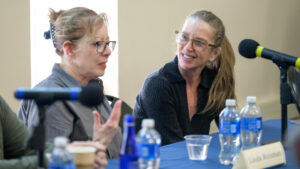
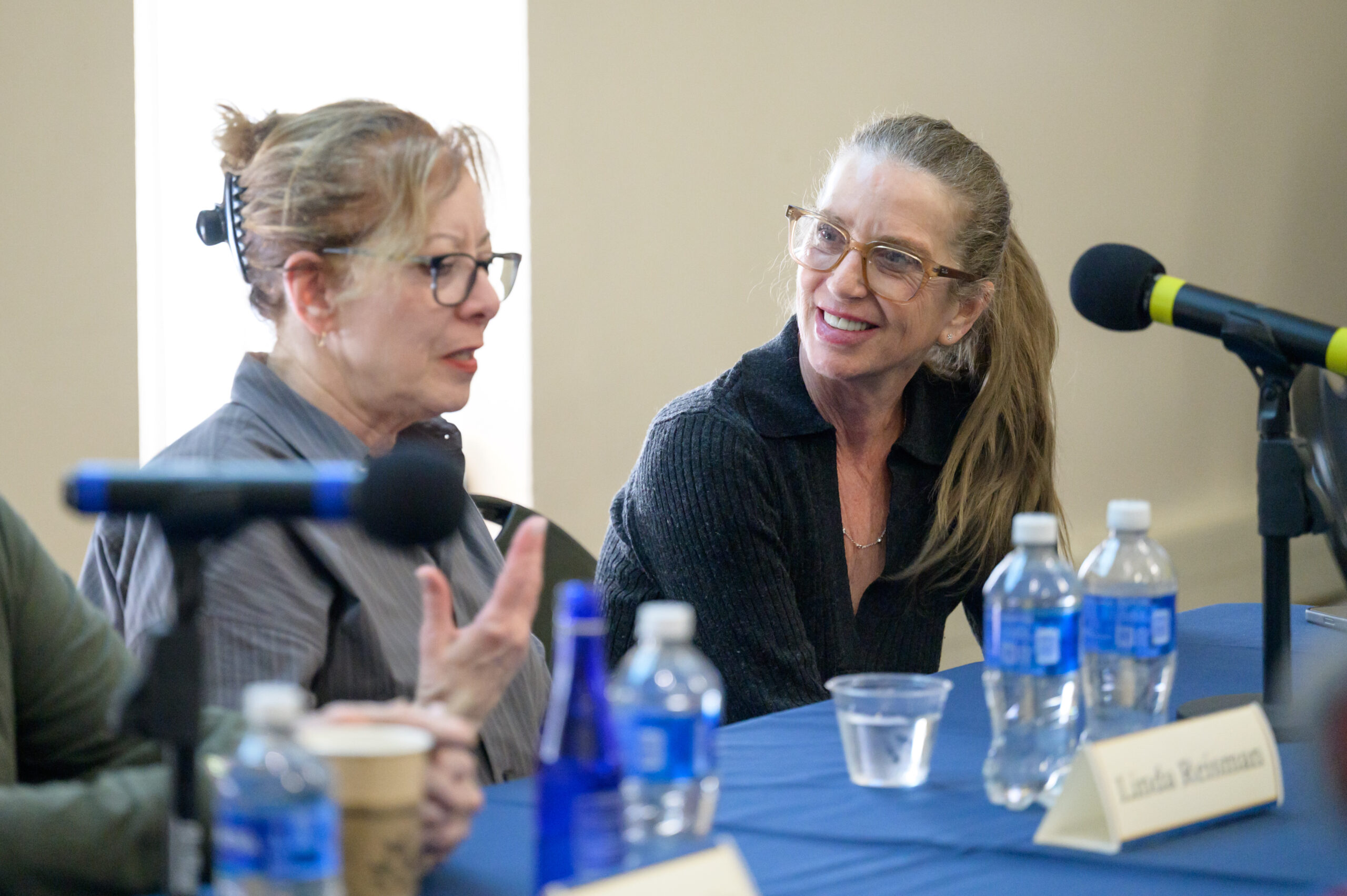
Filmmakers Linda Reisman and Caerthan Banks participate in the panel discussion.
Russell Banks, who died in 2023, published novels, collections of stories, poetry, and nonfiction. His novels Continental Drift (1985) and Cloudsplitter (1998) were finalists for the Pulitzer Prize for Fiction, and his novel The Sweet Hereafter (1991) was adapted into an award-winning 1997 film of the same name, directed by Atom Egoyan.
In his introduction to the panel discussion, Prakash Younger, associate professor of English and director of Trinity’s Film Studies Program, compared Russell Banks to Charles Dickens and Leo Tolstoy. “They looked at the world they lived in, in all of its complexity and detail, and shaped it into their art,” said Younger.
Caerthan Banks serves as executor of her father’s artistic estate, overseeing the development of his work for future film and theatrical projects. “I want people to keep reading his books,” she said. “I don’t want for his voice to disappear because he’s not here with us.” Caerthan Banks also is an actor, writer, director, and producer whose short film The Moor (2005)—adapted from a short story by her father—screened at festivals nationwide.
Of her father’s long relationship with Schrader, Caerthan Banks said, “The friendship was based on a mutual understanding of each other’s artistic expression.”
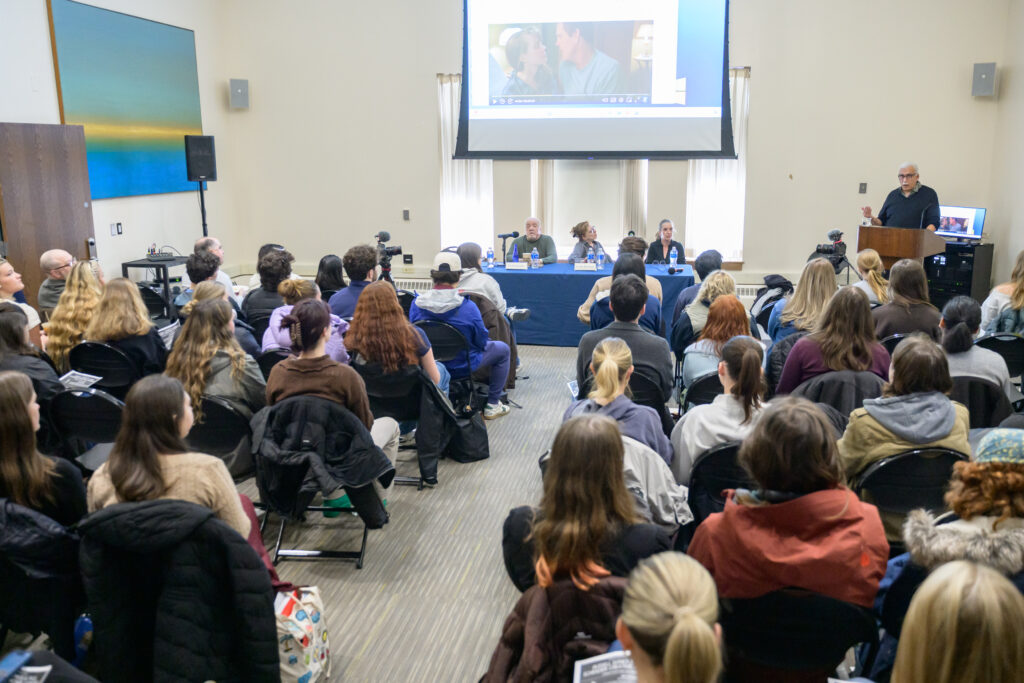
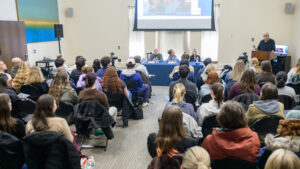
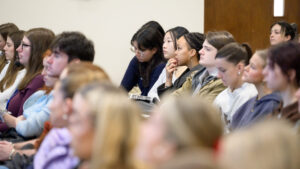
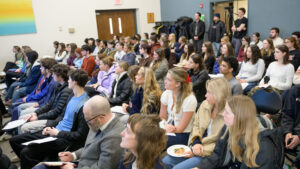
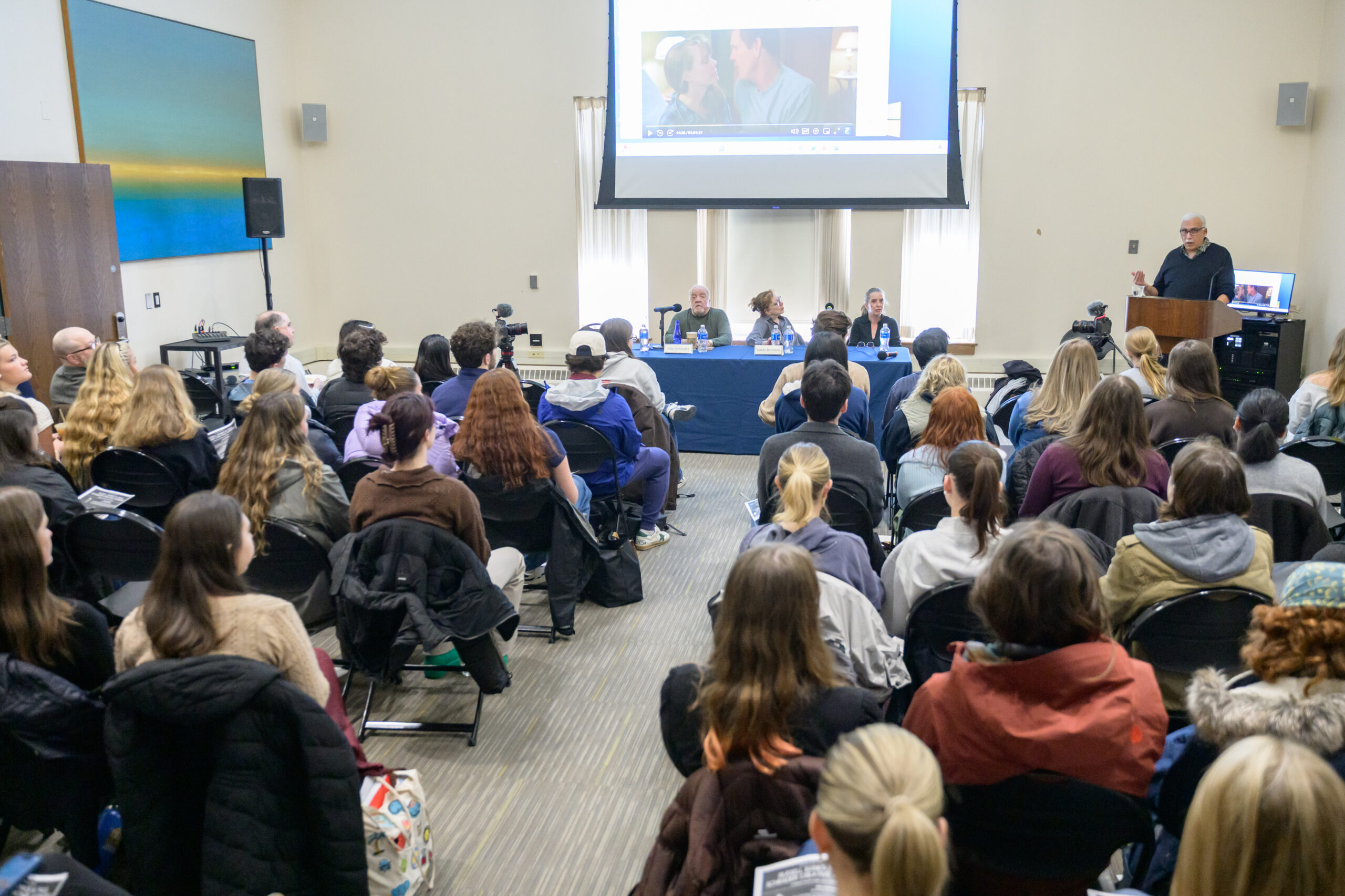
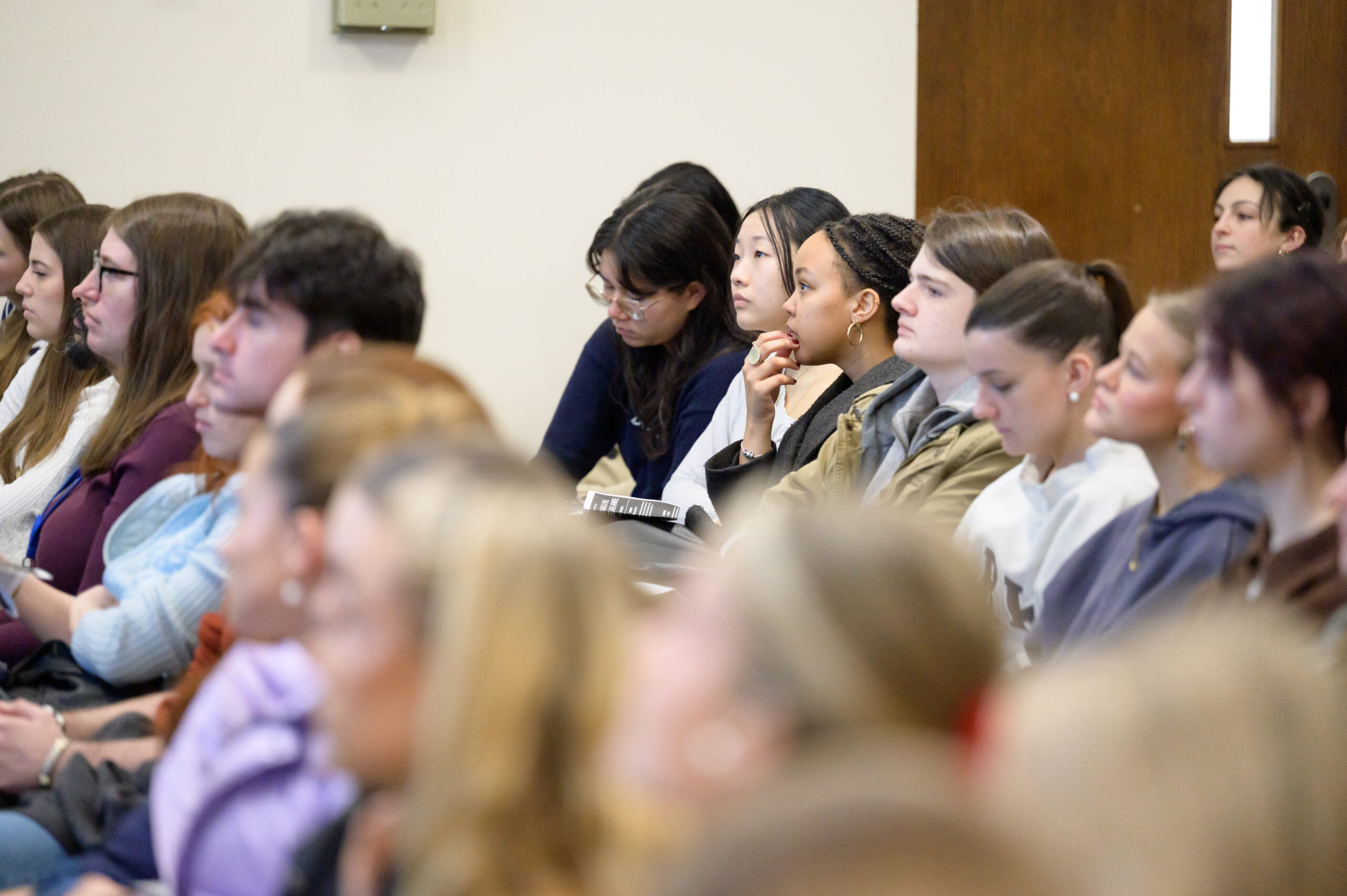
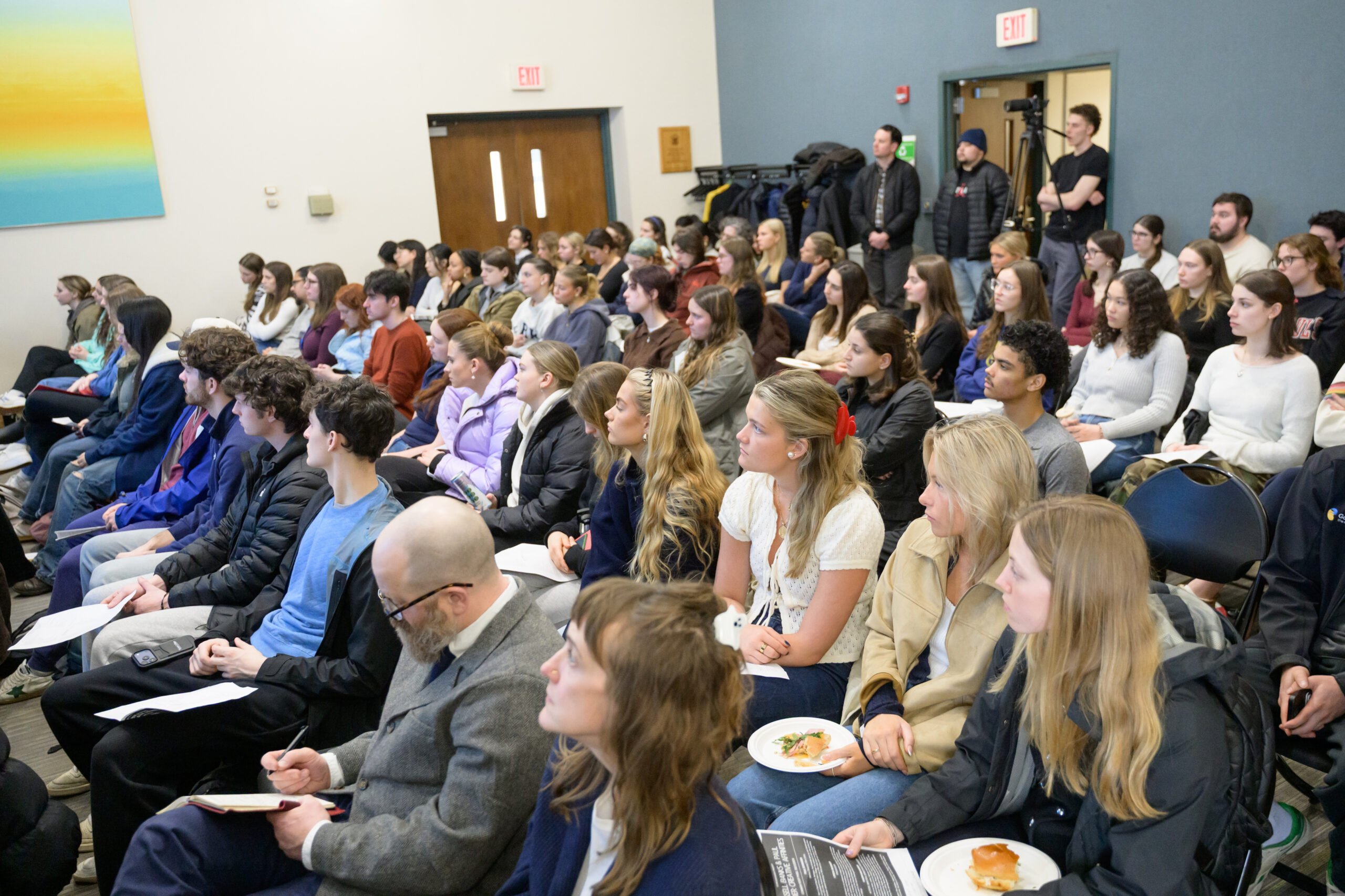
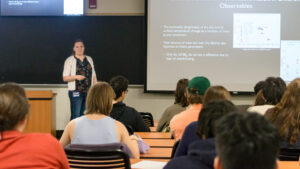
Students and other members of the Trinity community filled the Rittenberg Lounge in Mather Hall to see the panel discussion.
Reisman has worked with both Schrader and Russell Banks. “I admire Paul’s work tremendously. … He is always true to the story he thinks he wants to tell,” she said. Reisman is an independent film producer whose work includes Leave No Trace (2018) and the Academy Award–winning film The Danish Girl (2015). She formerly served as head of production at Francis Ford Coppola’s American Zoetrope.
During the panel discussion, Schrader spoke about his affinity for films with ambiguous endings. “I’ve always felt that the last scene of a film occurs on the sidewalk outside of the theater,” he said.
Schrader noted that his career has always been about moving forward with his art, not looking backward. When asked which of his films is his favorite, Schrader replied, “The next one.”
Following the day’s events at Trinity, Younger said, “It was a beyond-words honor and pleasure to be able to introduce our students to two great artists that I discovered when I was roughly their age.”
Younger noted that Schrader, like Scorsese, is committed to fostering a broader understanding of the cinema as an art form. He said, “While all of his own films manifest deep roots in the legacy of cinema—for example, the recurring ‘Pickpocket endings’ that connect him to [French filmmaker] Robert Bresson—I would also celebrate his ethos of perpetually re-discovering and refreshing his approach in each new film: a ‘don’t-look-back’ attitude that also binds him to Russell Banks.”
Filmmakers Paul Schrader, Linda Reisman, and Caerthan Banks participate in the panel discussion.
“As Paul Schrader explained during the Q&A in Cinestudio,” Younger added, “Banks’ work was a pronounced and welcome return to modes of realism and social engagement that had largely disappeared during the period of post-modernism, and in my opinion it will only continue to grow in importance going forward, along with the reputation of others such as James Baldwin.”
Along with Younger, Trinity faculty on the Schrader/Banks Coordinating Committee included Jeffrey J. Bemiss, professor of the practice in film studies; Joshua King, senior lecturer in language and culture studies; and Daniel J. Mrozowski, senior lecturer in English.
Trinity students also were involved in organizing and documenting the visits with the filmmakers. Angelica Gajewski ’26, an English and film studies double-major who worked with the coordinating committee, said she was interested in the relationship between Schrader and Banks as a tangible example of the collaborative nature of both film and literature. “Paul, Linda, and Caerthan all spoke to different aspects of collaboration, with Linda as a film producer and natural connector, and Caerthan taking on the unique role of an intergenerational, legacy-minded collaborator,” Gajewski said. “My hope is that the Schrader/Banks event series offered students a unique and approachable way to engage with film culture, expanding arts engagement on campus and highlighting the diverse ways it can take shape.”
Prakash Younger, associate professor of English and director of Trinity’s Film Studies Program (right) leads the discussion with filmmakers Paul Schrader, Linda Reisman, and Caerthan Banks. Photo by Nick Caito.
2/9
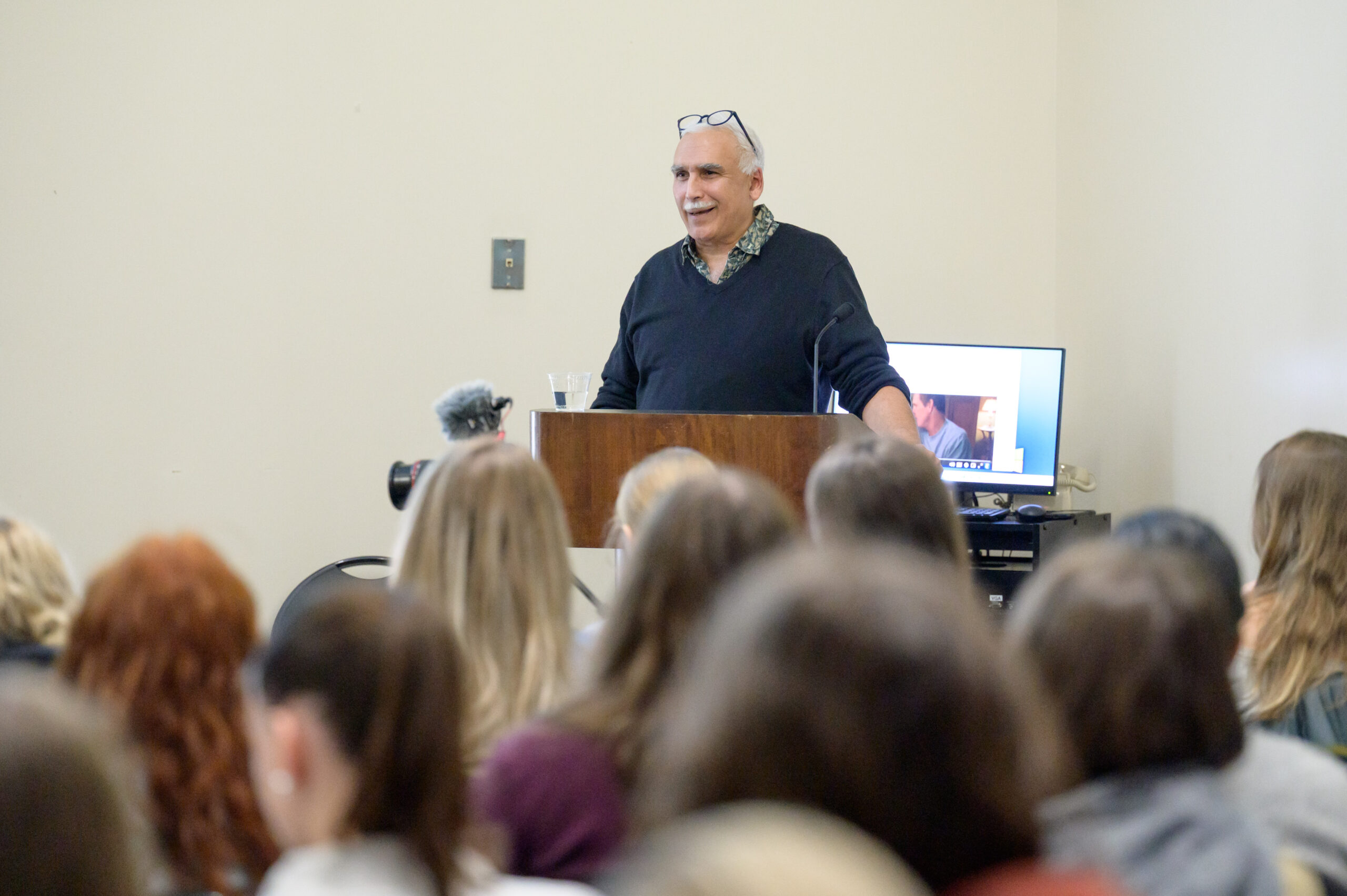
Prakash Younger, associate professor of English and director of Trinity’s Film Studies Program, moderates the panel discussion. Photo by Nick Caito.
3/9
Students and other members of the Trinity community filled the Rittenberg Lounge in Mather Hall to see the panel discussion. Photo by Nick Caito.
4/9
Filmmakers Paul Schrader, Linda Reisman, and Caerthan Banks participate in the panel discussion. Photo by Nick Caito.
5/9
Students and other members of the Trinity community filled the Rittenberg Lounge in Mather Hall to see the panel discussion. Photo by Nick Caito.
6/9
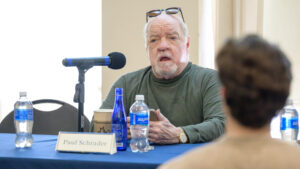
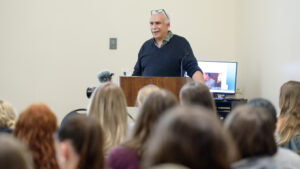
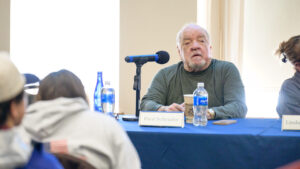
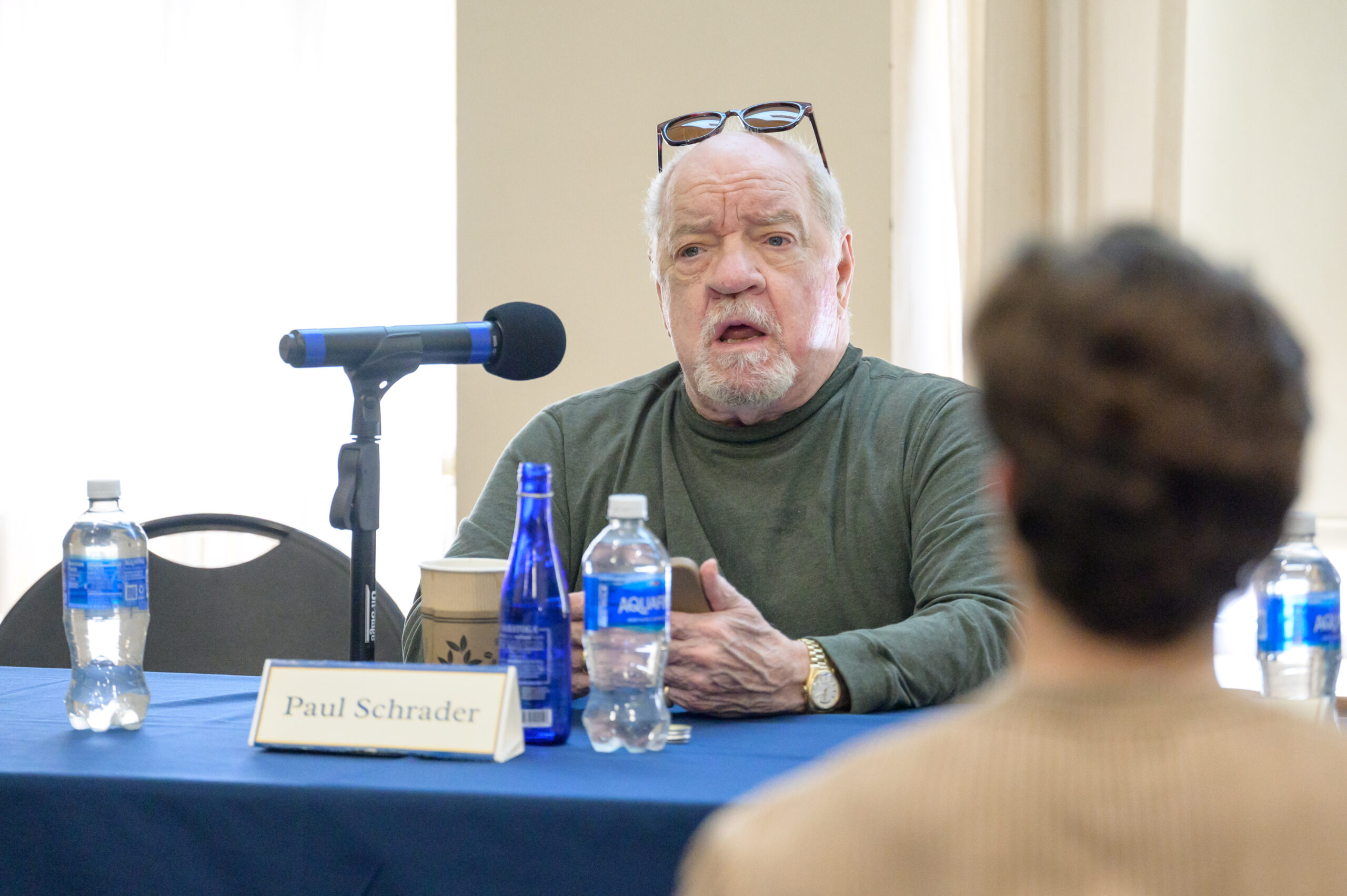
Writer and director Paul Schrader speaks at Trinity College. Photo by Nick Caito.
7/9
Students and other members of the Trinity community filled the Rittenberg Lounge in Mather Hall to see the panel discussion. Photo by Nick Caito.
8/9
Filmmakers Linda Reisman and Caerthan Banks participate in the panel discussion. Photo by Nick Caito.
9/9
Writer and director Paul Schrader speaks at Trinity College. Photo by Nick Caito.
A traveling environmental justice exhibition created by Trinity College students, faculty members, and community partners will be featured in Trinity’s Mather Hall Art Gallery from April 1 to 29, 2026.
Trinity students recently attended “The Future of the Environment,” a panel discussion hosted by The Connecticut Forum, a nonprofit organization that hosts thoughtful conversations on pressing social, political, and cultural issues.
Trinity College celebrated the International Day of Women and Girls in STEM (science, technology, engineering, and mathematics) with an event open to both the Trinity and Hartford communities.