Trinity Introduces Data Science Major Designed to Prepare Students for Careers
Content
Story
Posted
By
Andrew J. Concatelli
Category
Academics
A new data science major approved during the 2025-26 academic year will equip Trinity College students with the knowledge, tools, and problem-solving skills to meaningfully work with data across all industries and applications.
Students may declare data science as a major starting in the fall 2026 semester. As of this fall, Trinity will offer 50 majors, 42 minors, and more than 900 courses to help students pursue their educational goals and interests. About 15 percent of Trinity students pursue a double major and an additional 25 percent major in an interdisciplinary field. Bantams also may create their own student-designed majors.
The data science major is directed by chairs Per Sebastian Skardal, Marjorie V. and Robert W. Butcher Distinguished Professor of Applied Mathematics, and Ewa Syta, Charles A. Dana Research Associate Professor of Computer Science. They said that the data science curriculum provides the tools needed to make sense of complicated data, build models that are reliable and understandable, and effectively communicate outcomes and results that make a difference.
Using an interdisciplinary approach that combines foundational training in computer science and applied mathematics, the major offers opportunities for project-based learning and domain-specific applications across the liberal arts. Data science is currently offered as a Bachelor of Science degree; Trinity faculty are already working on developing a Bachelor of Arts option, as well.
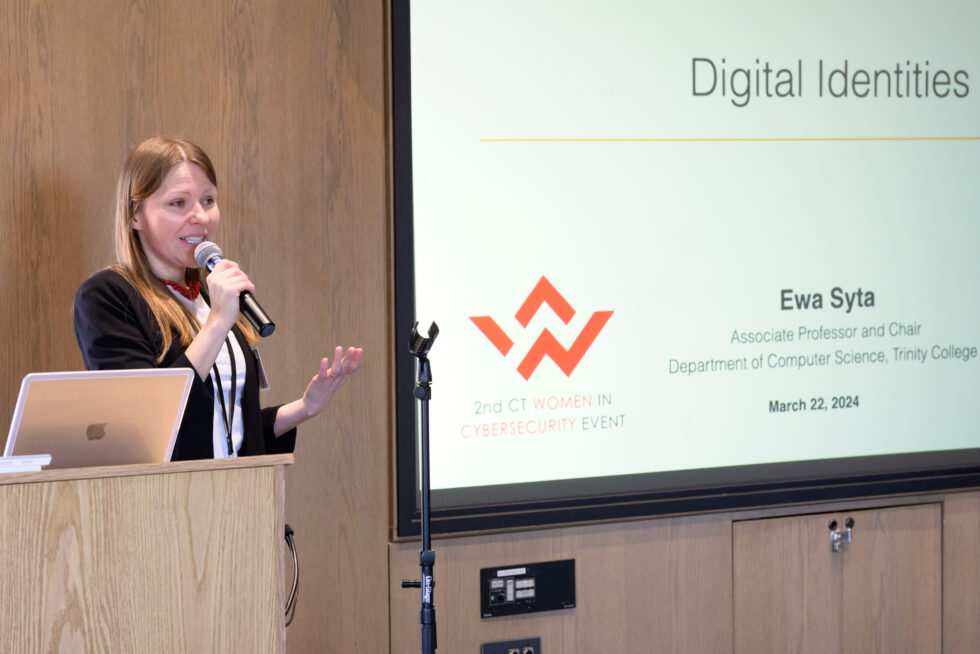
Ewa Syta, Charles A. Dana Research Associate Professor of Computer Science.
Syta said that there is a clear necessity for a data science major at Trinity. “The world is changing,” Syta said. “We live in a data-centric, data-driven society, and as an institution we must respond to what our students need as they enter their post-Trinity lives. Data literacy is no longer a specialized skill; it is a core competency.”
Skardal added, “This major emphasizes ethical reasoning, effective communication, and critical reflection on the ethical, societal, and policy implications of data science practices, preparing students to address challenges across a wide range of fields.”
Sonia Cardenas, provost and dean of faculty and Scott M. Johnson ’97 Distinguished Professor of Political Science, said, “The Trinity Plus Curriculum is about amplifying the power of the liberal arts, and this new data science major does just that. It’s often at the intersection of disciplines that we see the most innovative ideas arise. This new major can be combined with our other offerings to prepare students, rigorously and creatively, for real-world impact beyond Trinity.”
Trinity students across academic disciplines already take research methods courses, where they learn to analyze data; Syta said that the data science major expands and deepens that skillset. “We are giving students rigorous tools to apply data science techniques to their own disciplines,” she said. “The data science major is supporting more than just our STEM students; our goal is to support students from all majors.”
Per Sebastian Skardal, Marjorie V. and Robert W. Butcher Distinguished Professor of Applied Mathematics.
Among the stated goals of the major is the development of students’ problem-solving skills. “We want them to be able to learn how to define problems, ask the right questions, and develop the technical skills to solve those problems,” Syta said. “Students will be able to work effectively in their own domains for years to come.” Part of that effectiveness comes from data visualization and storytelling. “Being able to explain and use the data is very powerful,” Syta added. “Data scientists communicate their knowledge to different audiences, so that complex technical findings become meaningful.” Read more about the major’s learning goals here.
The courses offered in the data science major are listed in Trinity’s course catalogue. They include courses from the Computer Science and Mathematics departments, along with independent studies, teaching assistantships, research assistantships, and senior projects. In addition to data science and data visualization, courses will cover special topics on AI integration and data analytics.
The new major was not intended as a pipeline solely to technical data science roles, the chairs said. “My hope is that students and alumni take that skillset and apply it in whatever field they choose, making them more effective, competitive, and impactful,” Syta said. “I want our students to graduate ready not just for their first job, but for a successful career that will likely change many times over the course of their lives. A strong liberal arts foundation, complemented by practical technical skills, gives them the adaptability to navigate change and seize new opportunities.”
Learn more about Trinity’s new data science major here.
This year’s cohort of President’s Fellows includes some of Trinity’s most accomplished seniors. These 32 student scholars from the Class of 2027 have compiled exemplary academic records in their years at the College.
The Trinity College community gathered for a documentary film screening and panel discussion with alumna Julia Hoppock ’06, an associate producer of People vs. Politics, as part of Voter Education Week.
The grant for Susan A. Masino, Paul E. Raether Distinguished Professor of Applied Science, and David N. Ruskin, research associate professor, will provide summer research opportunities for Trinity students.
Associate Professor of Classical Studies Vincent E. Tomasso, whose first-year seminar is reading Homer’s epic poem, will give a presentation as part of Odyssey Day this fall. Read more about why he says The Odyssey still resonates today.

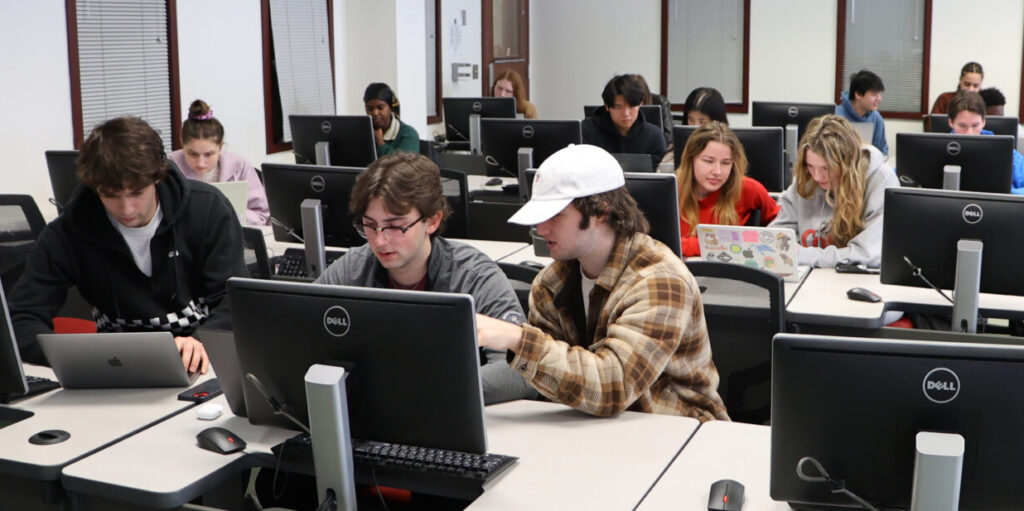 Students may declare data science as a major starting in the fall 2026 semester. As of this fall, Trinity will offer 50 majors, 42 minors, and more than 900 courses to help students pursue their educational goals and interests. About 15 percent of Trinity students pursue a double major and an additional 25 percent major in an interdisciplinary field. Bantams also may create their own