“Since the Association for Asian Studies is the biggest academic association for Asian studies, I feel honored to receive this competitive grant from them,” Izumi said.
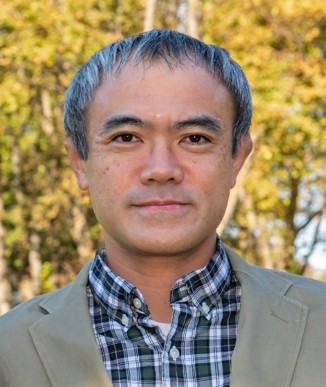
Katsuya Izumi
Izumi’s research project is based on an examination of Manzanar Free Press, the newspaper written by Japanese and Japanese American internees of the Manzanar internment camp during WWII. “Most of the issues have Japanese sections containing translations of the articles of English sections,” he said. “Examining the newspaper that was written and published under unique circumstances, one of this project’s purposes is to discover the undercurrents in the camp that can only be visible if we closely compare differences between the Japanese and English articles.”
As a scholar who works both on Japanese literature and American literature, Izumi believes it is important to analyze the Japanese American internment camps’ newspapers written both in English and in Japanese. “I can retain and convey the internees’ first-hand memories of experiencing incarceration and discrimination and make them available for larger audiences through this project,” he said.
Izumi was drawn to this subject in part because of a lack of scholarship in this field. “The Japanese sections of all internment camps’ newspapers particularly have not received much attention,” he said.
Besides analyzing small differences between articles written in Japanese and in English, Izumi also will translate Japanese poetry such as haiku, senryū, and tanka, which have not been translated into English. “These poems are either from the early issues of the Manzanar Free Press or some issues published around the New Year holidays in the Heart Mountain Sentinel,” he said. “In addition to poems, I want to translate into English some short stories from the literary magazines published in the internment camps.”
The AAS Japan Studies Grant for research travel within the United States —which covers the period from December 1, 2025, to August 31, 2026—allowed Izumi to visit Sterling Memorial Library and Beinecke Rare Book and Manuscript Library at Yale University to look at original copies of the Manzanar Free Press and the Heart Mountain Sentinel. “I was also able to find and look at literary magazines written in Japanese and published in the internment camps such as the Herat Mountain camp, Gila River camp, Poston camp, and Tule Lake camp,” he added.
At Trinity, Izumi plans to incorporate novels and poems about Japanese American experiences of internment camps into course work for “JAPN 234: Writing Across Borders: Japanese American and Japanese Authors.” Studying these accounts, Izumi said, will inform class discussions about the Japanese American experiences of incarceration, as well as current issues including immigration, racial and ethnic identities, and border crossings in various senses. “Plus, I can introduce Japanese poems written in the internment camps to my students who are taking my intermediate and advanced Japanese language courses and have them translate some of them into English, so that they can improve their Japanese while deepening their understanding of Japanese and Japanese American culture,” he said.
Izumi added, “I am grateful that the staff members of Trinity College’s Grants Office—especially Terri Williams—helped me write my proposal for this grant and that the Northeast Asia Council of the Association of Asian Studies and the Japan-U.S. Friendship Commission found my project promising. I am sure that their interests in my project will enhance the visibility of Trinity College’s Japanese program.”
Learn more about Trinity’s Language and Culture Studies Department here.
Associate Professor of Classical Studies Vincent E. Tomasso, whose first-year seminar is reading Homer’s epic poem, will give a presentation as part of Odyssey Day this fall. Read more about why he says The Odyssey still resonates today.
More than 100 Trinity students spent part of the summer working with faculty members and other mentors. The fall symposium allowed these students to showcase their findings and research processes.
The digital humanities website Public Art CT—sponsored in part by Trinity College and created by a Trinity faculty member—has received a 2026 Award of Excellence from the American Association for State and Local History (AASLH).
A book by Associate Professor of American Studies Juliet Nebolon was named a co-winner of the 2026 Association for Asian American Studies (AAAS) History Book Award.