‘Not Another One Like This Anywhere:’ Trinity’s Sol LeWitt Wall Drawing Shines after Restoration
Content
Story
Posted
By
Andrew J. Concatelli
Category
Trinity Community
A striking and colorful piece of art on the Trinity College campus underwent a thorough restoration this summer.
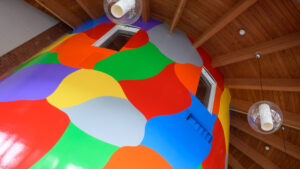
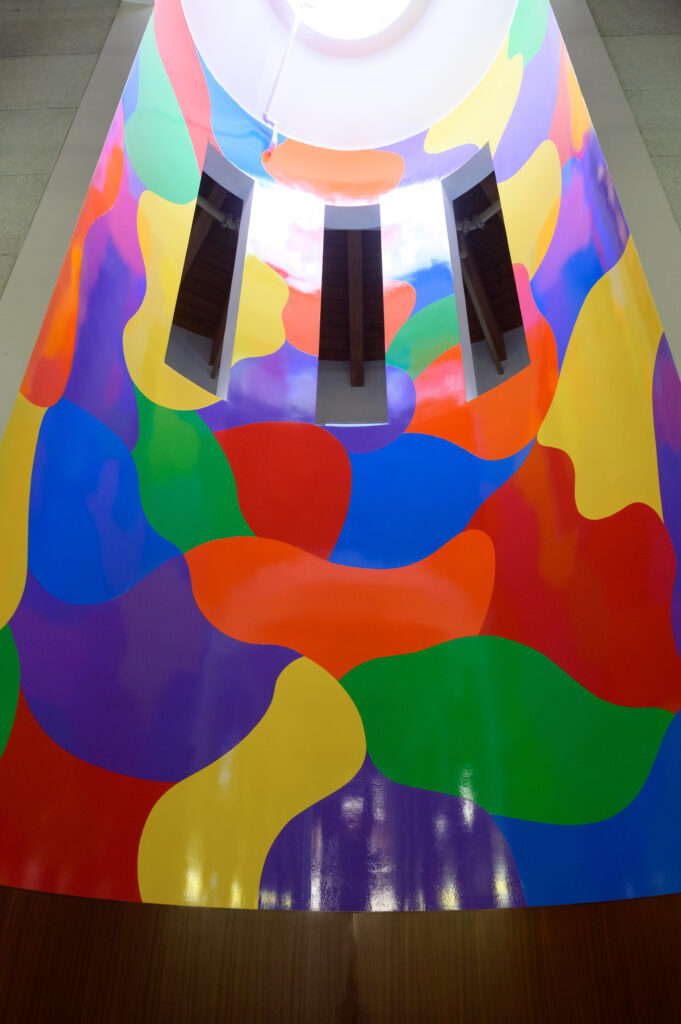
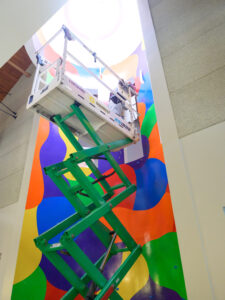
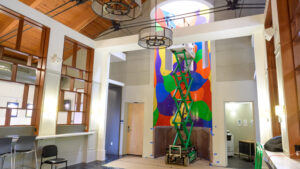
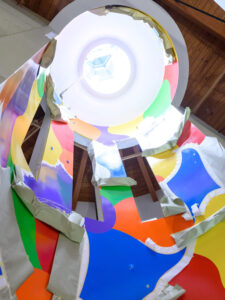
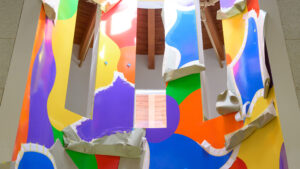
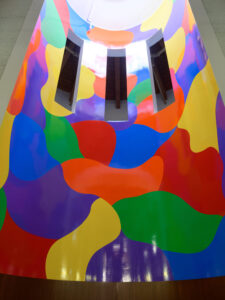
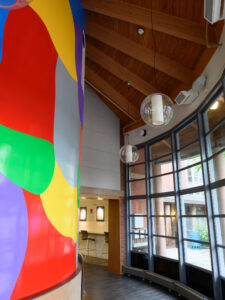
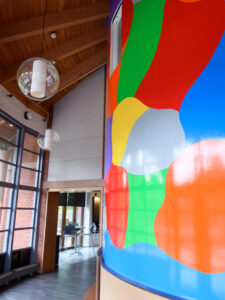
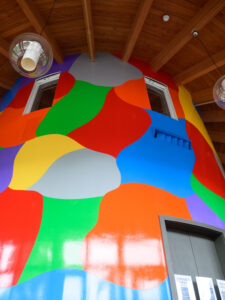
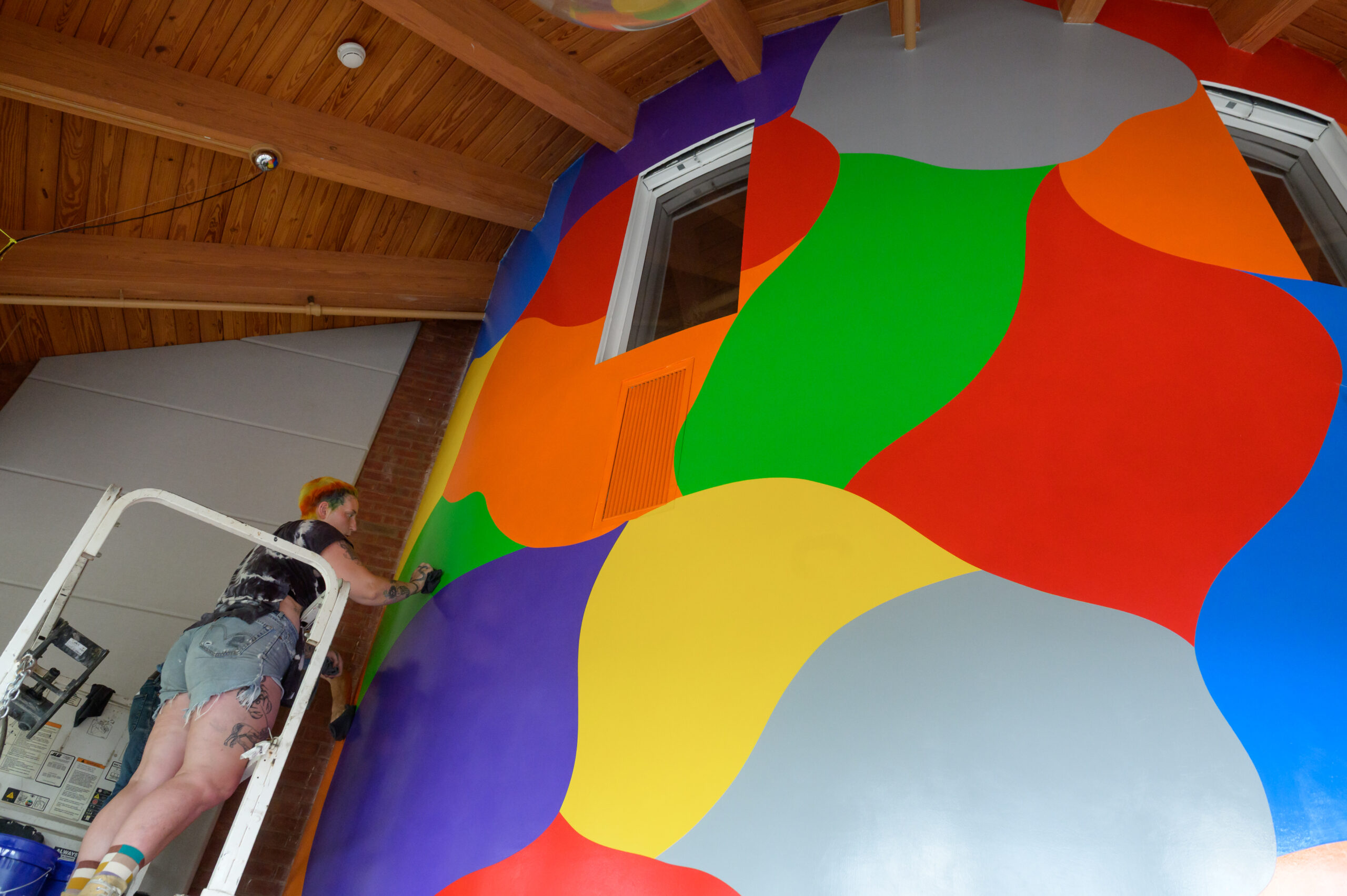
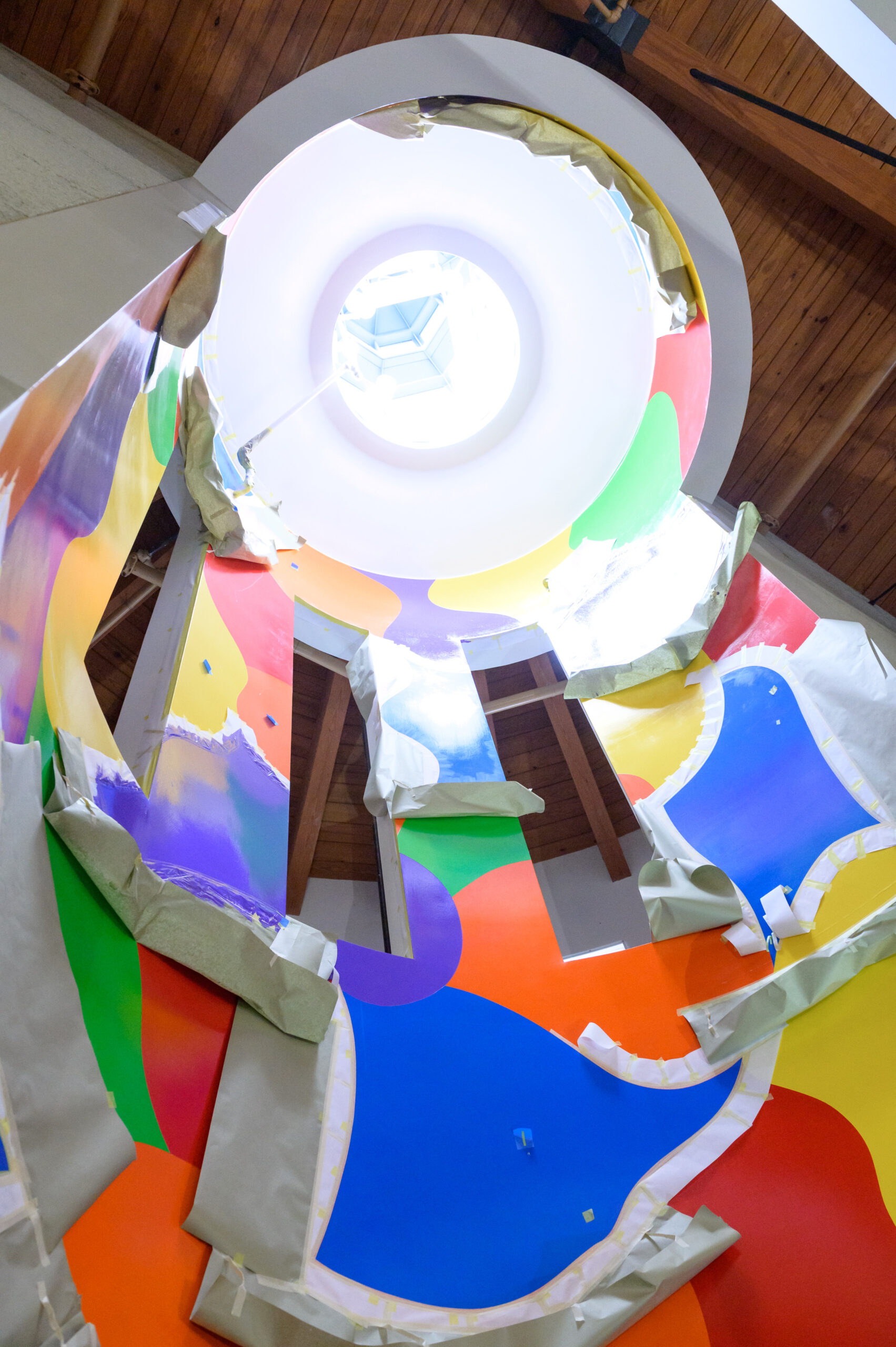
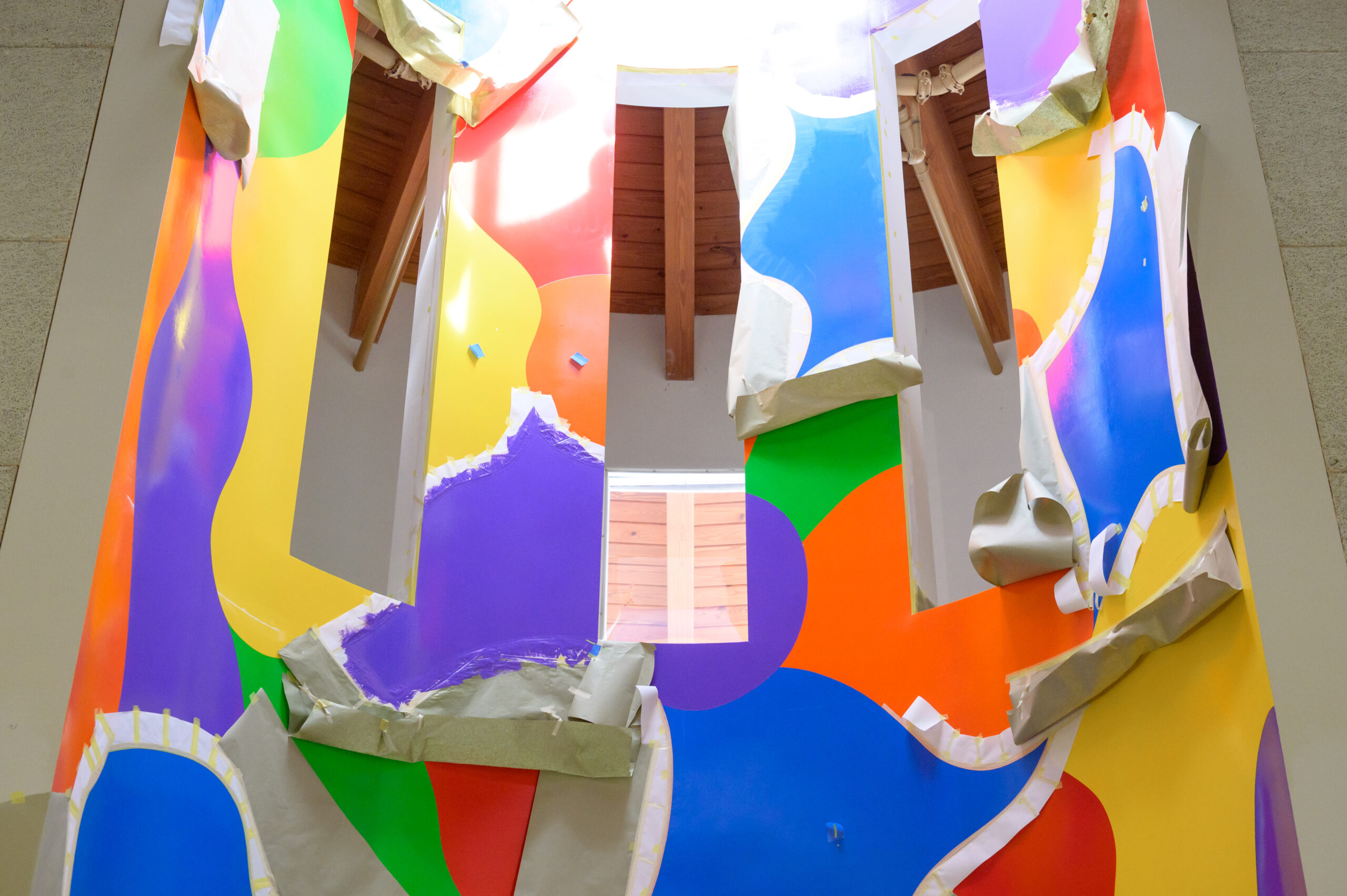
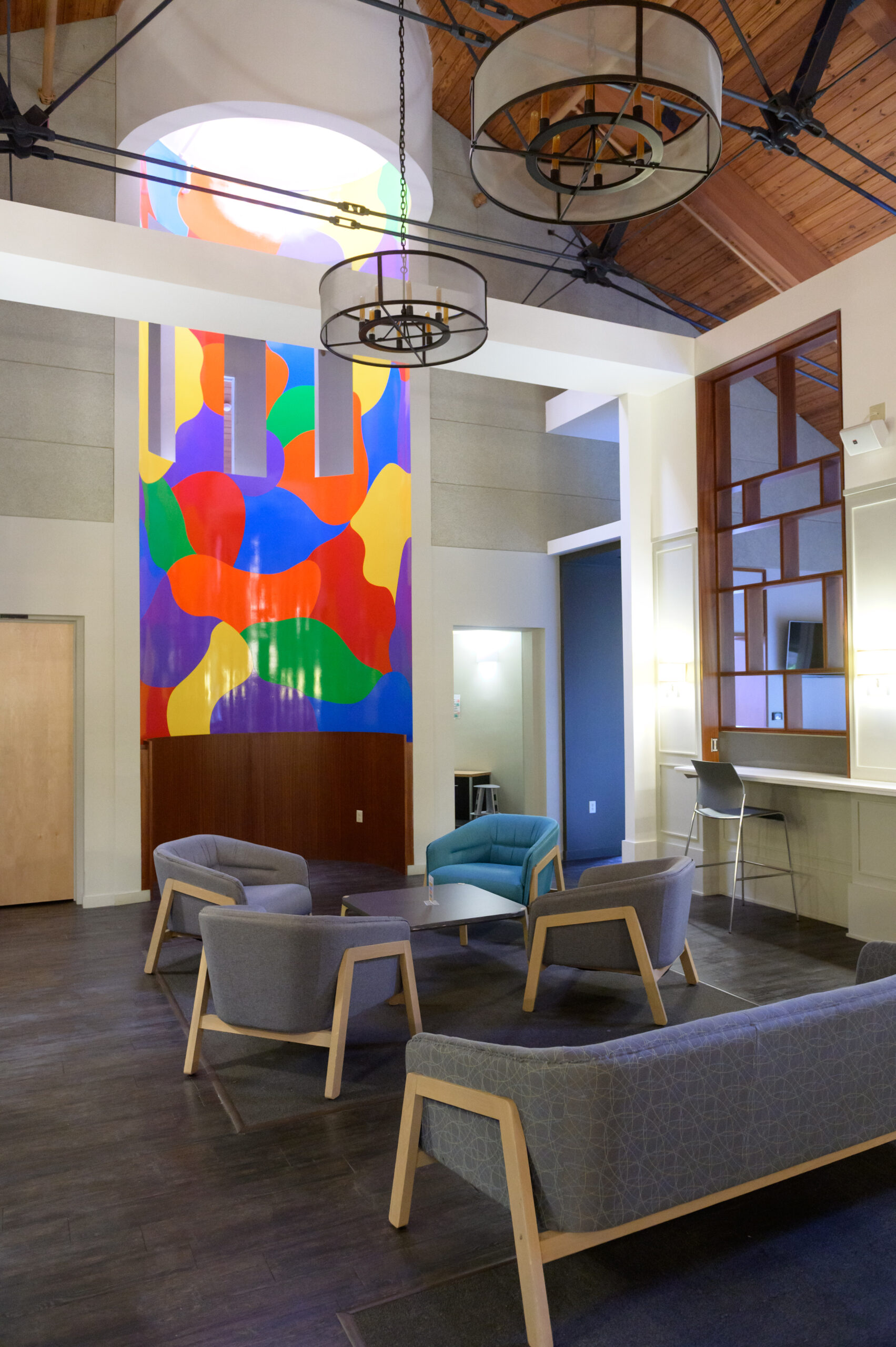
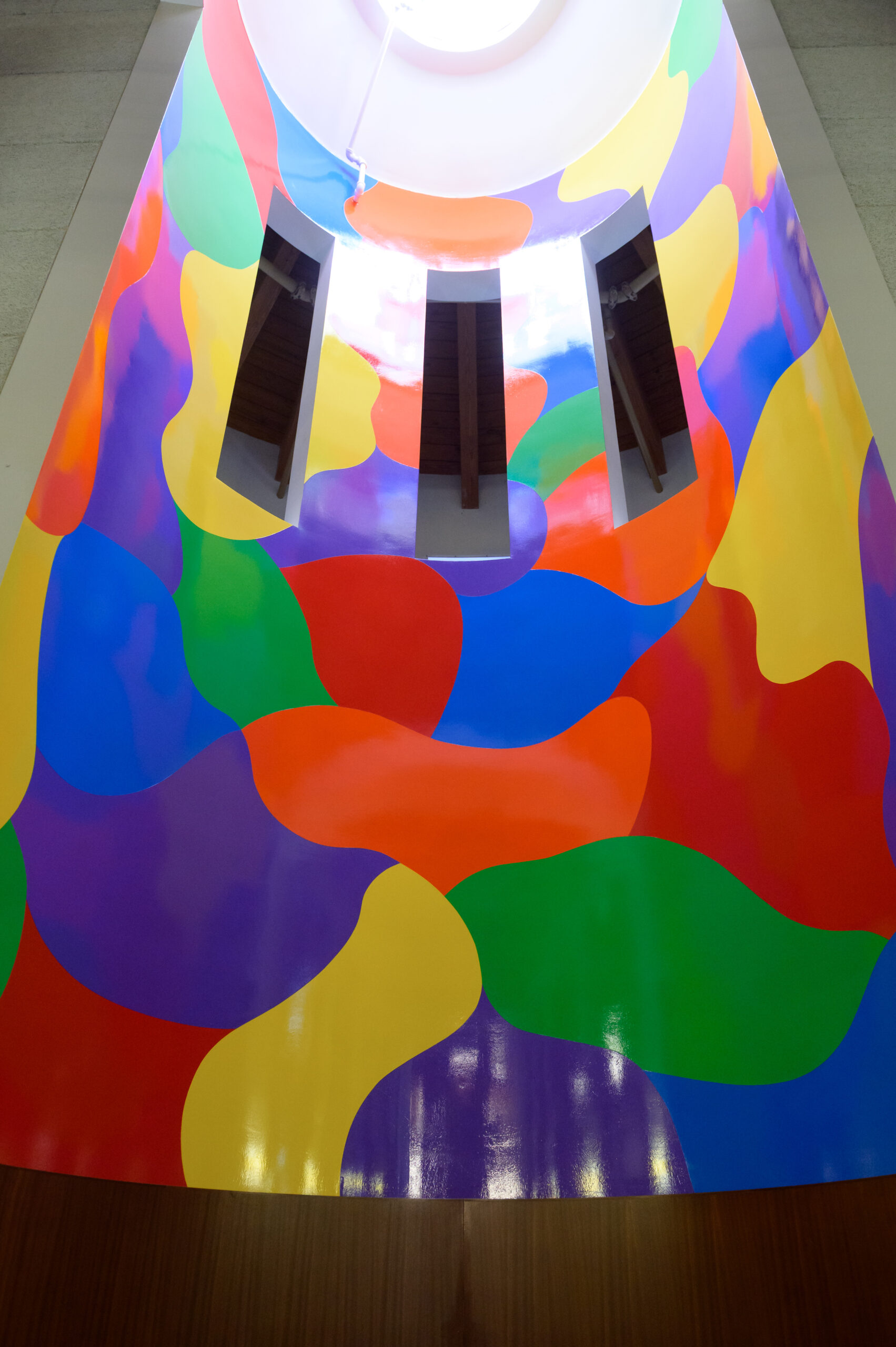
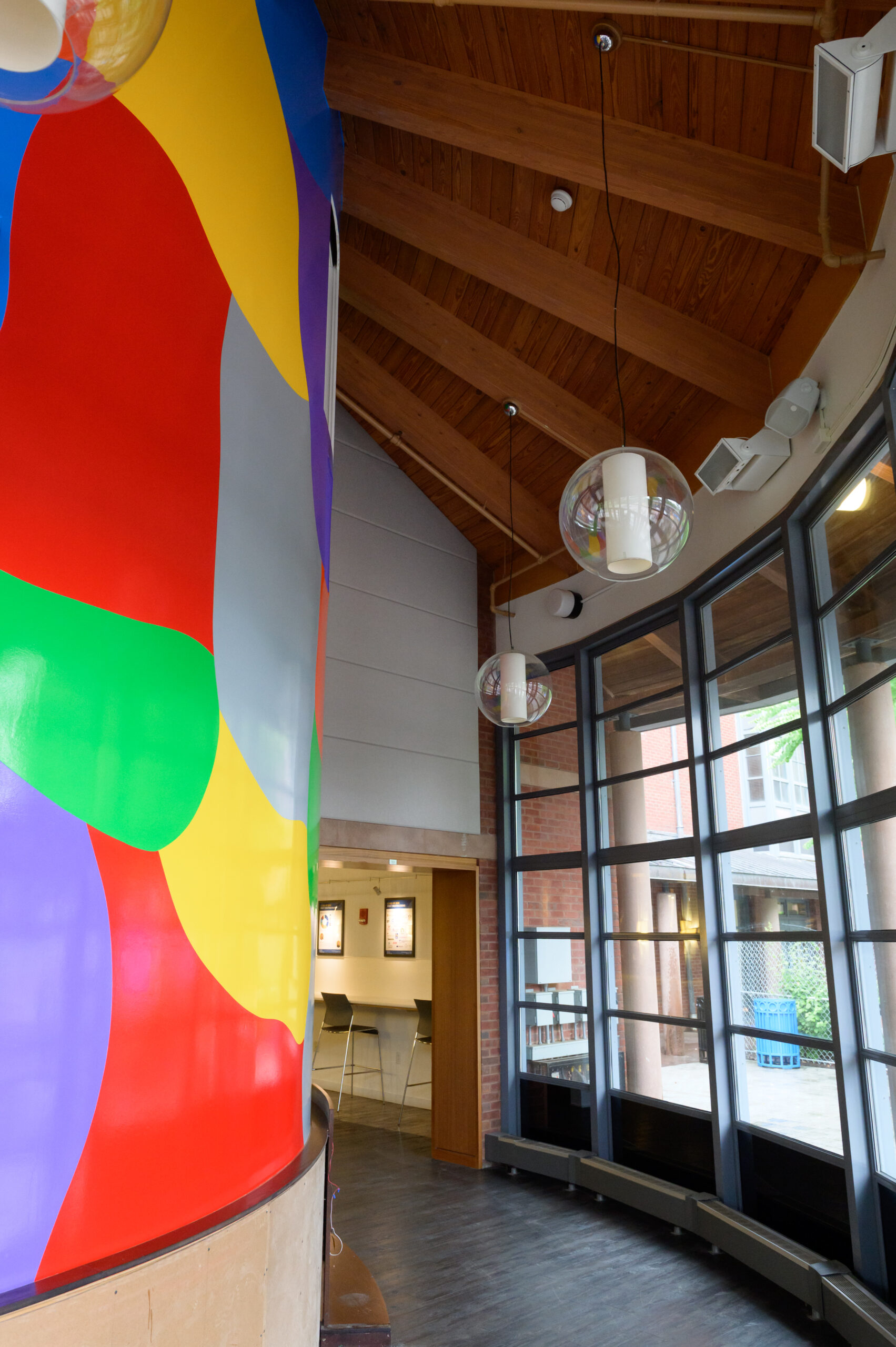
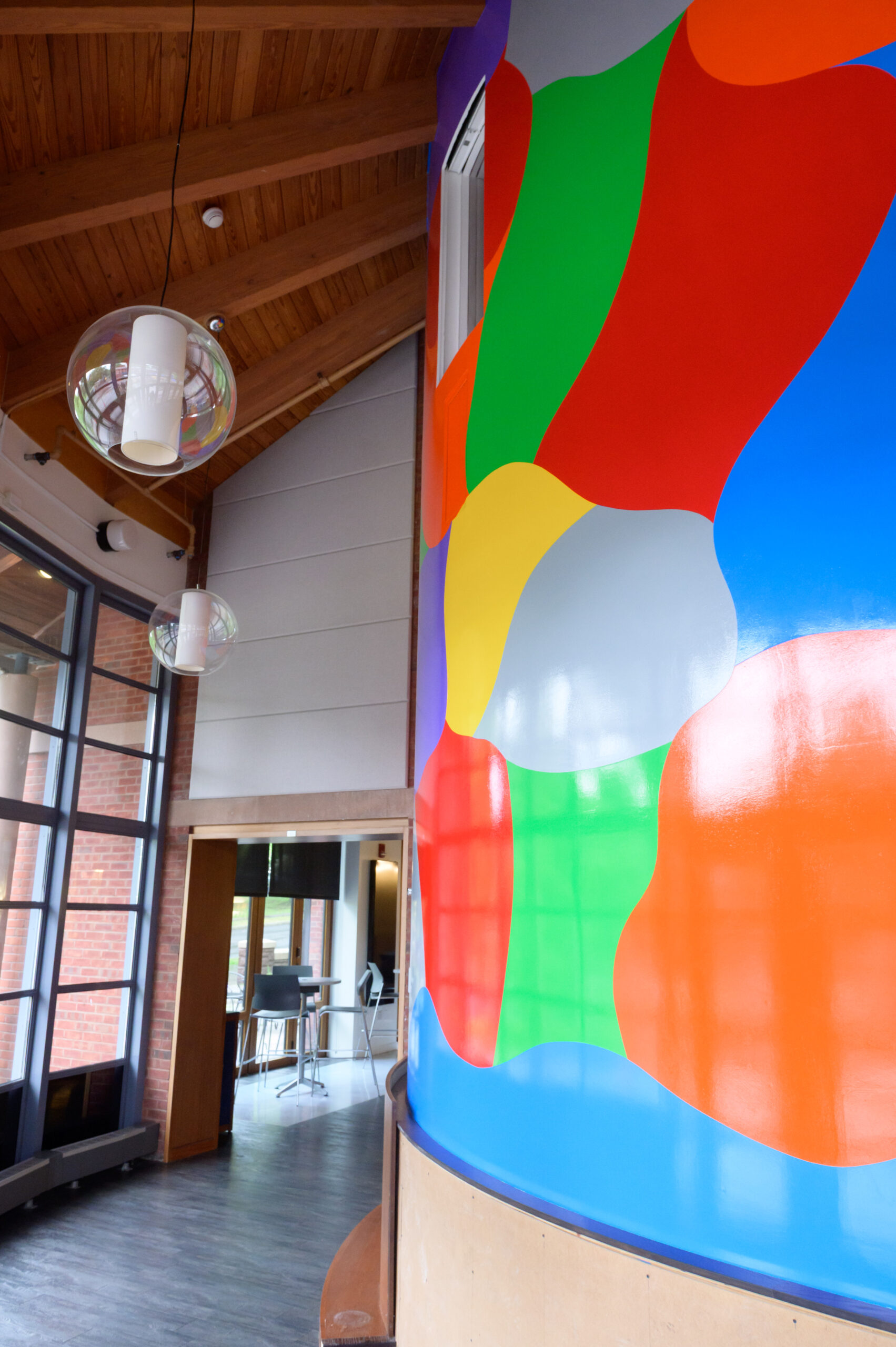
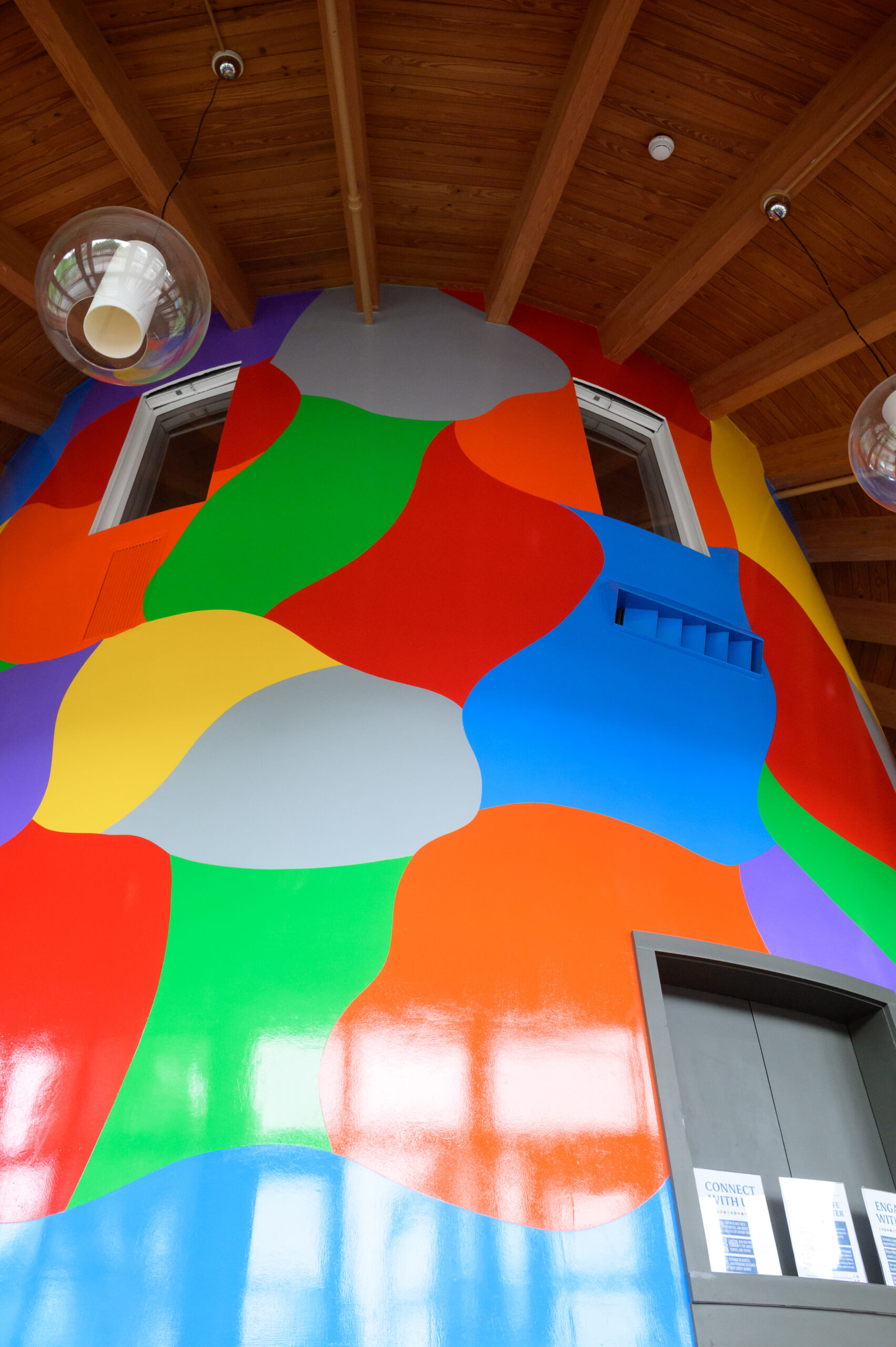
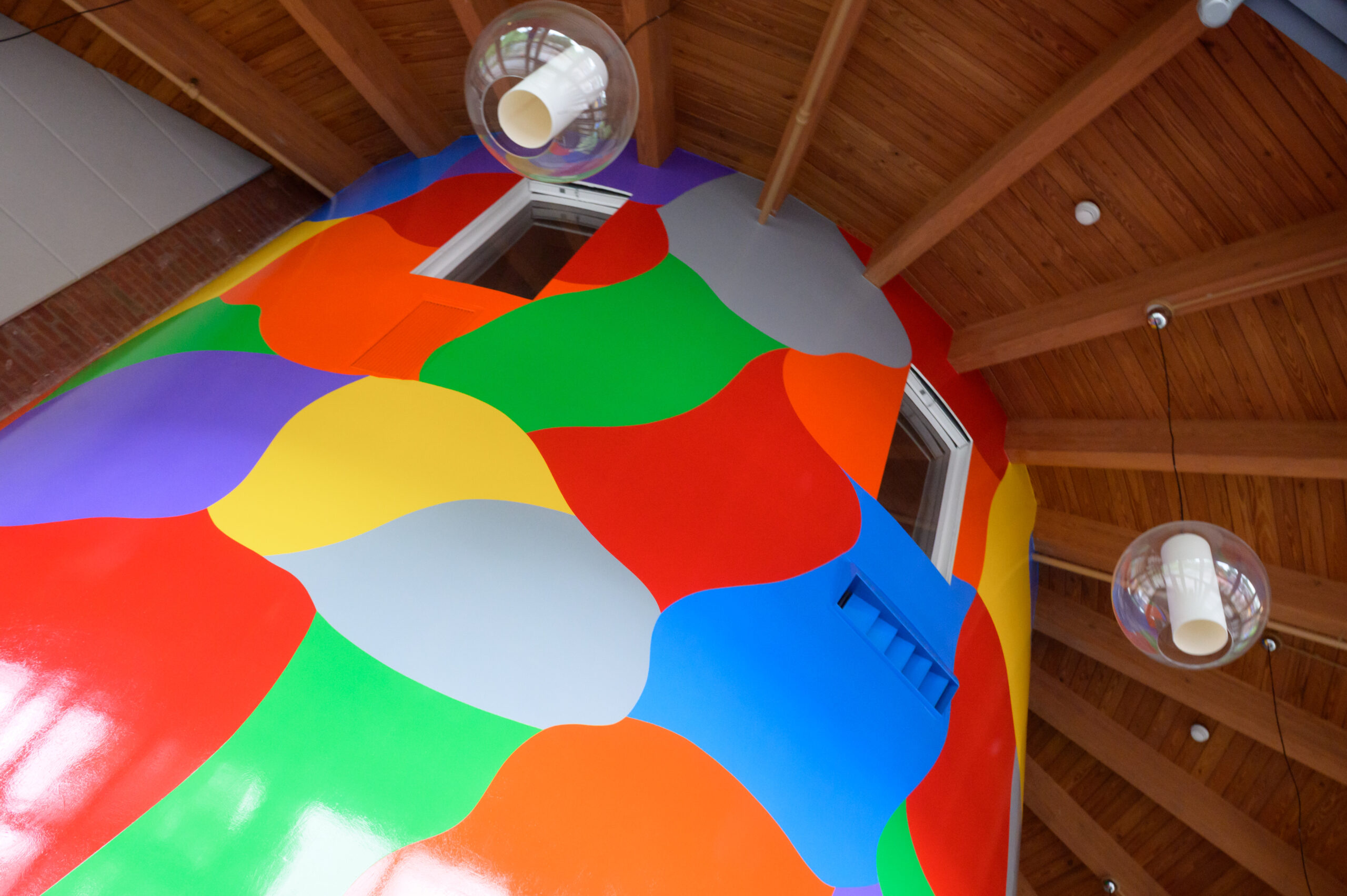
The two-sided, two-story-tall wall drawing by conceptual artist Sol LeWitt, “Wall Drawing #849: Irregular Blobs of Color, 1998,” located in the Cornelia Center has been repainted and refinished, 28 years after its installation.
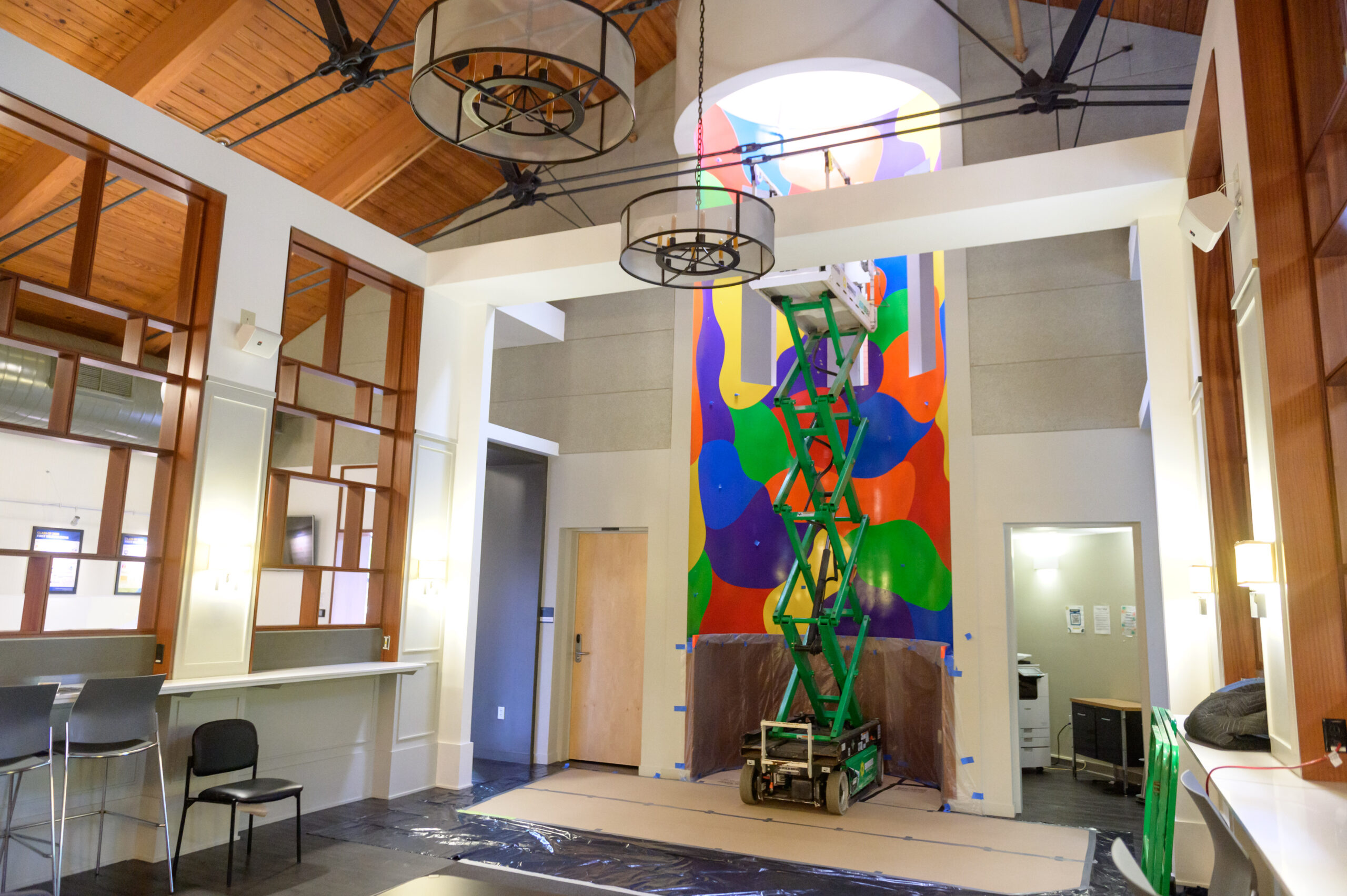
Sol LeWitt’s “Wall Drawing #849: Irregular Blobs of Color, 1998” after its 2026 restoration. Photos by Nick Caito. See more in the gallery below.
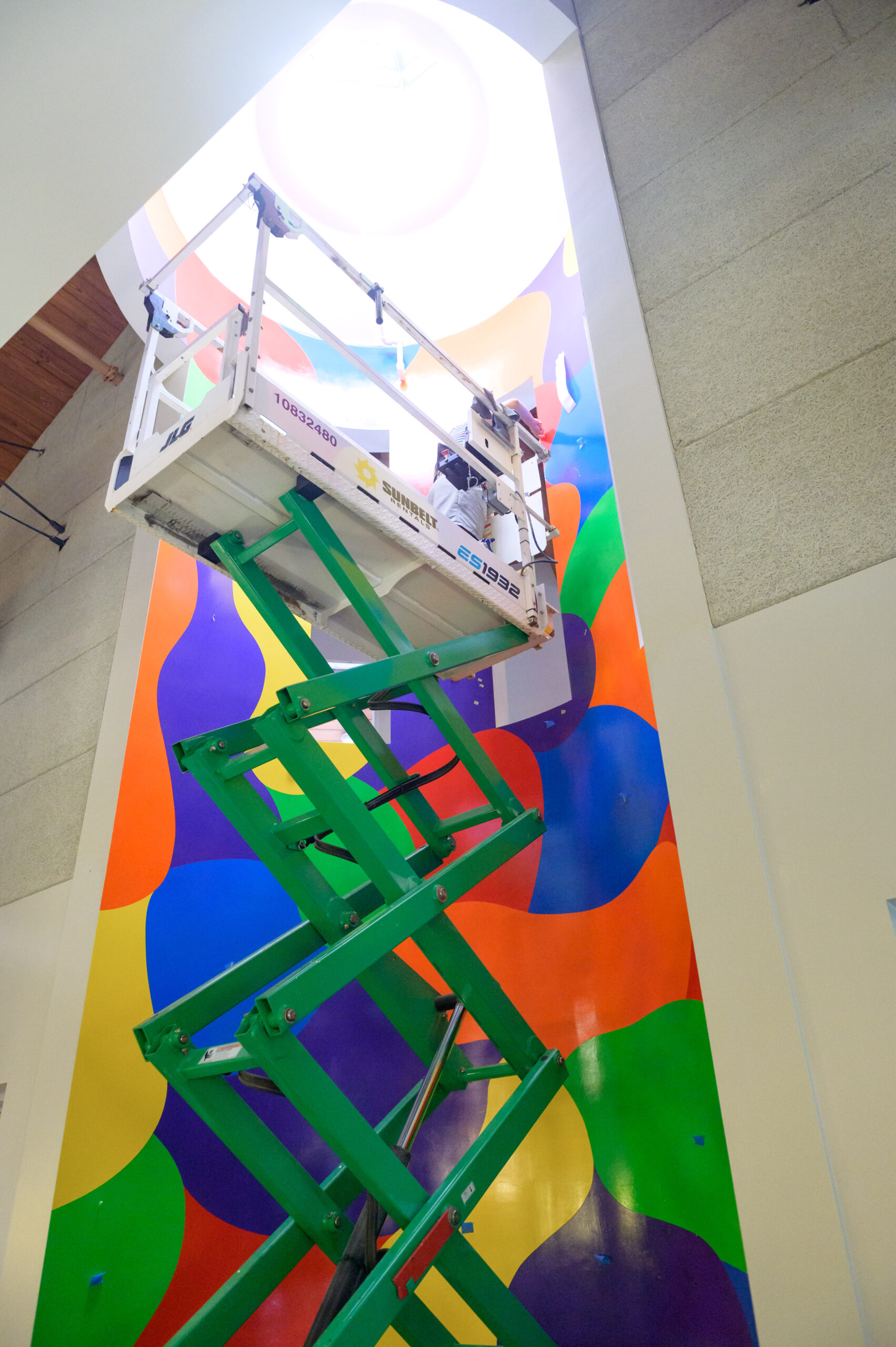
“This is the single most important artwork on the Trinity campus,” said Alden R. Gordon ’69, Paul E. Raether Distinguished Professor of Fine Arts, Emeritus. “Sol LeWitt is in every textbook on modern art; he’s one of the most important American artists of the late 20th century. Trinity has a very bold and very distinctive example of his work, because it’s actually two surfaces which constitute one work of art—one concave, one convex, fitting in with each other.”
The Cornelia Center—originally called Vernon Social Center when it opened in 1997—was designed by architect Tai Soo Kim, who wanted to add color to his austere space, Gordon said. Gordon was instrumental in inviting LeWitt to create a wall drawing for the unique space. “Sol LeWitt was born in Hartford and he lived in this neighborhood for part of his early life,” Gordon said. “His parents are buried in Zion Hill Cemetery, next to campus. He told me that was part of why he wanted to work on this project at Trinity.” LeWitt died in 2007.
LeWitt never actually touched the walls himself during the drawing’s installation in the summer of 1998, Gordon said. “It’s conceptual art,” he said, “so it’s a concept that can be written on paper and then there has to be a human interpretation, working from the instructions.” LeWitt provided scale drawings to his assistants, who drew the design on the wall free-hand and applied the paint. Trinity studio arts alumni and Gordon helped to paint the piece. Read more about the installation in a 1998 story from The Trinity Reporter.
With one side of the work facing exterior windows, “it’s the only LeWitt in Hartford that’s visible from outside,” said Gordon, the founder and editor of the public art website PublicArtCT.org. “And it’s especially beautiful when it’s lit up at night.”
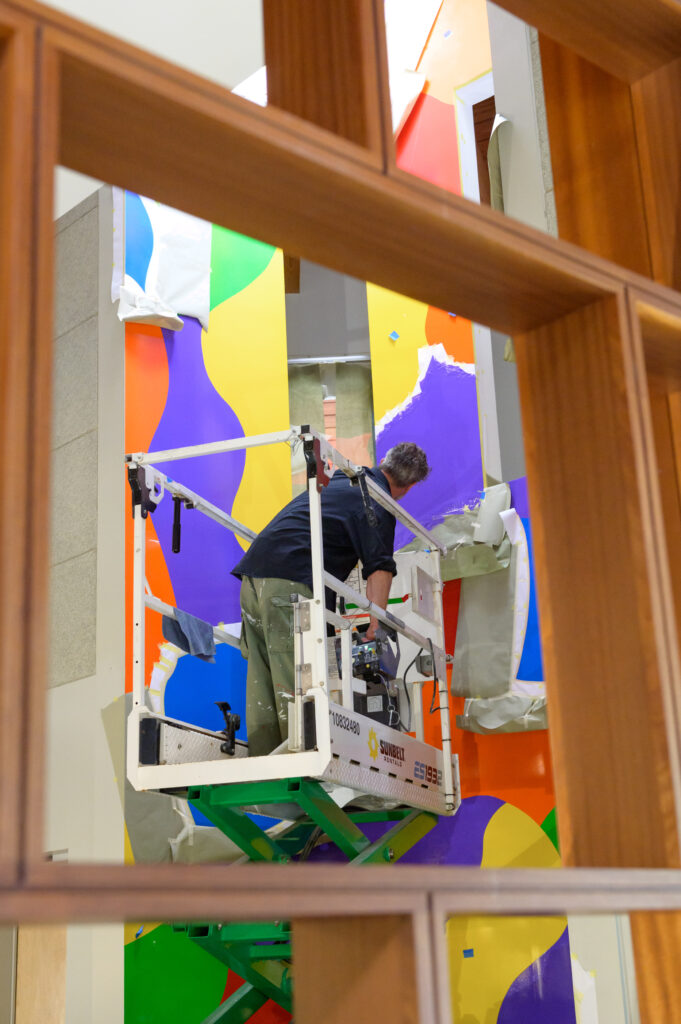
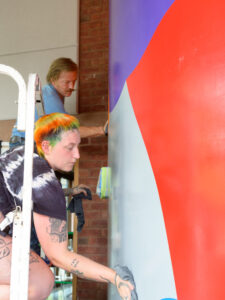
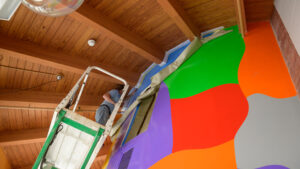
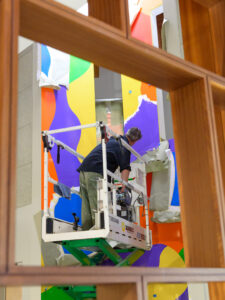
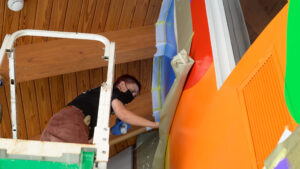
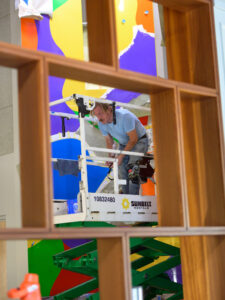
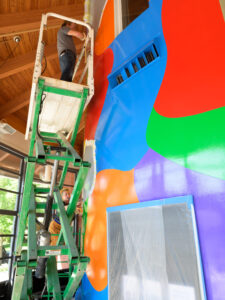
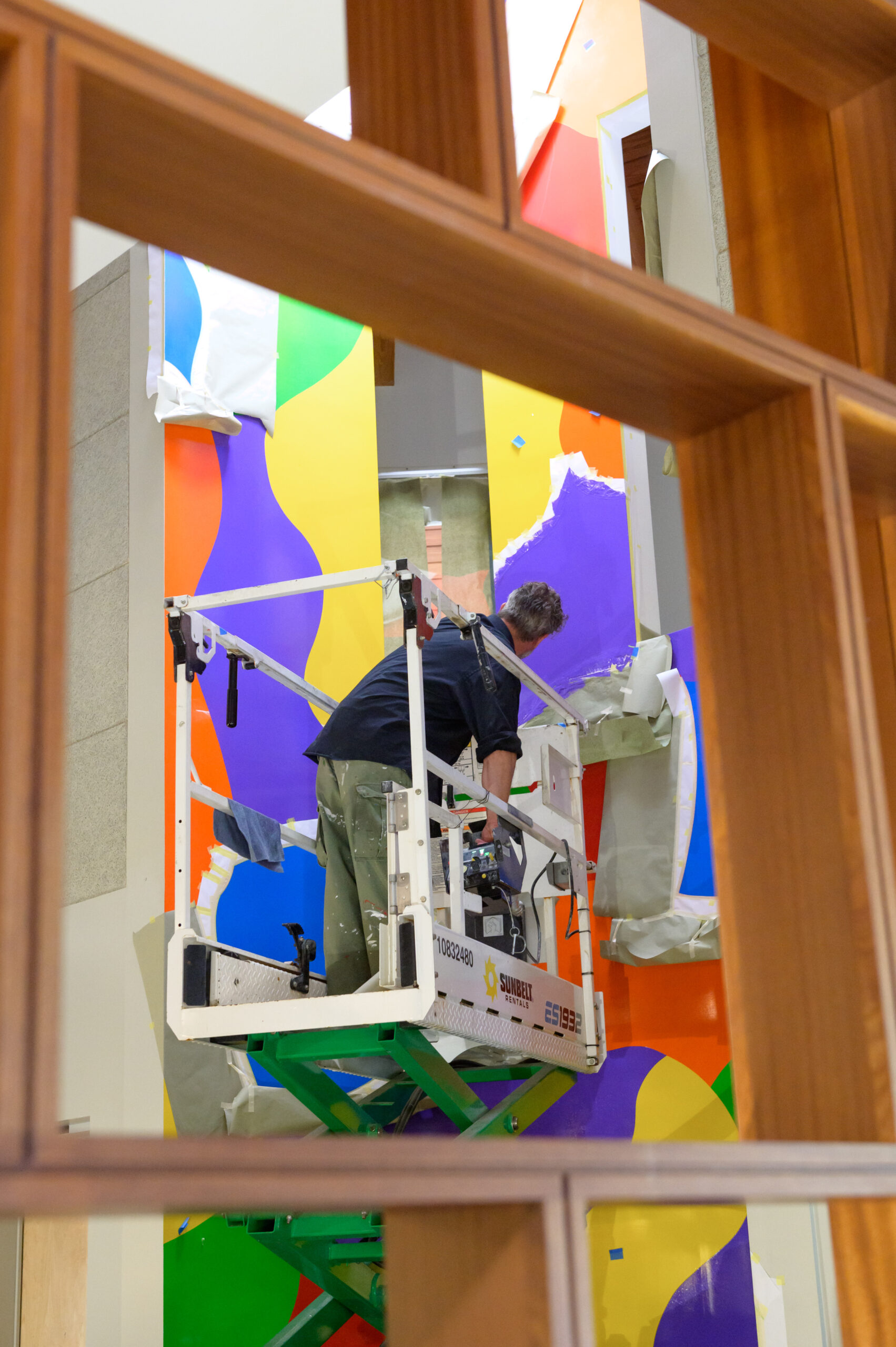
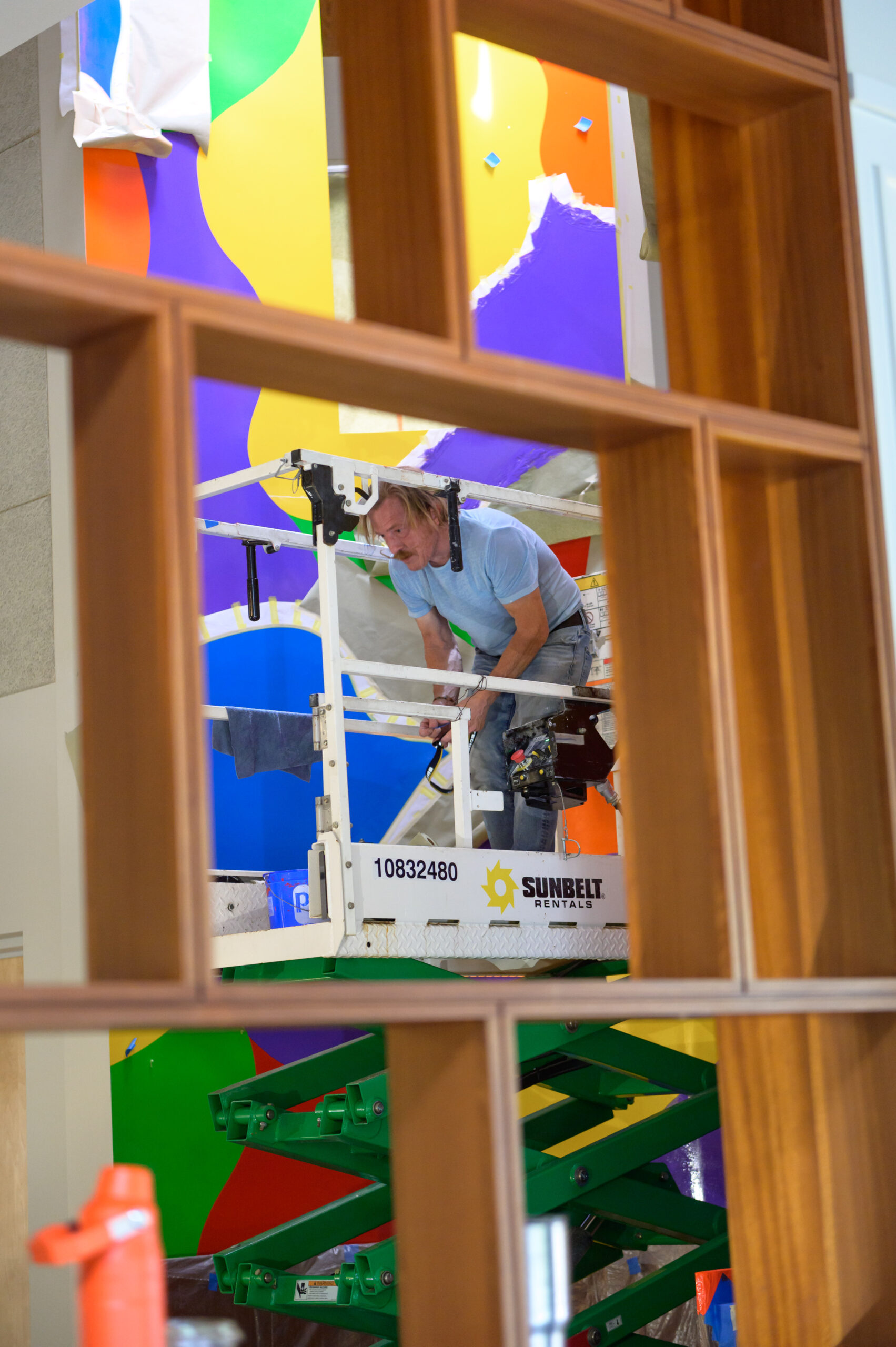
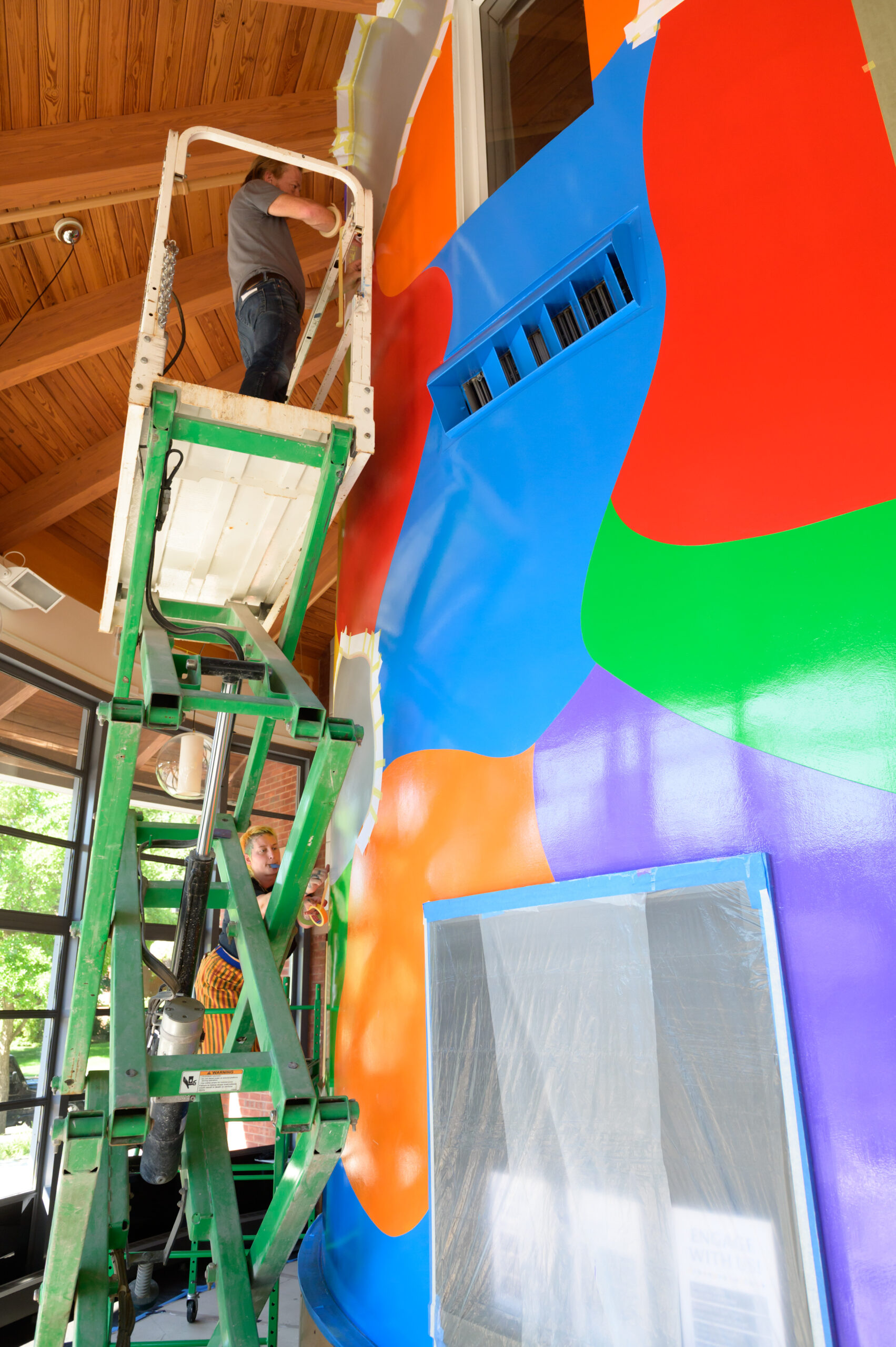
Gabriel Hurier, who led the four-person team that completed the restoration on behalf of the LeWitt estate, said that the work took about 20 days in June and July. “It’s about 26 feet tall on the inside and maybe 24 feet on the outside,” Hurier said of the artwork. “It’s a very singular drawing. There’s not another one like this anywhere.”
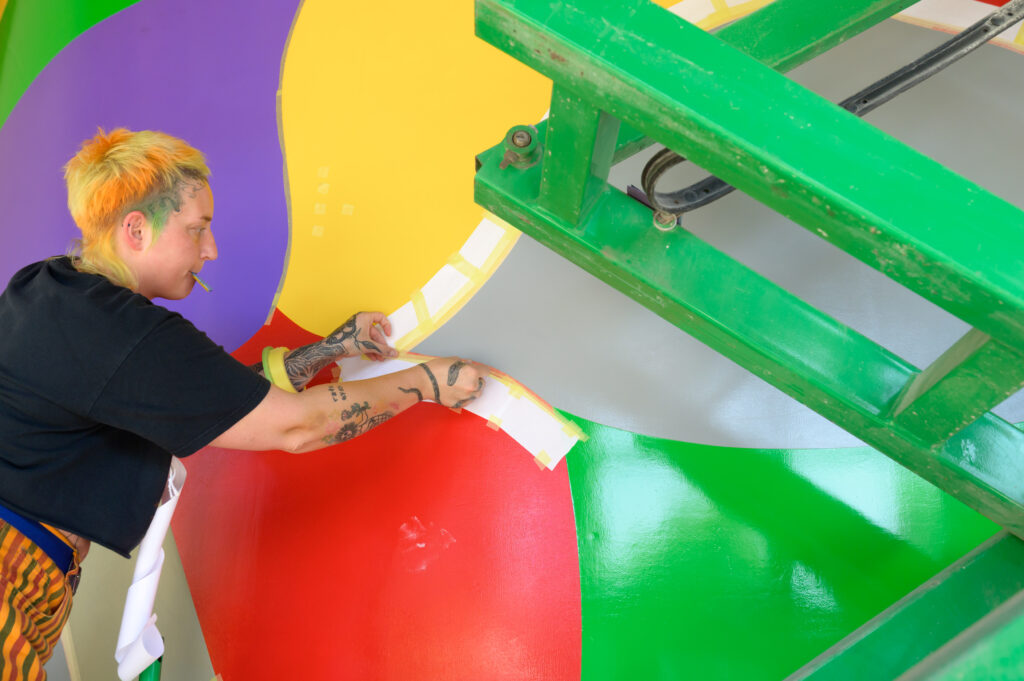
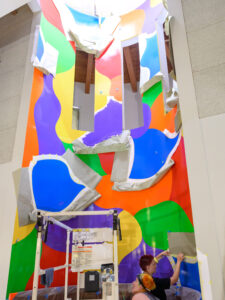
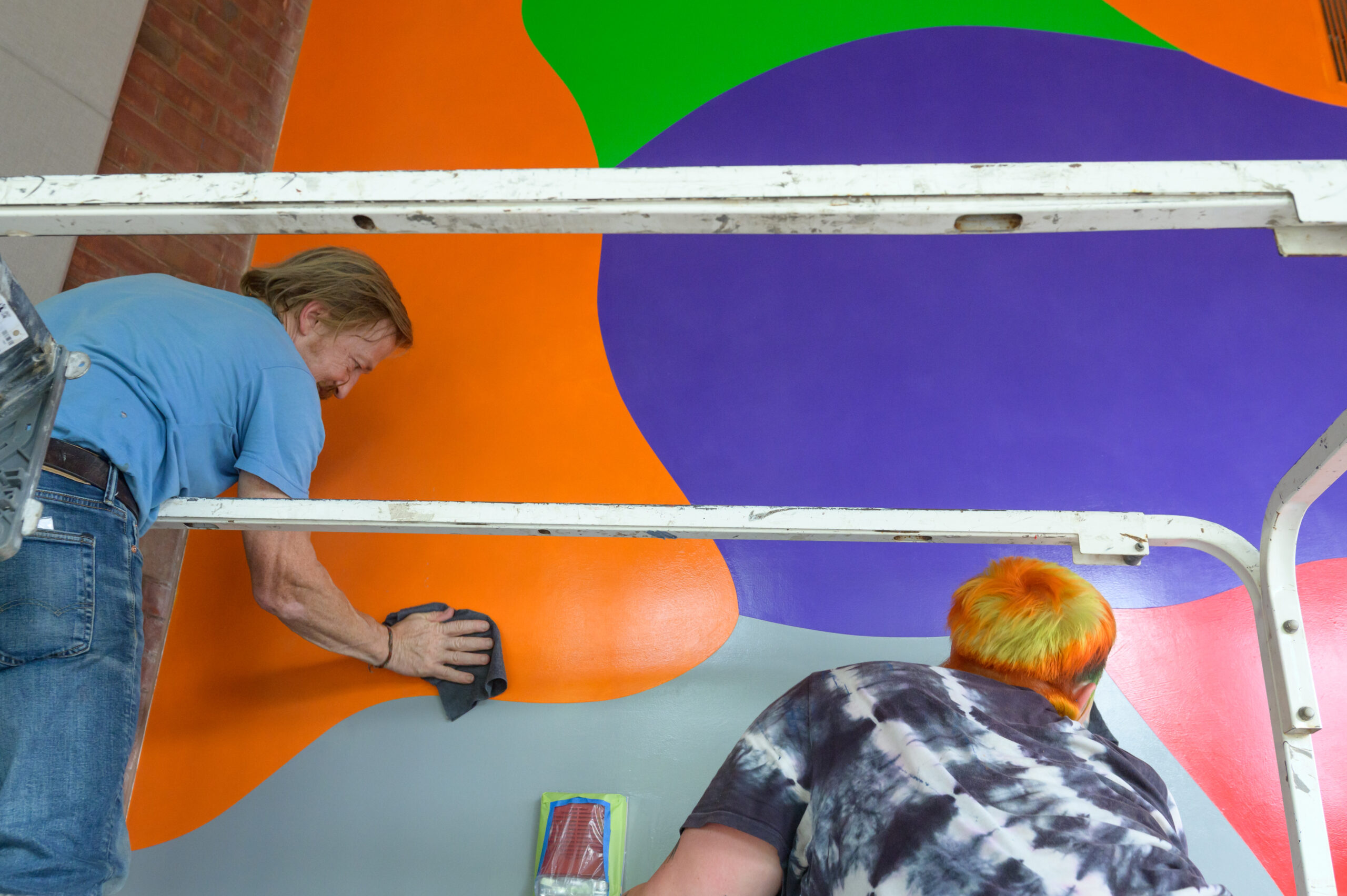
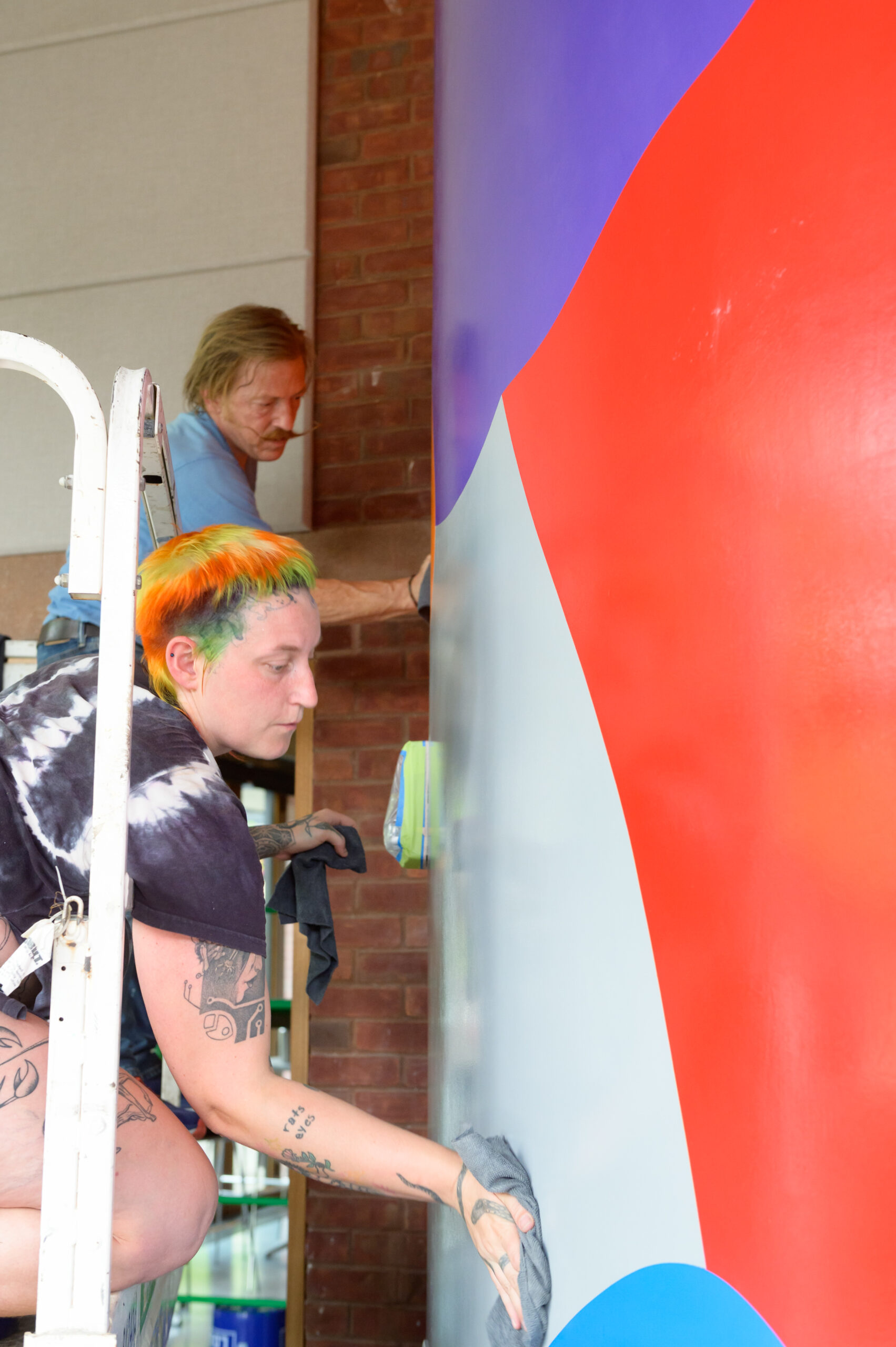
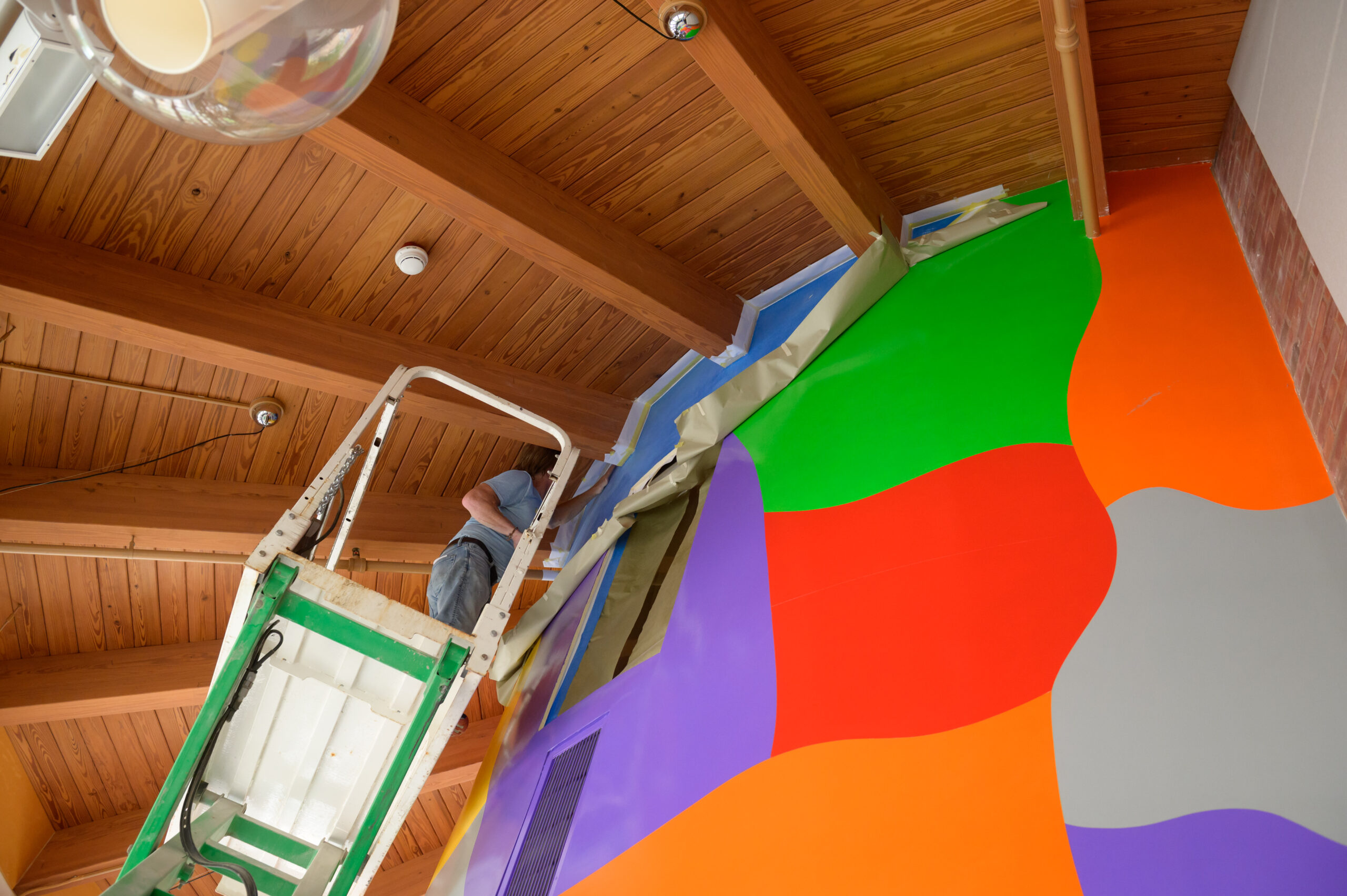
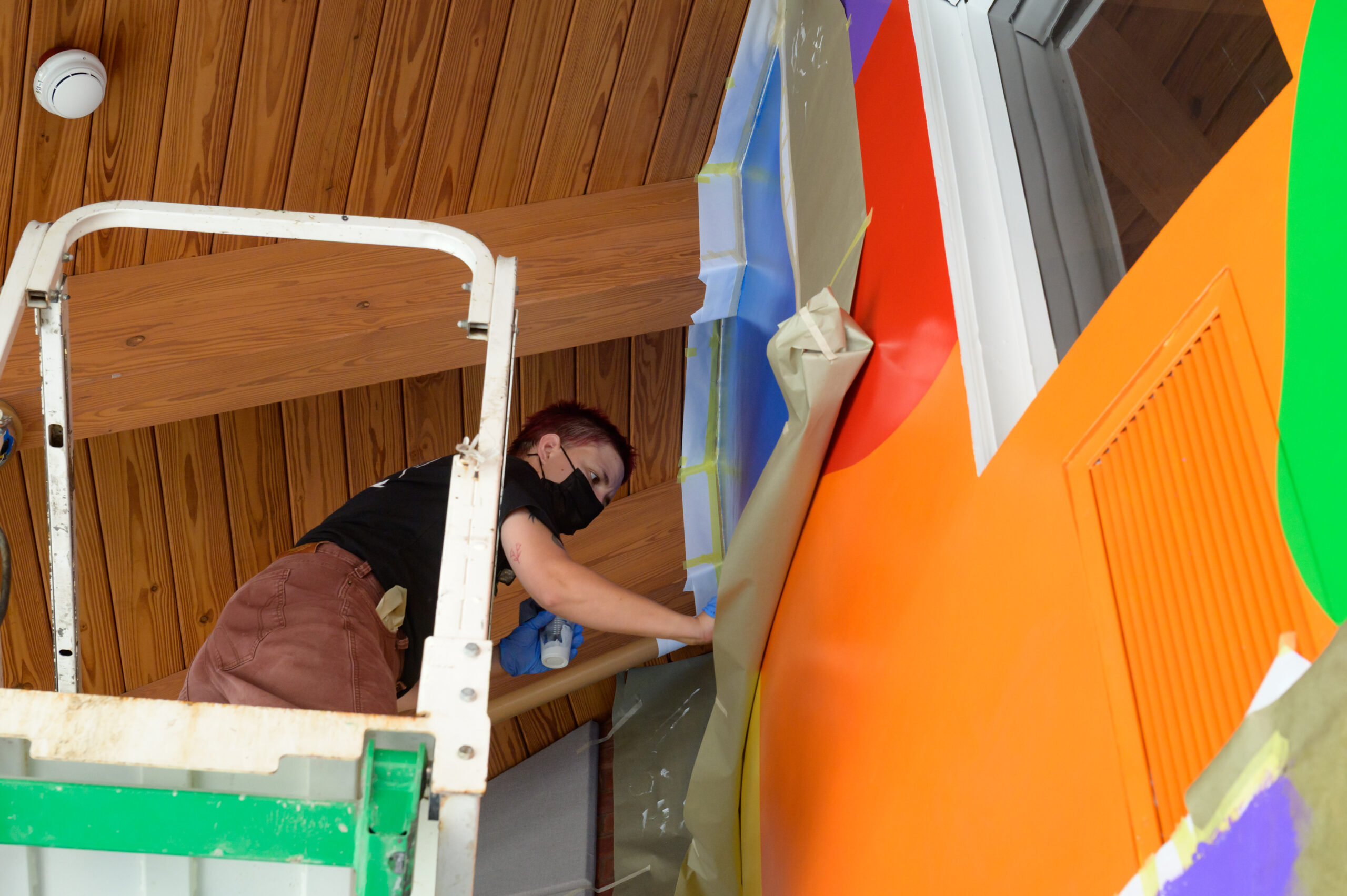
The work to restore the Sol LeWitt wall drawing took about 20 days in summer 2026.
After 28 years, the paint colors had faded and the walls showed signs of damage from being in a busy public space. Construction and repairs took their toll on the artwork over the years, as had scratches and spills on the walls.
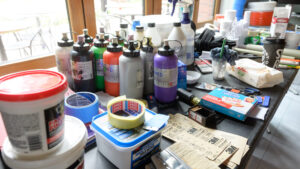
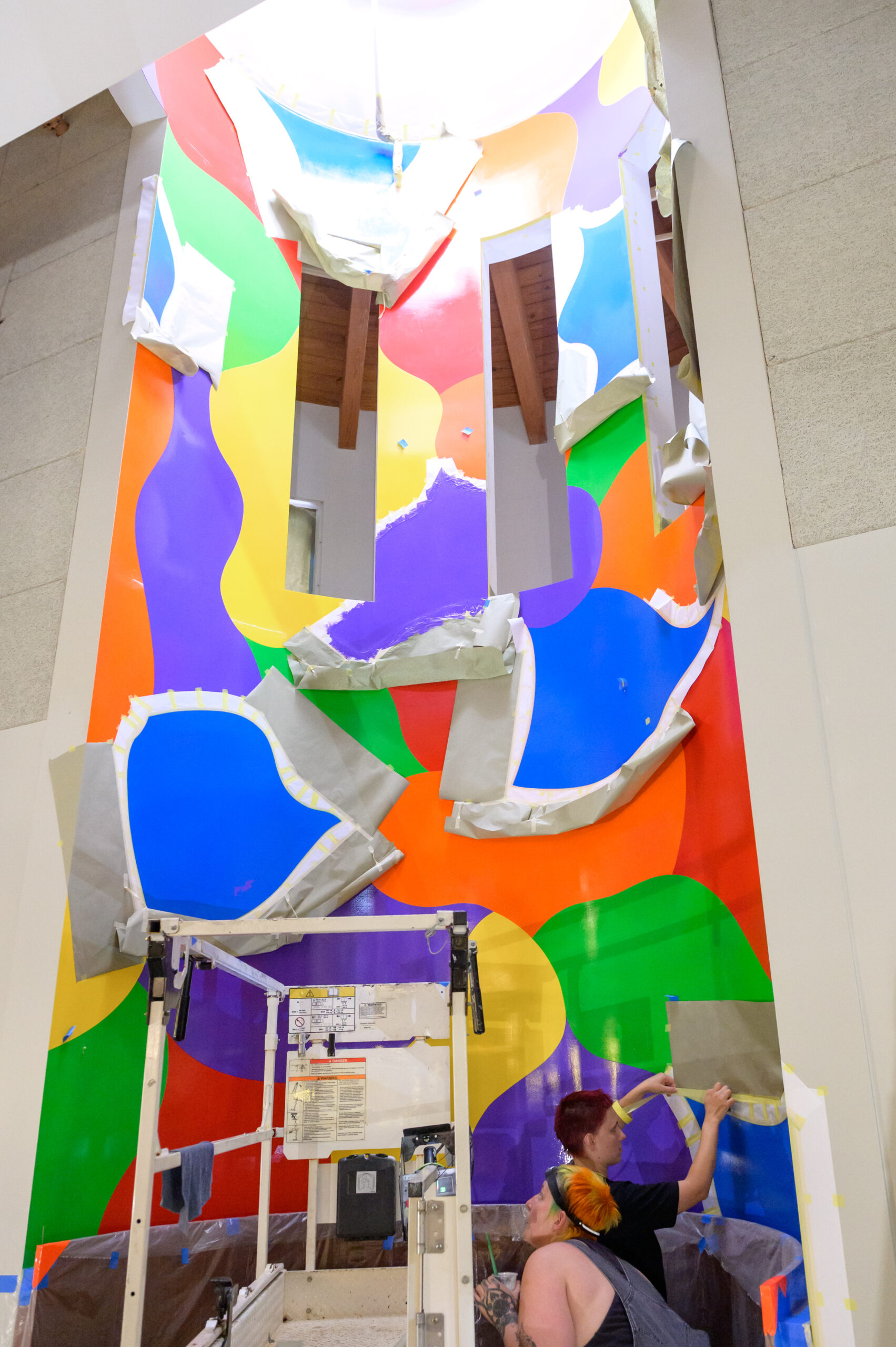
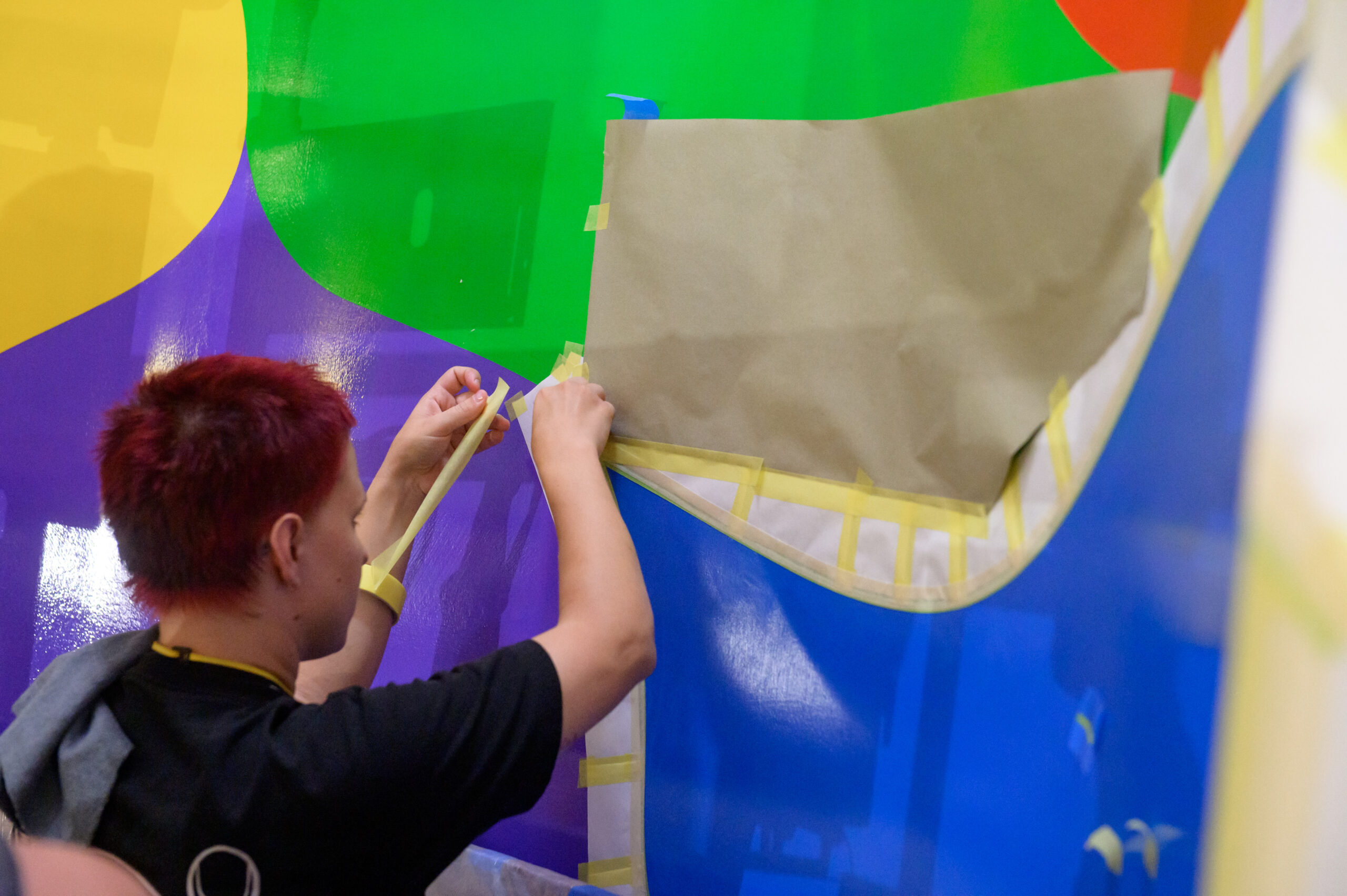
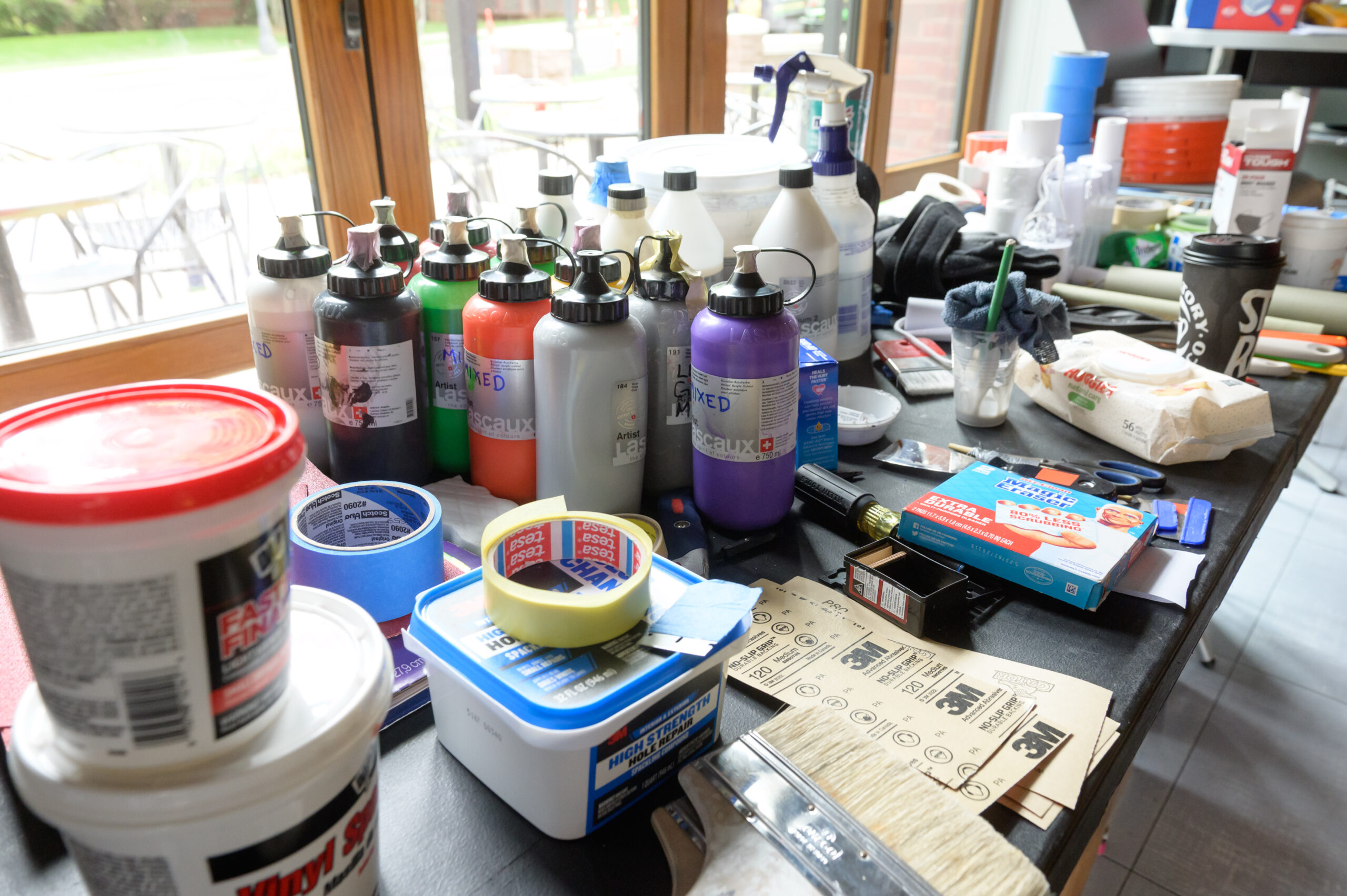
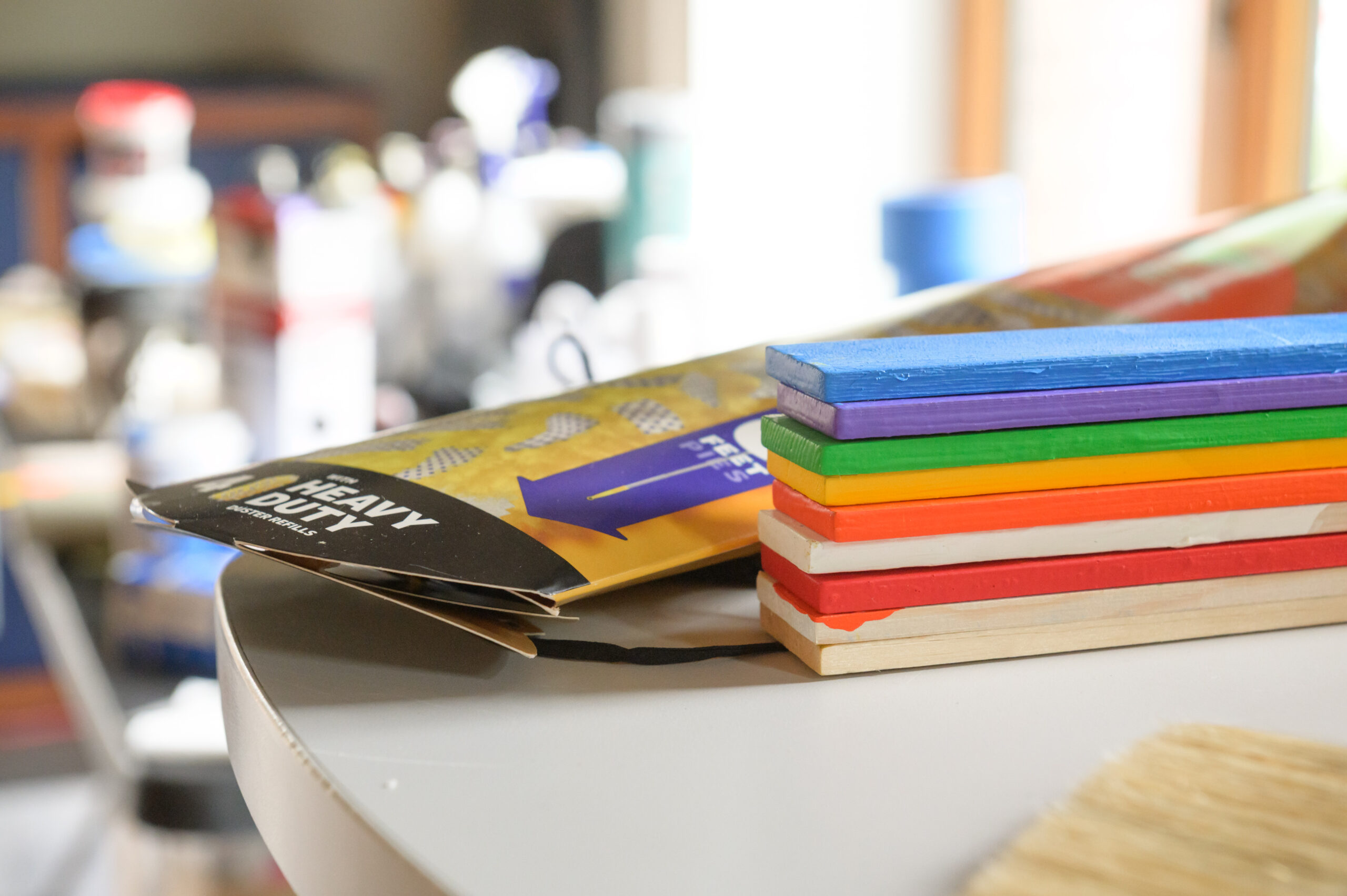
“First we basically sanded it down, fixed any holes or marks, and cleaned up the caulking. Then we worked on repainting and refinishing,” said Hurier, who noted that specialized paints were used to match the original colors as closely as possible. “We taped off the different colored sections and just went color by color. We went over it several times with new paint, then glossed it several times. Getting the glossy finish just right is very hard, and Sol was particular about his finishes.”
John Hogan, the installations director for the LeWitt estate, said that LeWitt’s artistic life went through several phases. “Earlier in his career, he was known for a sort of hard geometry. And then, gradually, he started to become a little bit more playful and started working with these very unusual shapes, these blobs like you see at Trinity,” Hogan said. “The piece at Trinity is actually one of the rarer ones where Sol is responding very specifically to the architecture.”
Hogan said that other examples of LeWitt’s work in Hartford can be found at the Wadsworth Atheneum Museum of Art. “Sol obviously liked working in galleries and museums, but he really had a sense of wanting to put his work in the public environment,” Hogan said. “He didn’t sell this piece to Trinity—it’s an example of where he said, ‘You can borrow this work and everyone can see it.’ A lot of artists would not be so forthcoming in their generosity.”
A four-person team repainted and refinished the wall drawing in the Cornelia Center.
While it is technically on indefinite loan from the artist’s estate, the LeWitt wall drawing is considered part of the Trinity College Art Collection, which is managed by Trinity’s Watkinson Library and College Archives. “Having such a large contribution from Sol LeWitt is representative of Trinity’s connection to Hartford and its commitment to public art,” said Christina M. Bleyer, college librarian and director of special collections and archives at the Watkinson Library. Bleyer added that Trinity’s art collection also includes a series of small maquettes that LeWitt created in 1997 to demonstrate possible ideas for the full-scale wall drawing.
Gordon said that public art adds more than beauty to a college campus. “In order to humanize a campus with lots of hard architecture, you have to have art, which is at more of the human scale,” he said. “Art makes every campus and every city distinct. It adds some liveliness as it changes. When alumni come back, they can see that the institution is active; art is a part of keeping the place alive. And it also becomes a contribution to the city, to the urban fabric.”
The restoration of the LeWitt wall drawing means that the Trinity and Hartford communities will continue to enjoy this piece of art for generations to come. “Students have the privilege of coming here any time they want to see it,” Gordon said. “Every art history student has written about it. Having original works of art on campus enlivens the education, because students can study and write about things they can see in person.”Gordon added, “This restoration is Trinity fulfilling its responsibility to this work of art and to Sol LeWitt’s memory and his gift.”
Installation Team, 1998: Lana Abraham ’98
Sachiko Cho (LeWitt assistant)
Amalie Flynn ’98
Alden Gordon ’69
Tory Marsh ’97
Kevin Oster (LeWitt assistant)
Kim Piotrowski ’93 The Edward C. and Ann T. Roberts Foundation, Inc. of Hartford funded the creation of the work.
Restoration Team, 2026: Abby Bagby
Gabriel Hurier
Cat McCaully
Michael Benjamin Vedder
Restaurateur Danny Meyer ’80, H’24, P’20 returned to Trinity College to help launch TrinTalks, a new series of campus conversations in which alumni share stories about how Trinity shaped their career trajectories.
The Trinity College community gathered for a documentary film screening and panel discussion with alumna Julia Hoppock ’06, an associate producer of People vs. Politics, as part of Voter Education Week.
Associate Professor of Classical Studies Vincent E. Tomasso, whose first-year seminar is reading Homer’s epic poem, will give a presentation as part of Odyssey Day this fall. Read more about why he says The Odyssey still resonates today.
More than 100 Trinity students spent part of the summer working with faculty members and other mentors. The fall symposium allowed these students to showcase their findings and research processes.