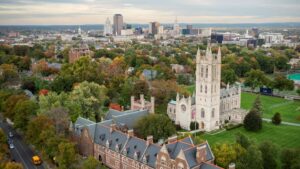
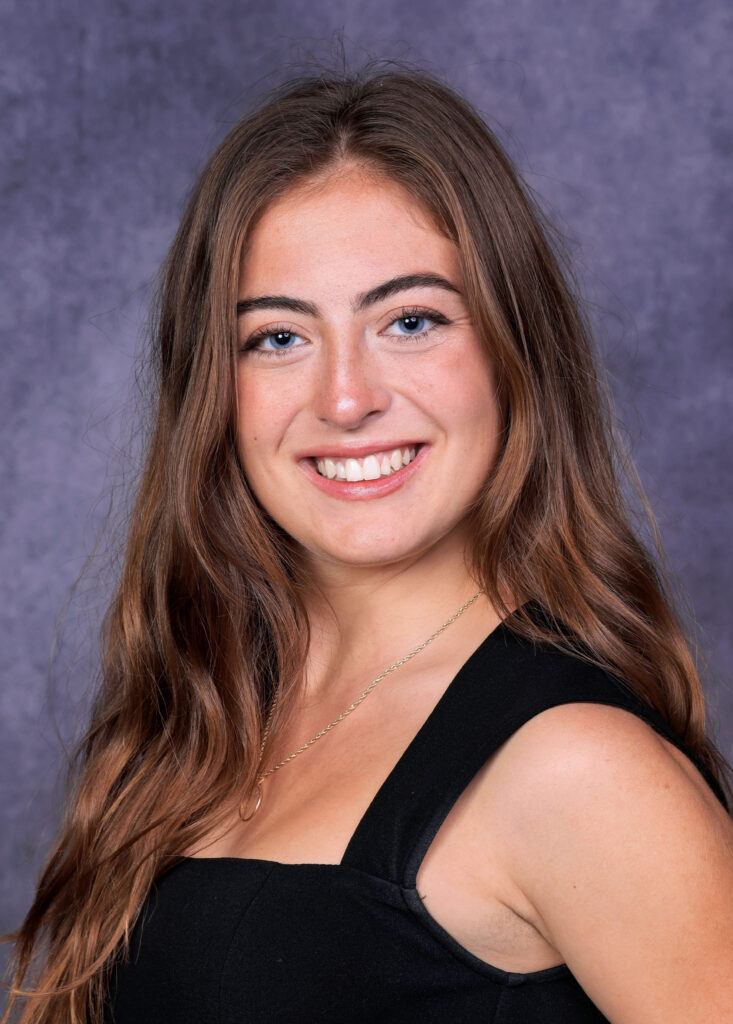
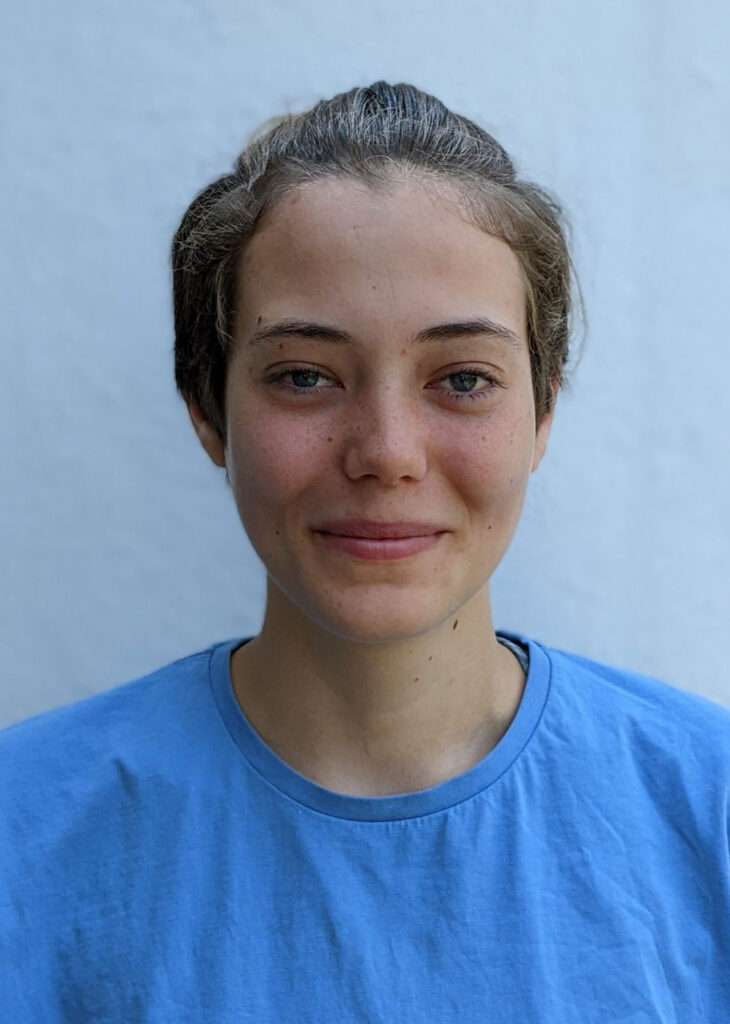
Pitta is a double major in environmental science and public policy and law from Bridgewater, Massachusetts. Schmidt is a political science and international studies double major from Freiburg, Germany. Both have served on the executive board of the Trinity Environmental and Climate Justice student organization, which raises awareness of environmental injustice at the local and global levels.
The Rachel Carson Council (RCC), founded in 1965, is the national environmental organization envisioned by American marine biologist, writer, and conservationist Rachel Carson to carry on her work after her death. The council promotes Carson’s ecological ethic that combines scientific concern for the environment and human health with a sense of wonder and reverence for all forms of life in order to build a more sustainable, just, and peaceful future.
The National Environmental Leadership Fellowship (NELF) identifies outstanding students with a passion for environmental education, organizing, and advocacy, and provides financial support to carry out projects and campaigns.
Throughout the year, NELF fellows will have the opportunity to engage with like-minded leaders, receive mentorship, and gain resources to help bring their chosen projects to life. The fellows also were invited to participate in the American Environment Leadership Institute from July 19 to 23, 2026, in Washington, D.C.
Read more from Pitta and Schmidt below:
Breanna Pitta ’27
Majors: Environmental Science; Public Policy and Law (Minor:Community Action) Hometown: Bridgewater, Massachusetts
Why did you apply to become a Rachel Carson Council National Environmental Leadership Fellow?
Breanna Pitta ’27
Environmental injustice is one of the most consequential and unresolved challenges to equality in the United States. Rachel Carson’s legacy as the woman whose critical thinking launched the modern environmental movement motivates me to utilize scientific research to advocate for equitable environmental policy and sustainable futures. The RCC’s mission acknowledges that compassion and courage are essential to catalyzing change, and these two pillars resonate deeply with me.
What kind of work will your fellowship involve?
Many of my most formative educational experiences in college involved creating intimate connections with the Hartford community. My project will examine environmental justice (EJ) issues in Hartford, with a specific focus on how the highway system contributes to unequal health burdens on residents. I will interview community members, EJ advocates, environmental health professionals, and local policymakers about how the roadways affect their quality of life. I hope to amplify the voices of people directly affected by this issue by publishing a podcast series or website and inviting participants to speak at Trinity College. Ultimately, I aim to document the historical factors that led to the creation of the concentrated roadways in Hartford, understand how these decisions continue to affect people’s wellness today, and imagine actionable steps toward a more just future.
How do you see this fellowship building on your education at Trinity and supporting your career goals?
My fellowship and project with the RCC will help culminate much of the work I have been involved with at Trinity over the past three years. Working as a student researcher in the Liberal Arts Action Lab on a project investigating the impact of the trash incinerator in Hartford’s South End neighborhood introduced me to hands-on environmental justice work and sparked my interest in grassroots, community-based activism. This project will contribute to a broader, growing body of knowledge documenting the impacts of environmental justice in Hartford, providing groundwork for future advocacy and legislation. After graduating from Trinity, I hope to continue studying environmental policy, eventually working as an environmental researcher and advocate.
Carla Schmidt ’27
Majors: Political Science; International Studies Hometown: Freiburg, Germany
Why did you apply to become a Rachel Carson Council National Environmental Leadership Fellow?
Carla Schmidt ’27
I am deeply passionate about environmental advocacy and I wanted to build my skills in accessible environmental communication. I am looking forward to the mentorship from the RCC, which I hope to use to bridge the gap between scientific knowledge and community action.
How do you see this fellowship building on your education at Trinity?
Trinity has allowed me to explore the importance of accessible climate communication on both a local and global scale. Globally, I have had opportunities to research climate issues in Bhutan, Peru, and the Caribbean, and gain hands-on experience during an internship with Greenpeace in Vienna. These experiences enriched my perspective on global manifestations of climate change, many of which I first learned about in the inspirational “Global Environmental Politics” class taught by [Associate Professor of Political Science and International Studies] Belén Fernández Milmanda and through my research assistantship with her.
Meanwhile, living in Hartford and my involvement with the Environmental and Climate Justice Club gave me the chance to meet environmental justice activists, which motivated me to pursue my thesis in this field. Learning that [John R. Reitemeyer Term Professor of Political Science] Stefanie Chambers had published on minority empowerment and environmental justice in Hartford further inspired me. I am incredibly grateful for the guidance I receive from Professor Chambers and [Associate Professor of Political Science and Public Policy and Law] Abigail Fisher Williamson, the support from the Marcuss Fellowship, and the collaboration with Hartford Environmental Justice Research Partnership to start my thesis research by doing interviews with environmental justice advocates. I hope that the skills learned during this fellowship will allow me to communicate my findings beyond an academic audience, to environmental justice advocates and those who may yet become advocates.
How might this fellowship impact your career goals?
I plan to be an environmental justice advocate and communicator of climate issues, in one form or the other. I firmly believe that to empower people we must communicate not just environmental risk, but also share stories about systemic resilience. I hope that skills learned during the fellowship will allow me to make research more accessible, actionable, and community driven.
More than 100 Trinity students spent part of the summer working with faculty members and other mentors. The fall symposium allowed these students to showcase their findings and research processes.
The first Summer Internship Showcase—presented by the Trinity+ Advising Center and the Career Center—featured the reflections of Trinity students who gained real-world experience through meaningful internships in summer 2026.
The exhibition opening in the Austin Arts Center on September 24 showcases recent works by Studio Arts Program Postbaccalaureate Fellowship alumni Ciara Rubí, Sydney Smith, and Trinity alumna Weixi Zhang ’18.
Trinity’s Summer Research Program supports intensive student involvement in ongoing faculty research. More than 100 Trinity students spent part of summer 2026 engaged in research projects with faculty mentors.