How the InterArts Gateway Reignited a Trinity Student’s Creative Spark
Content
Story
Posted
By
Eh Wah Wah ’28
Category
Academics
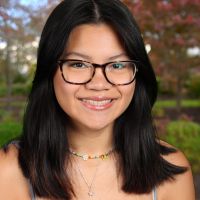
Eh Wah Wah ’28 is a psychology and English double major from Connecticut. On campus, she is the treasurer for Triptych, a student-run art, fashion, and culture magazine, and a reader for The Vernacular, a student literary magazine. This semester, she is a writing intern for Trinity’s Office of Communications and Marketing.
Here, she reflects on how the first-year InterArts Gateway Program helped her reconnect with creativity:
Eh Wah Wah ’28
Somewhere near the end of high school, between deadlines, expectations, and the pressure to choose a “practical” career path, creating art became something I promised myself I’d return to when I had more time. Trinity’s InterArts program allowed me to make space for it again.
The InterArts program is one of the College’s five Gateway programs designed for first-year students with shared interests to immerse themselves in a topic they’re really passionate about. I feel incredibly lucky to have been accepted into InterArts, a program that brought together artists working across different media who shared a genuine love for creating. From the start, I was welcomed into a community that valued curiosity, expression, and collaboration.
InterArts gave me access to a variety of creative disciplines, along with mentorship from Associate Professor of Theater and Dance Rebecca K. Pappas, who encouraged experimentation and reflection. The program gave me the opportunity to engage with art every week, making creativity a regular and important part of my life again.
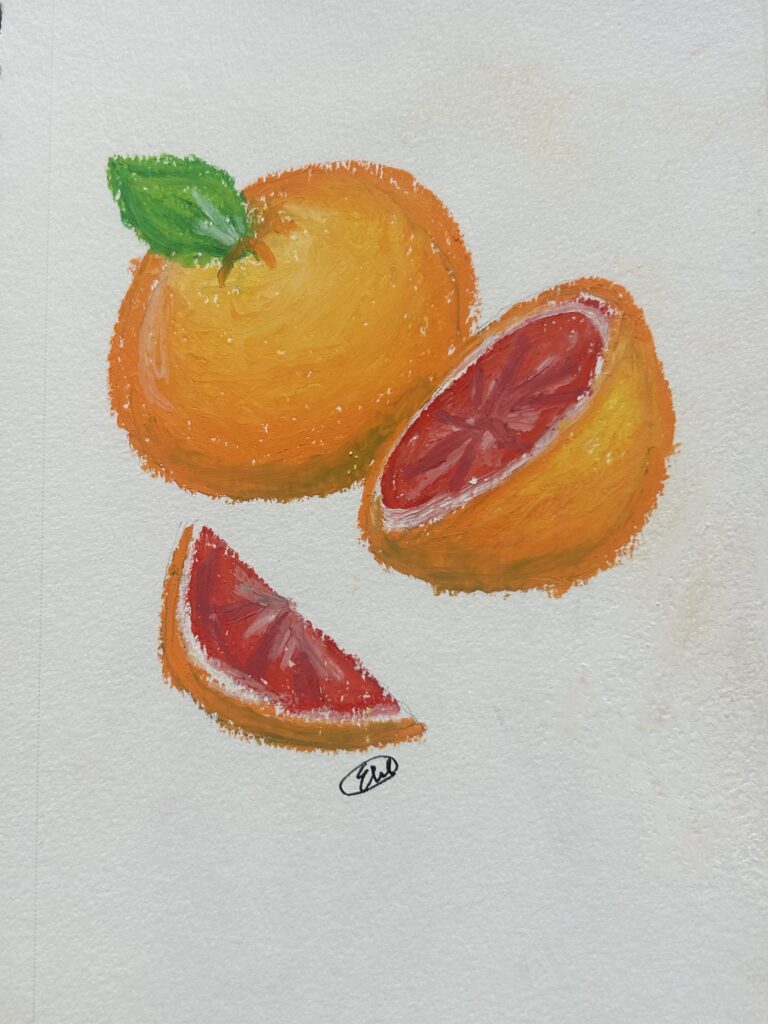
“Grapefruits” by Eh Wah Wah. Oil pastel, November 2025.
The curriculum also challenged students in the program to step outside our comfort zones and engage deeply with unfamiliar forms of art. While visual art and writing are my primary creative outlets, I have always had a deep love for music. Through InterArts, I completed a research project on one of my all-time favorite artists, Bruno Mars, and even spent time in a recording studio at the Austin Arts Center, creating a song that reassembled elements of his work. It was an experience I never would have pursued on my own, and it expanded my understanding of what it means to experiment, take risks, and trust the creative process.
Through the program, I learned that art does not compete with practicality. In fact, it fuels my passion for my studies in psychology and English. Art keeps me connected to emotion, perspective, and storytelling—qualities that are central to understanding people. InterArts reminded me why I gravitated toward such people-centered disciplines in the first place and showed me that analytical thinking and creativity are not separate modes of thought, but ones that inform and strengthen each other.
Through InterArts, the Triptych magazine came to life. Alexey Surilov ’28, a classmate and friend from InterArts, invited me to help bring his idea into motion: a student-run art magazine dedicated to showcasing the creative voices on campus. What began as one friend’s idea grew into a collaborative space where artists, writers, photographers, and designers could come together to share their work.
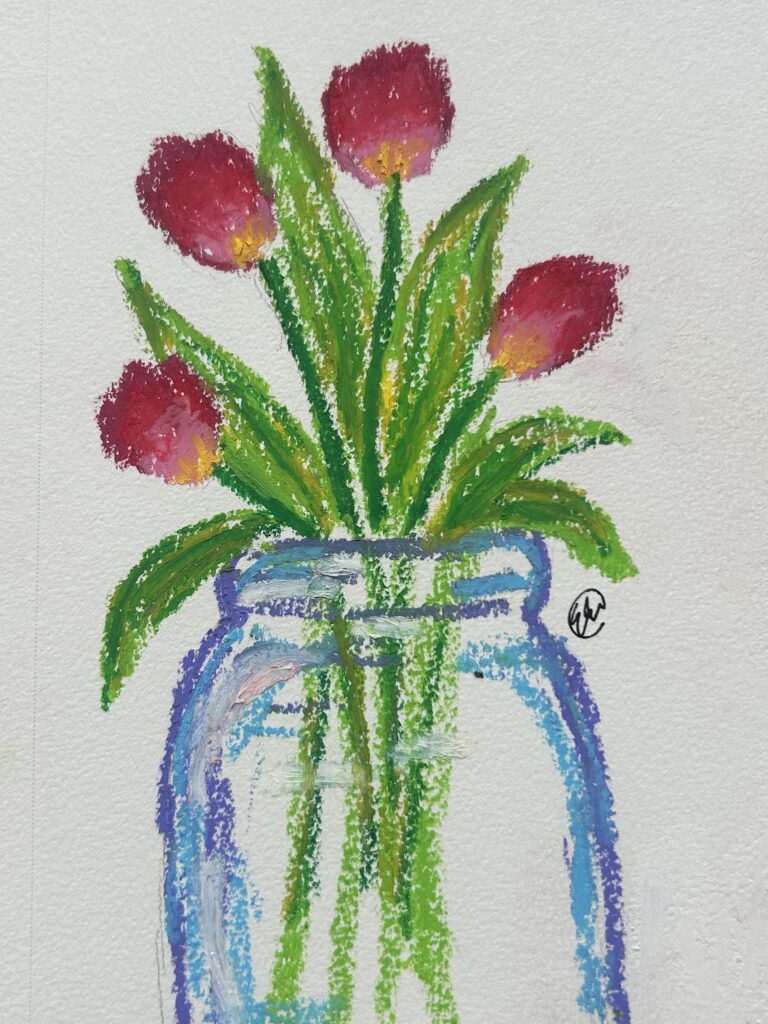
“Tulips” by Eh Wah Wah. Oil pastel, March 2025.
Although I serve as treasurer for Triptych, my involvement extends to writing articles for the magazine and participating in shaping each issue, from selecting themes to curating the content that gets published. Being part of these processes in our very first release in December 2025 and working on our second has shown me the responsibility that comes with amplifying the voices of artists on campus and the importance of honoring each event we feature.
Additionally, working on the magazine has allowed me to meet more people and collaborate with organizations on campus. As a result, Triptych felt like a natural extension of the InterArts community, where collaboration came together to produce something meaningful, intentional, and lasting.
InterArts has taught me to make space for creativity even when life feels busy, and I am grateful that Trinity’s liberal arts curriculum allows me to explore all of my interests. Although I plan to pursue a profession focused more specifically on helping people, I know that art will always be an integral part of my life.
The digital humanities website Public Art CT—sponsored in part by Trinity College and created by a Trinity faculty member—has received a 2026 Award of Excellence from the American Association for State and Local History (AASLH).
Trinity alumna Teodora “Tea” Brnović ’24 and Associate Professor of Sociology Alyson K. Spurgas recently had a co-authored article published in the October 2026 issue of Social Science & Medicine.
Demonstrating valuable return on investment and continued alumni success, Trinity has earned recognition this fall in multiple college guides, including an elevated ranking at #31 on the 2027 U.S. News & World Report list of Best National Liberal Arts Colleges.
The exhibition opening in the Austin Arts Center on September 24 showcases recent works by Studio Arts Program Postbaccalaureate Fellowship alumni Ciara Rubí, Sydney Smith, and Trinity alumna Weixi Zhang ’18.