Matt Gandal ’89
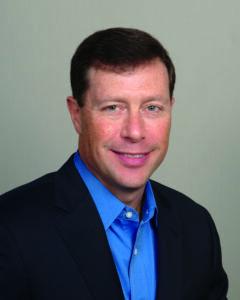 Degree: B.A. in philosophy
Job Title: Founder, president, and chief executive officer at Education Strategy Group
Favorite Trinity Memory: First, meeting my wife, Trina, my freshman year. Second, winning the talent show as part of the Two Jew Crew, a freestyle rap group with my then-roommate and still-close friend Jonah Cohen. We faced stiff competition but emerged the crowd favorite. This led to impromptu performances around Trinity. We peaked too early, though, and didn’t pursue it as our careers. Otherwise, I might be writing this from somewhere in L.A. or while on tour!
What was your path to your current position?
I was blessed to grow up in a diverse community with strong public schools that set me up for success. In many parts of our country, schools aren’t delivering on their potential, and students miss opportunities as a result. I decided to dedicate myself to improving the U.S. education system and started my career at an education reform think tank.
That led to roles in national nonprofit organizations driving policy change in schools. One group, Achieve, had a profound impact on me. It was started by governors and business leaders to raise standards and performance in U.S. schools. In helping to build that organization, I learned that change is possible if you equip leaders with a vision and the data they need.
After Achieve, I joined the Obama administration and led the signature initiative in the U.S. Department of Education called Race to the Top. It used billions of dollars in incentives—rather than mandates—to inspire states and communities to rethink their education systems. It also exposed the disconnect between K–12, higher education, and what comes next—your career.
I left the federal government and started Education Strategy Group, a national consulting firm dedicated to breaking down those barriers and to creating more seamless pathways from education into the economy.
What do you do in your role?
I lead an amazing team driven by our mission to ensure that education leads to economic prosperity. We help improve K–12 and higher education and build stronger talent pipelines. Our work includes diverse initiatives, including helping New York City public schools design career pathways programs for high schools, helping the Texas community college system align programs with growing job sectors, and helping the California State University system adopt a new strategy to attract more students and ensure better return on investment.
What do you enjoy most about your work?
The difference we make in the lives of students and the prosperity of communities. As a mission-driven organization, we shape policies and strategies that have profound impacts on real people.
What are the biggest challenges you face?
The disruptive and unstable political climate has been a test for the education sector. Luckily, our expertise is in high demand during periods of economic uncertainty, as education systems look to more clearly align with workforce needs.
You’re also a contributor to Forbes. What do you enjoy most about that?
My column gives me a space to express ideas and to highlight people and places taking on hard challenges and getting results. The ultimate goal is to inspire others to do the same.
How did Trinity prepare you for your career?
I was a philosophy major and like to say that it prepared me for nothing—and everything. My company helps colleges better prepare students for careers, and I understand how hard it is to draw a straight line from some degrees to specific occupations. Degrees like finance, engineering, even medicine generally steer toward specific jobs. Philosophy was different. It didn’t point toward one set of jobs or career. However, it did equip me to be strategic, to think critically, analyze, debate, communicate, collaborate, weigh options, and solve problems. It even allowed me to be comfortable when there are no clear answers. Those are all highly marketable skills that apply in different settings. So, Trinity prepared me to pursue nearly any career. I had to determine where I wanted to go and what problems I wanted to help solve.
What was the most memorable course you took at Trinity?
“The Philosophy of Sport” taught by Drew Hyland. I played soccer at Trinity and loved sports. This course examined how sports and competition help us develop physically, emotionally, and even intellectually. To Drew, sports were not extracurricular but deeply educational. He was an excellent teacher . . . he connected what we were learning to how we lived our broader lives. That was inspiring and validating.