Greg Cartin ’96
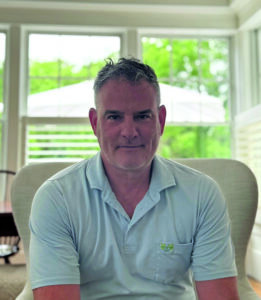 Degrees: B.A. in psychology, with a minor in philosophy; M.Ed., Ph.D. in counseling psychology with a specialization in sport psychology, Boston University
Job Title: Sport and performance consultant
Favorite Trinity Memory: That’s a tough question as there were many. I had a wonderful time at Trinity both academically and athletically, but my best memories come from the people I met and continue to call my close friends. Forging relationships that will last a lifetime!
What was your path to your current position?
After graduating from Trinity, I took a job at a boarding school teaching and coaching. I had always been interested in sport and performance, and after a few years there decided to go back to school to get my master’s. One of my professors in my master’s program happened to be my Trinity classmate Adam Naylor, who has been a great mentor to me through the years. I enjoyed it so much I continued with my doctoral work in hopes of one day having my own practice. During my years in grad school, I worked as a guidance counselor in addition to taking on private clients while supervised by my adviser. When I graduated, I declared I was open for business, and I’m still at it 17 years later.
What do you do in your role, and how is your work tailored to athletes?
I work with both individuals and teams. I’ve expanded to working with corporate clients as well. Most of my work is geared toward high performers who are looking for an edge, finding ways to get out of their own way to maximize their physical potential when it matters the most.
What do you enjoy most about your work?
The most enjoyable part of my work is being around people who are so passionate and committed to what they do. The sacrifices they make, the work they put in. It’s constant inspiration. And helping them continue to connect with the things they love about what they do when things get challenging is incredibly fulfilling.
What are the biggest challenges you face?
I have a lot of leverage with most of my clients in that they usually come to me when things aren’t going well and they have exhausted all other avenues. The biggest challenge I think I face is convincing them that nothing is wrong! In my experience, it’s the athletes who stop trying to “fix” themselves, who stop judging what it is they are thinking or feeling, that perform at their best.
How did your time at Trinity help prepare you for your career?
My career is steeped in relationship building. Without the rapport and trust between client and practitioner, the work doesn’t get very far. Forging strong relationships with teachers, coaches, and fellow students helped pave the way for me now in building strong, lasting relationships with my clients.
What was the most memorable course you took at Trinity?
My freshman year I took a course called “Abnormal Psychology” (I’m not sure that term is used anymore). I didn’t know it at the time, but that course opened my eyes to how similar all human beings are as it relates to how our minds work. It helped to form some of my own theories, which I incorporate into my work now. When things are not going well, we are under the assumption that there is a better way to do it. It’s this judgment that often causes the issues in the first place!
Was there a professor at Trinity who was particularly influential?
I had so many great professors while at Trinity it’s hard to pick just one. I would say that Karl Haberlandt, who was my adviser, sparked my interest in psychology and encouraged me to pursue other classes in the field. Classes taught by David Reuman and Sarah Raskin were so interesting to me that it was then that I knew I wanted to pursue a career in the field. I think that without those experiences, I wouldn’t be doing what I am today.
What advice would you give to current Trinity students who might want to work in your field?
As an undergrad, take as many psych classes as you can in addition to seeking independent study options. If possible, attend the AASP [Association for Applied Sport Psychology] conference and more specifically the grad-program fair. It’s a great opportunity to learn about all the grad programs around the country and what they have to offer. It’s crucial to find a program that best matches your interests. Don’t be afraid to reach out to people and ask questions. I love speaking to those interested in the field and helping them as they start their journey.