Cristina Lundy ’01
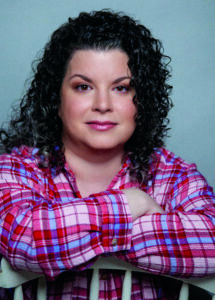
Degree: B.A. in theater and dance
Job Titles: Theatrical wardrobe technician; artistic director
Favorite Trinity Memory: There are so many, but this is high on the list: traveling to Venice for a week with The Chapel Singers right after my junior year. It’s my favorite city in the world, and that trip was full of magical moments. We gave a floating concert on the Grand Canal (with audience members following us in their own gondolas), performed in gorgeous churches, had tons of fun “after hours,” and on the final night, I was elected president of the group for the upcoming year. It’s still one of the top trips of my life!
What do you do in your roles?
On the wardrobe front: When I moved to New York City two years after graduation—with dreams of acting or directing—I was lucky enough to find my way to The Public Theater’s costume shop and spent the next three years freelancing, with most of my work coming from either The Public’s downtown home or Shakespeare in the Park. In 2006, I joined IATSE, the union that includes most of the backstage workers on Broadway, and I’ve been working steadily ever since. I’ve been on more than 20 shows, including nine years on Mamma Mia! and 10 years (and counting) on Hamilton. I’ve worked in costume construction and maintenance, as a dresser covering up to eight different tracks on a single show, and as an assistant or interim supervisor on multiple shows.
In my “other life,” I was hired as associate artistic director of New York Shakespeare Exchange (NYSX) in 2011, a year after the company was founded. Coming in at such an early point in its growth meant I had freedom to dive into the projects that most aligned with my interests. I directed and assistant directed full productions, produced our immersive ShakesBEER pub crawl, led our casting department, created and oversaw the intern program from 2012 to 2019, and built out a series of events at the New York Public Library, using Shakespeare as an entry point for discussing current issues. In 2020, I was promoted to co-artistic director and in 2022 became sole artistic director when the founder retired. In this phase, I’m interested in developing new works that draw inspiration from Shakespeare and expanding our programs to connect with communities across all five boroughs of N.Y.C.
What do you enjoy most about what you do?
I love working in a creative environment and witnessing so much artistic talent up close. In my work with NYSX, I love being able to reimagine or reframe classics, especially in a way that breaks through a lot of the gatekeeping that underlies which groups feel that Shakespeare is or isn’t “for them.” In my wardrobe work, I love the backstage life, knowing the secrets behind how the onstage magic happens and all the little jokes and traditions that come into a workplace where you’re putting on the same show eight times a week.
What has been a favorite show to work on?
In 2023, I was a dresser on the Broadway run of How to Dance in Ohio, a show focused on the lives of seven autistic young adults and the first in Broadway history to cast all the autistic roles with openly autistic actors (including understudies). I learned so much from the efforts and strategies to make the onstage and backstage space accessible for everyone and absolutely loved working with the cast and crew.
How did your time at Trinity help prepare you for your career?
The broad base of a liberal arts education set me up well for a career where creative thinking and problem-solving are crucial. And the technical theater training and mentors I found in the Theater and Dance Department are a direct influence on the work I do every day.
What was the most memorable course you took at Trinity?
I’d have to choose the whole semester I spent in the Trinity/La MaMa program in N.Y.C. It prepared me for a theatrical career in ways I wasn’t fully aware of when I was in the middle of it. I came away confident that I could create a piece of art from any point of inspiration and with any resources available to me, and that confidence has deepened and extended to the kind of creative problem-solving I apply in both my wardrobe work and my work as an artistic director.
Did you have a professor who was particularly influential?
Kat Power and Arthur Feinsod showed me how much there was to love about theater history, Fred Pfeil taught me how to read films and the actors in them as multilayered texts, and Tony Hall gave me foundational approaches to directing that I still use in my work today.