Along the Walk
Commencement 2026
“Passion is a force that can transform obstacles into opportunities and setbacks into fuel for growth,” N. Louis “Lou” Shipley ’85—a Trinity trustee, multi-time tech CEO, and senior lecturer in entrepreneurship at Harvard Business School—told the Trinity College Class of 2026 during his Commencement address on Sunday, May 17. Read more about the ceremony that celebrated the Class of 2026.
Around Hartford
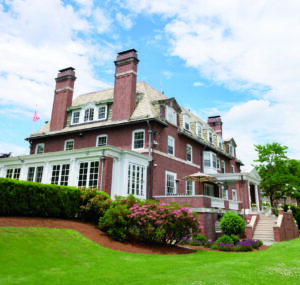
The Governor’s Residence
990 Prospect Avenue, Hartford, CT
The Governor’s Residence, located in the city’s West End at Prospect and Asylum Avenues, is more than just the house where Connecticut’s top elected official lives. The home, listed on the National Register of Historic Places, serves as the site for many official functions of the governor and for charitable events sponsored by nonprofits. It also offers several free and open-to-the-public events, including the 2026 Holiday Open House on December 4 and 5 from 10:00 a.m. to 2:00 p.m. each day. The event will feature holiday trees decorated by volunteers, art from museums around the state, live music from local schools, Santa greeting guests, and a collection drive for Toys for Tots. In addition, the dining room table will be set by a local designer, and the annual commissioned ornament—this year showcasing the Jacobson Barn on the University of Connecticut campus in Storrs—will benefit the Governor’s Residence Conservancy, which holds responsibility for planning and supervising the preservation, restoration, and maintenance of the entire property. Visitors to the Holiday Open House will receive a card featuring a favorite recipe of the governor’s family.
Built in 1909 for Hartford physician and industrialist George C.F. Williams, the Georgian Revival-style home was designed by the Boston-based architectural firm of Andrews, Jacques & Rantoul, and in 1916, Hartford architects Smith & Bassette designed the north and south wing additions. Much of the home’s furnishings in use today were created by Connecticut artisans. The first state leader to live in the house was Governor Raymond E. Baldwin, who moved in with his family in September 1945; today, the residence is home to Edward Miner “Ned” Lamont Jr. H’25, Trinity’s Commencement speaker in 2025, and his wife, Annie.
New trustees
Four new members were named to the Trinity College Board of Trustees and began their terms on July 1, 2026.
The new charter trustees are Amy McGill Dilatush ’94, a director of marketing at PGIM, the global asset management business of Prudential Financial Inc.; Karoline Shair P’29, former chief legal officer and corporate secretary at Akouos, a Boston-based biotechnology company that was acquired by Eli Lilly; and Charles “Charlie” Siguler ’10, chief investment officer of Uphill Farm, a family office based in Greenwich, Connecticut. Scott Lessne ’80, senior counsel of the financial services and corporate practice groups at Crowell & Moring LLP, was named as the Trinity College Alumni Association trustee representative.
“Amy, Karoline, Charles, and Scott are talented and committed members of the Trinity community who will bring significant personal and professional experience to our board,” said President Daniel G. Lugo. “They join the board at an important time in the history of the College as the trustees are focused on setting the strategic vision for Trinity’s next era. Their individual areas of expertise and their collective enthusiasm for Trinity will enable each of them to make a positive impact on the trajectory of the College.”
Returning trustees Lisa Alvarez-Calderón ’88, Malcolm Fraser MacLean IV ’92, and Stephanie Ritz ’90 were reelected for another term on the board.
Board officers elected for the coming year are Lisa G. Bisaccia ’78, chair, and Jeffrey B. Hawkins ’92, Susannah Smetana Kagan ’91, and David L. Schnadig ’86, vice chairs.
Letters
With gratitude to Randy Lee
I was happy to read the recent article in the Reporter about Dr. Randy Lee [“Volunteer Spotlight,” spring 2026]. When I was a senior at Trinity, I went through a personal crisis precipitated mostly by my parents’ divorce. I made an appointment to see Dr. Lee, and he immediately helped. I went back a few more times, and he helped even more. All these years later, I don’t remember exactly what he said, but I do remember going from feeling overwhelmed and lost to feeling like I could and would get through that difficult situation and be OK. I’m forever grateful to Dr. Lee. . . . He’s really a great guy.
Steve Schutz, M.D., ’84
Boise, Idaho
Remembering Scott Smedley
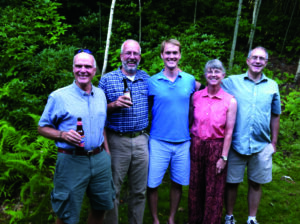
[The spring 2026 story on firefly research by Scott Smedley and his student] brought back a lot of fond memories of working alongside Scott in the Biology Department. As some of you know, Scott was instrumental in acquiring the Church Farm property for Trinity, which was a great place for field trips and student research for several years. . . . Scott was a great friend and colleague; he and the opportunities presented by the Church Farm were among the reasons I came to Trinity. Along with his professional dedication to his students and colleagues, Scott also just liked to have fun. We all remember the ice cream socials during the summer research period when Scott brought his own old-fashioned hand-crank ice cream maker, and everyone took a turn before sharing the spoils. I know this recognition would make Scott proud, although, as he was, he would be very humble about accepting all the praise.
Joan Morrison
Professor of Biology, Emerita
Corrales, New Mexico
Editor’s note: Morrison also shared this photo, which shows Craig Schneider (biology), Christoph Geiss (environmental science), Craig C. Schneider ’05 (environmental science major), Joan Morrison (biology), and Scott Smedley (biology) at a September 2015 gathering. Morrison writes, “Before he retired, Craig had an annual get-together, a Labor Day party as it were, and colleagues from throughout the College would attend. . . . It would be nice to have the photo included somewhere; all of the folks in it will have fond memories of that time.”
The Chapel Singers of yesteryear
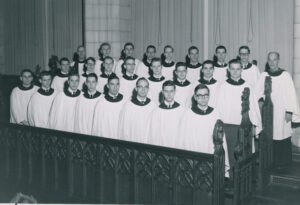
Thank you for putting that picture on the back of the Reporter (spring 2026) and asking for names. My husband, Stan Marcuss, is a member of the Class of 1963. We recognize three of the singers, all members of Stan’s class: Ted Stier, third from left in front row; Dick Chang, at the left in the front row; and Dick Gooden, fourth from right in the back row (including the choral director in the count). Again, thanks.
Rosemary Marcuss
Washington, D.C.
The first Lessons and Carols was in 1958. I sang in the first four. For trebles, [Clarence] Watters used boys from St. John’s in West Hartford, where he also was in charge of music.
Donald H. Jones ’62
Rochester, New York
Editor’s note: Donald Jones also writes that in the spring 2026 back cover photo of The Chapel Singers, he’s the fourth from left in the top row. Others he says he spied in the photo include Bob Ierley ’62, Bob Hunt ’62, Al Burfeind ’64, Jim Sweeney ’62, Paul Johnson ’62, Bob Harned ’61, Ted Stier ’63, and “possibly” Carl Scott Zimmerman ’61. He also named Chaplain J. Moulton “Mo” Thomas, far left in the top row, and Professor of Music Clarence Watters H’35, far right in the top row.
Chapel music and more
I have great memories of singing in what was then called the Chapel Choir under the direction of Clarence Watters. I sang in ’57–’58, ’58–’59, and ’60–’61. Your photo was taken in my junior year, which I spent at the University of Madrid. I learned a lot from Professor Watters and acquired a deep appreciation of Renaissance and Baroque motets, which has lasted a lifetime.
I also sang in the Glee Club under the direction of Professor Barber. His name was also Clarence, though everybody called him Pete. The two Clarences didn’t really like each other very much and didn’t see eye to eye on what was the best singing technique for young male voices. Those of us who sang in both groups often had to struggle with the competing ideals of covered tone and resonant tone. I think I eventually learned how to do one or the other on command, but it wasn’t easy.
Professor Watters had many connections in the Hartford musical community, and we often got to sing with other groups. Sometimes we sang with boys’ choirs, and they usually had plenty of sopranos but sometimes were lacking in altos, so some of us tenors would get pressed into service as altos, which was a stretch.
Another memory has to do with Chapel credits. Attendance at religious services was required back then, and one had to accumulate a number of Chapel credits each term by depositing little cards with one’s name into a box at the entrance to the Chapel. Those of us singing regularly in the choir were deemed to automatically satisfy the requirement by virtue of our choir membership, so we didn’t have to deposit name cards. But every semester, as the semester was just about over, one or more friends would suddenly realize that there weren’t enough services left in the semester to meet the requirement. So, they would beg us to slip in cards with their names as we entered the building. It seemed to work and we never got caught, so I guess whoever was tallying the names wasn’t paying close enough attention to realize that “Charlie Smith” (not his real name) had acquired three credits for the same service.
My singing—Chapel Choir, Glee Club, and the Pipes—was one of the most rewarding experiences I had while at Trinity.
Bill Cressey ’61
North Branford, Connecticut
The photo on the back page of the latest issue of The Trinity Reporter included one of my 1961 senior-year roommates and classmate, Robert Bell (back row, second from right), who was also a member of my wedding party in 1964 following my graduation from law school. Bob’s career path led him to service with the U.S. Agency for International Development (coincidentally created in 1961). Unfortunately, Bob died in service in an African country of a heart attack, leaving behind his wife and family. Sadly and also unfortunately, that agency has been shuttered by the present national administration, although I understand that it is still a legal entity.
Our other roommate, also a classmate, was John Thrower (not pictured), who was one of the Chapel’s student carillonneurs. . . .
In closing, I would note that Trinity, at that time, had a mandatory Chapel requirement during the first two years. Although I am not a religious person, I thoroughly enjoyed Professor Cherbonnier’s course on The Judean-Christian Origins of Western Civilization, which has helped me come to the realization in my later years that the concept of “God” is at the root of the Mideast’s travails over the years.
The times spent within the Chapel were always moments of reflection and peace, contemplating its beauty, including that of the iconic, pew-end wood carvings—a national treasure! Hopefully they are memorialized for posterity in a lengthy, descriptive video that describes the key features of each one and is available online for alums to savor.
For the next 250, dubiously, but sincerely,
Curt Turner ’61
Rowley, Massachusetts
The caption on the back cover of the spring 2026 issue of The Trinity Reporter is incorrect. The name Chapel Singers was not in use when that photo was taken. The first line of text on page 20 of that issue correctly indicates that the group of students who sang for Chapel services was known as the Chapel Choir from its beginning. It was still known that way during the years when I sang in it (1957–61). I have not yet discovered when the term Chapel Singers began to be used, but it may have been when the group was reconstituted after the “quartet” year(s) mentioned in that article.
In my day, Chapel Choir members were paid for their participation: 25 cents for each rehearsal (Tuesday and Thursday afternoons) and 50 cents for each Sunday service (Morning Prayer and Evensong). Two of us did double duty—John E. “Jack” Thrower ’61 (third from left in the back row) was master carillonneur of the College, and I was assistant carillonneur. One of us played a 20-minute carillon prelude for each of the two Sunday services, already dressed in cassock and surplice (as shown in the photo). It was always a scramble down a ship’s ladder and two sets of spiral stairs from the carillon console to the base of the tower to rejoin the choir for the processional hymn.
The fine music that we sang, the architectural beauty of the Chapel, Professor Watters’s marvelous organ playing, and the theological solidity of the Episcopal liturgy with which we worshipped all made an indelible impression on me. Their implicit witness to the faith of generations past also helped me to avoid the abandonment of personal faith that is so common among college students, and I have been a volunteer church musician ever since.
Cordially yours,
Carl Scott Zimmerman ’61
Campanologist
St. Louis, Missouri
Get in touch!
The Trinity Reporter welcomes letters related to items published in recent issues. Please send remarks to the editor at [email protected] or Sonya Storch Adams, Office of Communications and Marketing, Trinity College, 300 Summit Street, Hartford, CT 06106.
Volunteer Spotlight
An annual fundraising initiative, the Senior Class Gift Campaign is led by members of the senior class, with the goal of making a monetary contribution to the Trinity College Fund to have a positive impact on the College and to help sustain the Trinity experience for future generations. Read more about the Class of 2026 Senior Class Gift Committee.
Twice as nice!
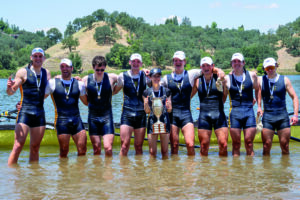
Men’s rowing wins national title for second straight year
The Trinity College men’s rowing team won the 2026 Intercollegiate Rowing Association (IRA) Division III Varsity 8+ National Championship for the second year in a row. Wesleyan University finished second, crossing the line just 0.15 seconds behind Trinity, while Williams College placed third, 2.69 seconds behind.
Fencing returns
Trinity College and USA Fencing announced that the College will add varsity fencing teams to its athletics offerings, beginning with a women’s program in the 2027–28 academic year and then a men’s program in 2028–29.
The news came at the U.S. Fencing Foundation Fête, the foundation’s annual gala, held this year in May in New York City. Gavin Viano, Trinity’s director of athletics and recreation, said that the College is excited to partner with USA Fencing to bring intercollegiate fencing back to campus. “The addition of varsity fencing aligns with several of the College’s institutional strategies as we enter our third century of higher education,” Viano said. “Women’s fencing has the highest cumulative GPA of any NCAA sport, and Trinity is ready to attract a cohort of scholar-athletes who are passionate about pursuing the blend of academic and athletic excellence that Trinity is known for globally.”
Trinity will have the 47th NCAA varsity women’s fencing program in the country and the 40th men’s program. USA Fencing awarded the College a grant to support the relaunch of the fencing program at Trinity.
The Bantams will join a regional fencing landscape that includes nearby NCAA programs at Yale, Brown, and Harvard Universities and Boston College, creating competitive opportunities across New England.
Fencing is not new to Trinity, with a team in the early 1870s noted in Glenn Weaver’s The History of Trinity College. Stories in The Trinity Tripod recount Bantam teams or clubs from the late 1940s into the 1980s.
Recent Publications
After Fission: Recognition and Contestation in the Atomic Age
Sidra Hamidi, Assistant Professor of Political Science
Cambridge University Press, 2026; 209 pages
Postcolonial Urban Studies: Édouard Glissant and the Whole-World of Cities
Garth A. Myers, Paul E. Raether Distinguished Professor of Urban International Studies and Director of the Center for Urban and Global Studies
Agenda Publishing, 2026; 199 pages
Fees: How to Sell Professional Services
Jeffrey J. Fox ’67
2026; 192 pages

Dead Rail
Alex Belida ’70
2025; 185 pages
Nathan Straus: From Macy’s Magnate to International Humanitarian
Andrew Fisher ’72, M’72
Rutgers University Press; 403 pages
Unlikely Entrepreneurs: Wins, Losses, and Crucial Lessons on Building Great Companies
Louis Shipley ’85 and Patricia Favreau
Wiley, 2026; 212 pages
The Washington Decree
Scott Sherwood ’87
2025; 228 pages
I Was a Shipwreck Scholar: Poems on Loss, Reckoning, and Wonder
Gregory LeStage ’88, P’27
J.P. Zenger Books, 2025; 72 pages
Cipher: A Proven Framework to Hire the Best People
Craig della Penna ’97
Third Act Publishers, 2026; 211 pages
Friendship Skills for Neurodivergent Adults
Caroline Maguire ’97
Hachette Book Group, 2026; 283 pages
If you have a recent publication that you would like listed in The Trinity Reporter, please submit a copy to Sonya Storch Adams, Office of Communications and Marketing, Trinity College, 300 Summit Street, Hartford, CT 06106. Questions? Email [email protected].
Faculty Focus
Belén Fernández Milmanda
Associate Professor of Political Science and International Studies
“It’s hard not to be interested in politics if you’re an Argentine,” says Belén Fernández Milmanda, who came of age in the late 1990s as the country’s economy unraveled. As protests swept the nation, her working-class family lived with the daily fear that her father would lose his job. “You could see it in the streets,” she says. “People were going through garbage to find food.” Read more about Fernández Milmanda.
 ‘Most beautiful’
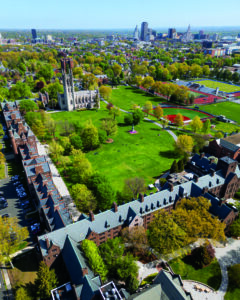
Trinity College once again made Architectural Digest’s annual list of the 64 most beautiful college campuses in the country. The publication, which weighs architectural legacy and setting, singled out Trinity for its picturesque Long Walk, landscape design, and Chapel. The story notes, “Ultimately, the campuses on this list stood out for the way architecture, landscape, history, and culture come together to create striking environments for [a] student’s daily life.”
Tenure, promotions
The Trinity College Board of Trustees voted to award tenure, promotions, and emeriti status to several faculty members.
Those awarded tenure and promoted to associate professor, effective July 1, 2026, were Elise Castillo, educational studies; Brianna Halladay, economics; Michael C. Puljung, neuroscience and chemistry; Lynn Sullivan, fine arts; Anna Terwiel, political science; and Benjamin J. Toscano, biology. In addition, Shane A. Gleason, associate professor of public policy and law, was awarded tenure, also effective July 1.
Faculty members awarded emeritus/a status, effective June 30, 2026, were Dina L. Anselmi, associate professor of psychology; Barbara M. Benedict, Charles A. Dana Professor of English; Robert J. Corber, William R. Kenan Jr. Professor in American Institutions and Values; Jack Dougherty, professor of educational studies; Robert J. Fleming, professor of biology; and Katherine Lahti, professor of language and culture studies.
In his letter to the Trinity community following the April 2026 meeting of the Board of Trustees, Trinity College President Dan Lugo said, “These professors are esteemed scholars in their field and are making a difference in the lives of the students they teach and mentor.”
Fulbrights for two
Two recent Trinity College graduates—Julianna Boris ’26 and Mia Creane ’25—were awarded Fulbright grants to serve as English Teaching Assistants.
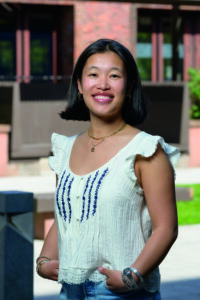
Boris, a double major in anthropology and religious studies, started her time in Taiwan in September. She said that her Trinity coursework played a defining role in shaping her perspective. Classes with Associate Professor of Anthropology and Religious Studies Timothy R. Landry and Assistant Professor of Religious Studies Susanne Kerekes left a lasting impact, particularly through their emphasis on ethnographic fieldwork and global religious traditions, she said.
“I think studying anthropology has really helped me prepare for going abroad,” said Boris, of Newton, Massachusetts. “It has given me a very holistic and open-minded view of the world. It helps me prepare to teach other people, but also to learn from them, too.”
Outside the classroom, Boris served as a captain of the Trinity women’s rowing team, to which she was originally recruited as a coxswain. Being part of that team has provided a strong sense of community and leadership experience, she said.
Boris’s decision to apply to teach English in Taiwan was both strategic and personal. She has studied Mandarin Chinese since third grade and hopes to strengthen her language skills during her time abroad. Additionally, as someone adopted from China, she sees the experience as an opportunity to reconnect with her cultural heritage.
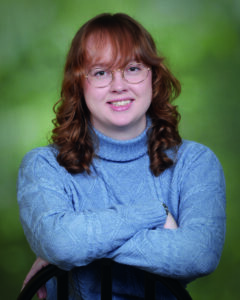
Although she is still exploring her long-term career path, Boris emphasized her commitment to creating meaningful change in communities. “What has drawn me to this type of work is the idea of doing work that’s centered around humans—helping people and improving communities from the ground level,” she said.
Creane, who headed in September to Handlová in the Slovak Republic, is combining her interests in language, education, and technology. After she graduated from Trinity with a degree in computer science, the native of Milford, Connecticut, worked as a system engineer for a health care software company in Madison, Wisconsin.
“The program in the Slovak Republic was specifically seeking STEM majors,” Creane said. “They’re looking for the skills that I have, and I’m looking forward to using those skills. They’re doing some really interesting government initiatives with technology and education.”
At Trinity, Creane appreciated her experiences as a teaching assistant and a tutor. “I enjoyed the opportunity to mentor other students, especially in computer science courses, where I could tell them more about the program,” she said. Creane also completed the Trinity Technology and Leadership Internship for Women during her junior year.
Studying languages, including Hebrew and Russian at Trinity, helped Creane prepare for her upcoming role teaching English. She also studied in South Korea for a semester. “Going into Trinity, I thought that language learning was not for me, but I had some really great experiences,” she said. “Now language learning is something I’m really interested in and enjoy,” she said.
Following her time teaching English, Creane sees herself working in the tech field again. “But I definitely am looking to combine that with other interests of mine; I’d really love to get into education software or education technology,” she said. “I think that having more experience in the education space with Fulbright will help with whatever I decide to do next.”
Vibrant once more
A striking and colorful piece of art on the Trinity College campus underwent a thorough restoration this summer.
The two-sided, two-story-tall wall drawing by conceptual artist Sol LeWitt, Wall Drawing #849: Irregular Blobs of Color, 1998, in the Cornelia Center has been repainted and refinished, 28 years after its installation.
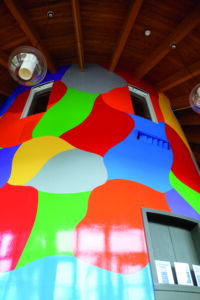
“This is the single most important artwork on the Trinity campus,” said Alden R. Gordon ’69, Paul E. Raether Distinguished Professor of Fine Arts, Emeritus. “Sol LeWitt is in every textbook on modern art; he’s one of the most important American artists of the late 20th century. Trinity has a very bold and very distinctive example of his work because it’s actually two surfaces which constitute one work of art—one concave, one convex, fitting in with each other.”
The Cornelia Center—called Vernon Social Center when it opened in 1997—was designed by architect Tai Soo Kim, who wanted to add color to his austere space, Gordon said. Gordon was instrumental in inviting LeWitt to create a wall drawing for the unique space. “Sol LeWitt was born in Hartford, and he lived in this neighborhood for part of his early life,” Gordon said. “His parents are buried in Zion Hill Cemetery, next to campus. He told me that was part of why he wanted to work on this project at Trinity.” LeWitt died in 2007.
LeWitt never touched the walls during the drawing’s installation in the summer of 1998. “It’s conceptual art,” Gordon said, “so it’s a concept that can be written on paper and then there has to be a human interpretation, working from the instructions.” LeWitt provided scale drawings to his assistants, who drew the design on the wall freehand and applied the paint. Trinity alumni and Gordon helped to paint the piece.
With one side of the work facing exterior windows, “it’s the only LeWitt mural in Hartford that’s visible from outside,” said Gordon, the founder and editor of PublicArtCT.org. “And it’s especially beautiful when it’s lit up at night.”
Gabriel Hurier, who led the four-person team that completed the restoration on behalf of the LeWitt estate, said that the work took about 20 days. “It’s about 26 feet tall on the inside and maybe 24 feet on the outside,” Hurier said of the artwork. “It’s a very singular drawing. There’s not another one like this anywhere.”
After 28 years, the paint colors had faded, and the walls showed signs of damage from being in a busy public space. Construction and repairs took their toll on the piece over the years, as had scratches, rips, and spills on the walls.

“First, we basically sanded it down, fixed any holes or marks, and cleaned up the caulking. Then we worked on repainting and refinishing,” said Hurier, who noted that specialized paints were used to match the original colors as closely as possible. “We taped off the different colored sections and just went color by color. We went over it several times with new paint, then glossed it several times. Getting the glossy finish just right is very hard, and Sol was particular about his finishes.”
John Hogan, the installations director for the LeWitt estate, said that LeWitt’s artistic life went through several phases. “Earlier in his career, he was known for a sort of hard geometry. And then, gradually, he started to become a little bit more playful and started working with these very unusual shapes, these blobs like you see at Trinity,” Hogan said. “The piece at Trinity is actually one of the rarer ones where Sol is responding very specifically to the architecture.”
Hogan said that other examples of LeWitt’s work in Hartford can be found at the Wadsworth Atheneum Museum of Art. “Sol obviously liked working in galleries and museums, but he really had a sense of wanting to put his work in the public environment,” Hogan said. “He didn’t sell this piece to Trinity—it’s an example of where he said, ‘You can borrow this work, and everyone can see it.’ A lot of artists would not be so forthcoming in their generosity.”
While it is technically on indefinite loan from the artist’s estate, the LeWitt wall drawing—the creation of which was funded by the Edward C. and Ann T. Roberts Foundation Inc. of Hartford—is considered part of the Trinity College Art Collection, which is managed by the Watkinson Library and College Archives. Christina M. Bleyer, College librarian and director of special collections and archives at the Watkinson Library, noted, “Having such a large contribution from Sol LeWitt is representative of Trinity’s connection to Hartford and its commitment to public art.”
Original Installation Team, 1998:
Lana Abraham ’98
Sachiko Cho (LeWitt assistant)
Amalie Flynn ’98
Alden Gordon ’69
Tory Marsh ’97
Kevin Oster (LeWitt assistant)
Kim Piotrowski ’93
Reunion 2026
Reunion Weekend 2026 welcomed nearly 1,000 Bantams back to campus. A highlight of the weekend’s programming was Ideas Fest 2026, which featured a conversation with Trinity College President Dan Lugo, the presentation of alumni awards, and a discussion of the role of AI in the future of medicine and wellness. Alumni also gathered for special meals, attended the Athletics Hall of Fame induction ceremony, and enjoyed musical entertainment, tours, and presentations.
Congratulations to our 2026 award winners!
The Eigenbrodt Cup
William P. Scully ’61, H’18
Paul E. Raether Alumni Achievement Award
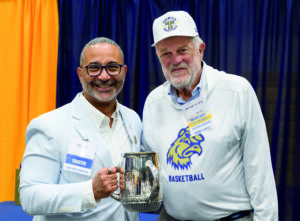
John S. Gates Jr. ’76, P’13
The Gary McQuaid Award
Casey Tischer Jr. ’01
The Kathleen O’Oconnor Boelhouwer ’85 Alumni Initiative Award
Brooke Brown ’91, P’21, ’23
Alumni Medal for Excellence
Major Capers Jr. ’76
Lisa M. Heilbronn ’76
Susannah Smetana Kagan ’91
Edward T. Schiff ’01
The Michael A Schulenberg ’63 Fellowship Award
Richard W. Goode Jr. ’76
Outstanding Class Secretary
Susan E. Weisselberg ’76
Reunion 2026
Reunion 2026
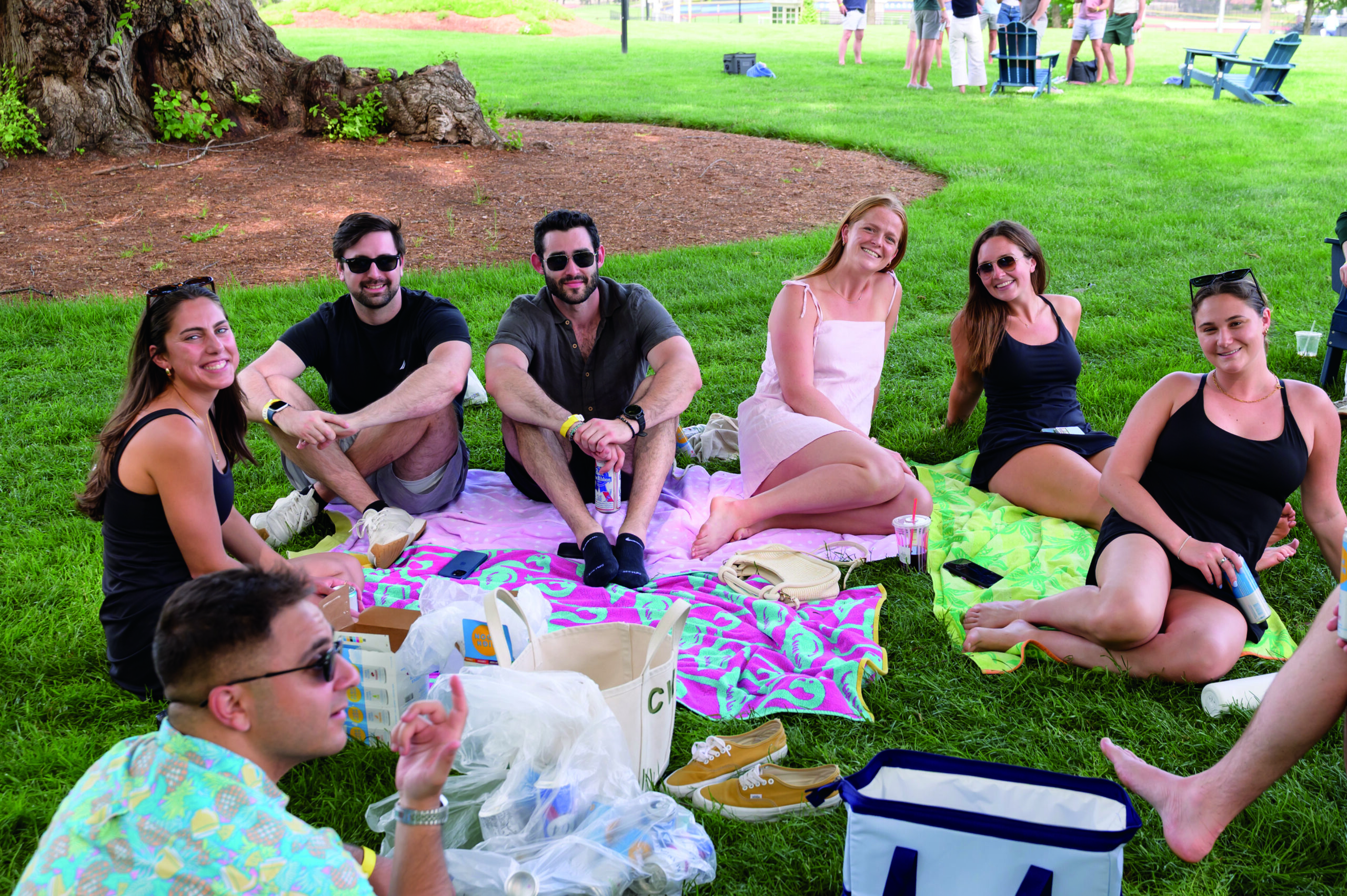
A group of alumni enjoy a beautiful day on the Main Quad. (Photos by Nick Caito)
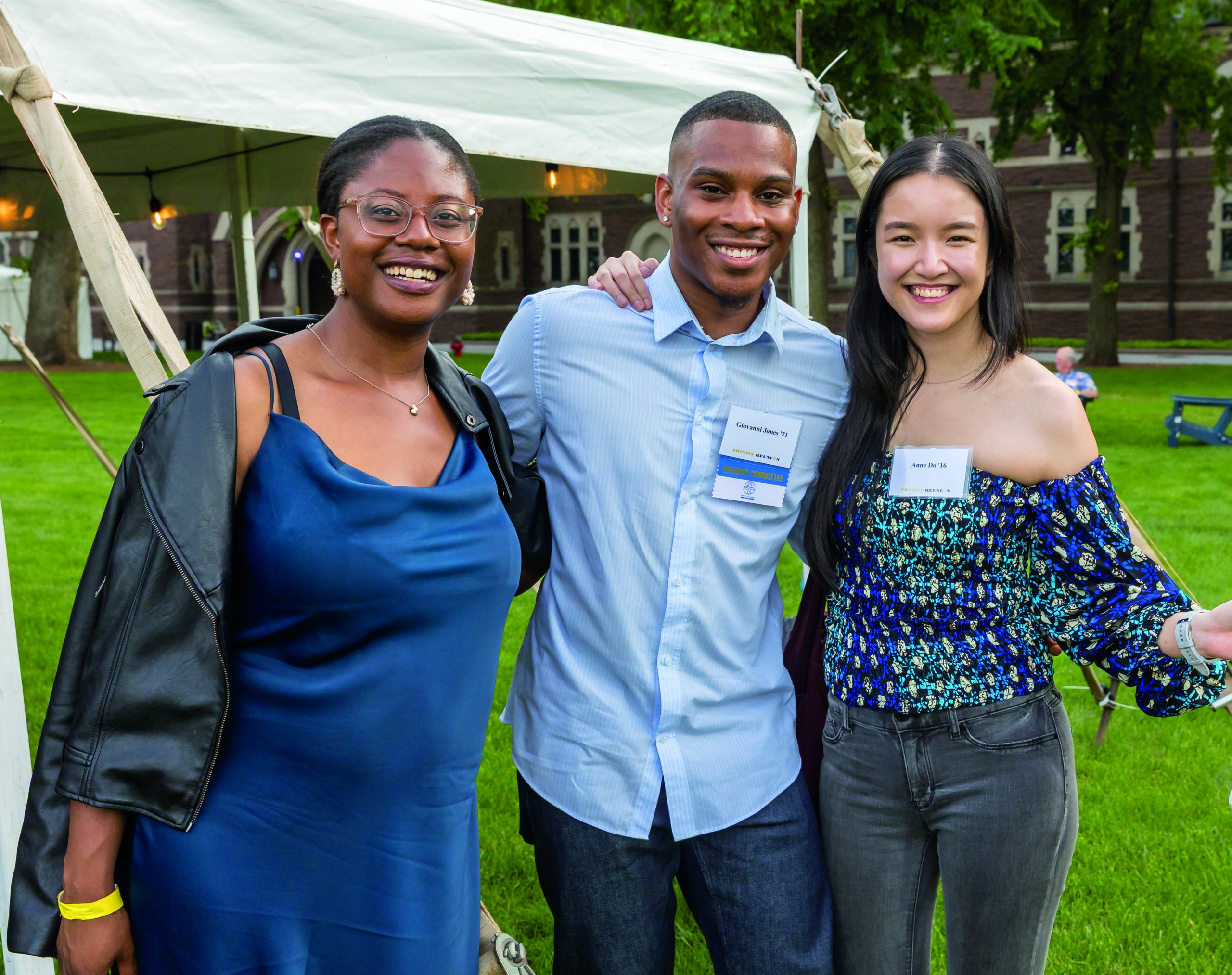
Lara Abiona ’16, Giovanni Jones ’21, Annie Do ’16 get together.
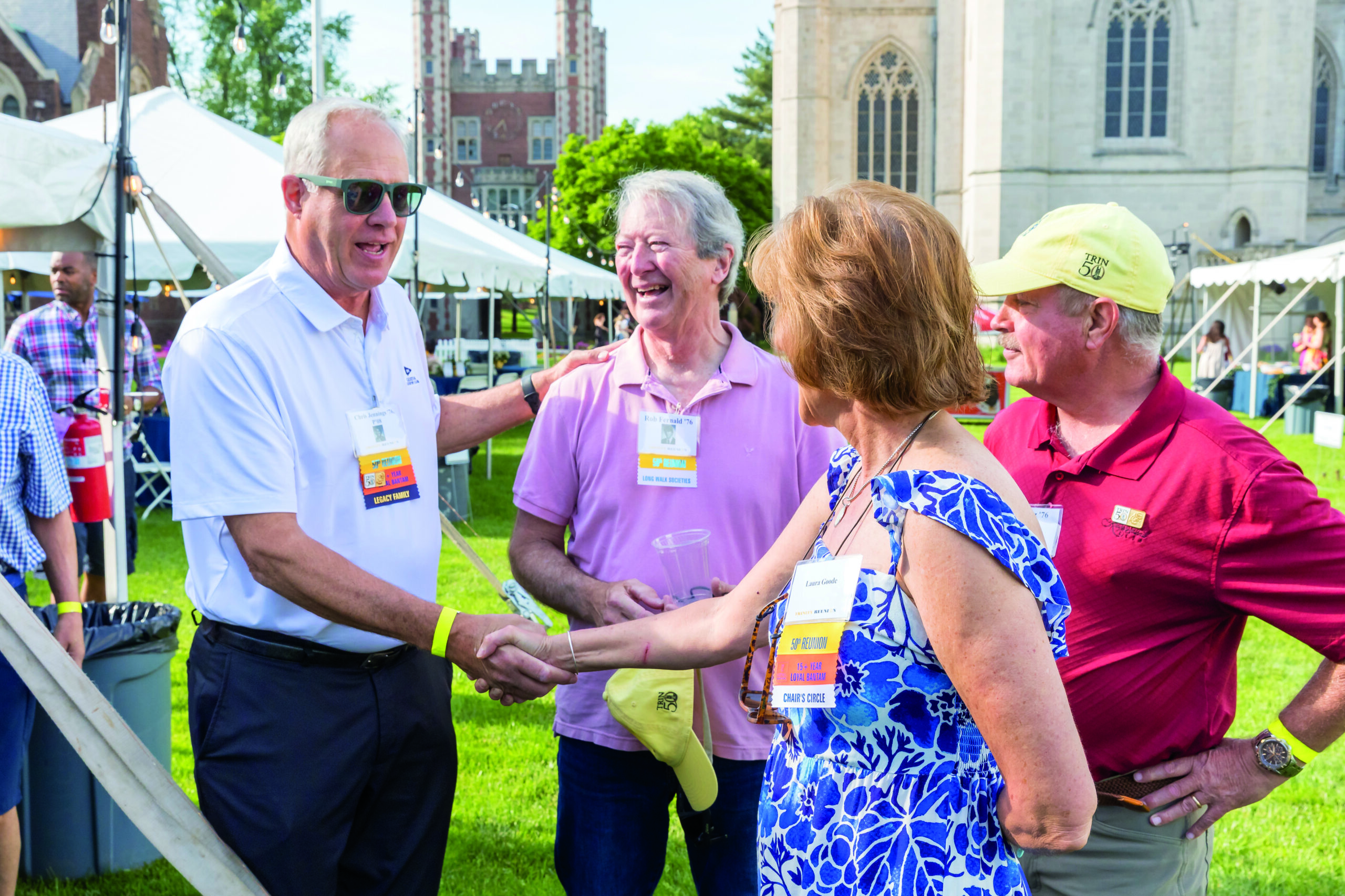
Chris Jennings ’76, Rob Fernald ’76, Laura Goode, and Tom Shultz ’76 greet one another near the Chapel.
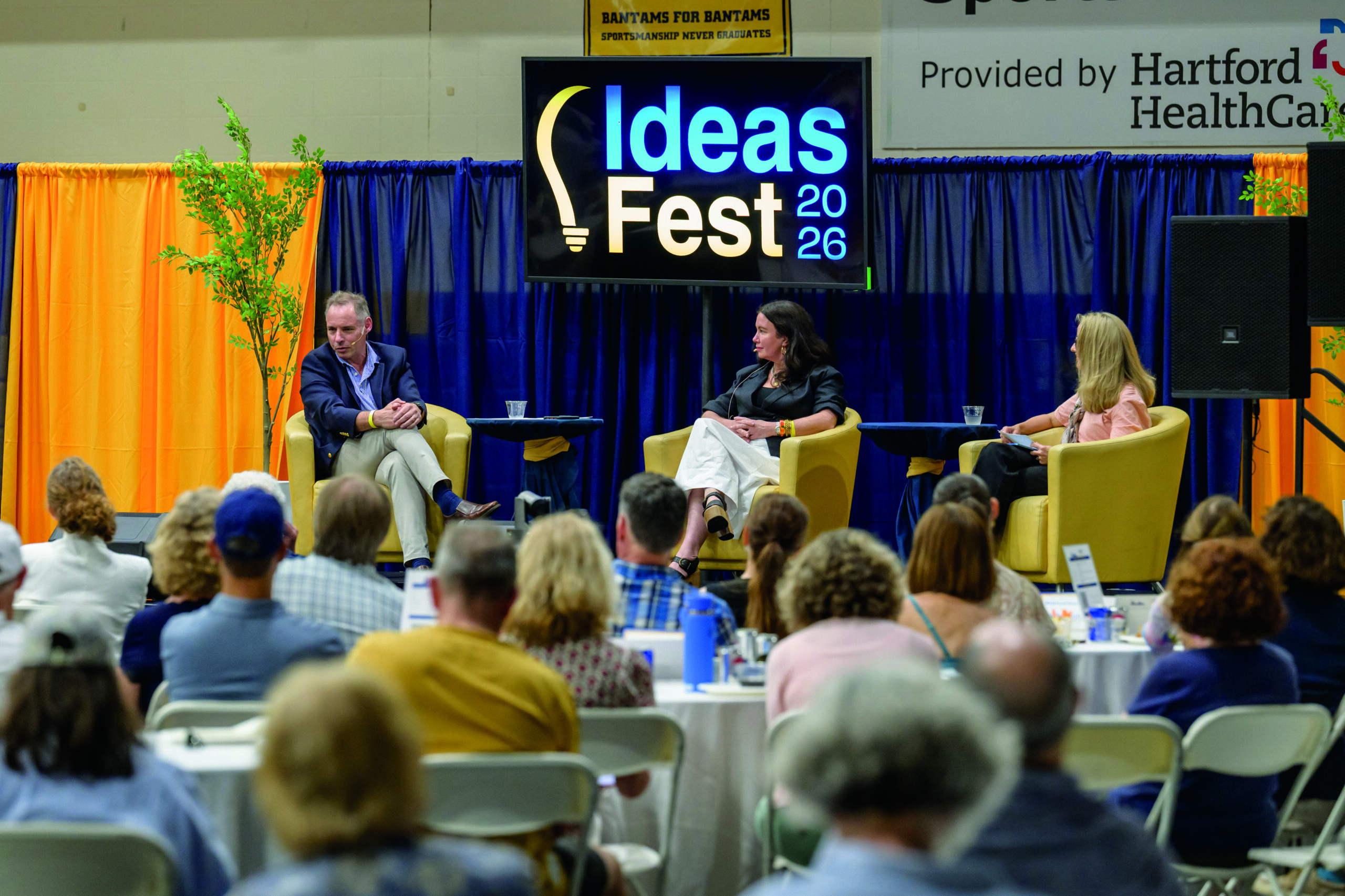
Eric Rosow ’86, Bobbi Wegner ’01, and Vice President and Chief Information Officer Kristen Eshleman present at Ideas Fest.
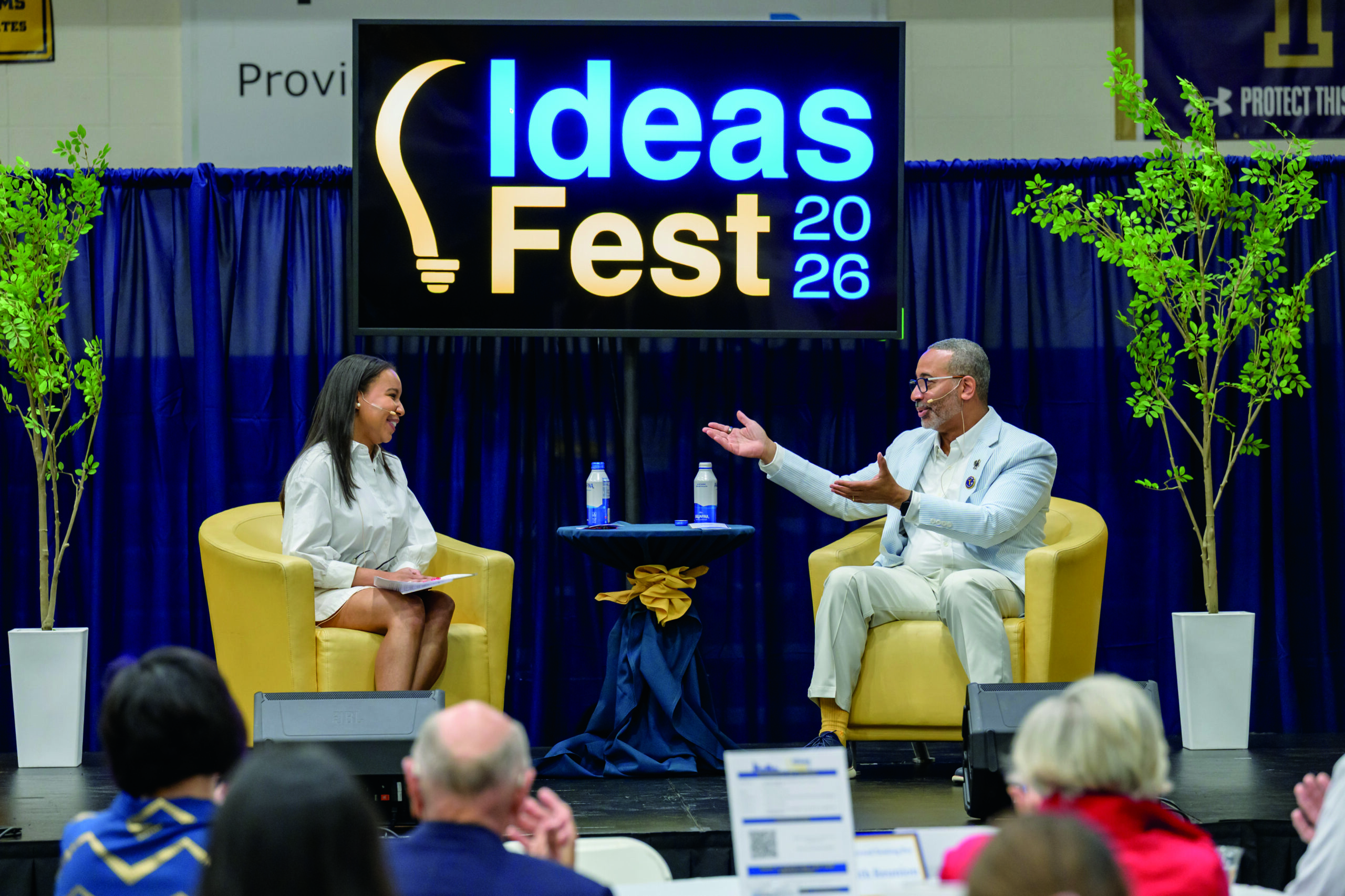
Jessica Jones ’21 and President Dan Lugo take part in Ideas Fest.
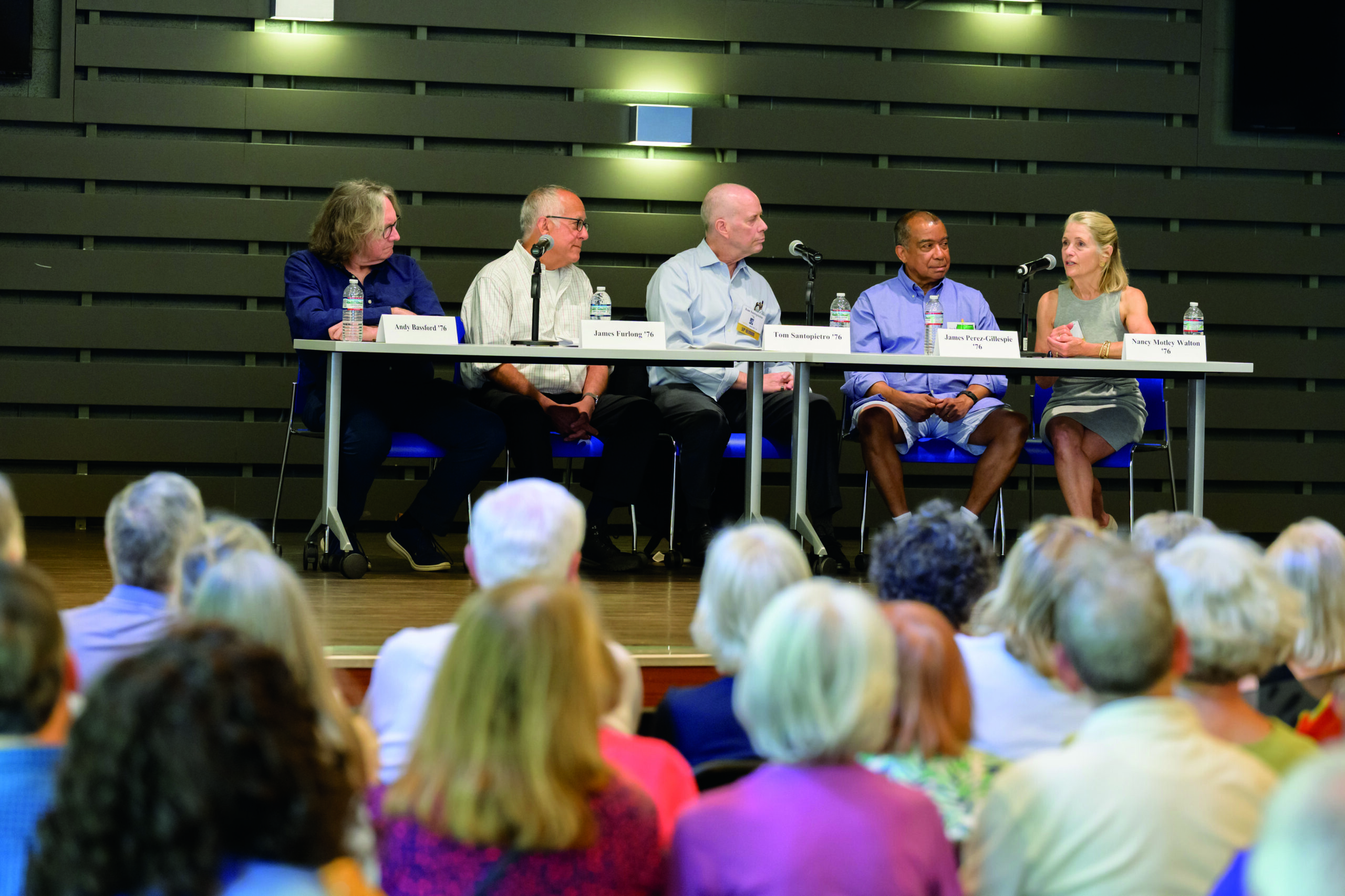
Andy Bassford ’76, James Furlong ’76, Tom Santopietro ’76, James Perez-Gillespie ’76, and Nancy Motley Walton ’76 present at From the Long Walk to the Limelight: A 50th Reunion Creatives Panel Discussion.
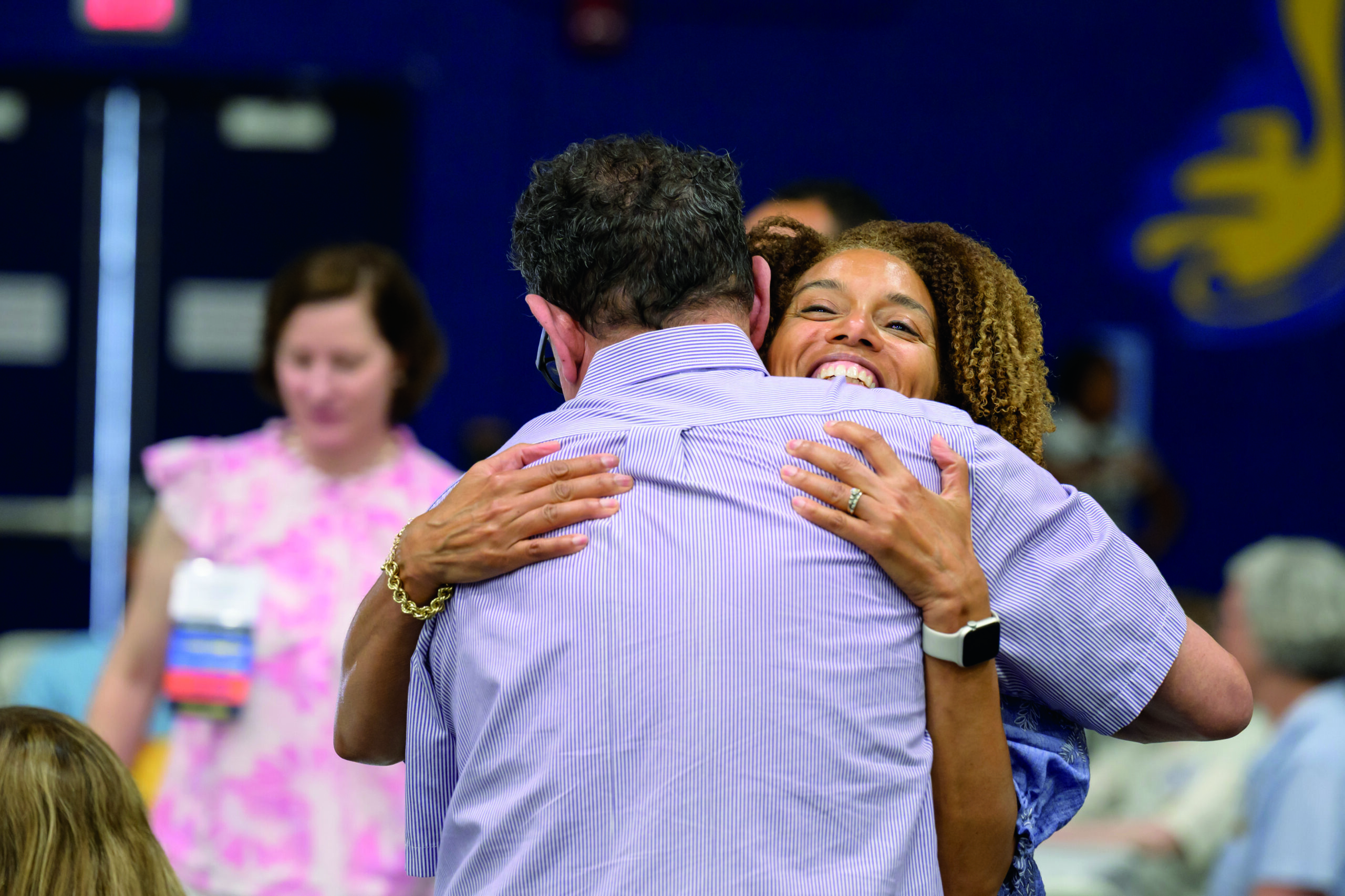
Alumni embrace at Ideas Fest.
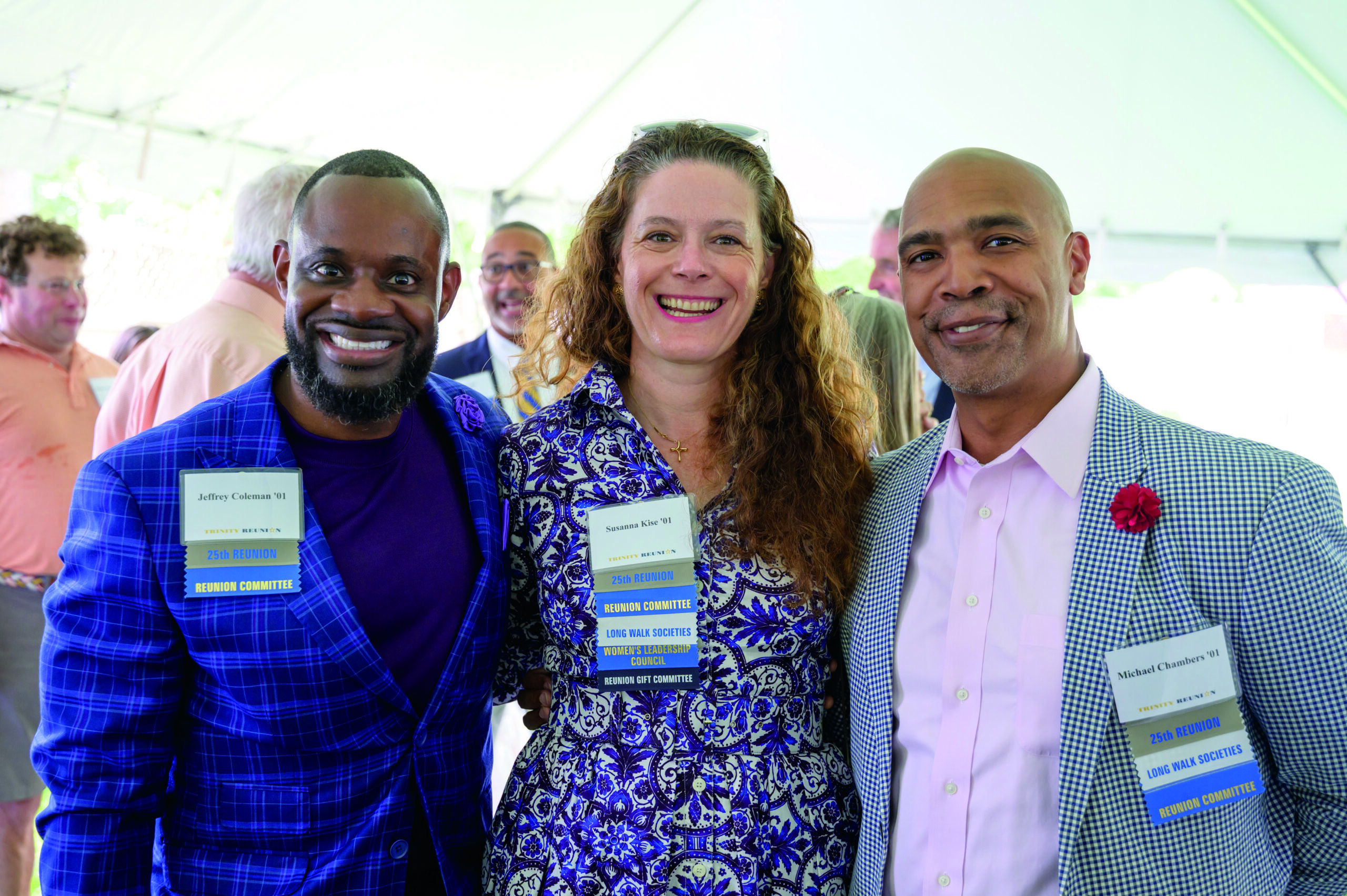
Jeffrey Coleman ’01, Susanna Kise ’01, and Michael Chambers ’01 meet under the tent.