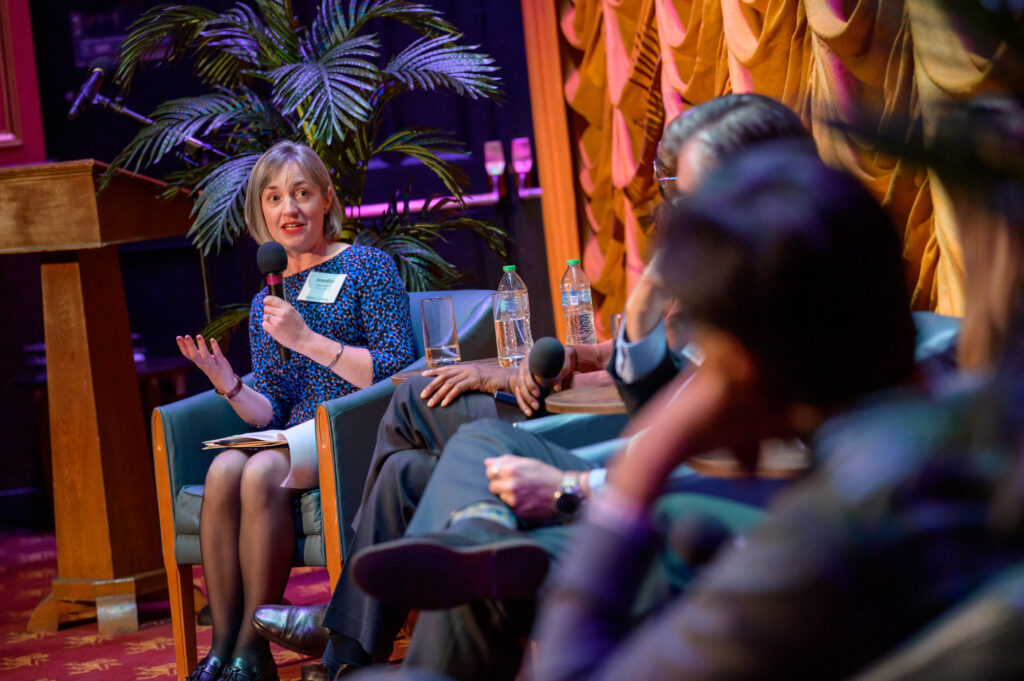
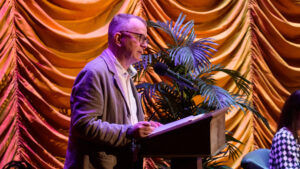
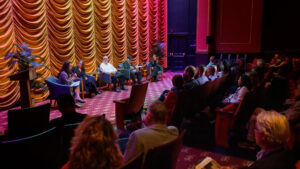
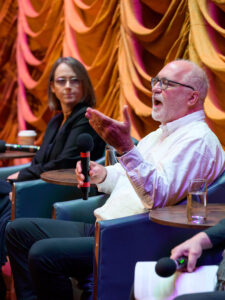
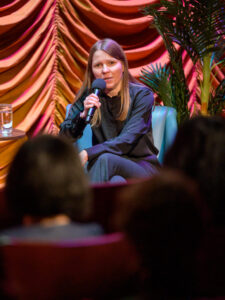
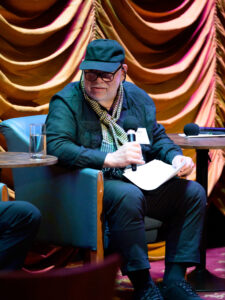
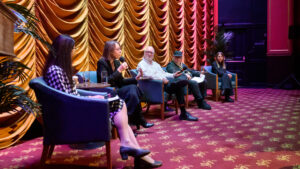
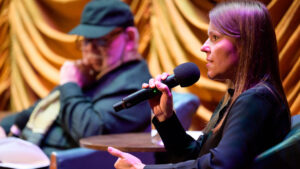
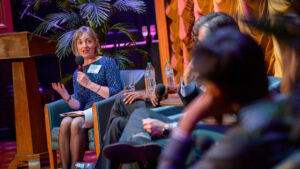
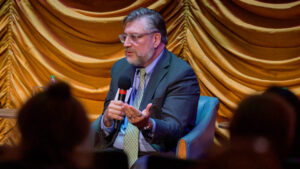
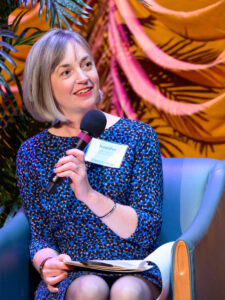
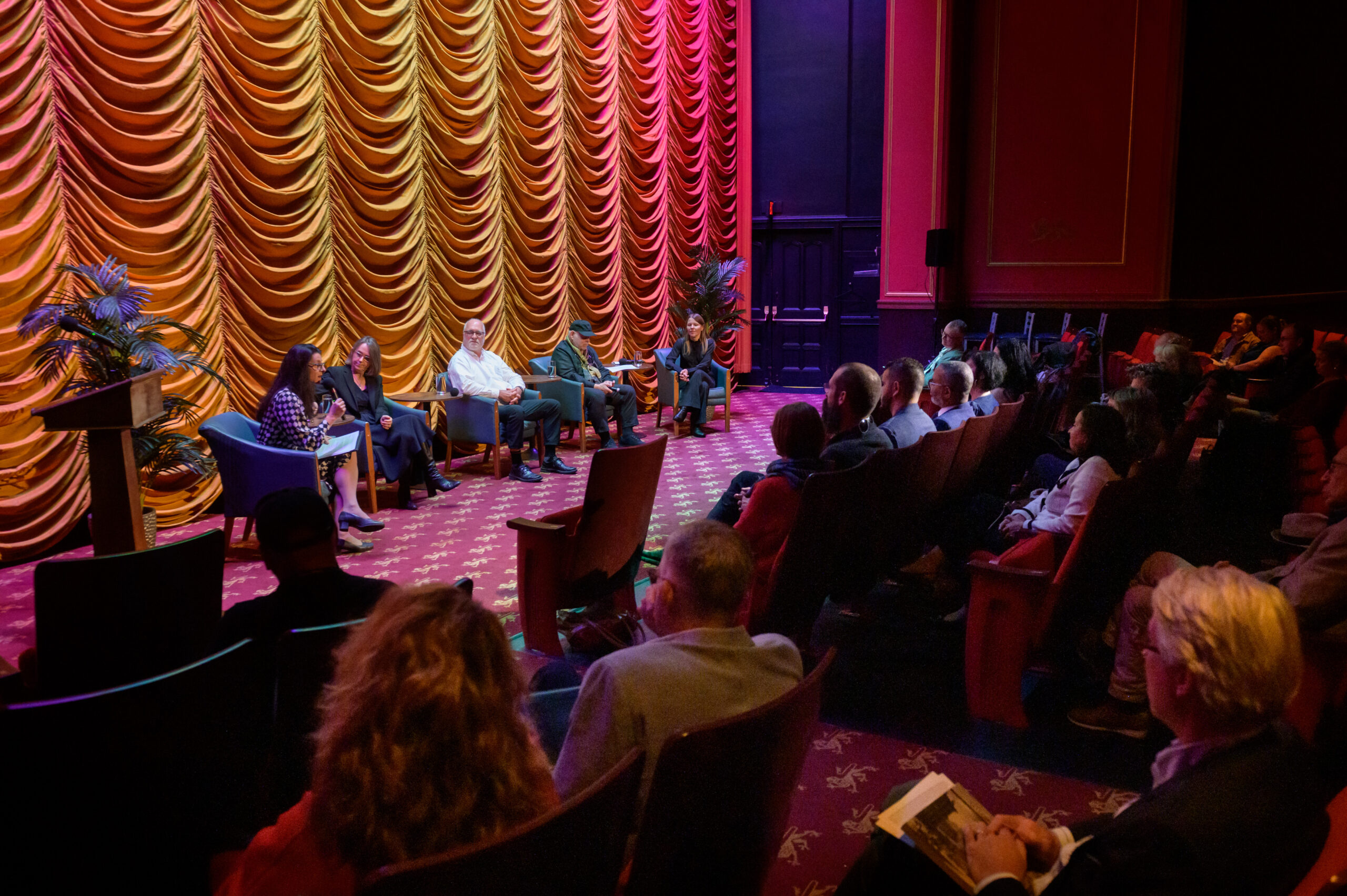
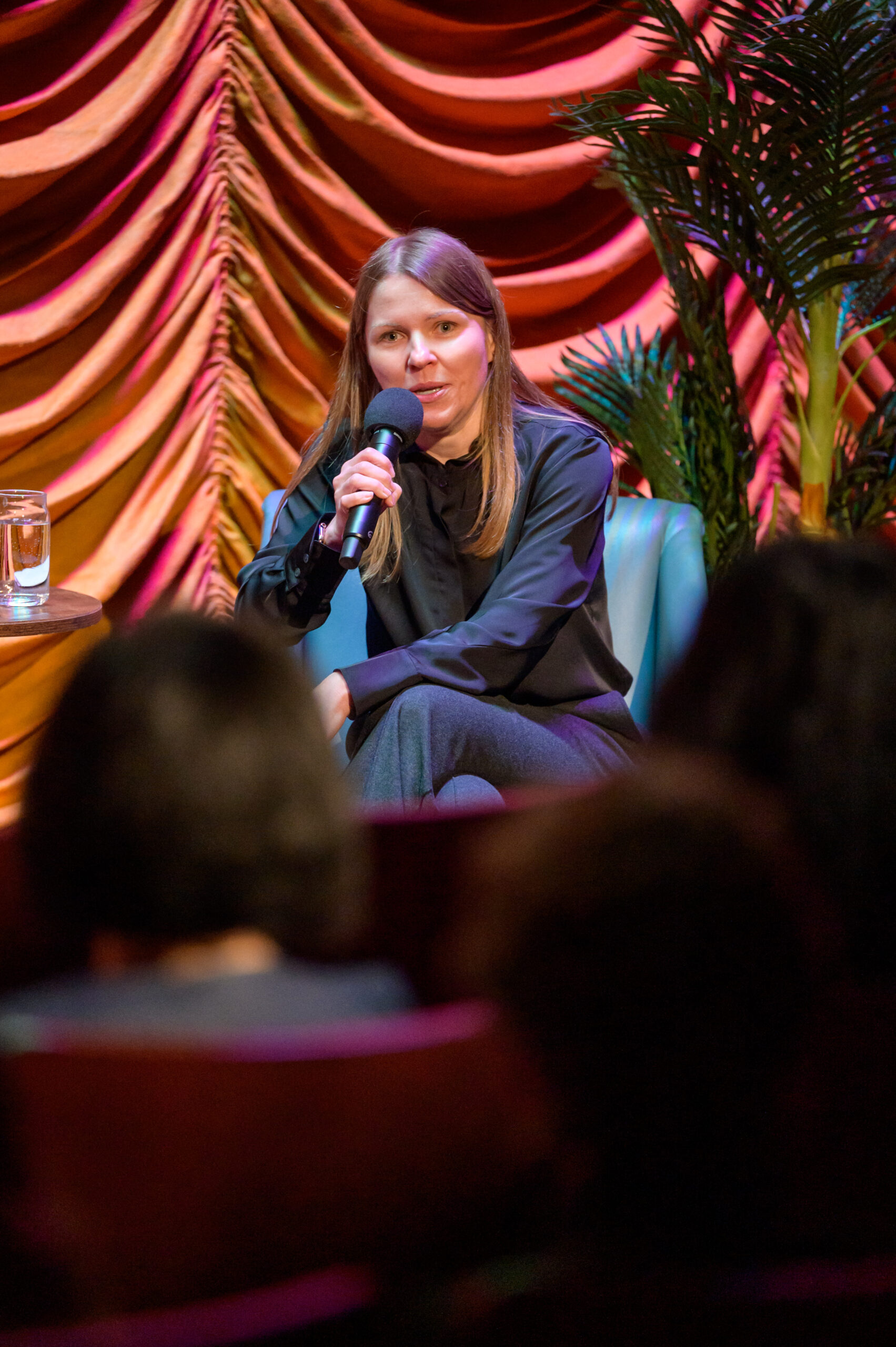
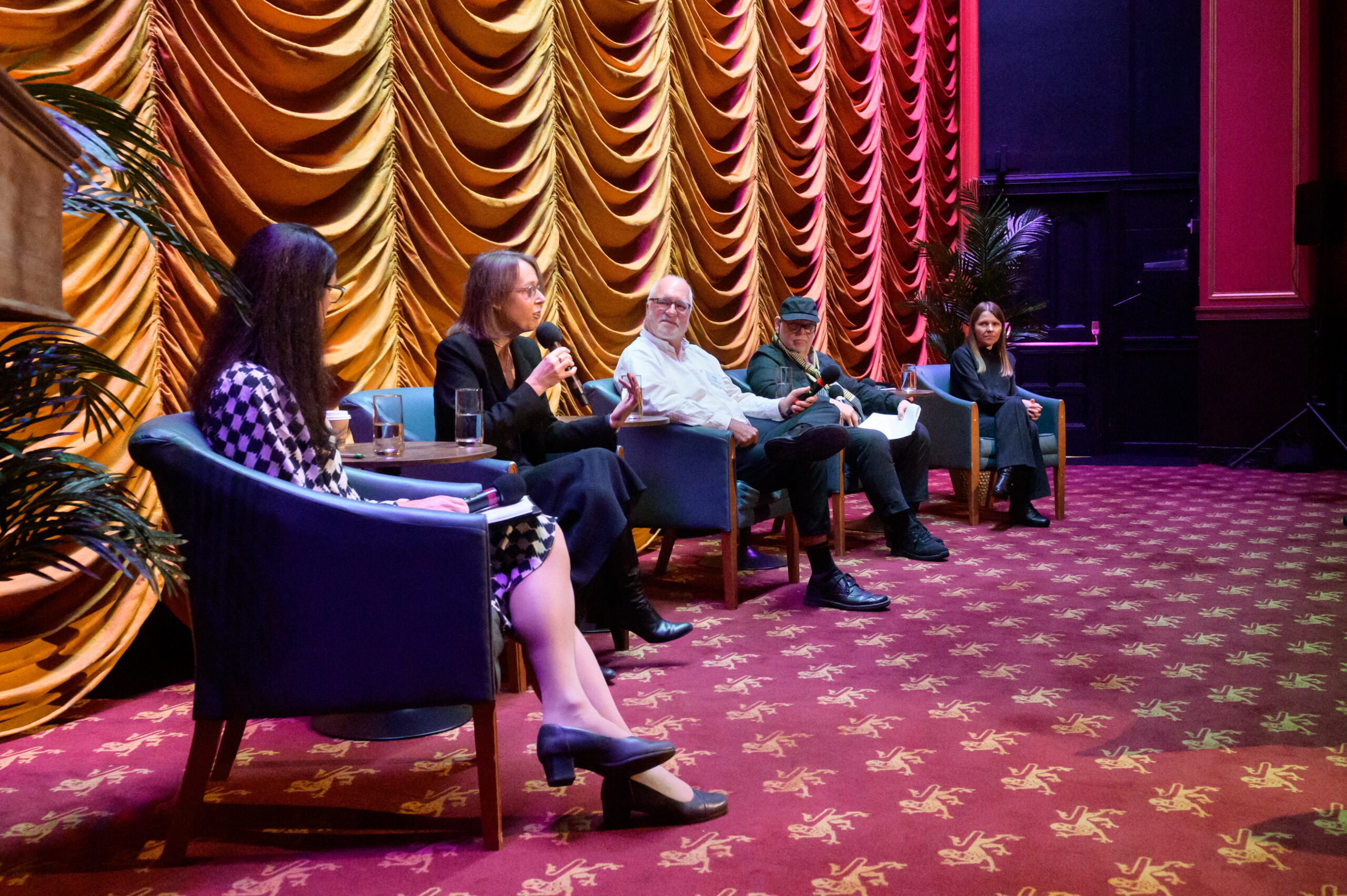
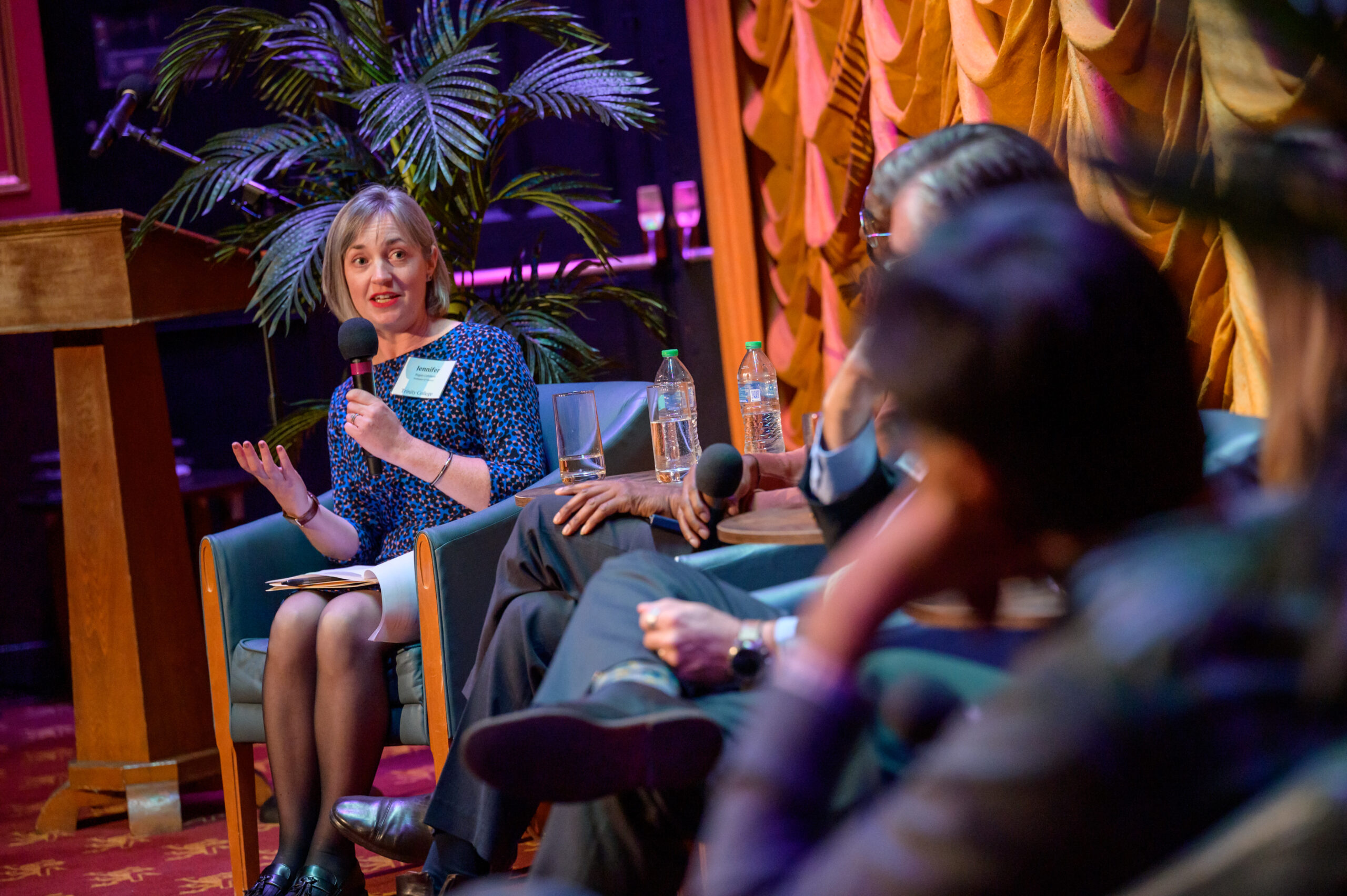
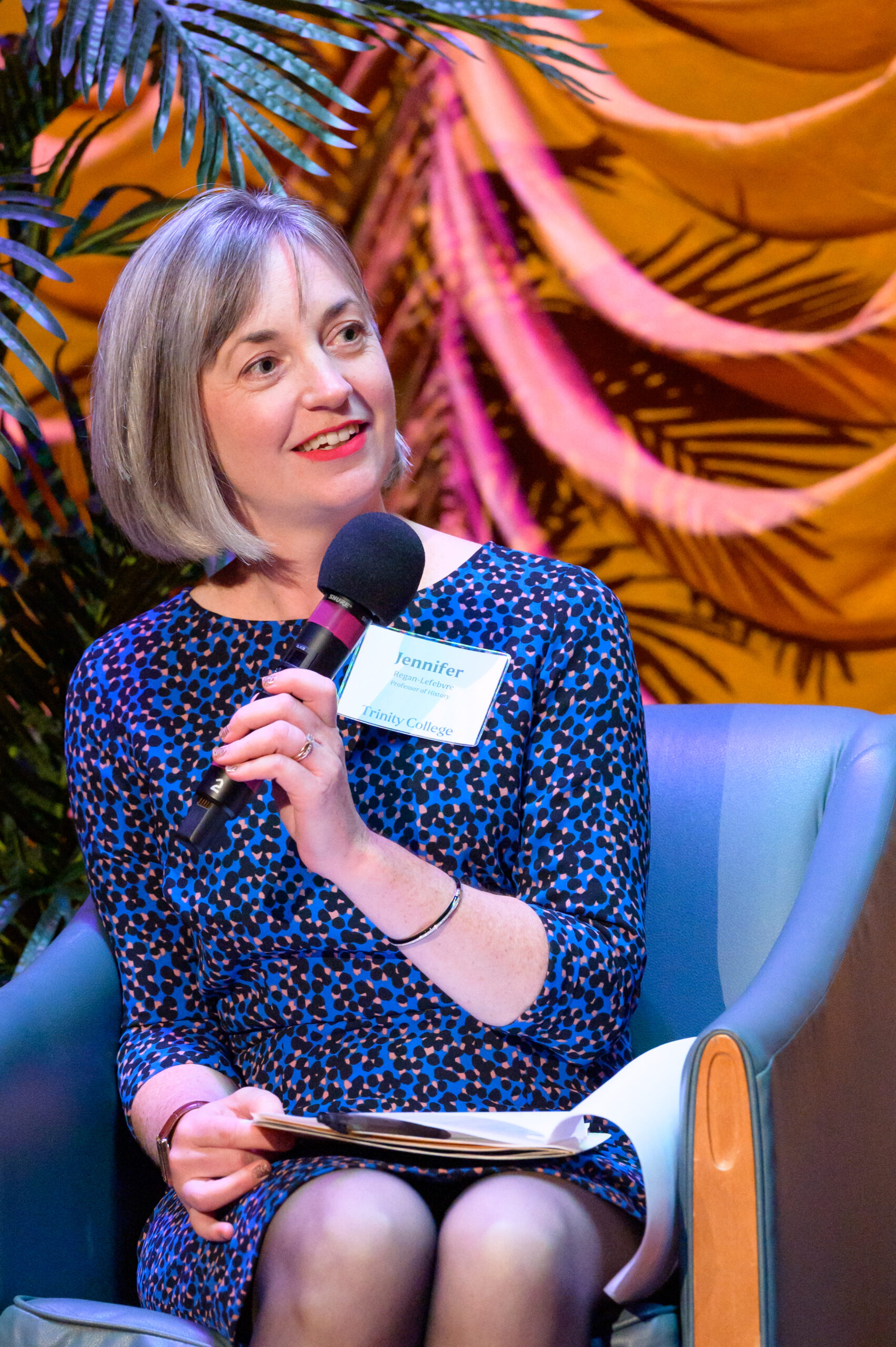
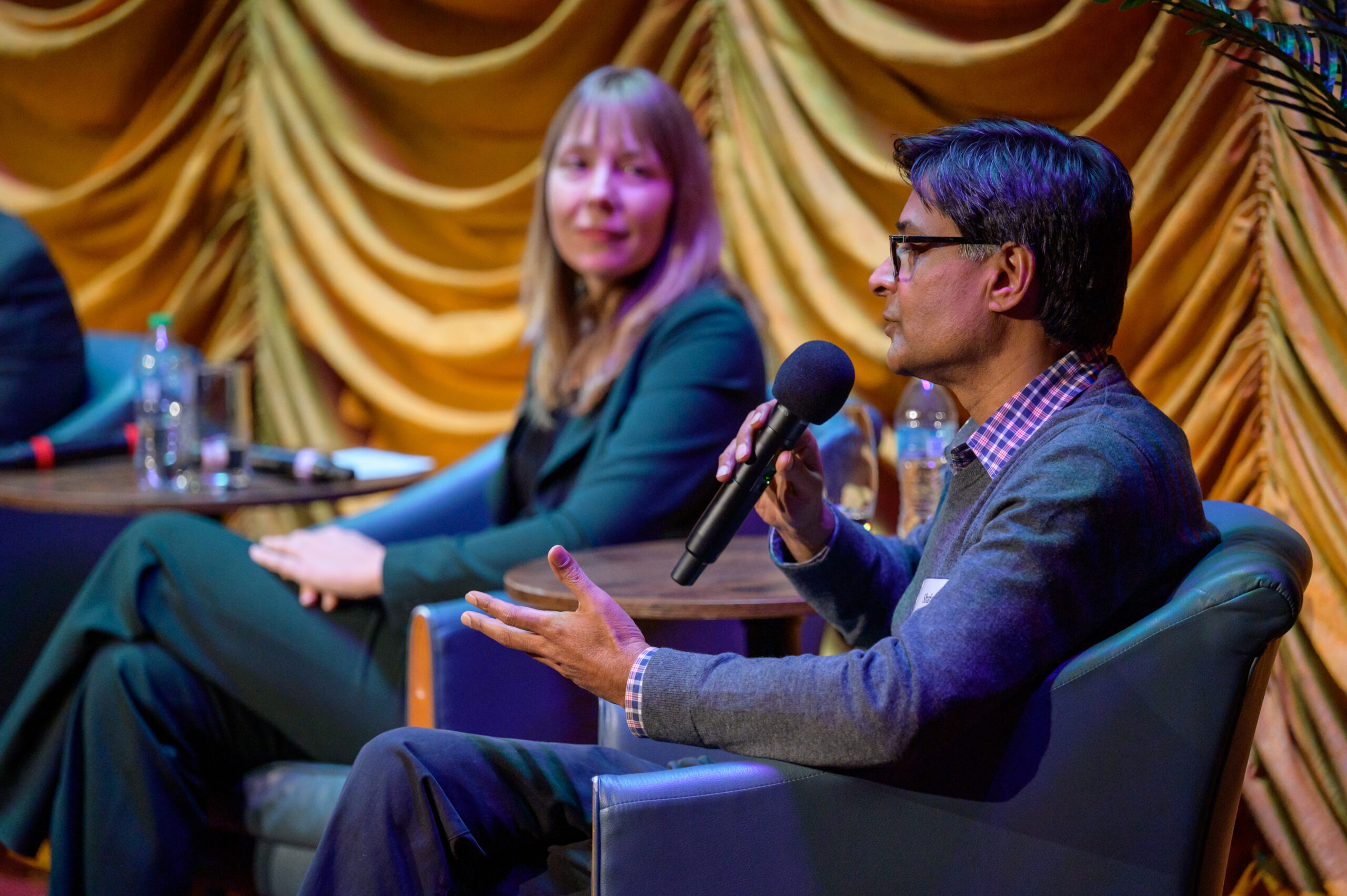
Jennifer M. Regan-Lefebvre, professor of history, poses questions to the “Bridging Knowledge and Practice” panelists. Photos by Nick Caito.
Through a set of cross-disciplinary conversations and a performance on Friday, October 17, some of Trinity’s leading scholars and artists engaged with audiences to examine the possibilities of human creativity and to discuss ways to bridge knowledge and practice to advance society.
Two symposia were held in Cinestudio in the Clement Chemistry Building, with a performance held in the Trinity College Chapel between the panel discussions. All participants also were invited to a luncheon and a closing reception.
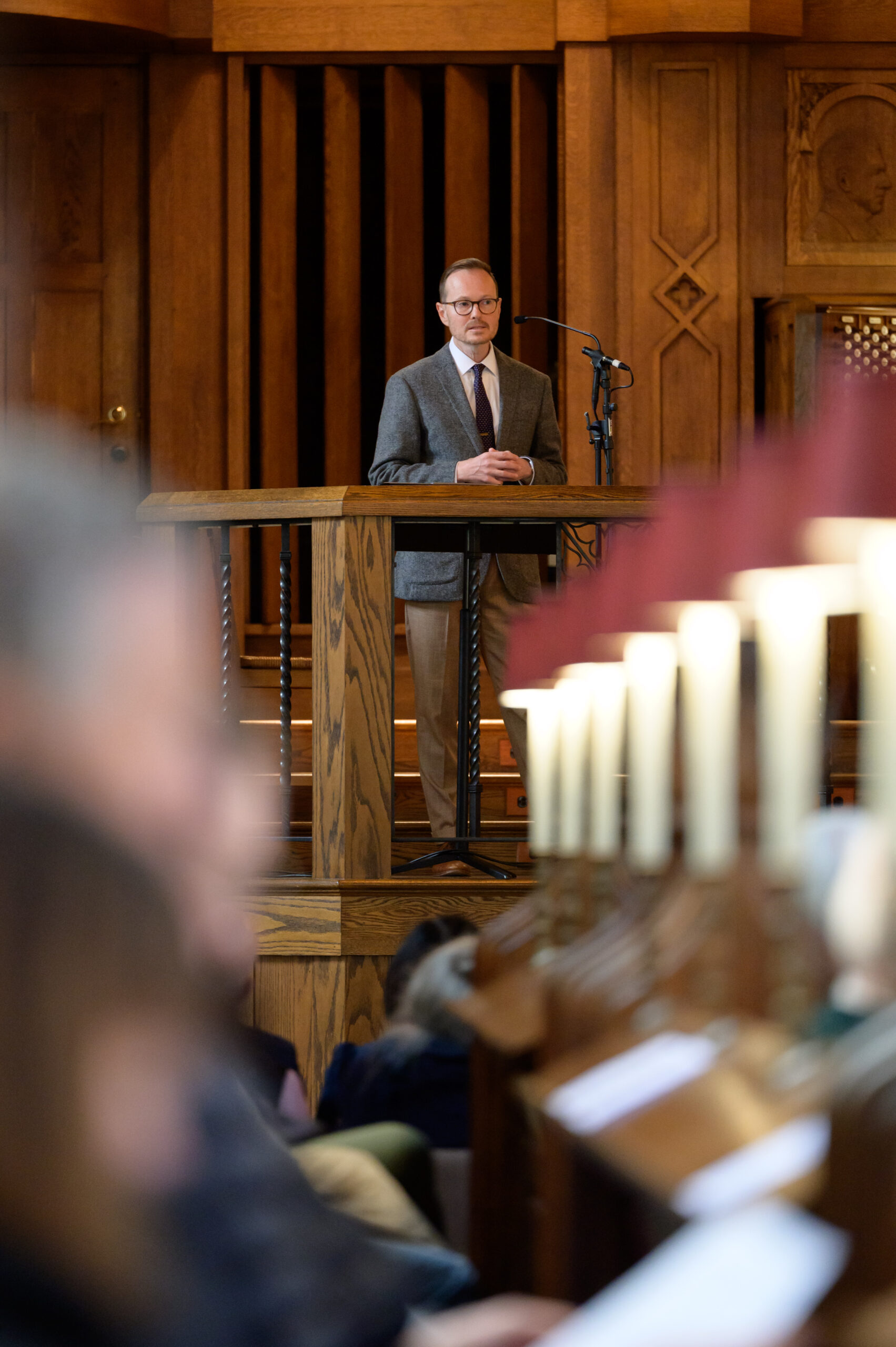
Welcome remarks were delivered at each symposium by Garth A. Myers, faculty secretary and Paul E. Raether Distinguished Professor of Urban International Studies and director of the Center for Urban and Global Studies. Myers introduced the day’s programming as a way inspire a robust exchange of ideas about the future of both the liberal arts and higher education.
Symposium I: Human Creativity
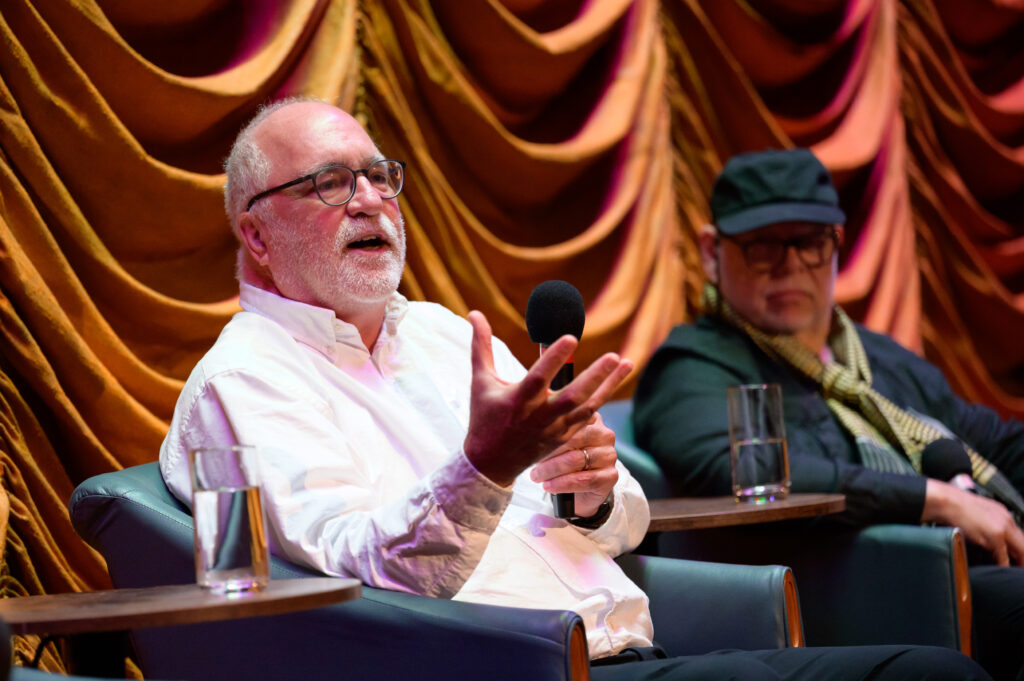
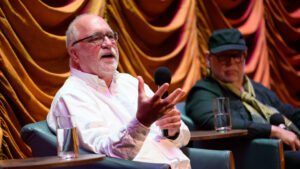
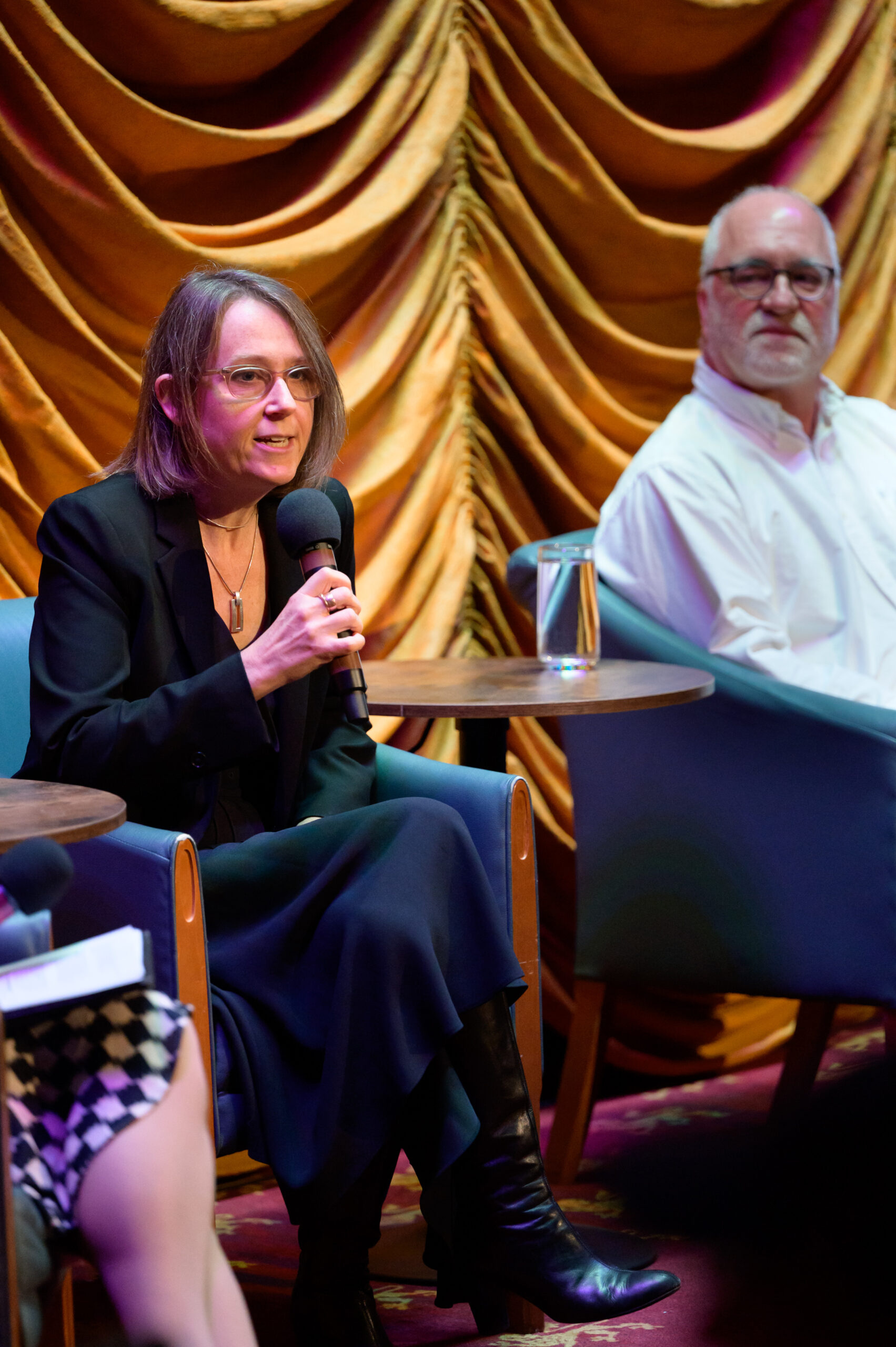
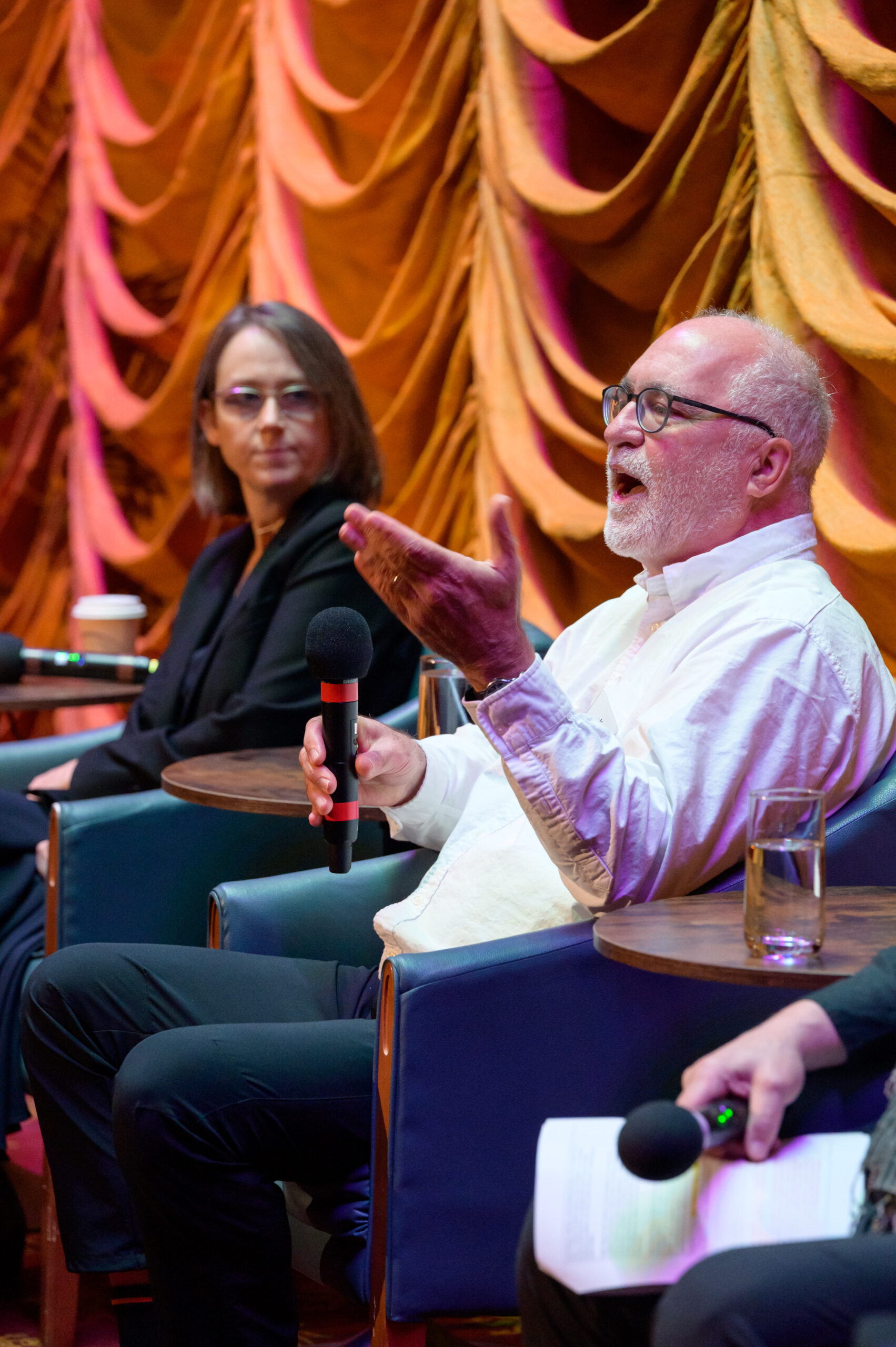
Kent D. Dunlap, Thomas S. Johnson Distinguished Professor of Biology, and Pablo Delano, Charles A. Dana Professor of Fine Arts, discuss creativity.
This symposium explored the role of creativity as an essential human practice. Faculty from across disciplines reflected on how creativity shapes their scholarship and teaching, the complex and evolving role of technology, and the value of preparing all students to think creatively in a digital world.
Moderated by Laura J. Holt ’00, professor of psychology, the panel included: Sarah Bilston, Paul E. Raether Distinguished Professor of English; Pablo Delano, Charles A. Dana Professor of Fine Arts; Kent D. Dunlap, Thomas S. Johnson Distinguished Professor of Biology; and Ewa Syta, Charles A. Dana Research Associate Professor of Computer Science.
Bilston said that working under specific constraints—such as the structural form of a sonnet—can lead to greater appreciation of how difficult, yet fulfilling, the creative process be. The greatest learning often follows the greatest failures, the faculty members agreed.
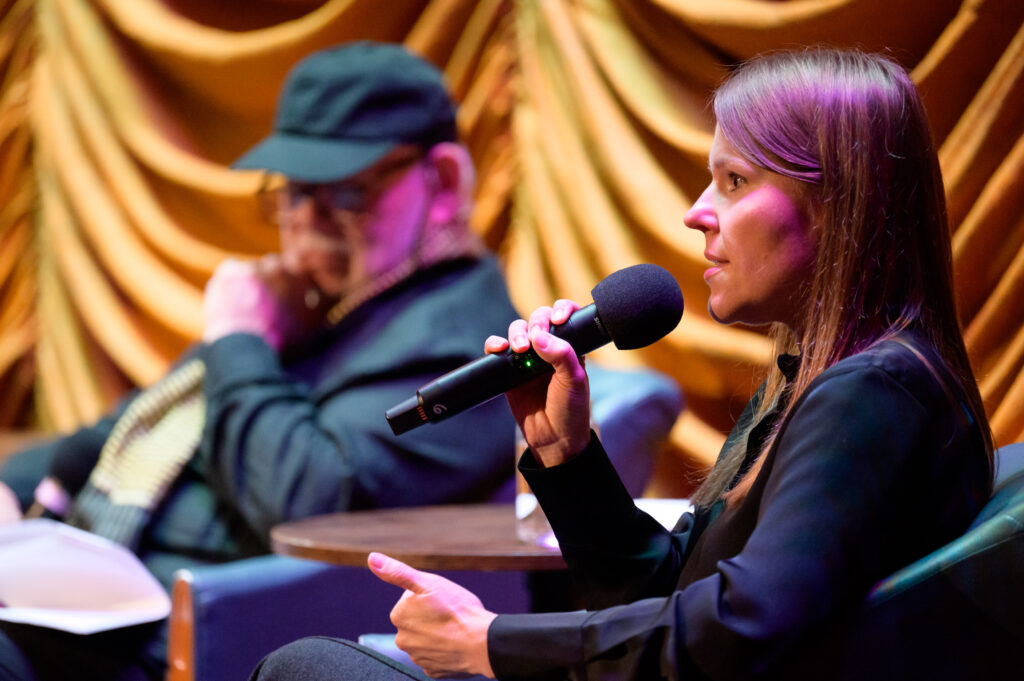
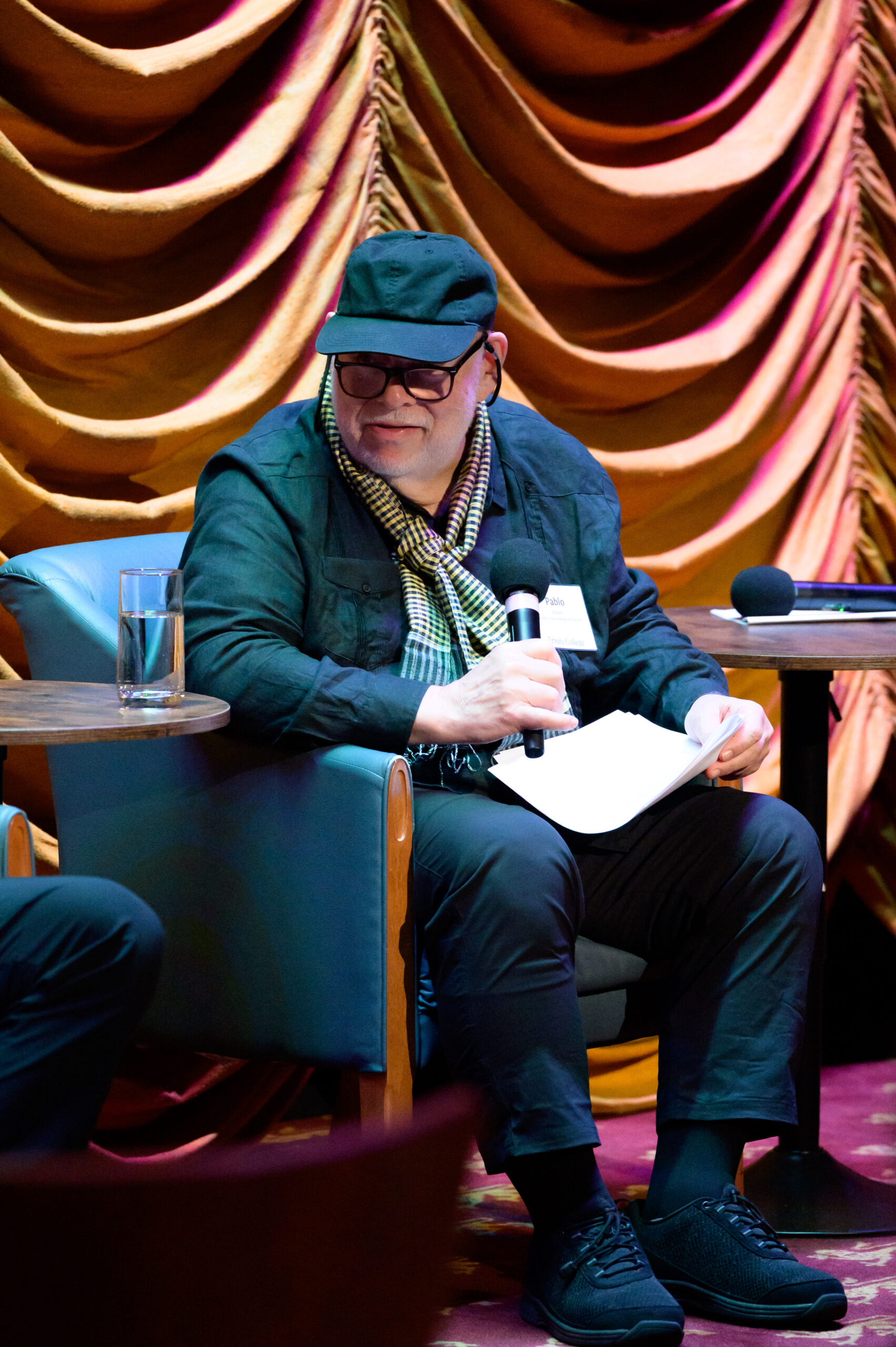
Pablo Delano, Charles A. Dana Professor of Fine Arts, and Ewa Syta, Charles A. Dana Research Associate Professor of Computer Science.
Dunlap proposed that observation alone can be an exercise in creativity. “It’s not so much about inventing something, but about looking at other places,” he said. “The natural world is about the most creative thing out there.” Dunlap added that the concept of a “light bulb moment” over-simplifies the process of discovery or creativity: “Ideas need to be reshaped like clay,” he said.
When discussing the advances of artificial intelligence and its potential impacts, Syta said, “Some people think of [A.I.] as a catalyst for creativity. … It’s likely something that’s going to allow us to innovate much faster. On the other hand, people claim it will kill the arts and creativity.”
Delano said that he tries to get students to be introspective about the creative process. “It’s often thought of as just fun or entertaining, but it’s so much more than that,” he said. “It can be an emotional roller-coaster, and that’s what it’s supposed to be.”
Inauguration Performance: The Art and Science of Awe
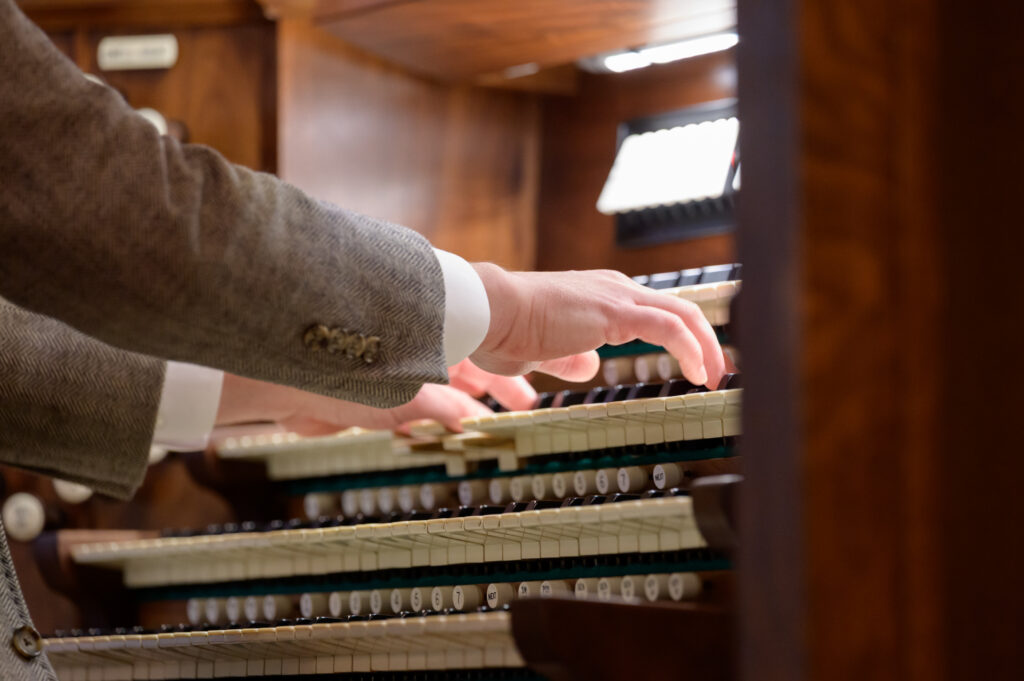
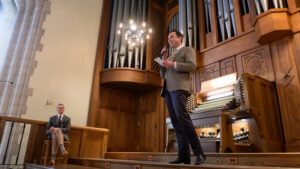
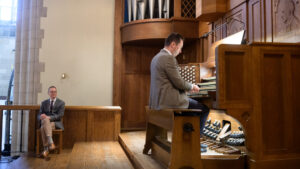
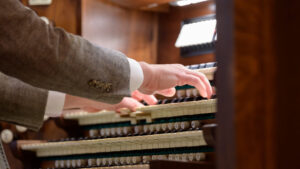
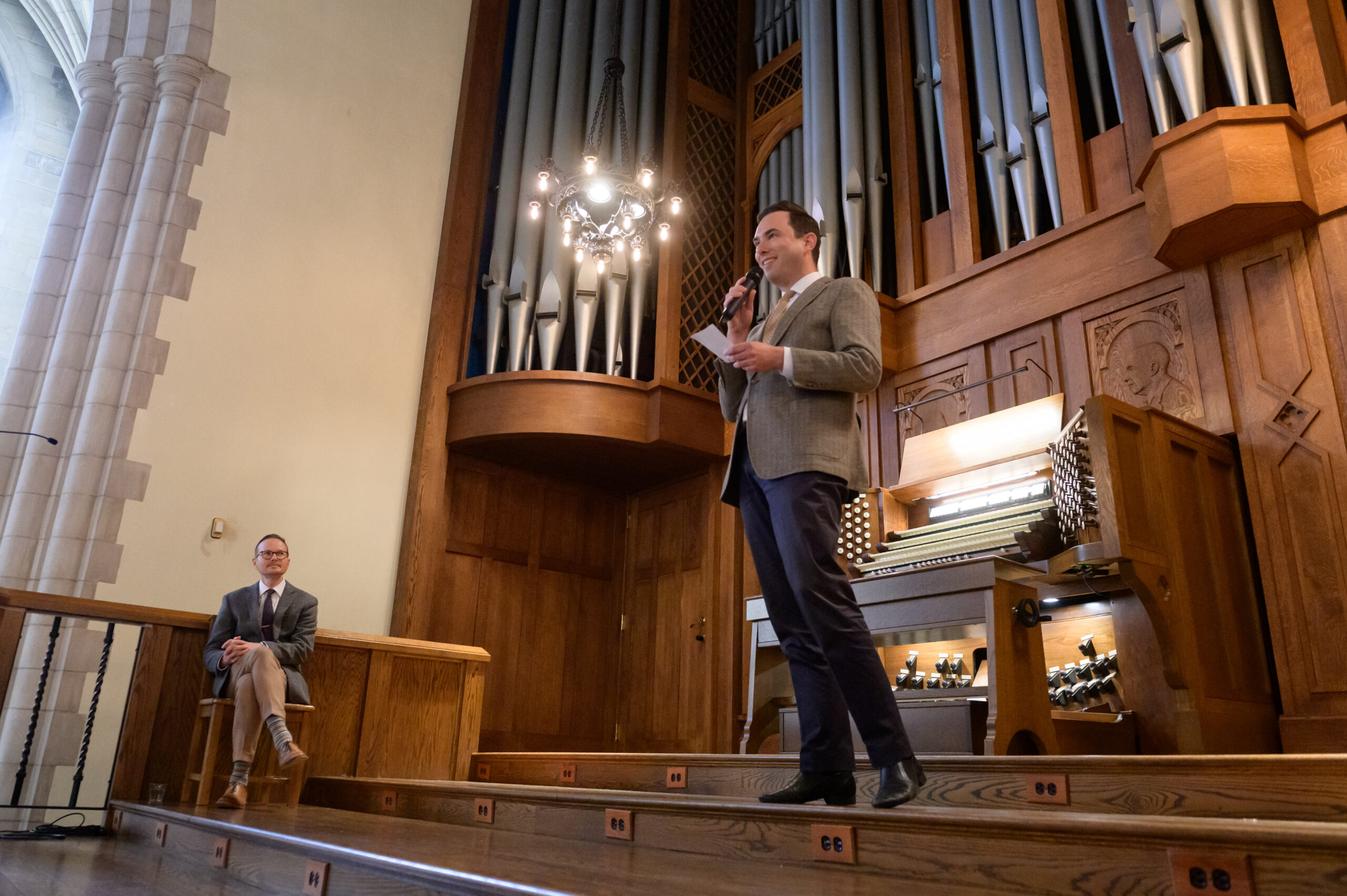
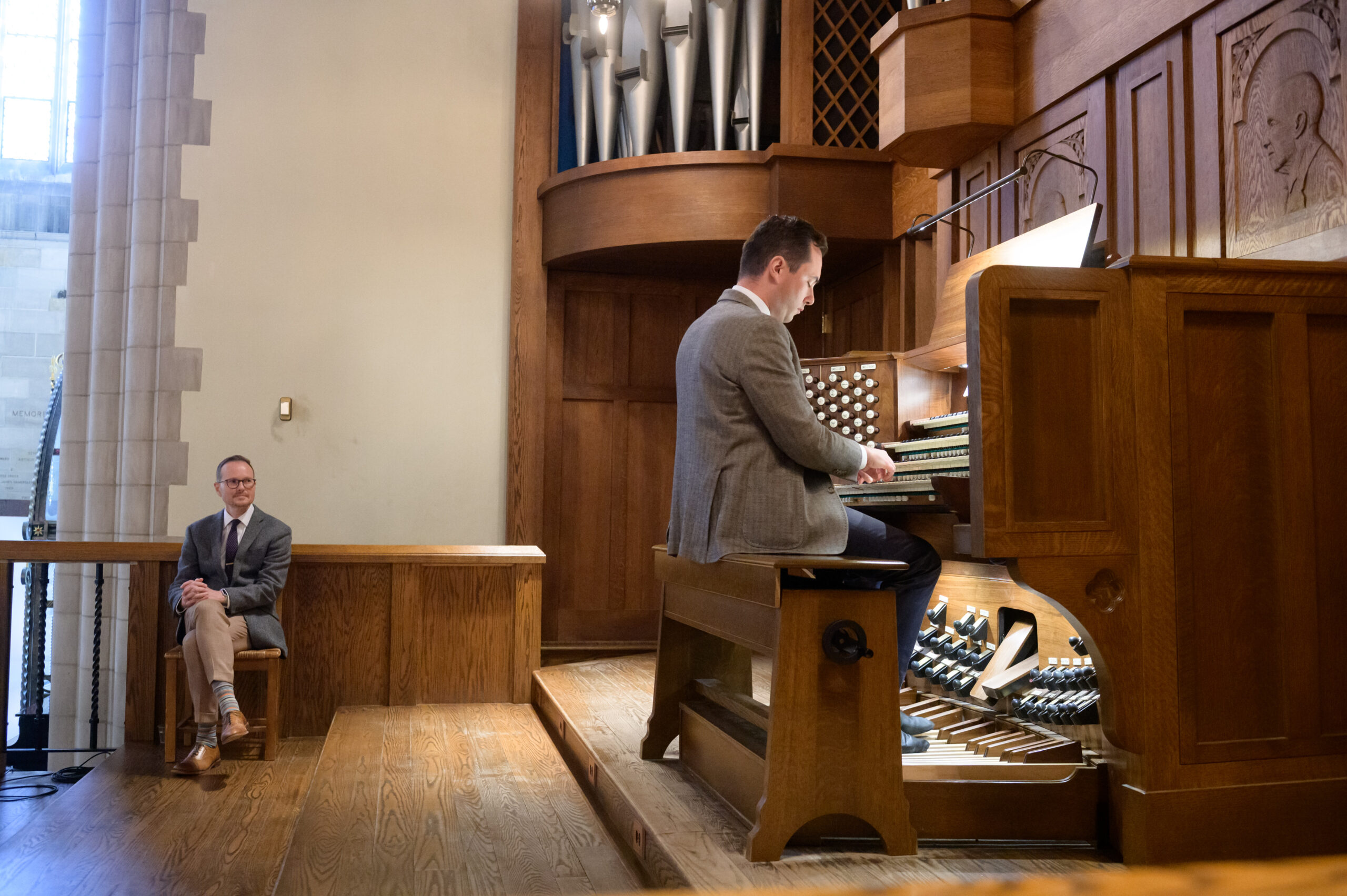
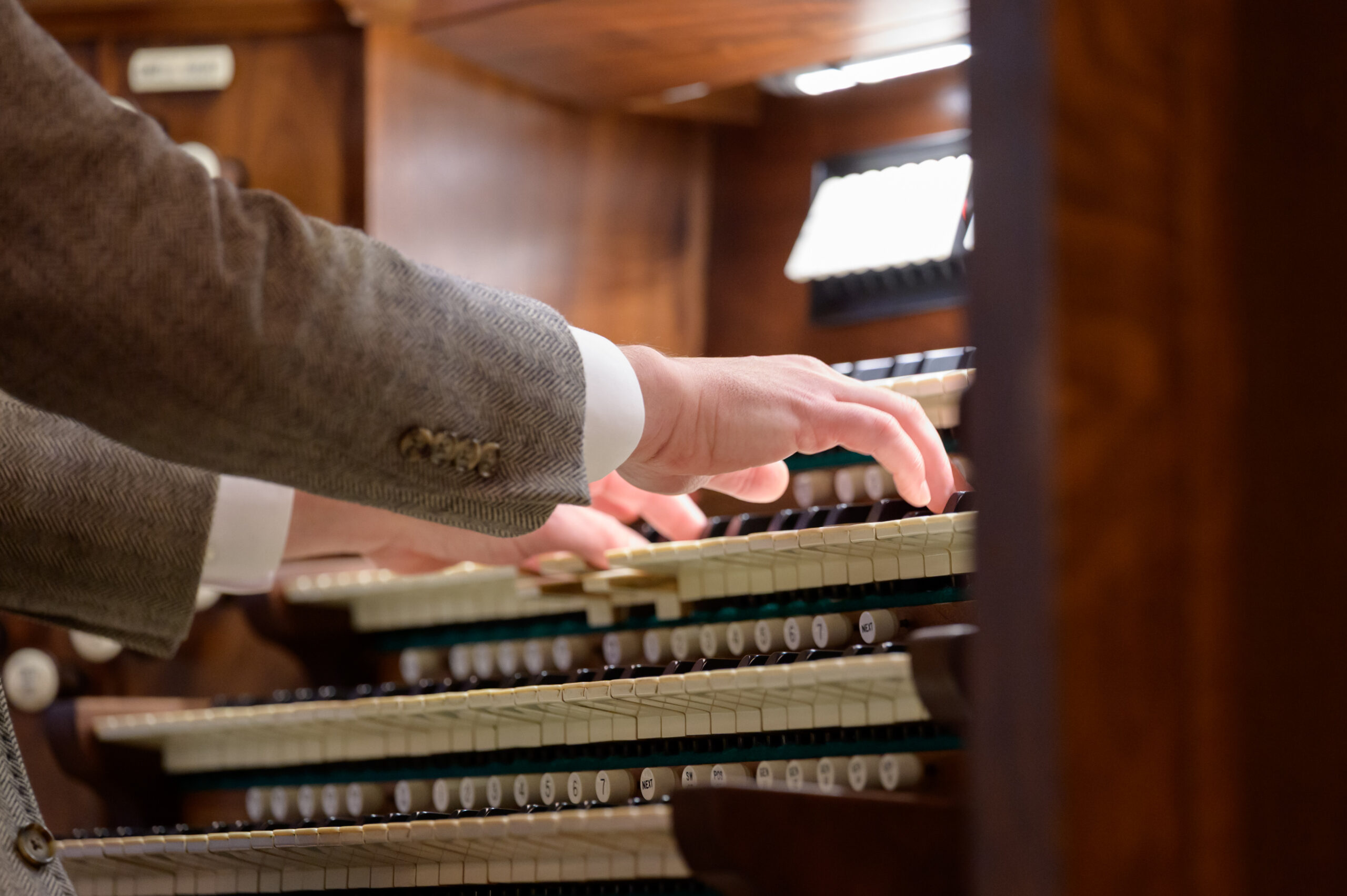
Christopher Houlihan ’09, John Rose Distinguished College Organist, director of Chapel music, and artist-in-residence, performs.
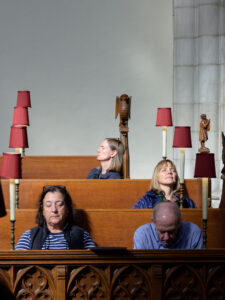
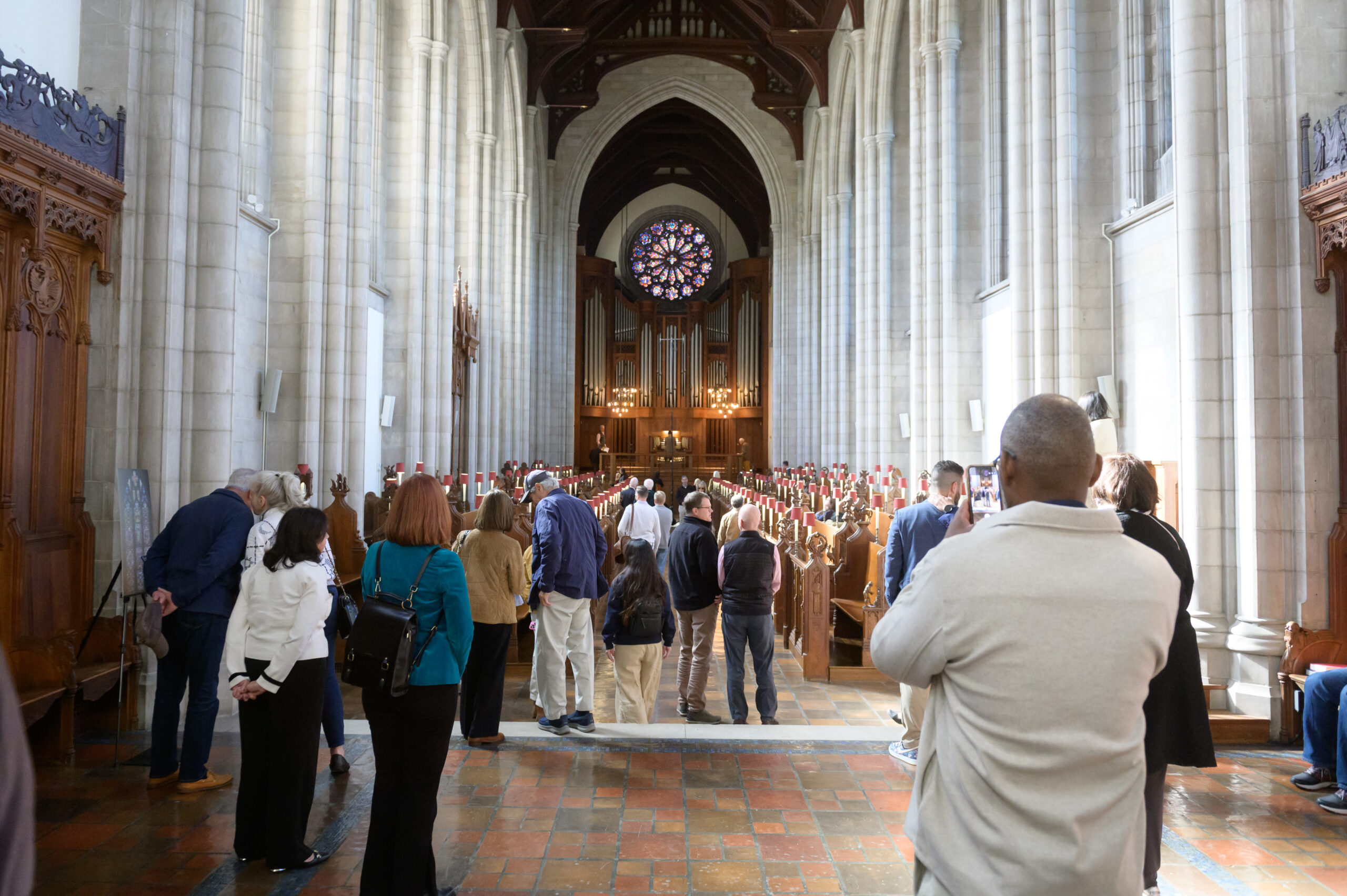
Trinity’s iconic Chapel hosted a performance by Christopher Houlihan ’09, John Rose Distinguished College Organist, director of Chapel music, and artist-in-residence. Commentary was delivered by Michael A. Grubb, associate professor of psychology, based on his seminar, “Exploring Awe,” which was offered in collaboration with Houlihan at Trinity’s Rome campus as part of last year’s January Term. He said that this unique collaboration is an example of how the arts and sciences can meet.
Grubb is a psychologist and neuroscientist who uses experimental methods to understand vital questions, including visual perception, notably in collaboration with Trinity students. He said that in psychological literature, “awe” is defined as an emotional response to physical or conceptual vastness. “It’s an experience that momentarily quiets the self and expands our sense of what is possible or challenges what we thought we knew to be true,” Grubb said. “In recent years, researchers have found that music—much like the visual grandeur of nature—can evoke this same feeling.”
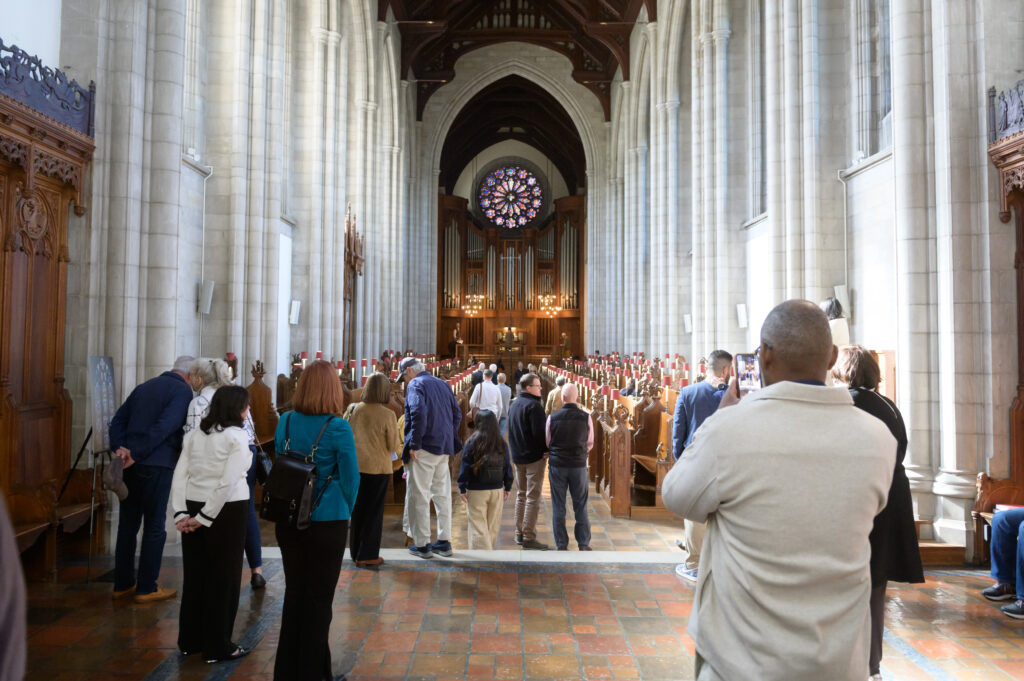
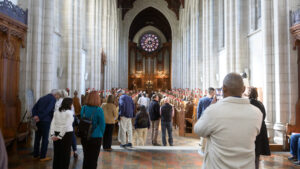
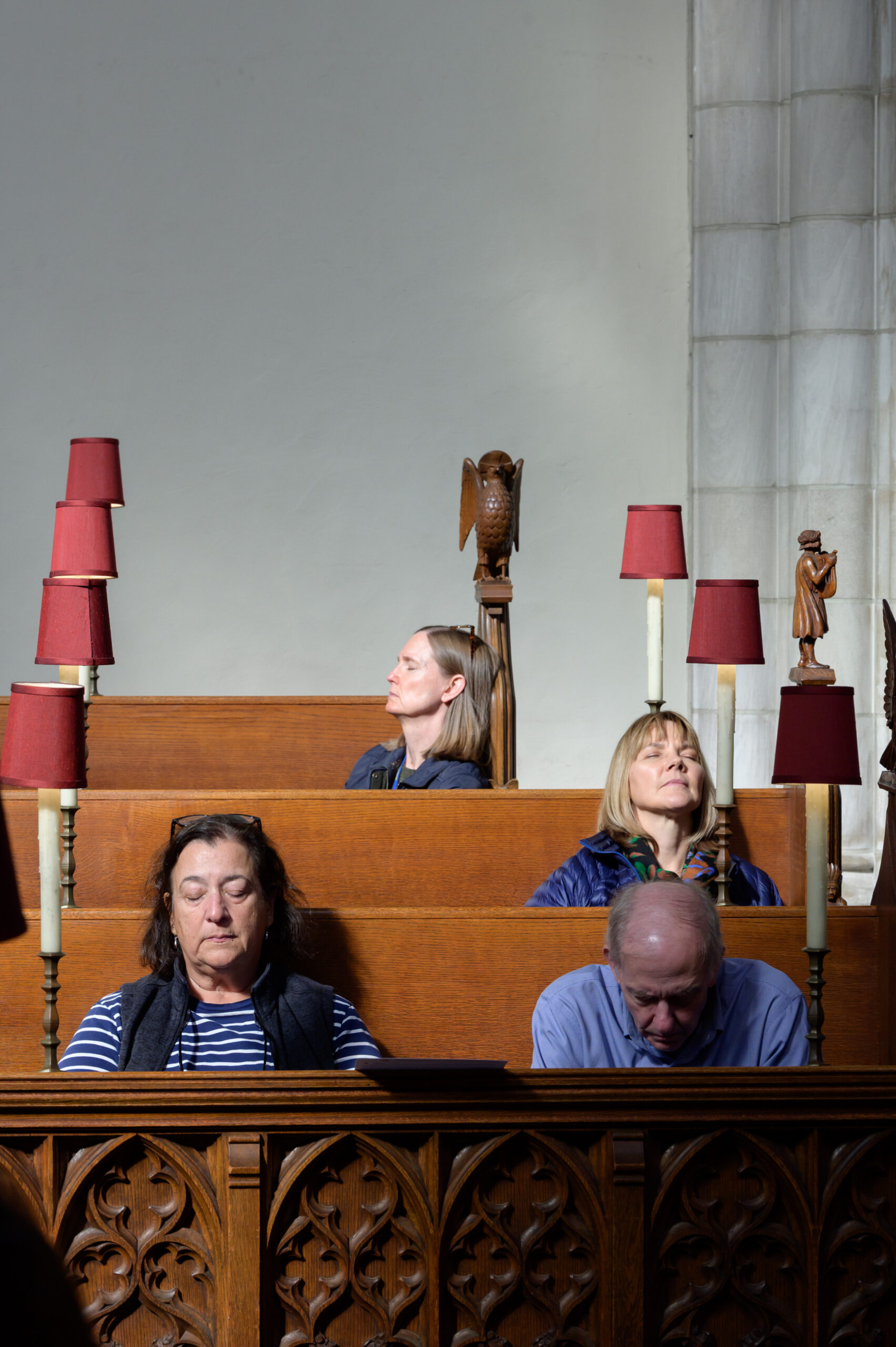
Audience members were encouraged to move around the Chapel to hear the organ from different perspectives.
Houlihan is a concert organist who has received numerous critically acclaimed reviews, including in Gramophone, The New York Times, The Los Angeles Times, and The Wall Street Journal. He has performed as a soloist with symphonies and orchestras across the country. Houlihan also directs The Chapel Singers, Trinity’s oldest student organization.
Before he performed the last of three pieces featured in the performance, Houlihan invited the audience to move around the Chapel to hear and feel the organ from different perspectives. “The room is a part of this musical instrument,” he said.
The second symposium explored the bridging of knowledge and practice as a hallmark of a distinctive liberal arts education. Award-winning teacher-scholars from Trinity’s faculty discussed their boundary-spanning work and its public impact, whether in Hartford, nationally, or globally.
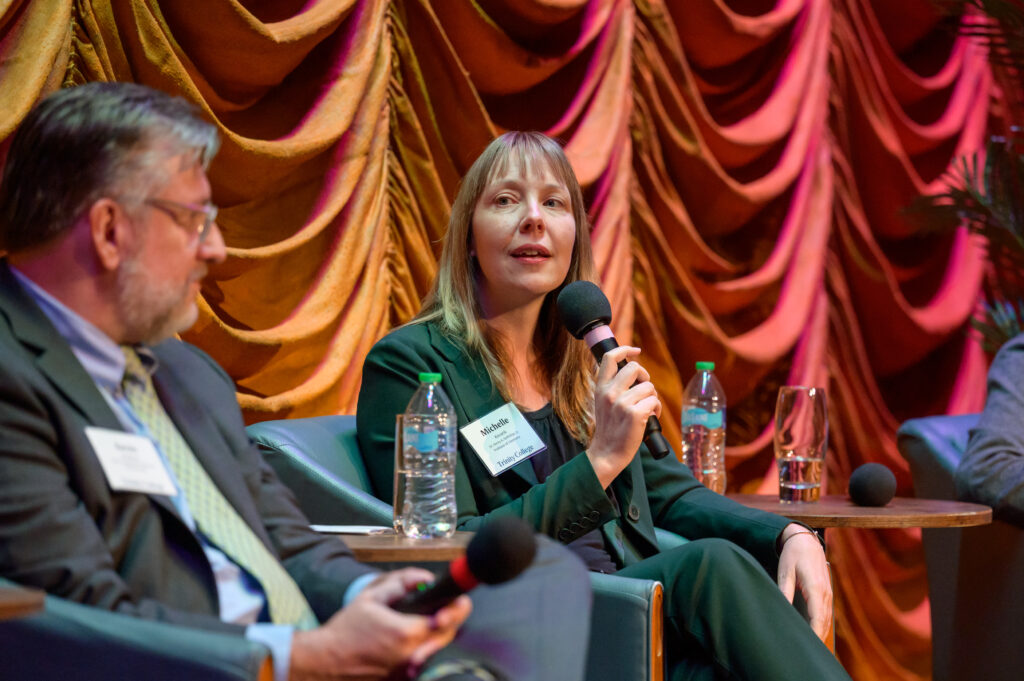
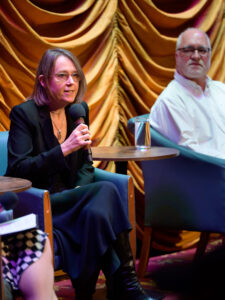
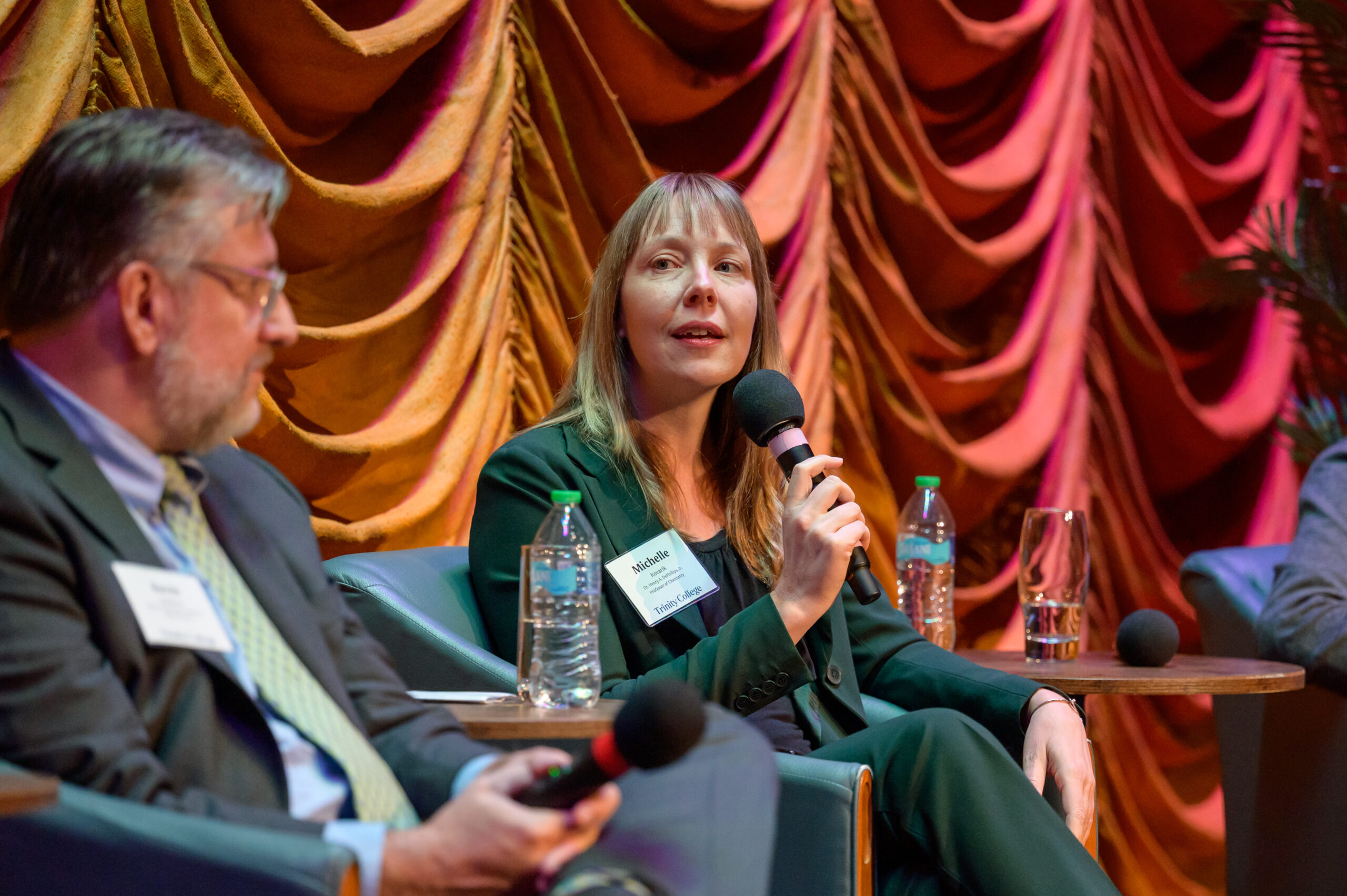
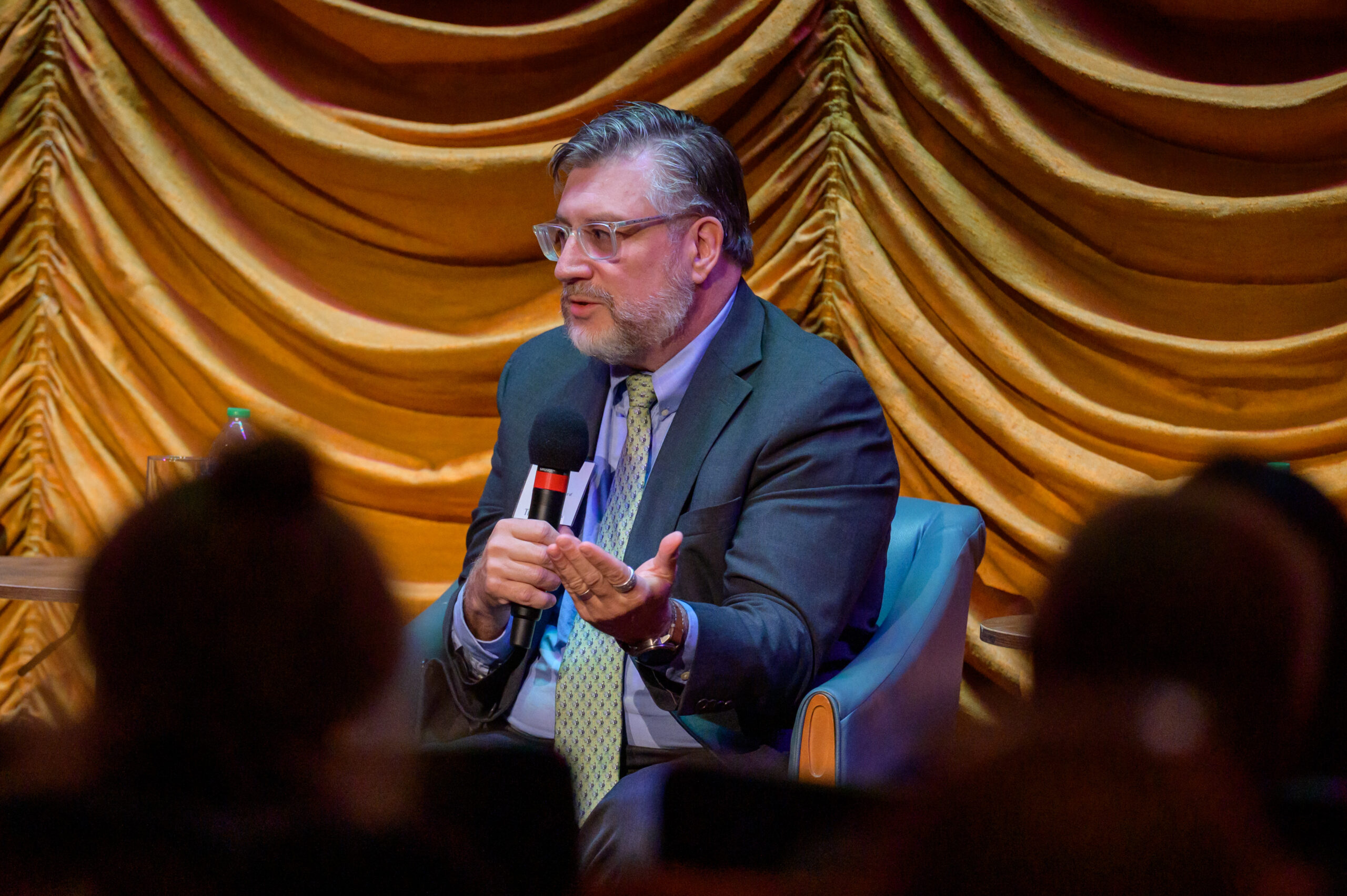
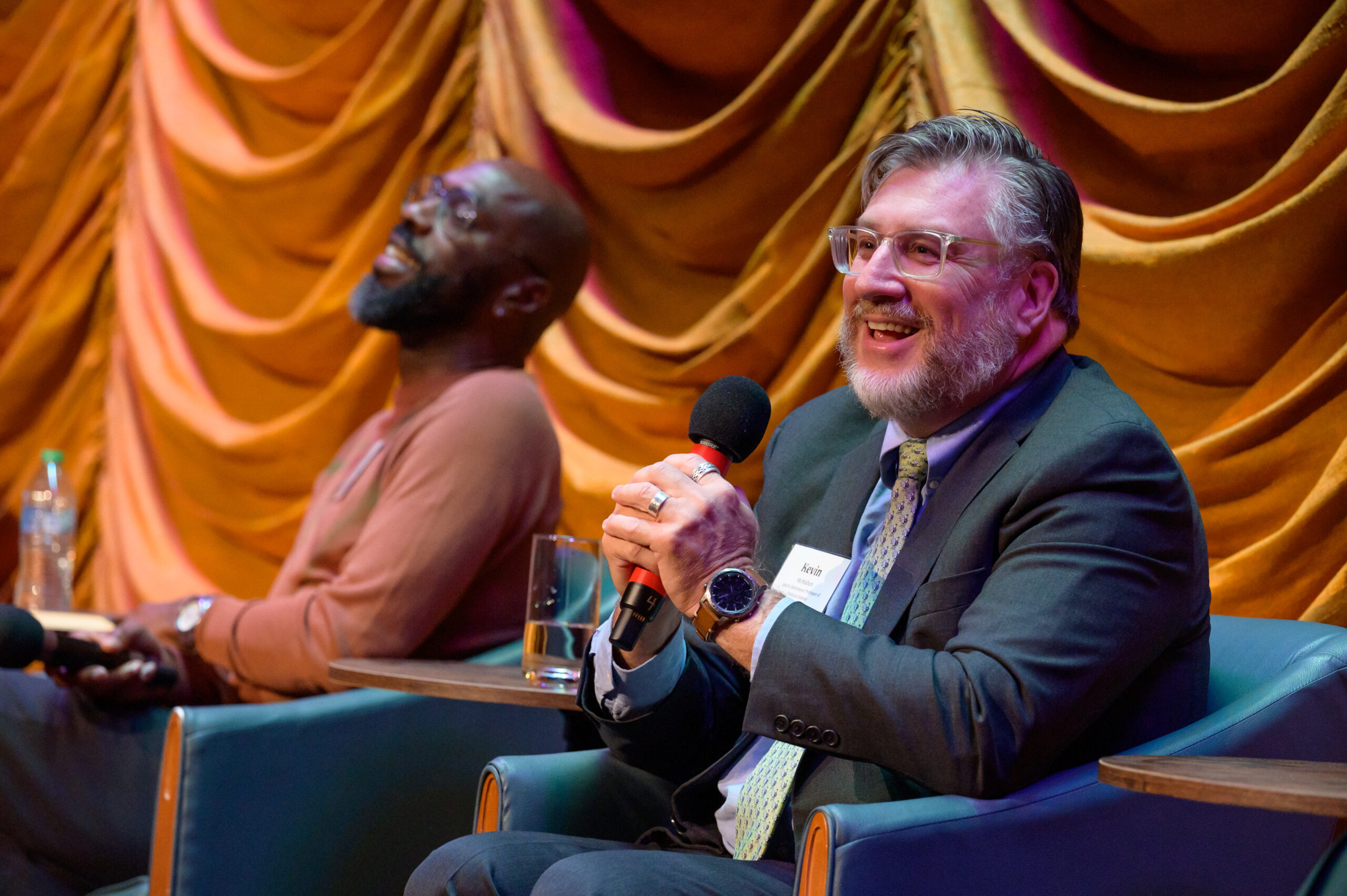
Kevin J. McMahon, John R. Reitemeyer Professor of Political Science, and Michelle Kovarik, Dr. Henry A. DePhillips, Jr. Professor of Chemistry, address bridging knowledge and practice.
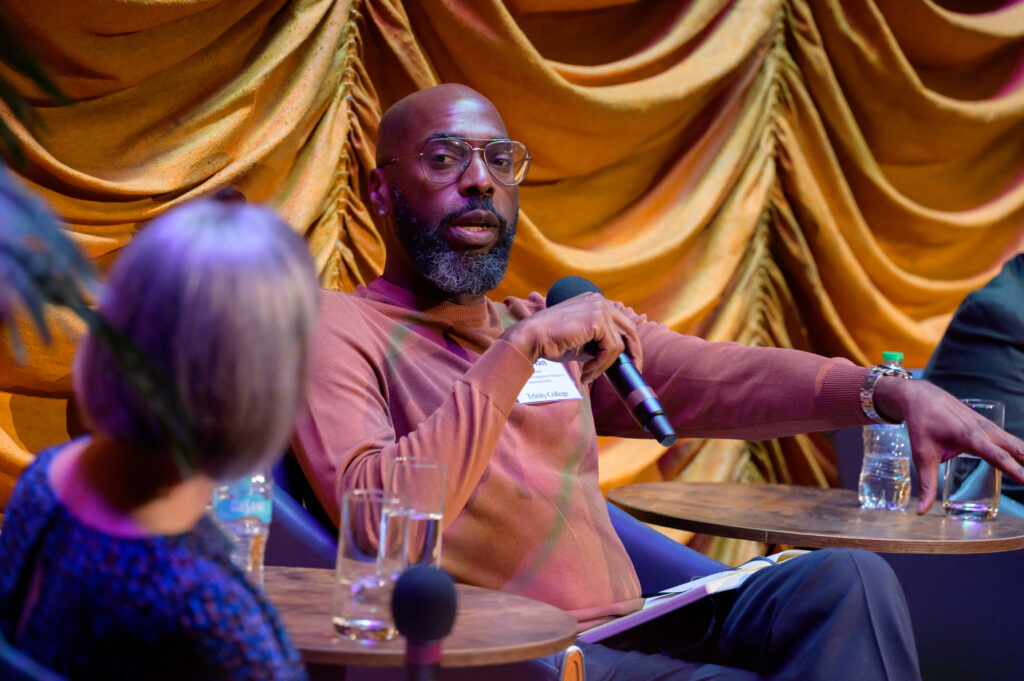
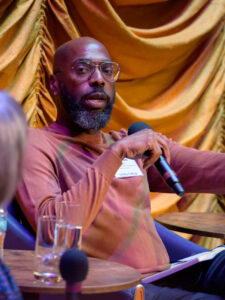
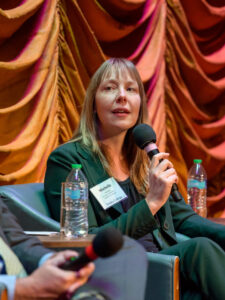
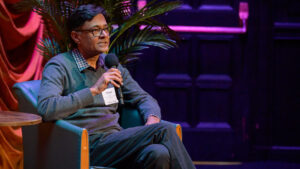
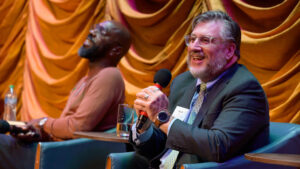
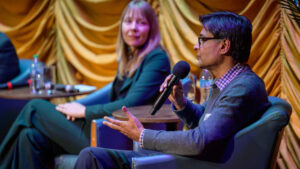
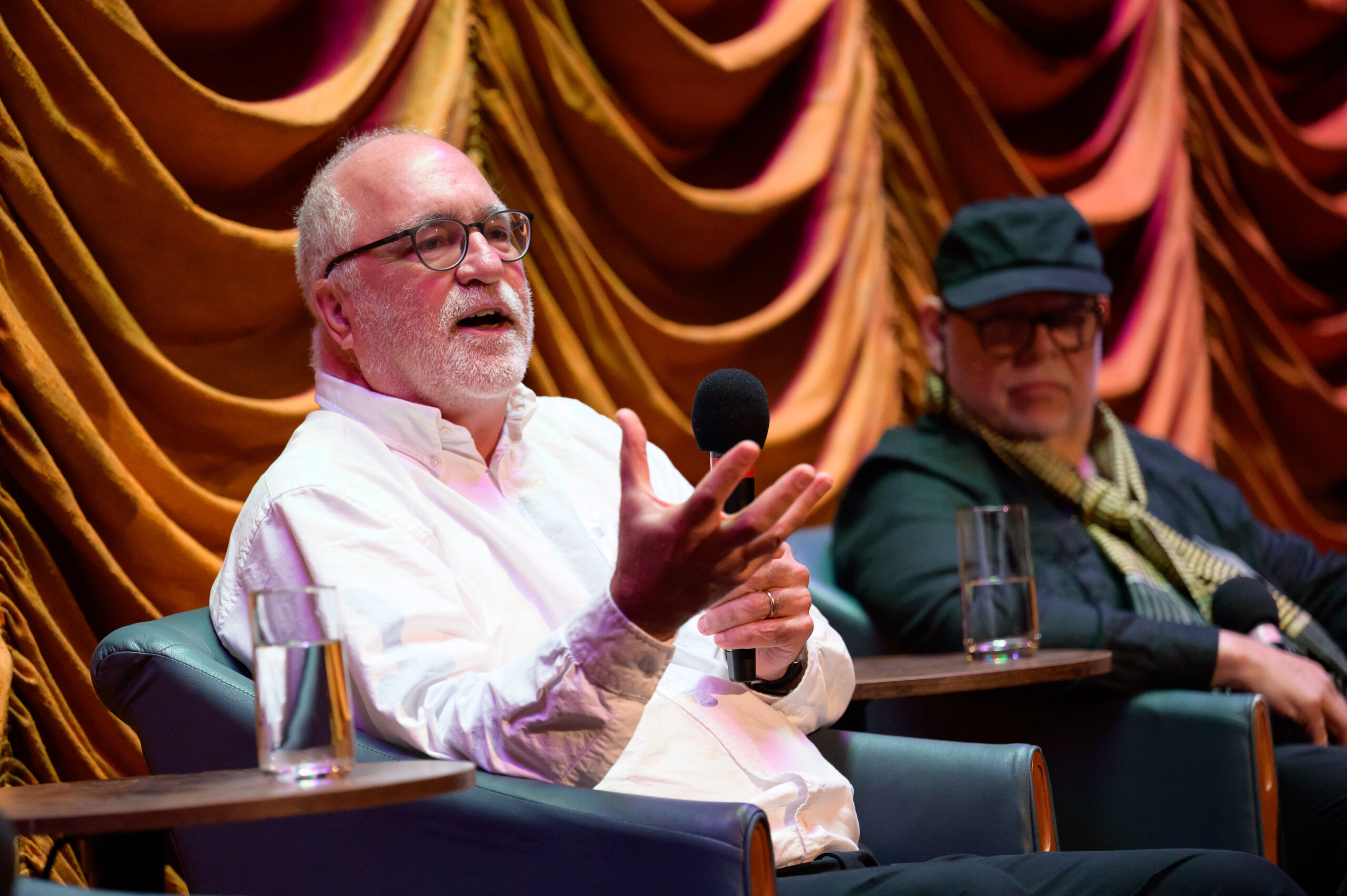
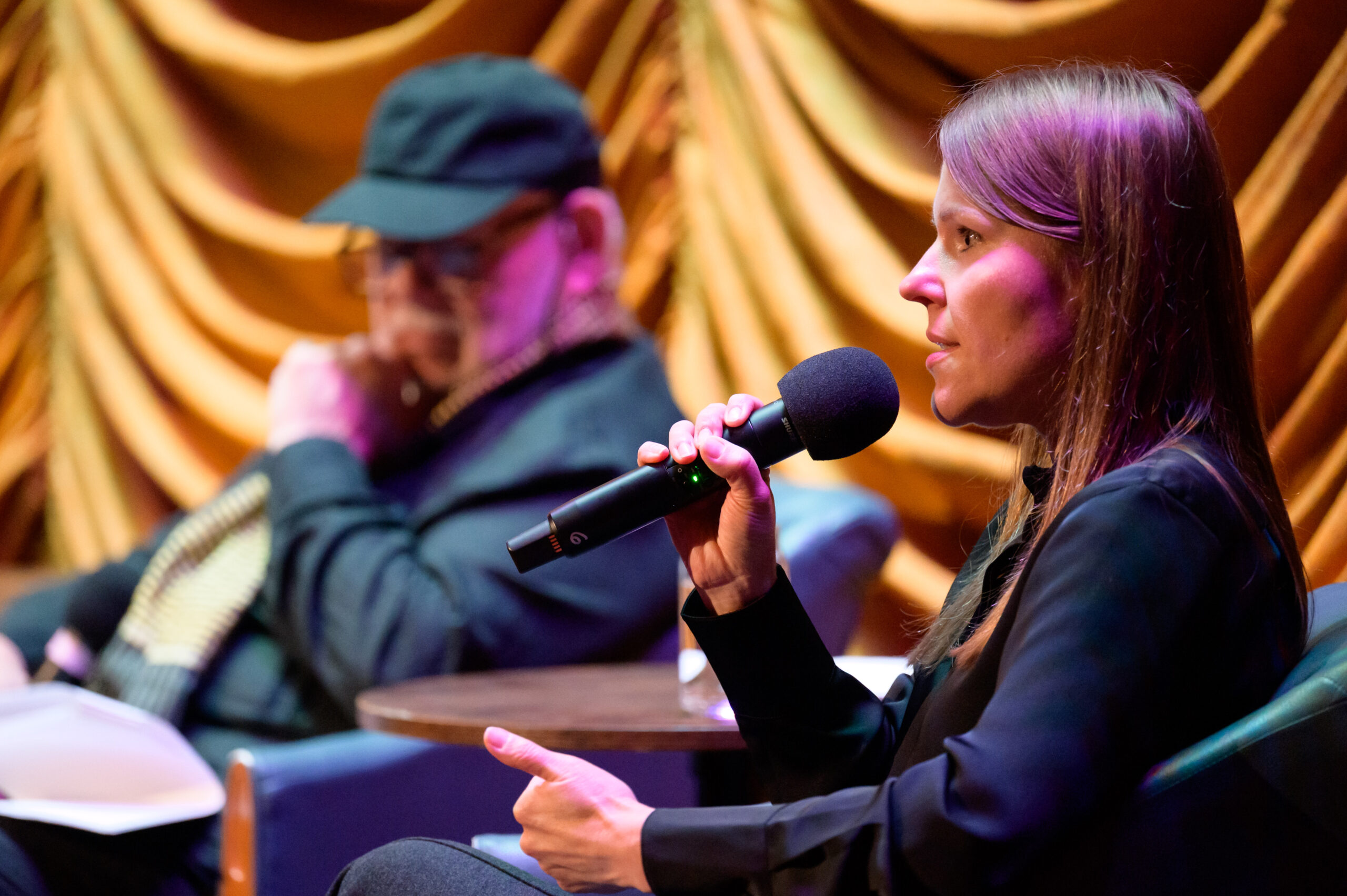
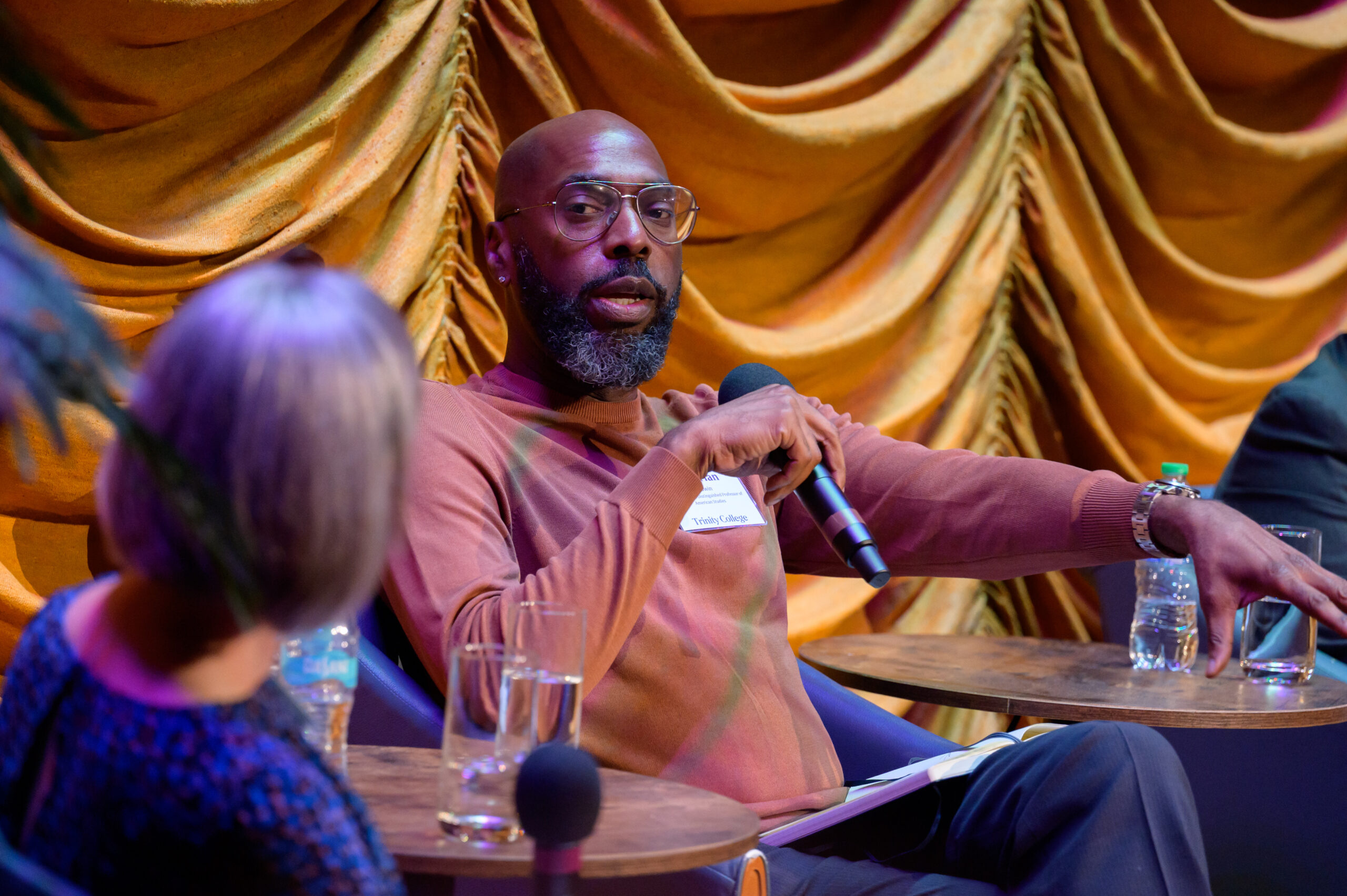
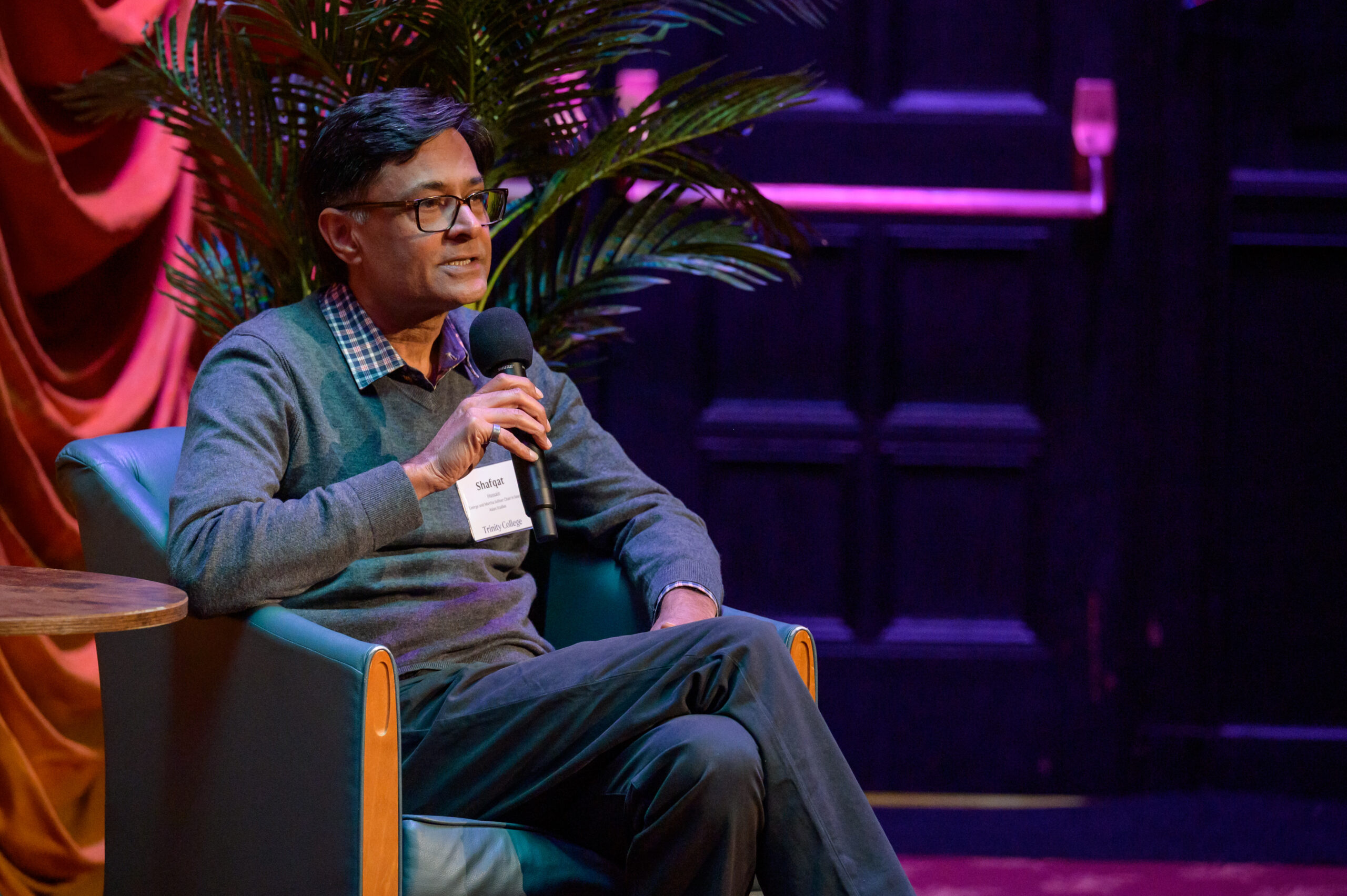
Moderated by Jennifer M. Regan-Lefebvre, professor of history, the panel included: Davarian L. Baldwin, Paul E. Raether Distinguished Professor of American Studies; Shafqat Hussain, George and Martha Kellner Chair in South Asian Studies; Michelle Kovarik, Dr. Henry A. DePhillips, Jr. Professor of Chemistry; and Kevin J. McMahon, John R. Reitemeyer Professor of Political Science.
Hussain, whose work as an applied anthropologist focuses on the co-existence of snow leopards and human societies, said that for faculty members who are active practitioners in their fields, “it means that you not only teach, but you also try to solve some problems that are out there in the world.”
Baldwin said that his Smart Cities Research Lab is driven by service and advocacy. “We research and consult on best practices for building equitable urban communities,” said Baldwin, who added that liberal arts institutions and their faculty members can be nimble, adaptive, and responsive. “It’s the secret sauce of what we can do here,” he said.
Davarian L. Baldwin, Paul E. Raether Distinguished Professor of American Studies.
During a discussion about the challenges that artificial intelligence poses to teaching, McMahon—who studies the Supreme Court—talked about his use of in-class moot court exercises. “I want to emphasize skills that you can’t go to ChatGPT and get. … Thinking on your feet, responding to questions that you might not anticipate,” he said.
Kovarik spoke about the value of a teaching laboratory. “Labs are not just for practicing: labs are the site of knowledge creation in the sciences. Students can contribute to that,” she said. “We’re not just teaching them content knowledge; we’re teaching them how to use that knowledge.”
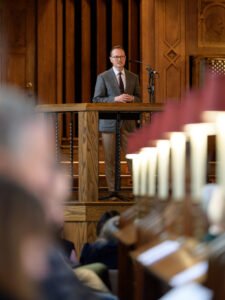
Garth Myers, faculty secretary and Paul E. Raether Distinguished Professor of Urban International Studies and director of the Center for Urban and Global Studies, delivers opening remarks.
2/25
Laura J. Holt ’00, professor of psychology, introduces the “Human Creativity” symposium panelists.
3/25
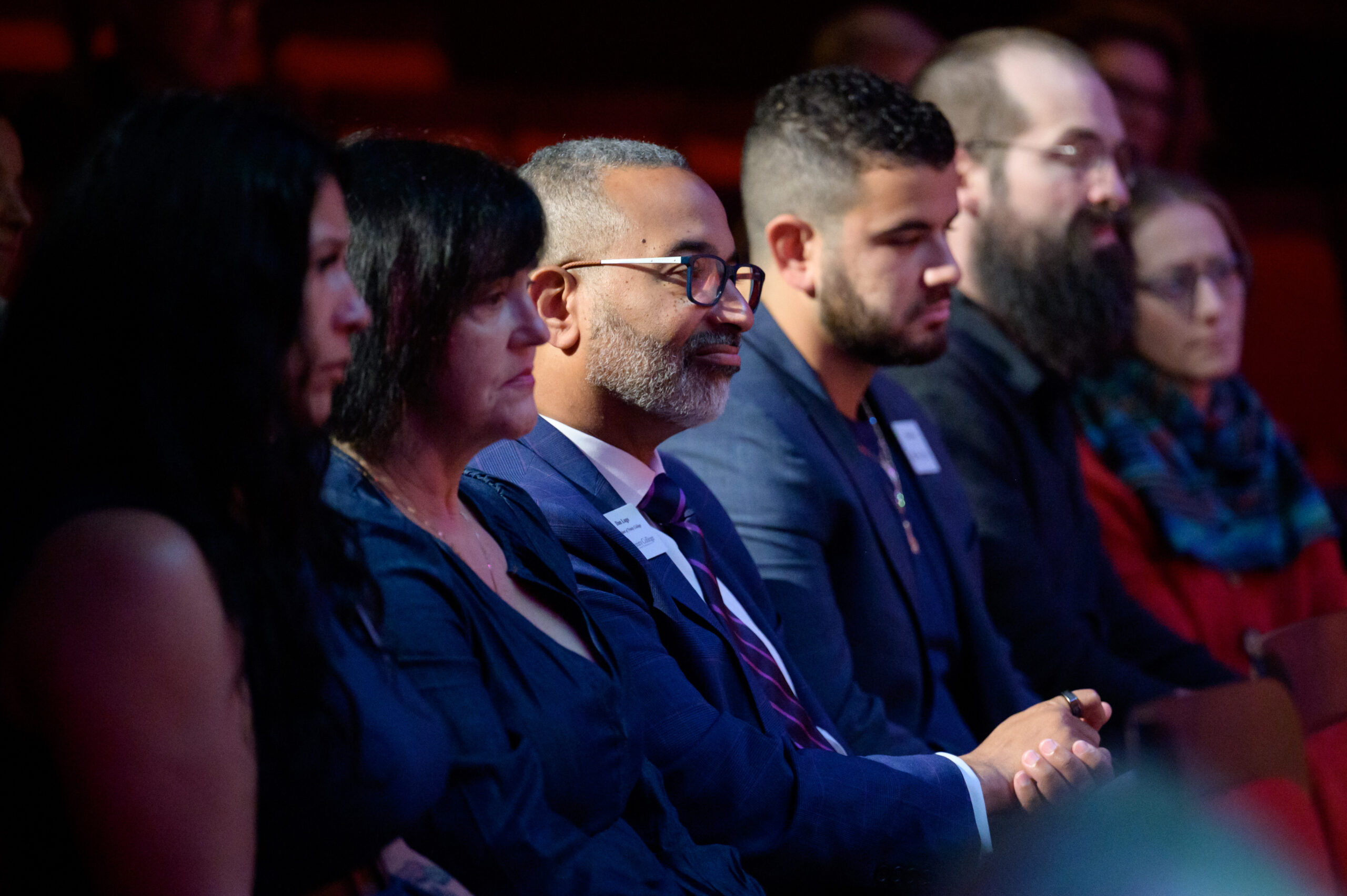
Trinity College President Dan Lugo and his family at the “Human Creativity” symposium.
4/25
Sarah Bilston, Paul E. Raether Distinguished Professor of English, and Kent D. Dunlap, Thomas S. Johnson Distinguished Professor of Biology.
5/25
Sarah Bilston, Paul E. Raether Distinguished Professor of English, and Kent D. Dunlap, Thomas S. Johnson Distinguished Professor of Biology.
6/25
Ewa Syta, Charles A. Dana Research Associate Professor of Computer Science.
7/25
Pablo Delano, Charles A. Dana Professor of Fine Arts.
8/25
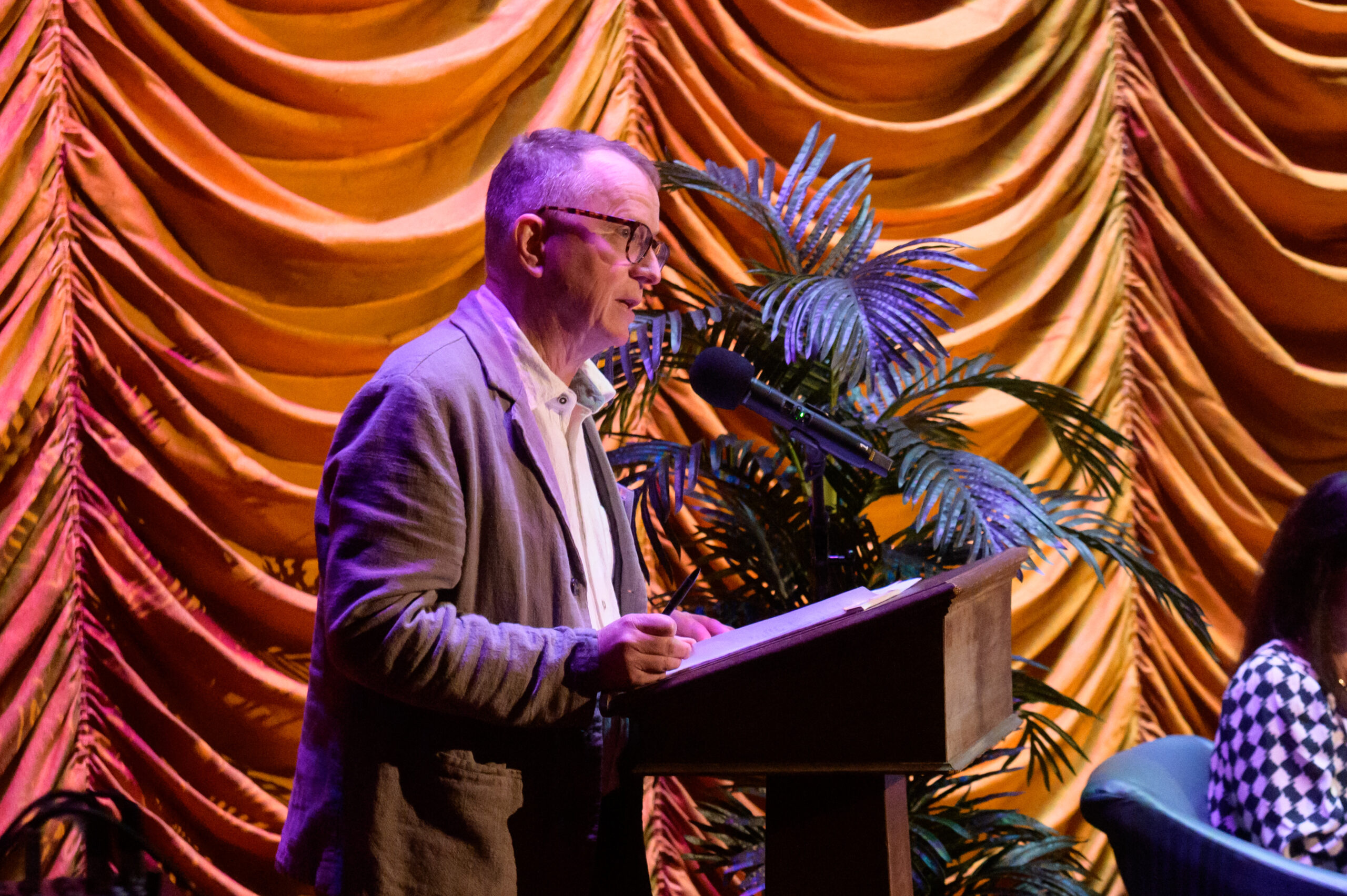
Sarah Bilston, Paul E. Raether Distinguished Professor of English, speaks during the “Human Creativity” symposium.
9/25
Kent D. Dunlap, Thomas S. Johnson Distinguished Professor of Biology, and Pablo Delano, Charles A. Dana Professor of Fine Arts.
10/25
Pablo Delano, Charles A. Dana Professor of Fine Arts, and Ewa Syta, Charles A. Dana Research Associate Professor of Computer Science.
11/25
Associate Professor of Psychology Michael A. Grubb introduces “The Art and Science of Awe.”
12/25
Christopher Houlihan ’09, John Rose Distinguished College Organist, director of Chapel music, and artist-in-residence.
13/25
Christopher Houlihan ’09, John Rose Distinguished College Organist, director of Chapel music, and artist-in-residence, performs.
14/25
Audience members listen to a performance by Christopher Houlihan ’09, John Rose Distinguished College Organist, director of Chapel music, and artist-in-residence.
15/25
Christopher Houlihan ’09, John Rose Distinguished College Organist, director of Chapel music, and artist-in-residence, performs.
16/25
Audience members were encouraged to move around the Chapel to hear the organ from different perspectives.
17/25
Jennifer M. Regan-Lefebvre, professor of history, poses questions to the “Bridging Knowledge and Practice” panelists.
18/25
Davarian L. Baldwin, Paul E. Raether Distinguished Professor of American Studies.
19/25
Kevin J. McMahon, John R. Reitemeyer Professor of Political Science, and Michelle Kovarik, Dr. Henry A. DePhillips, Jr. Professor of Chemistry.
20/25
Shafqat Hussain, George and Martha Kellner Chair in South Asian Studies.
21/25
Kevin J. McMahon, John R. Reitemeyer Professor of Political Science.
22/25
Jennifer M. Regan-Lefebvre, professor of history, poses questions to the “Bridging Knowledge and Practice” panelists.
23/25
Davarian L. Baldwin, Paul E. Raether Distinguished Professor of American Studies, and Kevin J. McMahon, John R. Reitemeyer Professor of Political Science.
24/25
Michelle Kovarik, Dr. Henry A. DePhillips, Jr. Professor of Chemistry, and Shafqat Hussain, George and Martha Kellner Chair in South Asian Studies.
25/25
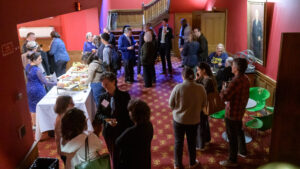
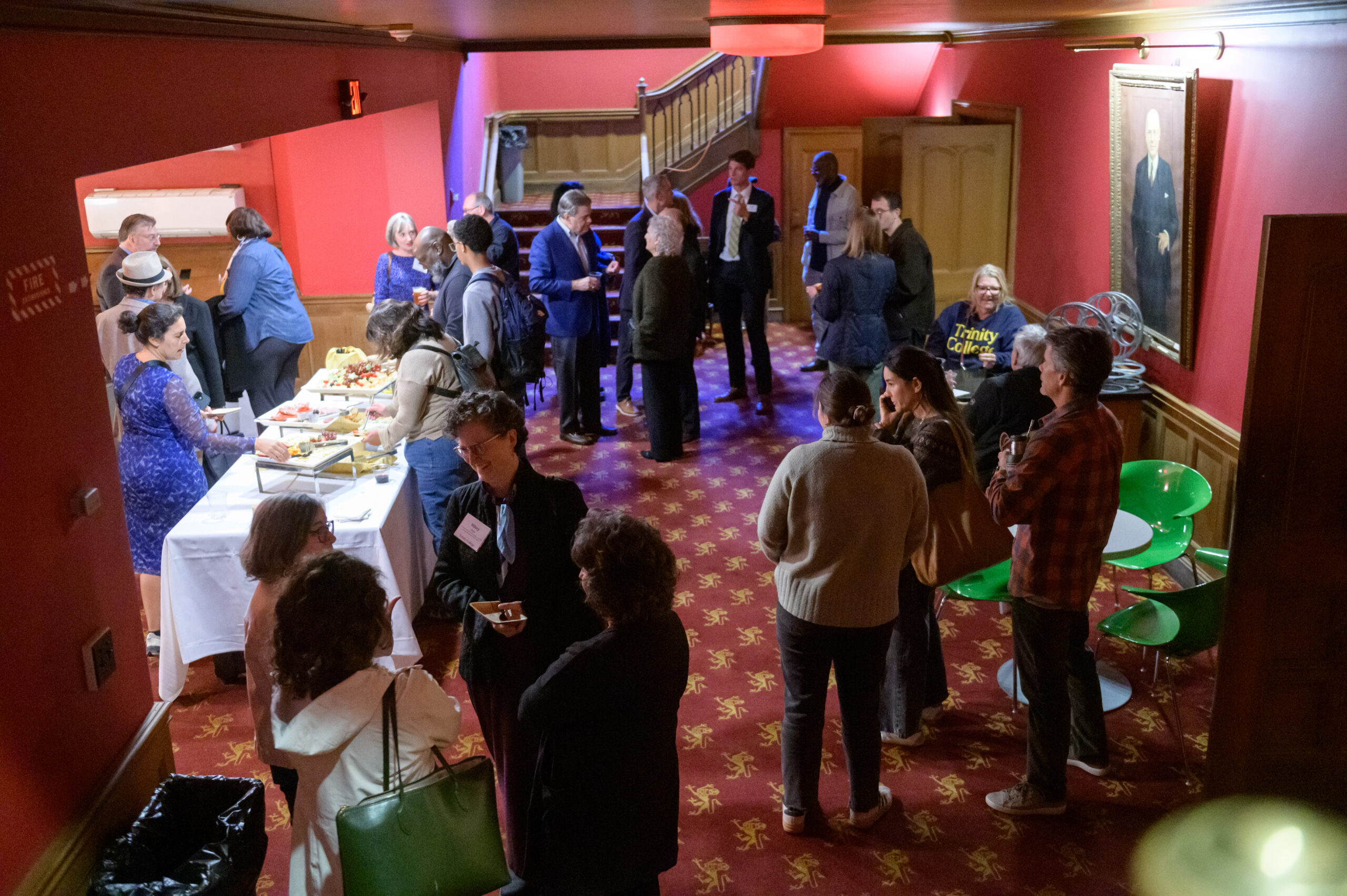
A reception in Cinestudio followed the academic symposia.
Activist, scholar, poet, and educator Alexis Pauline Gumbs gave a reading and joined a discussion on campus as the keynote event in Trinity College’s celebration of Women’s Herstory Month.
The Museum of the Old Colony, an art installation by Professor of Fine Arts Pablo Delano, opened March 14, 2026, at the New Britain Museum of American Art.
Highlights from February included athletic achievements, cultural celebrations, panel discussions, theater performances, art exhibitions, the awarding of the 2026 President’s Medal for Science and Innovation, and one major snowstorm after another.