Mather Art Gallery Hosts Hartford Environmental Justice Research Partnership Exhibit
Content
Story
Posted
By
Yulia Puhareva ’26 and Andrew J. Concatelli
Category
Academics
A traveling environmental justice exhibition created by Trinity College students, faculty members, and community partners will be featured in Trinity’s Mather Hall Art Gallery from April 1 to 29, 2026.
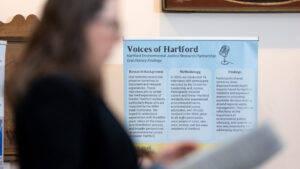
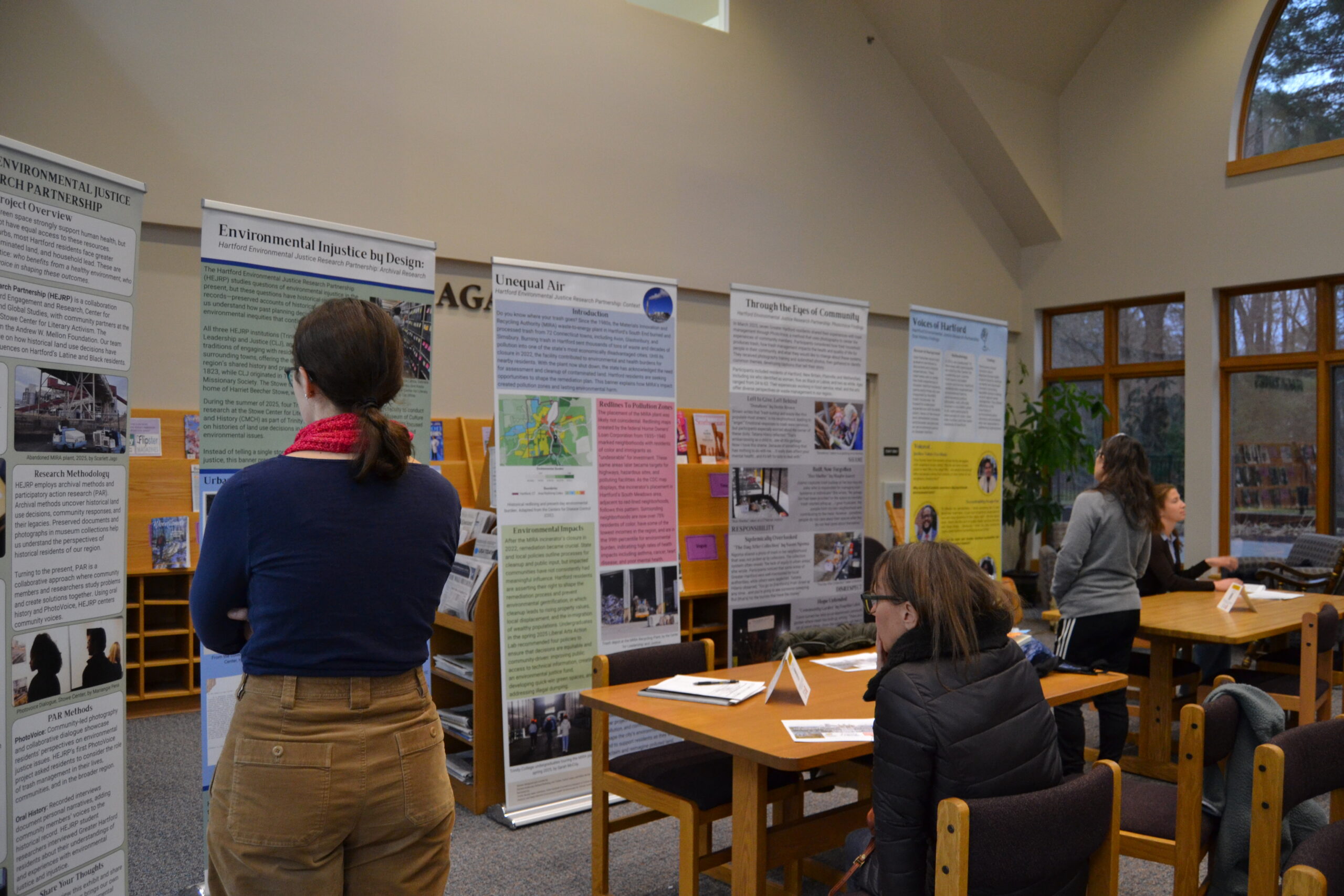
The research-based exhibit features banners with information about environmental issues shaping Greater Hartford, including the closure of the Materials Innovation and Recycling Authority trash incineration facility and its implications for waste management, public health, and regional planning.
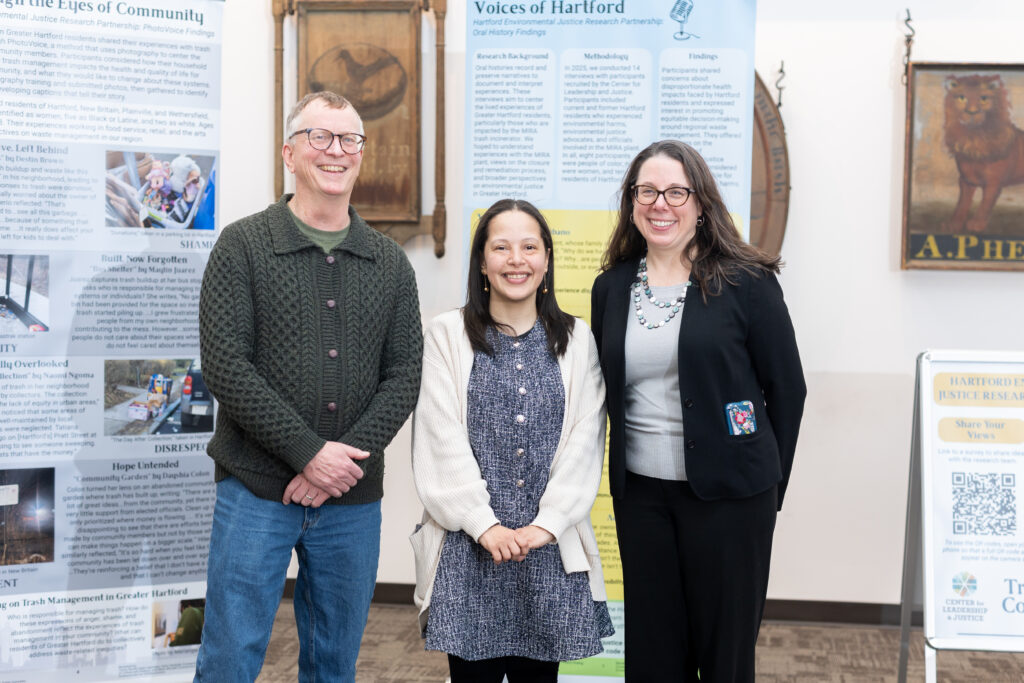
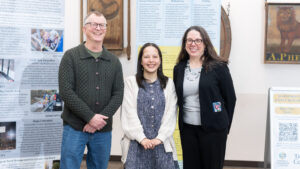
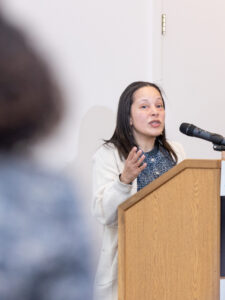
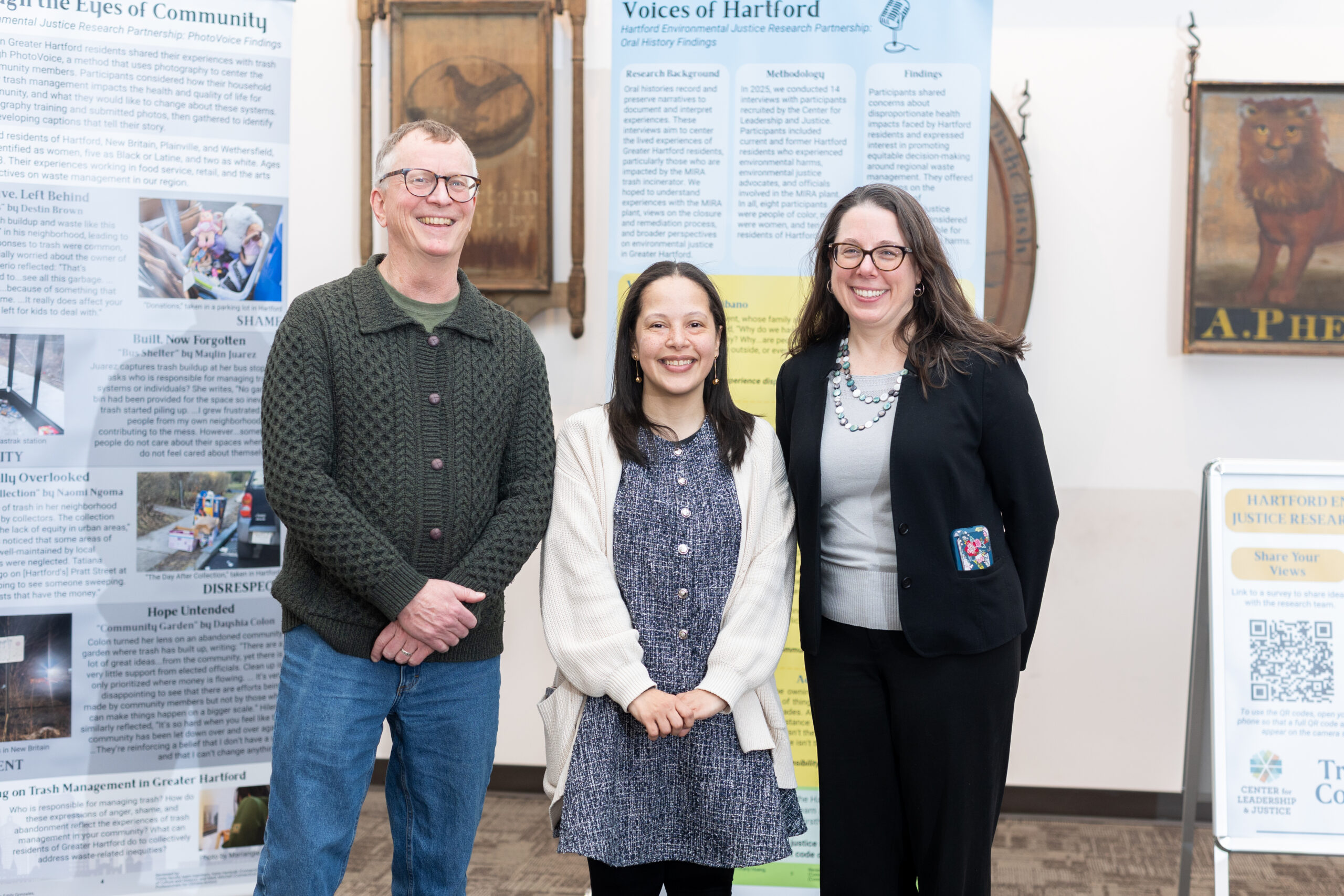
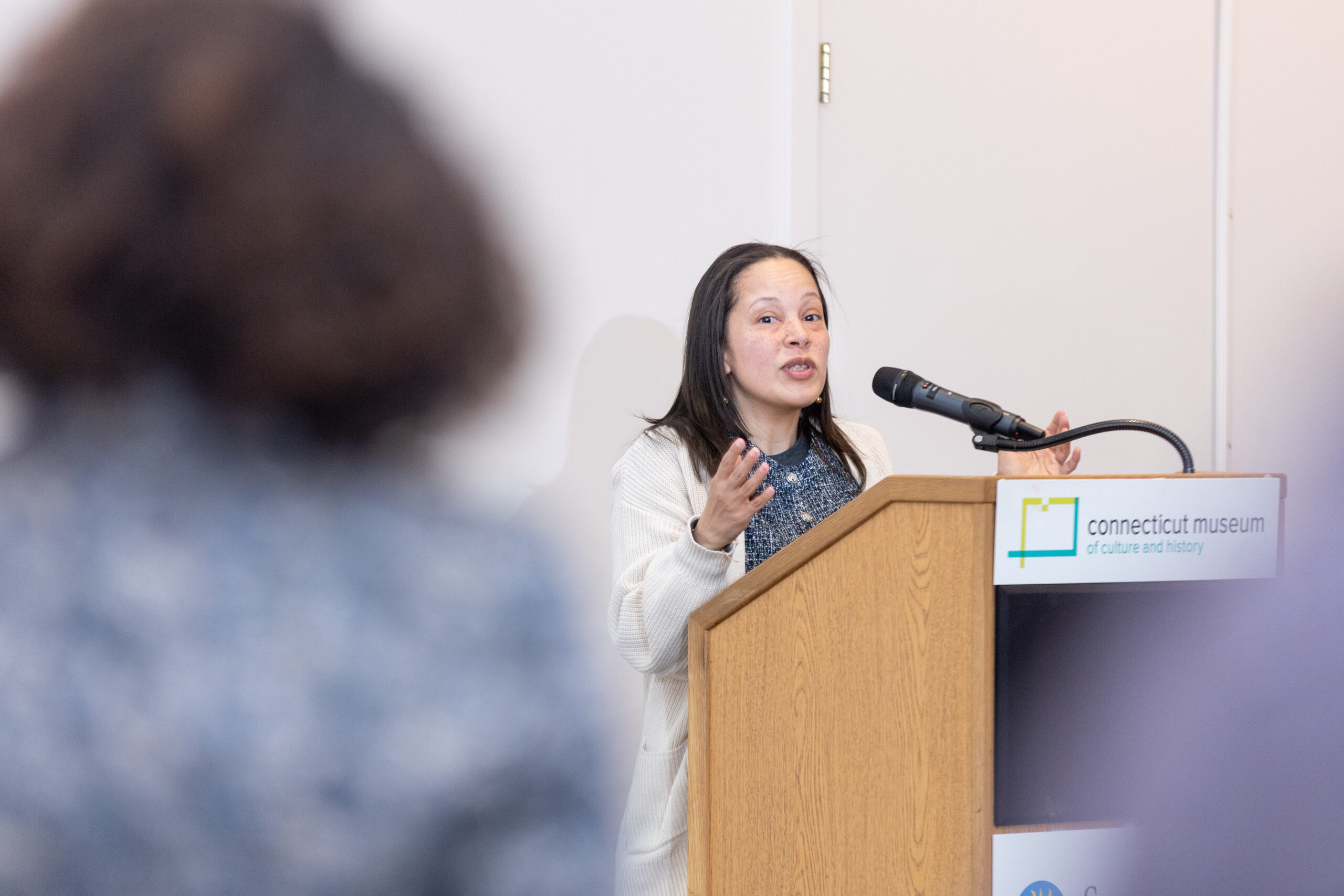
Paul E. Raether Distinguished Professor of Urban International Studies and Director of the Center for Urban and Global Studies Garth A. Myers; Assistant Professor of Anthropology Amanda J. Guzmán; and Associate Professor of Political Science and Public Policy and Law Abigail Fisher Williamson at the exhibit’s opening at the Connecticut Museum of Culture and History on January 29, 2026. Photo by Sarah McCoy.
Collectively, the team aims to “encourage informed public dialogue on how historical land use decisions have imposed health and environmental consequences on Hartford’s predominantly Latine and Black residents and to build regional consensus to address challenges brought about by that history.”
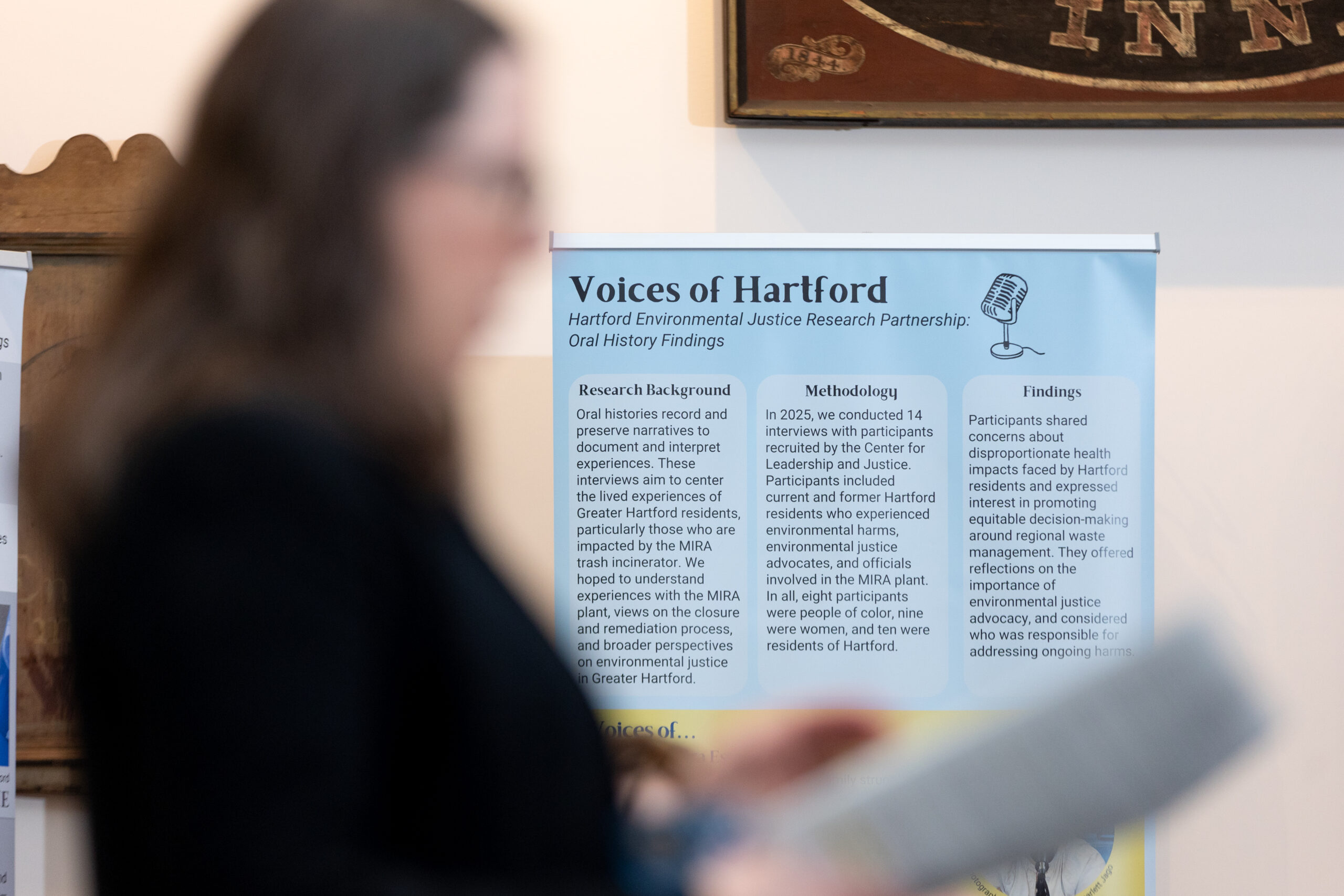
In fall 2025, project curator Guzmán incorporated grant research into her “Anthropology of Museums” course. “My students produced the inaugural banner series of five pop-up banners, which focused on the project’s overview, contextualized the work of environmental justice in Hartford, and outlined preliminary research findings through archival analysis, oral history, and PhotoVoice work,” Guzmán said. “This work was supported by museum trips, guest lectures, and banner feedback support with the Stowe Center for Literary Activism—one of the project’s community partners—and the Connecticut Museum of Culture and History.”
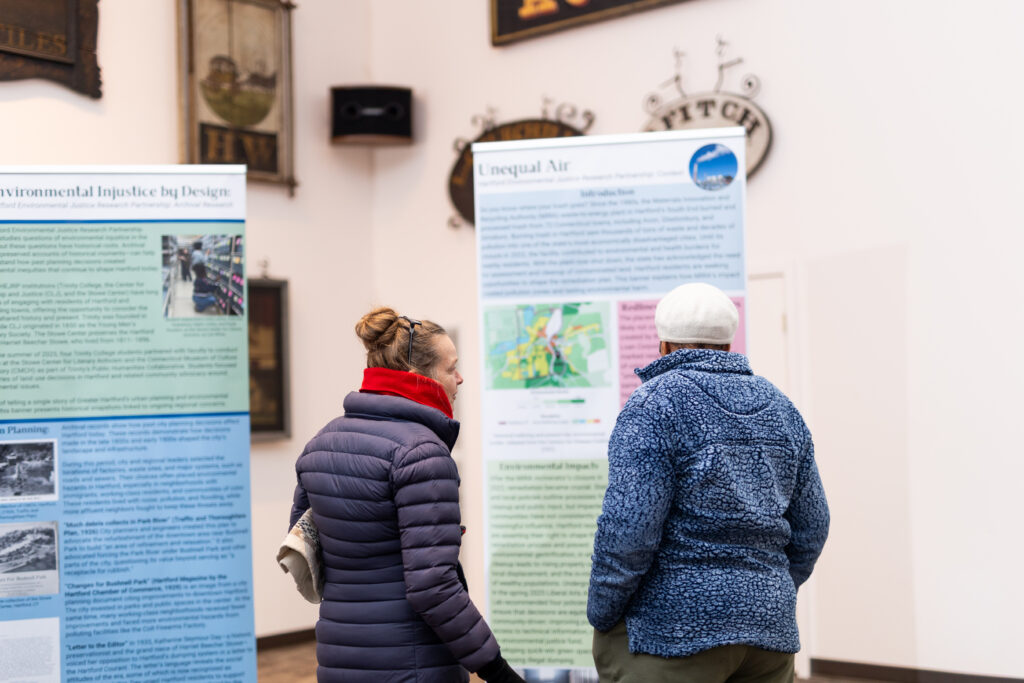
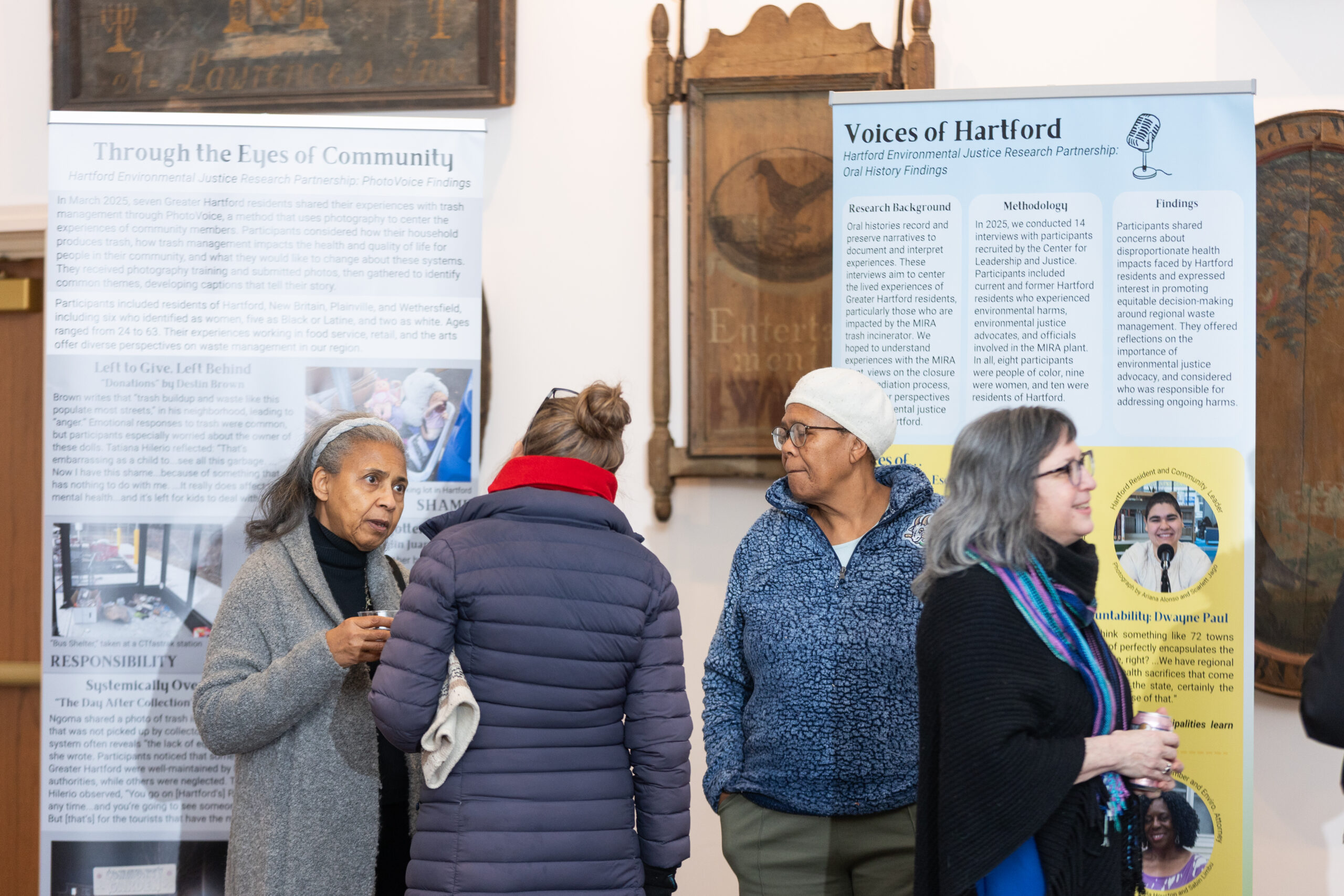
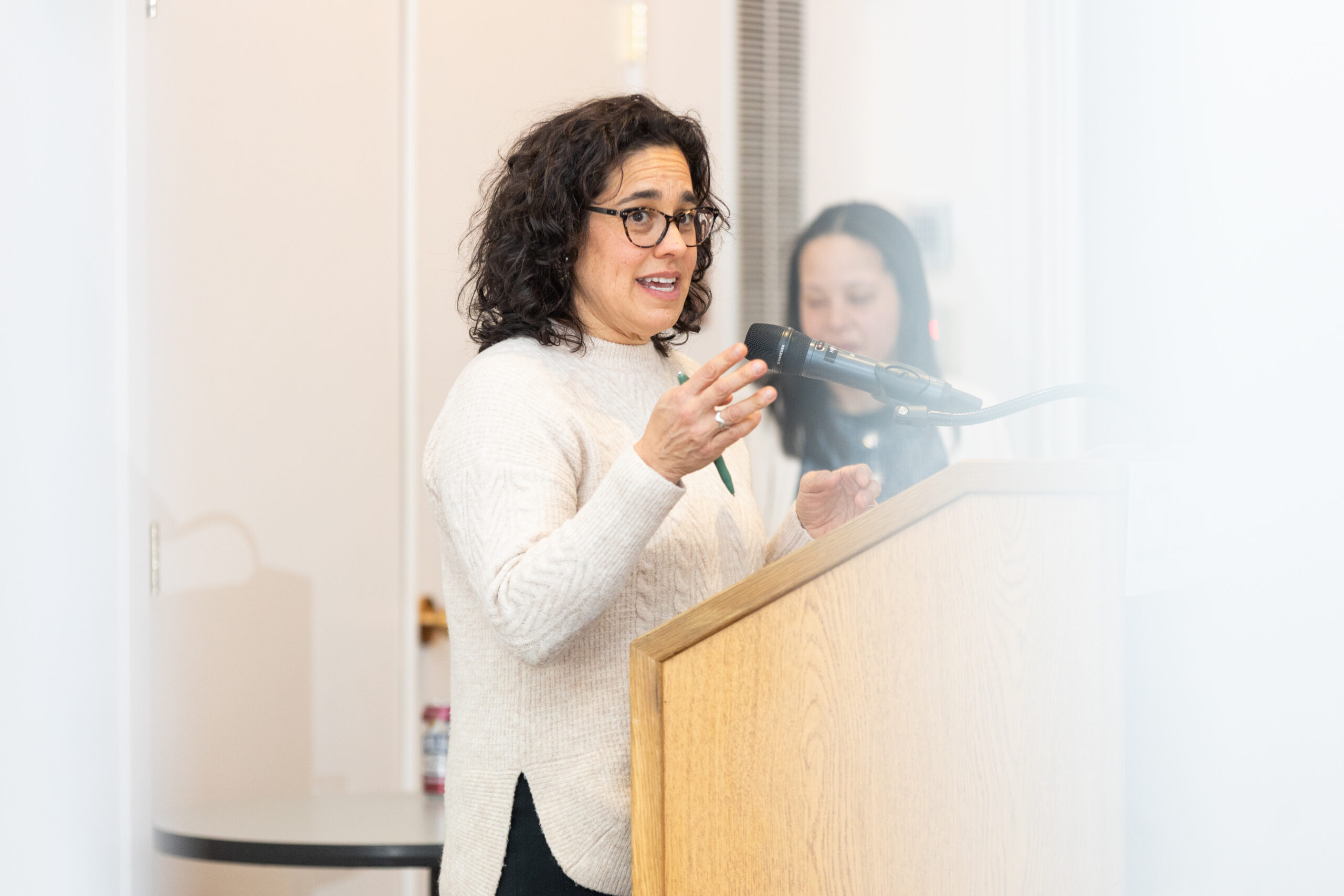
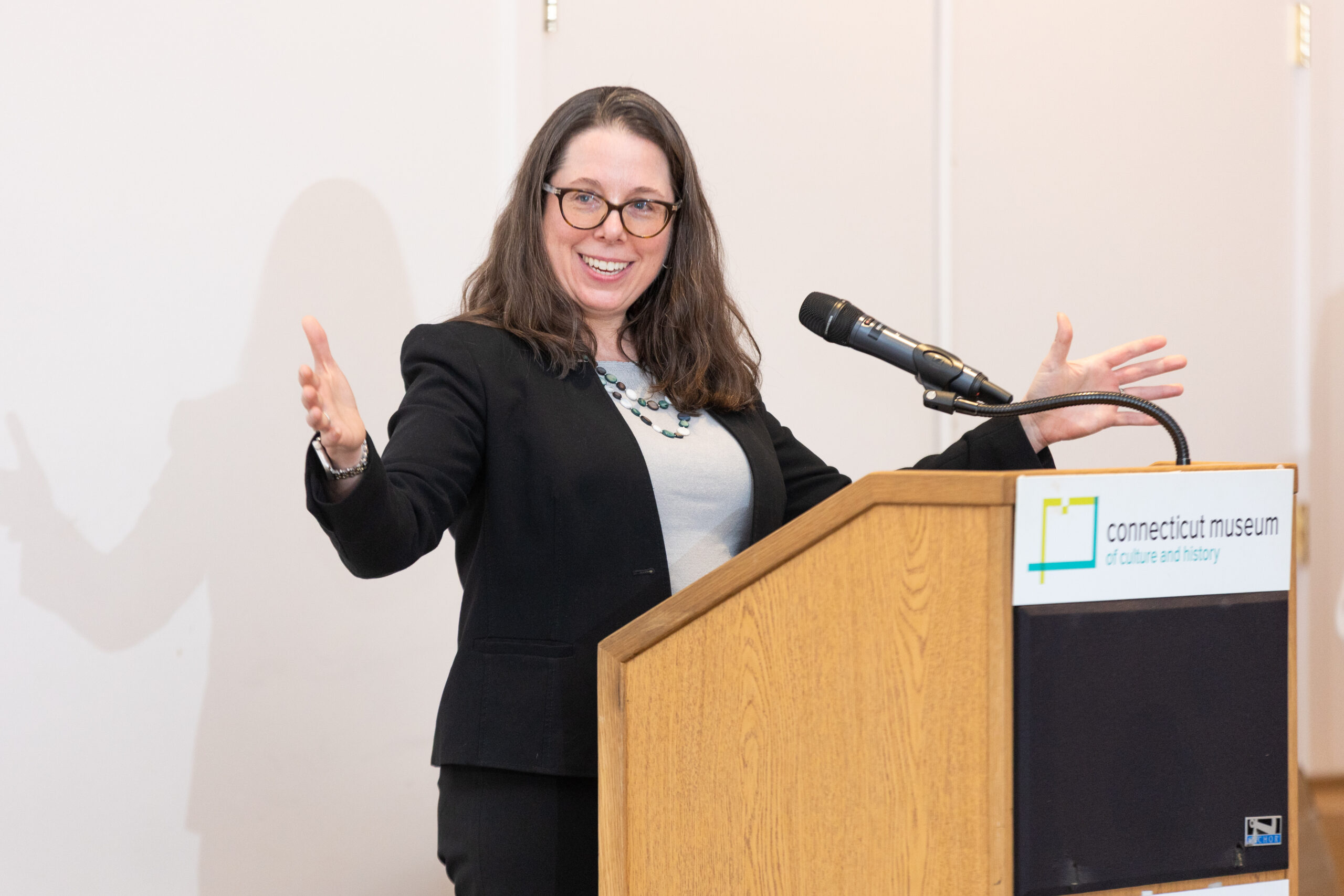
The exhibit first opened at the Connecticut Museum of Culture and History on January 29, 2026. Photo by Sarah McCoy.
These banners are the centerpiece of a spring 2026 traveling exhibition, which was shown at the Connecticut Museum of Culture and History and the Avon Free Public Library before coming to Trinity. The exhibit invites visitors to reflect on and participate in facilitated discussions about environmental justice and waste management issues in Greater Hartford.
The oral history interviews, PhotoVoice images, and archival research that informed the banners were developed by Trinity students in a spring 2025 Liberal Arts Action Lab project co-taught by Liberal Arts Action Lab Director and Lecturer in Public Policy and Law Derin Atalay, Sarah McCoy of the CLJ, and Williamson, as well as by summer student researchers through the Public Humanities Collaborative. Read more about their work here.
Williamson said that community-engaged research too often ends when the semester does. “This grant is helping us break that cycle by supporting ongoing collaboration among students, staff, faculty, and community partners, so the research is deeper, and the relationship with the community is more reciprocal and sustained,” she said.
Professor of Political Science Stefanie Chambers, in her role as a major project grantee, is working with her “Environmental Justice Policy” students to employ the banners as a point of departure for public dialogue at urban and suburban religion-based settings.
Guzmán added, “Together, the class-facilitated public dialogues along with the tour venue exhibitions are meant to broadly communicate the work of the project both on Trinity’s campus and across urban and suburban communities to encourage and facilitate regional dialogue around environmental justice.”
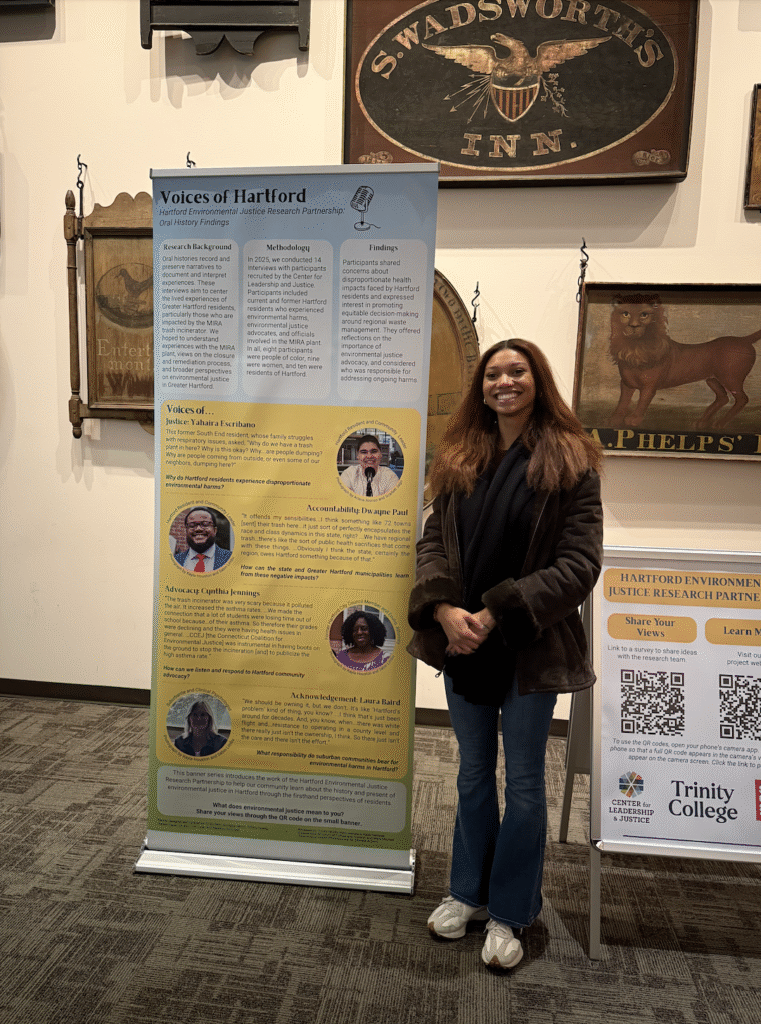
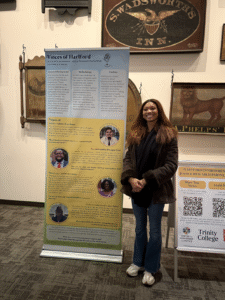
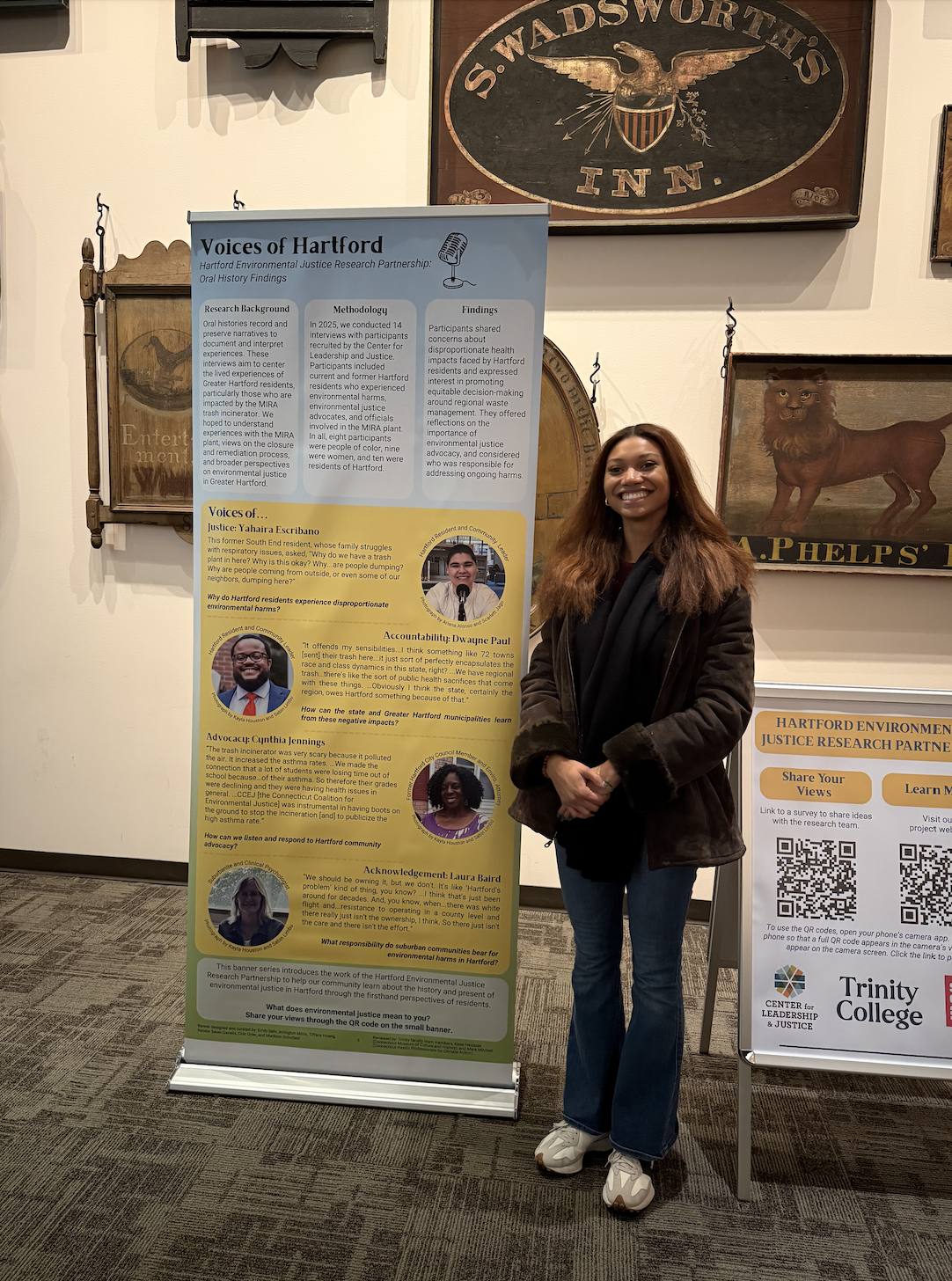
Arrington Mims ’26 at the Connecticut Museum of Culture and History.
One of Guzmán’s “Anthropology of Museums” students was Arrington Mims ’26, an anthropology major at Trinity who took the course because she is interested in museum careers and exhibit curation. Mims had previously completed engaged coursework in the archives of the Stowe Center of Literary Activism.
Mims worked with a group of class peers to translate oral histories with 14 community members into a banner for public audiences. She described the central challenge as accurately representing participants while condensing long interviews into short quotes, given the banners’ space limitations. “We were really trying to make sure we weren’t chopping up their words and making them say something they didn’t mean,” Mims said.
The pop-up banners are designed to be displayed in public spaces for a general audience while also inviting optional research participation through an anonymous survey. A component of the broader research project is understanding how people in Greater Hartford view environmental justice, especially as it relates to trash management. Survey responses and dialogue experiences will be analyzed to contribute to this line of inquiry.
A focus on careful representation, clarity, and accessibility shaped the overall development of the traveling exhibition, Mims said. Students worked through multiple rounds of feedback from faculty and project partners, revising banner language and visual design to make the information readable and impactful for a general audience.
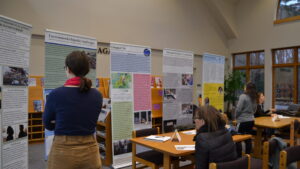
At the exhibit’s January 29 opening at the Connecticut Museum of Culture and History, Mims said she watched visitors stop and read closely, reacting in real time to the history and the community experiences presented. “Usually, I do a project, and it’s just my professor looking over it. This is something people are going to see,” she said. “This has an impact.”
The exhibit is on display in Trinity’s Mather Hall Art Gallery through April 29, 2026.
1/9
Paul E. Raether Distinguished Professor of Urban International Studies and Director of the Center for Urban and Global Studies Garth A. Myers; Assistant Professor of Anthropology Amanda J. Guzmán; and Associate Professor of Political Science and Public Policy and Law Abigail Fisher Williamson at the exhibit’s opening at the Connecticut Museum of Culture and History on January 29, 2026. Photo by Sarah McCoy.
2/9
The exhibit first opened at the Connecticut Museum of Culture and History on January 29, 2026. Photo by Sarah McCoy.
3/9
Professor of Political Science Stefanie Chambers. Photo by Sarah McCoy.
4/9
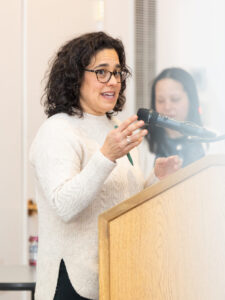
Associate Professor of Political Science and Public Policy and Law Abigail Fisher Williamson. Photo by Sarah McCoy.
5/9
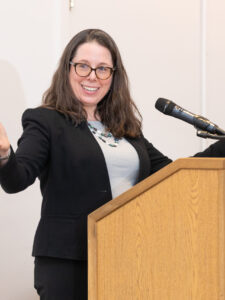
Assistant Professor of Anthropology Amanda J. Guzmán. Photo by Sarah McCoy.
6/9
The exhibit first opened at the Connecticut Museum of Culture and History on January 29, 2026. Photo by Sarah McCoy.
7/9
The exhibit first opened at the Connecticut Museum of Culture and History on January 29, 2026. Photo by Sarah McCoy.
8/9
Arrington Mims ’26 at the Connecticut Museum of Culture and History.
9/9
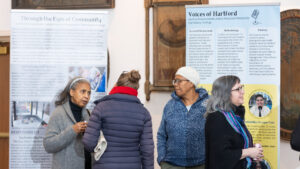
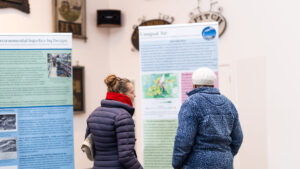
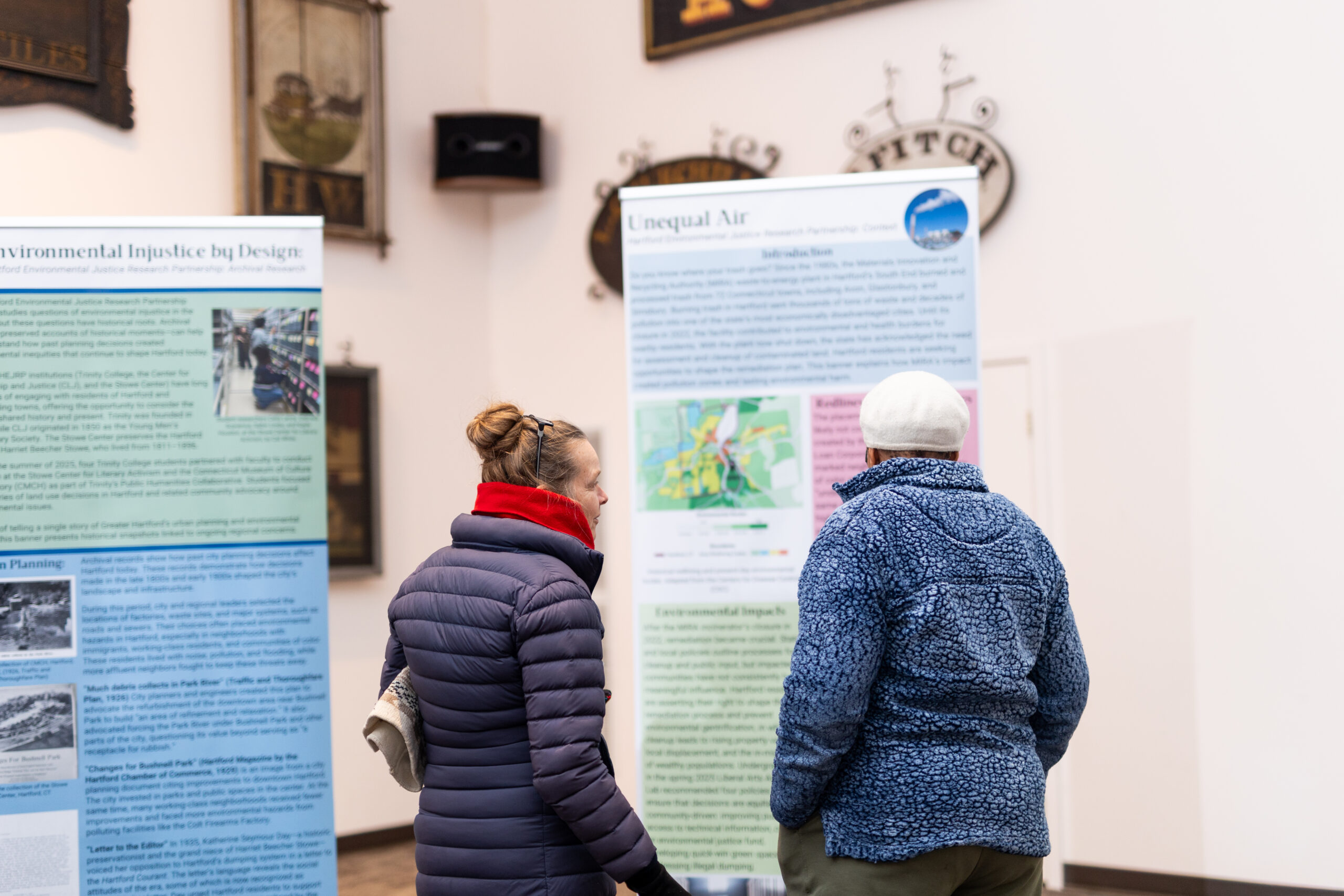
Guests view the banners at the pop-up exhibit at the Avon Free Public Library on March 23, 2026. Photo by Reanna Kuzdzal.
The digital humanities website Public Art CT—sponsored in part by Trinity College and created by a Trinity faculty member—has received a 2026 Award of Excellence from the American Association for State and Local History (AASLH).
Trinity alumna Teodora “Tea” Brnović ’24 and Associate Professor of Sociology Alyson K. Spurgas recently had a co-authored article published in the October 2026 issue of Social Science & Medicine.
Demonstrating valuable return on investment and continued alumni success, Trinity has earned recognition this fall in multiple college guides, including an elevated ranking at #31 on the 2027 U.S. News & World Report list of Best National Liberal Arts Colleges.
The exhibition opening in the Austin Arts Center on September 24 showcases recent works by Studio Arts Program Postbaccalaureate Fellowship alumni Ciara Rubí, Sydney Smith, and Trinity alumna Weixi Zhang ’18.