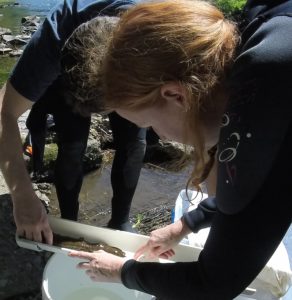
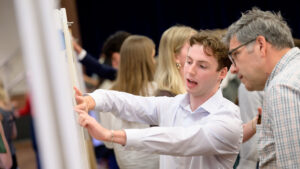
Amber Pitt, associate professor of environmental science, works in the field with students.
Amber Pitt grew up swimming in New England rivers and lakes alongside freshwater turtles and appreciating their presence.
The Trinity College associate professor of environmental science is now among leading tortoise and turtle researchers globally to be recognized for her expertise by the International Union for Conservation of Nature (IUCN).
“Being part of the IUCN is a powerful reminder of the urgent need for effective conservation strategies,” said Pitt. “It is vital that we continue to monitor and evaluate their status to ensure we are doing everything we can to protect these incredible species.”
The IUCN’s Tortoise and Freshwater Turtle Specialist Group plays a key role in evaluating the status of more than 300 species, providing essential science-based recommendations to determine appropriate threat level categories for the species. The evaluations are critical for informing conservation priorities and guiding policy decisions.
At the most recent international IUCN gathering at the Turtle Conservancy’s headquarters in Ojai, California, Pitt presented an assessment of the Northern Map Turtle, a species of special concern in North America.
Turtles face increasing threats from habitat loss, exploitation, pollution, and climate change, she said.
The Trinity College community gathered for a documentary film screening and panel discussion with alumna Julia Hoppock ’06, an associate producer of People vs. Politics, as part of Voter Education Week.
The grant for Susan A. Masino, Paul E. Raether Distinguished Professor of Applied Science, and David N. Ruskin, research associate professor, will provide summer research opportunities for Trinity students.
Associate Professor of Classical Studies Vincent E. Tomasso, whose first-year seminar is reading Homer’s epic poem, will give a presentation as part of Odyssey Day this fall. Read more about why he says The Odyssey still resonates today.
More than 100 Trinity students spent part of the summer working with faculty members and other mentors. The fall symposium allowed these students to showcase their findings and research processes.