image
posted by Yulia Puhareva'26

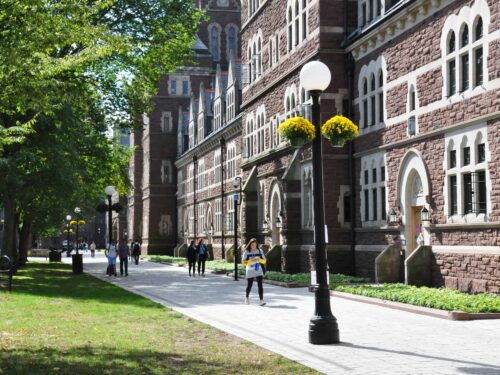
The Best Years of Your Life Were Walkable

Why do so many Americans describe college as the best years of their lives? Drawing on Jan Gehl’s Cities for People, this piece suggests the answer has less to do with youth and more to do with walkability, proximity, and life at human speed — something many leave behind after graduation.

image
Postgraduate Fellowships posted by Gabby Nelson, José Ginocchio Moraiz ‘23

Alum’s Commitment to Human Rights and Global Leadership Leads to Schwarzman Scholars

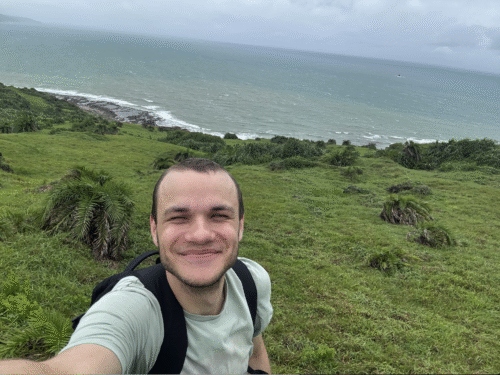
José Ginocchio Moraiz ‘23 has been using his creativity and advocacy to advance human rights since before he came to Trinity. An international student from Argentina, José attended United World College of the Adriatic before coming to Trinity as an anthropology and human rights major. As a teenager, he volunteered in humanitarian shelters for displaced populations and undertook leadership roles in civil society organizations. The breadth of his activities and depth of his commitment to disadvantaged communities has only grown since then. After working on human rights issues for the last couple of years, José applied for and was accepted to Schwarzman Scholars, a prestigious one-year, fully funded master’s degree program in global affairs at Tsinghua University in Beijing, China. 

image
Faculty Research posted by Yulia Puhareva'26

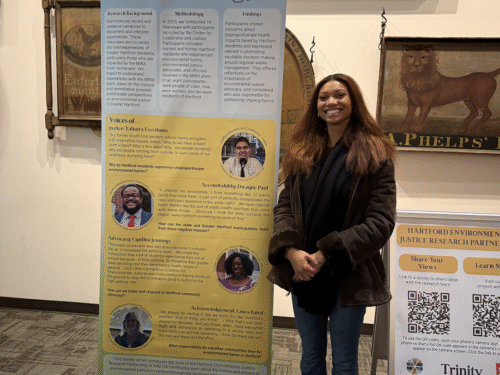
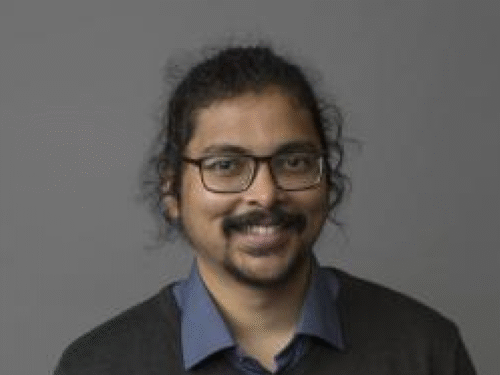
From Dhaka to Hartford: Meet Dr. Mushahid Hussain

Urban Studies welcomes development sociologist Dr. Mushahid Hussain, whose work spans topics from agrarian change to urban life in cities from Dhaka to Hartford.

image
Senior Spotlight posted

Nellie Conklin ’26 Named Presidential Scholar in Urban Studies

What happens when one class reshapes your entire perspective on cities? For Nellie Conklin ’26, it meant finding her academic passion and setting her on the path to becoming this year’s Presidential Scholar in Urban Studies. Her work since then has spanned from neighborhood walks in Hartford to on-site field study in Rome, and from classroom projects to collaborations with local housing organizations. Nellie brings curiosity and focus to every part of her work, and she plans to bring that approach with her as she returns to Boston after graduation to pursue a career in affordable housing.

image
CUGS Events posted by Yulia Puhareva'26

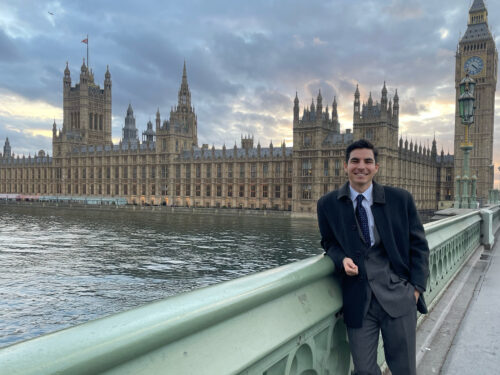
Trinity Students Connect with Global Leaders in Hartford

This November, Trinity students had the chance to hear directly from two foreign ambassadors visiting Hartford. Through a partnership between the Center for Urban and Global Studies (CUGS) and the World Affairs Council (WAC) of Connecticut, students attended two events in the 2025 Global Security Forum Series.

image
posted by Yulia Puhareva'26

Shifting Streets: How Chinese “One Dollar Shops” Are Redefining Urban Life in Dili, Timor-Leste

Supported by CUGS (Grossman & Kelter Funds), Via Guterres ’26 investigates how Chinese “one-dollar shops” are reshaping Dili’s economy, culture, and skyline. Interviews with customers, local vendors, and shop owners reveal a city prioritizing affordability and access while struggling with identity and regulations. What does convenience mean for Dili’s future?

image
Student Research posted by Alex Goiris'26 - Reposted from the Center for Caribbean Studies Research Blog, source

Walking the Fragments: Visual Sidewalk Stories from Ciudad del Este, Paraguay

In Ciudad del Este, Paraguay, Alex Goiris '26 led an interdisciplinary project sponsored by the Center for Caribbean Studies. He combined visual analysis and interviews to uncover how fragmented sidewalks shape daily life. By linking design and psychology, the research highlights how uneven pavements affect accessibility, emotions, and sense of belonging, and how small urban details can reveal much larger stories about inclusion and public space.

image
Student Research posted

Reimagining Highways: Student Research in Belgrade, Serbia

Through grant-funded research supported by the Center for Urban and Global Studies, Yulia Puhareva'26 spent the summer in Serbia. She was working with the University of Belgrade students on redesigning Autokomanda highway interchange for a better neighborhood connectivity. Blending engineering and urban studies, they used GIS and AR tools to propose people-centered redesigns, showing how even the most car-dominated infrastructure can turn into safe, human-inclusive spaces.