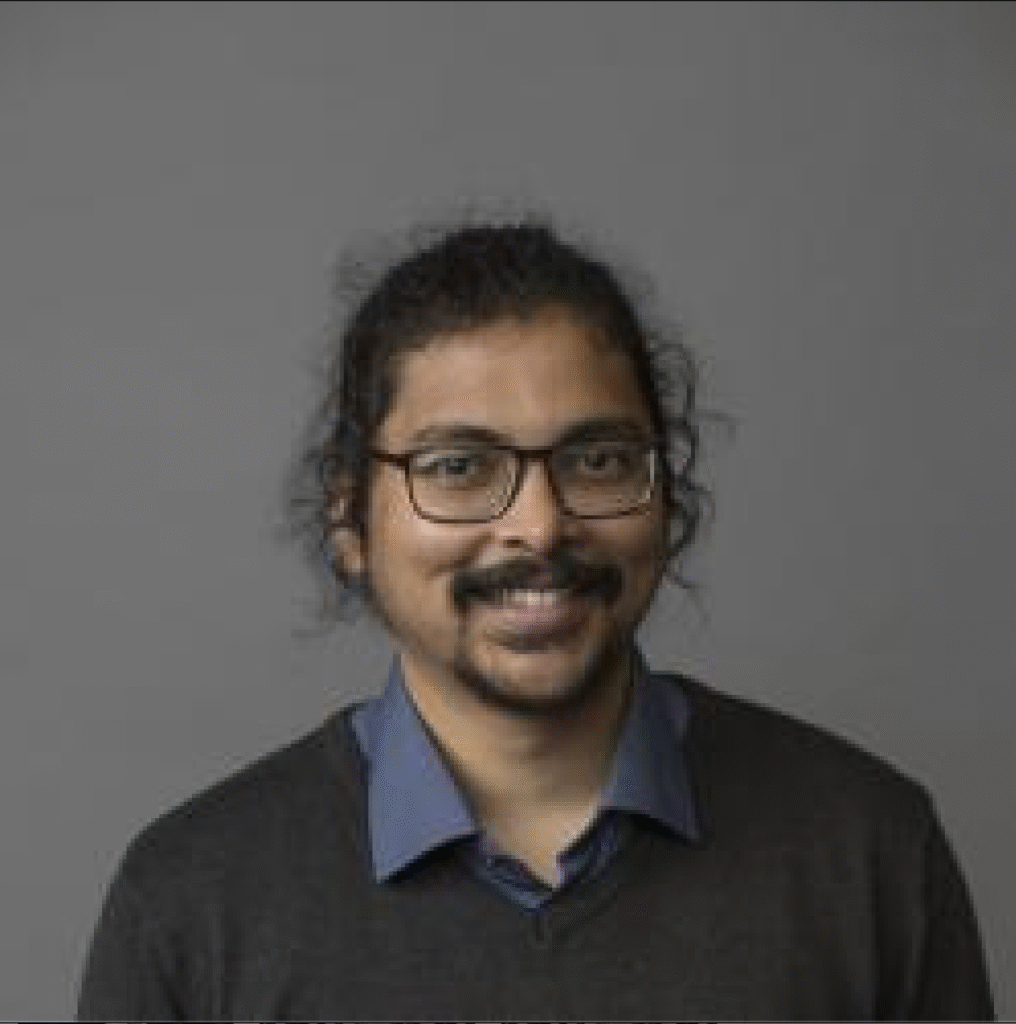
This fall, urban studies welcomed a new faculty member, Dr. Mushahid Hussain, whose work moves between rice fields and megacities. He shared how he arrived at Trinity, what questions drive his research, and how he hopes students will experience his classes.
Dr. Hussain did not begin his academic life in urban studies, or even in sociology. His undergraduate and master’s degrees, completed in India, were in economics, and he previously worked in investment banking.
“But I soon realized that wasn’t for me,” Dr. Hussain shared. “I was always interested in teaching and research.”
He moved back to his hometown and began teaching at a local college, mostly undergraduate courses in international trade and macroeconomics. Being in front of a classroom felt natural. The classes were topical and discussion-heavy, built around questions like “What are you reading in the news?” or “What do you make of this policy?” Those conversations with students became a source of ideas and convinced him to stay in academia.
When it came time to think about a PhD, he realized that the questions he cared about were not exactly aligned with mainstream economics. He found himself drawn toward economic history, social change, and politics. So instead of continuing with economics, he completed a PhD in development sociology at Cornell University in the United States. From that moment, the “urban question” moved to the center of his work.
The city that first pushed him toward urban questions is the one he calls home: Dhaka – the capital of Bangladesh and one of the fastest-growing cities in the world, home to over 20 million people. There, he had experience living on the urban fringe, in areas where agrarian land was being filled with sand and turned into real estate for apartment towers and gated developments. He watched wetlands get buried and commutes turn into multi-hour journeys. Everyday life became structured by congestion and detours.
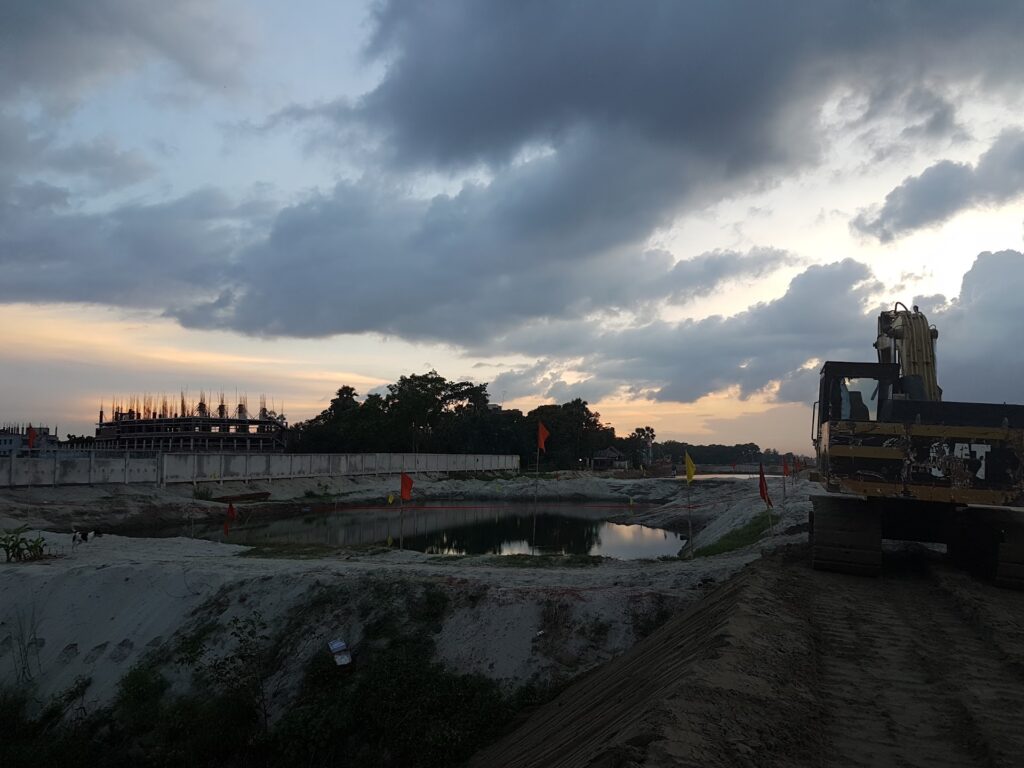
“When you’re in a place like that, you kind of hate it,” he admitted, laughing. “You’re drained by the traffic and the chaos. But when you move away, you get nostalgic. Your family and friends are there. You start to think about how things might be done differently.”
Those frustrations about big structural changes eventually became research questions: How does rural land get absorbed into urban real estate markets? Who benefits from that transformation? Who is displaced by it? What happens to water when the wetland that used to hold it is gone?
When asked about his research, Dr. Hussain immediately broke it into three “boxes.”
First, he looks at histories of development, decolonization, and state-building, focusing on connections between agrarian modernization and the global wave of urbanization. This includes studies of mid-twentieth-century community development projects in what was then East Pakistan that helped set the stage for Green Revolution agriculture, freeing (and pushing) people off the land and into cities. For this work, he spent years in archives in South Asia and the United States, tracing how ideas and policies moved between rural development and urban planning.
Second, he studies how rural land at the urban edge becomes real estate. He examines “land brokering,” in which local elites mediate between farmers, the state, and developers. In a delta city like his hometown Dhaka, that often means filling wetlands with sand and reclassifying land to generate profit. He is currently researching how different stakeholders contribute to this process and how it eventually leads to lost wetlands, weak drainage systems, and growing inequalities that shape urban lives and livelihoods. What is called environmental justice in the United States is a central issue there too.
Third, Dr Hussain is developing a comparative project on youth-led urban protests in Indonesia, Nepal, Bangladesh, Sri Lanka, Kenya, and beyond. He sees these uprisings as a critique of “neoliberal urbanism” – treating cities as growth machines built on export-oriented industry and real estate. That model has reduced inequality between countries while deepening inequality within them. Young people feel these effects in long commutes, weak public transit, unaffordable housing, and unresponsive politics. “These protests are urban in form and in content,” he told me. “They are about how people live in cities today, and what they find unacceptable in how those cities have been built and governed.”
Those research interests are also part of what brought Professor Hussain to Trinity and Hartford: before joining the CUGS, he held a tenure-track position in sociology and international studies at Indiana State University. His partner already worked at Trinity, and they faced the “two-body problem”, familiar to many academic couples. He also already knew and respected several people in the urban studies community at Trinity.
Hartford quickly became part of his intellectual map. Dr Hussain describes it as an unexpectedly rich place to think about cities. Soon after moving here, he began learning about local organizations working on issues such as re-entry after incarceration and neighborhood safety. The contrast between suburban wealth and disinvestment in the city center immediately attracted his attention as an urban sociologist: How did this pattern emerge over time? How did Hartford move from a fast-growing nineteenth-century industrial city built on firearms and insurance to its current landscape of corporate campuses, brownfields, and deep inequality?
Those questions already appear in his teaching. This fall, Professor Hussain taught two courses: Sustainable Urban Development and Urban Research Methods. “Sustainable Urban Development” uses case studies from Hartford and from cities around the world to treat the city as a living system shaped by pollution, climate risk, and planning decisions. “Urban Research Methods” is a small, project-focused seminar in which URST majors design and refine their own research proposals on topics of their choice, such as stadium subsidies, office-to-housing conversions, cycling infrastructure, suburbanization, and urban alienation. Professor Hussain was especially enthusiastic about helping students structure their projects, think through literature and methods, and move from vague interests to sharper research questions.
Next semester, he will launch two new courses. “Cities at Work” focuses on employment and power relations in urban contexts, bringing together themes such as globalization, deindustrialization, migration, and the rise of gig and platform work. Hartford will serve as a key case study, particularly around labor organizing, sanctuary city policies, and links between immigration and employment. “City and Society” will enable students to think about “the urban” through social theory and political philosophy, linking the everyday worlds of policy reports, news headlines, and lived experiences to big questions about modernity, capitalism, and urban futures.
When asked how he wants students to feel in his classroom, he answered with a smile: “Not bored.” Lecturing is kept to shorter segments so that most class time can be used for discussion, close reading, films, and group presentations. Since students already read and write outside of class, he sees the classroom as a space to test ideas, ask questions, and hear how others are thinking. Visual material matters to him; films and documentaries help students “visit” places on the other side of the globe.
If there is one thing he hopes students carry with them beyond the semester, it is the habit of pursuing ideas that genuinely interest them. In a liberal arts environment, students arrive with very different interests and backgrounds. When a topic in class sparks curiosity, Dr. Hussain encourages them to follow it and see where it leads – to new questions, new connections, and sometimes new opportunities.
Beyond teaching and research, he has long been an avid soccer player and enjoys reading fiction for pleasure, currently – Andrei Platonov’s Chevengyur and he is planning to start an Arabic novel, Cities of Salt, over the winter break. He often recommends that students make space for reading that is not tied to any syllabus.
Like many faculty members, Professor Hussain reflects on AI and its place in the classroom. He is wary of treating it as a shortcut for reading or writing, describing it as a tool that predicts words rather than understands arguments. In his view, AI can sometimes assist with limited tasks, such as experimenting with search keywords, but it cannot replace the cognitive work of immersive reading, conceptualizing ideas, and crafting original arguments.
After his first semester at Trinity, Prof. Hussain describes the urban studies community as engaged, curious, and willing to think seriously about difficult questions. Students in his courses have used class readings to write about current events, develop independent projects, and explore cities that matter to them. Colleagues across CUGS have invited him into ongoing conversations about Hartford and cities across the Global South. For now, Professor Hussain is doing what he came here to do: thinking with students about cities, from Hartford’s streets to the edges of Dhaka.