Reflections from Community Learning: Integration within the Hartford Community
My experience engaging with the diverse community of migrants in Hartford has been extremely fulfilling during this semester at Trinity. I feel that Hartford, Connecticut, has become my second home, particularly after my freshman year when I participated in the Community Action Gateway Program (CACT) with Make The Road CT (MRCT), and now working with Hartford Public Library (HPL) and House of Bread (HOB) through my community learning class AMST 349- Global Migration and Refugee Resettlement Lab. All these nonprofit community organizations dedicate countless hours to providing integral resources to Hartford residents, especially marginalized populations such as migrants. It’s vital to learn about their work and participate in it through Trinity’s various outlets.
The integration of migrants into our country has always been a polarized issue; some believe assimilation is the only way, while scholars agree that we must change our focus to integrating them into society. Coming into this spring semester, I learned the difference between assimilation and integration. To assimilate means to leave everything you love behind, to forget who you are and what you believe in, and to become an entirely new individual. This logic is flawed because you can’t deny your identity, origin, or lineage. As a first-generation college student and American, I have learned to integrate the cultural identity of my migrant parents while creating my own. I have firsthand witnessed the societal pressure of assimilation on migrants, such as when learning English or celebrating the Fourth of July.
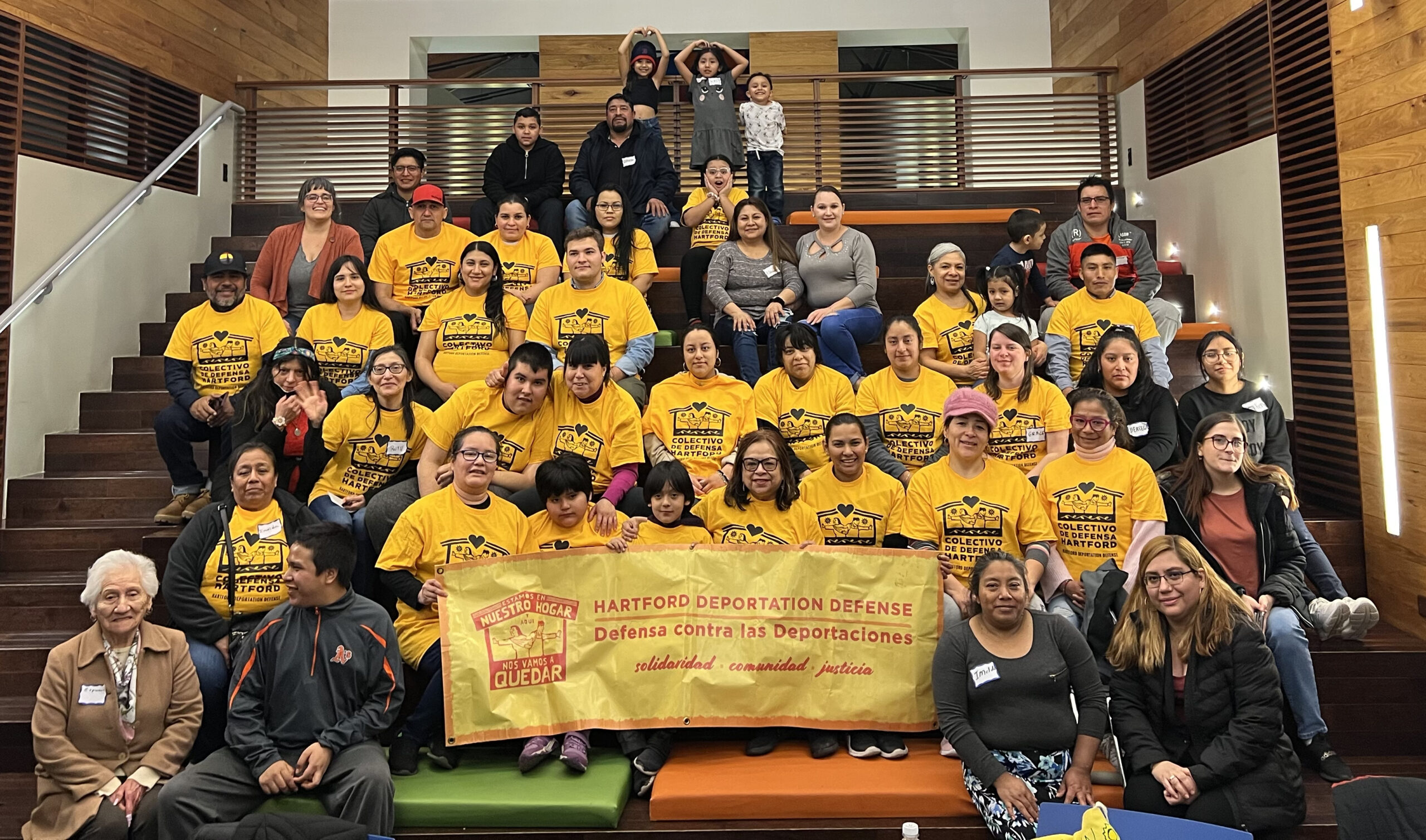
Throughout my class, students worked with various organizations such as Connecticut Institute for Refugees and Immigrants, Refugee Women’s Center, Hartford Deportation Defense, and Jubilee House. Their internship and involvement embodied an integrated mindset that worked to develop skills for immigrants to flourish, but also to appreciate their cultural upbringing. From some students working with lawyers on sensitive cases to other students building relationships with women to improve their English and financial literacy skills, they have found community, as did their clients with them. At times, the people they would work with would invite them to parties to attend and events they would organize.
As a society, we have focused too much on forcing arriving migrants to assimilate instead of granting them the opportunity to integrate and foster new perspectives. By allowing them to integrate, it grants them the opportunity to maintain their identity while constructing a new one. Such an approach has a tremendous amount of social, political, and economic ramifications, including greater overall diversity of culture and identity. It is a known fact that diversity cultivates growth; it creates an environment that leads to a richer life experience.
A diverse and accepting nation will take years of reform and policies, but you can make a change starting today. Trinity has various departments, such as the Center for Hartford Engagement and Research (CHER) or the Office of Community Service and Civic Engagement, that allow students to volunteer in Hartford. My experience at both community organizations and through my community learning classes is an honor to facilitate English classes for ESL students and adult learners at the Hartford Public Library’s The American Place. I learned how to mentor, teach, and be patient. Community engagement builds all these helpful soft skills. The classroom won’t teach you the skills necessary to be a successful community member. We are all members of Hartford, and it’s our responsibility to provide as much as we take. I hope to stand as an example and inspiration for others to engage outside of Trinity’s campus. If you would like to learn more about CACT and how to get involved, please visit the link below: https://www.trincoll.edu/cher/community-learning/cact/.