Housing Equity, Transportation Justice and Inclusive Cinema with the Action Lab
This past fall semester, the Liberal Arts Action Lab welcomed fifteen students for three projects. The students from Trinity College and CT State Community College Capital brought in diverse perspectives, experiences, and interests as they participated in the Action Research Methods in Hartford course (LAAL 200) and one of three Hartford Research Projects (LAAL 201).
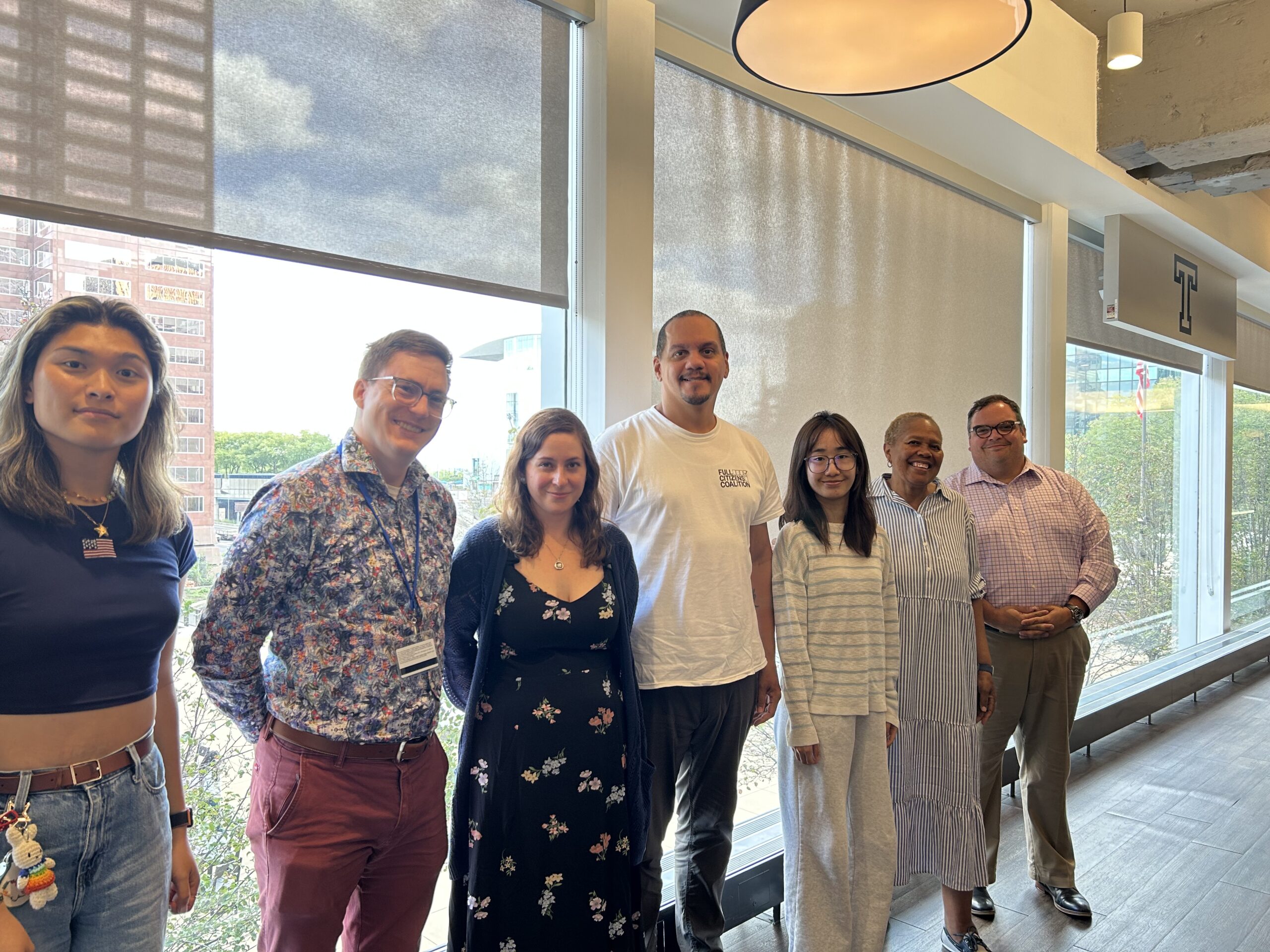
Dr. Derin Atalay taught Action Research Methods in Hartford this semester and co-led the Housing Equity Tenant Organizing Project alongside our community partner, Sarah White from the Connecticut Fair Housing Center, with support from faculty fellow Dr. Shaznene Hussain from the American Studies and Human Rights Studies Department with support from Teaching Assistant We also welcomed Dr. Simon Hoellerbauer, the new Director of Social Science Research at Trinity College, as the instructor for the Transportation Equity and Parking Justice Project, and Prof. Rachael Stephens, who is a Ph.d candidate at UPenn, as a guest lecturer for the Inclusive Cinema Project. Each team worked with a community partner who posed a pressing question about their work in Hartford.
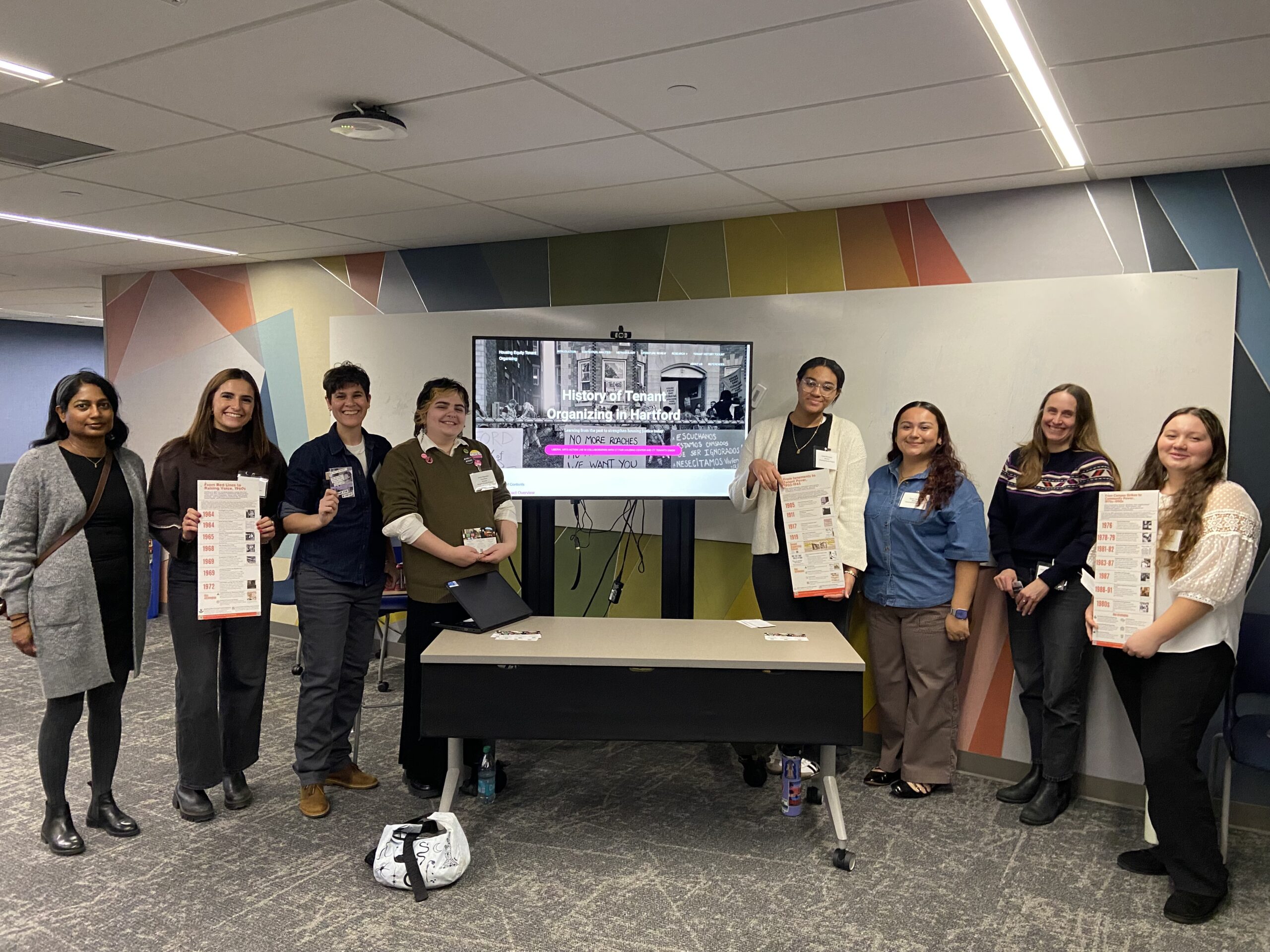
Students in the Housing Equity Project partnered with the Connecticut Fair Housing Center, a nonprofit organization whose mission is to ensure that all people have equal access to housing opportunities in CT free from discrimination, and the Connecticut Tenants Union, a statewide organization that helps renters join together to improve their housing conditions and protect their rights. Trinity students Zamia Barradas, Kyarra Valentin, and Demetra Danas, along with CT State Community College students Elisa Torres-Baez, Mariia Kovalchuk, and Jester Magnotta, explored the history of tenant organizing in Hartford, Connecticut, throughout the 20th century. By combining archival research and oral history interviews, students created organizing material such as zines and timeline posters to support ongoing education and mobilization efforts.
Reflecting on the partnership and its impact, Sarah White, a longtime partner, shared: “We’ve had incredible experiences working with the Action Lab to do archival research on tenant organizing stories and capture oral histories from tenant leaders. It’s been rewarding for me to see students’ engagement with the work we do and their excitement in researching and organizing history, especially when they get to make connections between the past and the present. I’ve also loved getting to read and share my favorite texts about housing with the students and to learn from them and the instructor.”
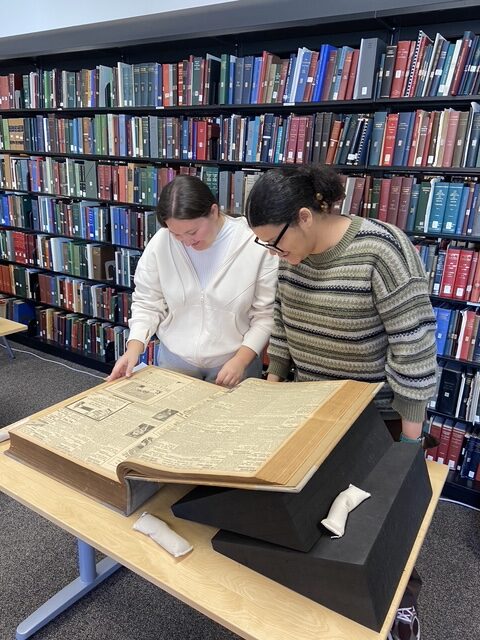
The research focused on three major periods of tenant activism—1919–1945, the Civil Rights Era, and the 1980s–1990s—each known for its own forms of organizing and community resistance. By researching archival materials and conducting oral histories, students and the community gained a better understanding of tenant organizing in Hartford, a city with limited tenant protections.
Prof. Hoellerbauer collaborated with the Advocacy to Legacy and faculty fellow Professor Jonathan Cabral to lead the Transportation Equity and Parking Justice Project. This project explored how parking policies and enforcement shape mobility, access, and equity in Hartford. Advocacy to Legacy Inc. is a non-profit organization based in Hartford that is dedicated to empowering individuals, families, and communities with the knowledge and skills to advocate for themselves. They requested this research to understand how parking enforcement can impact Hartford residents. The team utilized a mixed-methods approach with two data sources, one being parking ticket records from the Hartford Parking Authority (HPA) and a community-designed survey. Team members included CT State Community College student, Eriberto DeLeon Jr., and Trinity students Nellie Nguyen and Qing (Sunny) Shi, along with teacher assistant Mafer Vacca. Their primary recommendation when they finished their research was for Advocacy to Legacy to expand its partnership with the HPA and for the HPA to collaborate with community organizations to facilitate better community engagement.
“In working alongside students from CT State Community College Capital, this project(s) reinforced that collaborative work can expand our sense of belonging beyond a single campus or institution.” – Neo Khambule, Inclusive Cinema Project
Professor Rachael Stephens led the Inclusive Cinema Project in partnership with the Cinestudio and faculty fellow John Michael Mason. The research team included Trinity students Yula Li, Denise Guzman, Hannah Neo Khambule, and CT State students Ellie Kelly and Claudette Mahdi. The students researched why nearby residents were underrepresented in Cinestudio programs and aimed to help them enhance their engagement with the local community and make residents feel more welcome on campus. “As an international student, cinema has been an incredible tool for my immersion in new cultures and experiences, ” Neo shares, “Cinestudio, in particular, has been an integral part of my comfort and perception of what a campus space can be – a place of community gathering, a bridge between campus and city, and a resource for both leisure and learning.” Their final product was a report and summative booklet for Cinestudio Board and members to use when considering programming that will bring more residents to the theater, with a range of recommendations to increase participation.
To learn more about the projects, you can check out the websites of each project below.