Community Action Gateway Students Connect with Hartford Changemakers CACT 101
In December 2025, 14 students completed the first semester of the Community Action Gateway (CACT), taught by Professor Elise Castillo of the Educational Studies Program, and supported by mentors Makayla Cervantes ‘26 and Raven Reynoso ‘28. CACT is a selective, year-long first-year program for students interested in social change and community engagement. The program combines coursework with community partnerships, equipping students to examine social change and engage ethically with community leaders across Hartford.
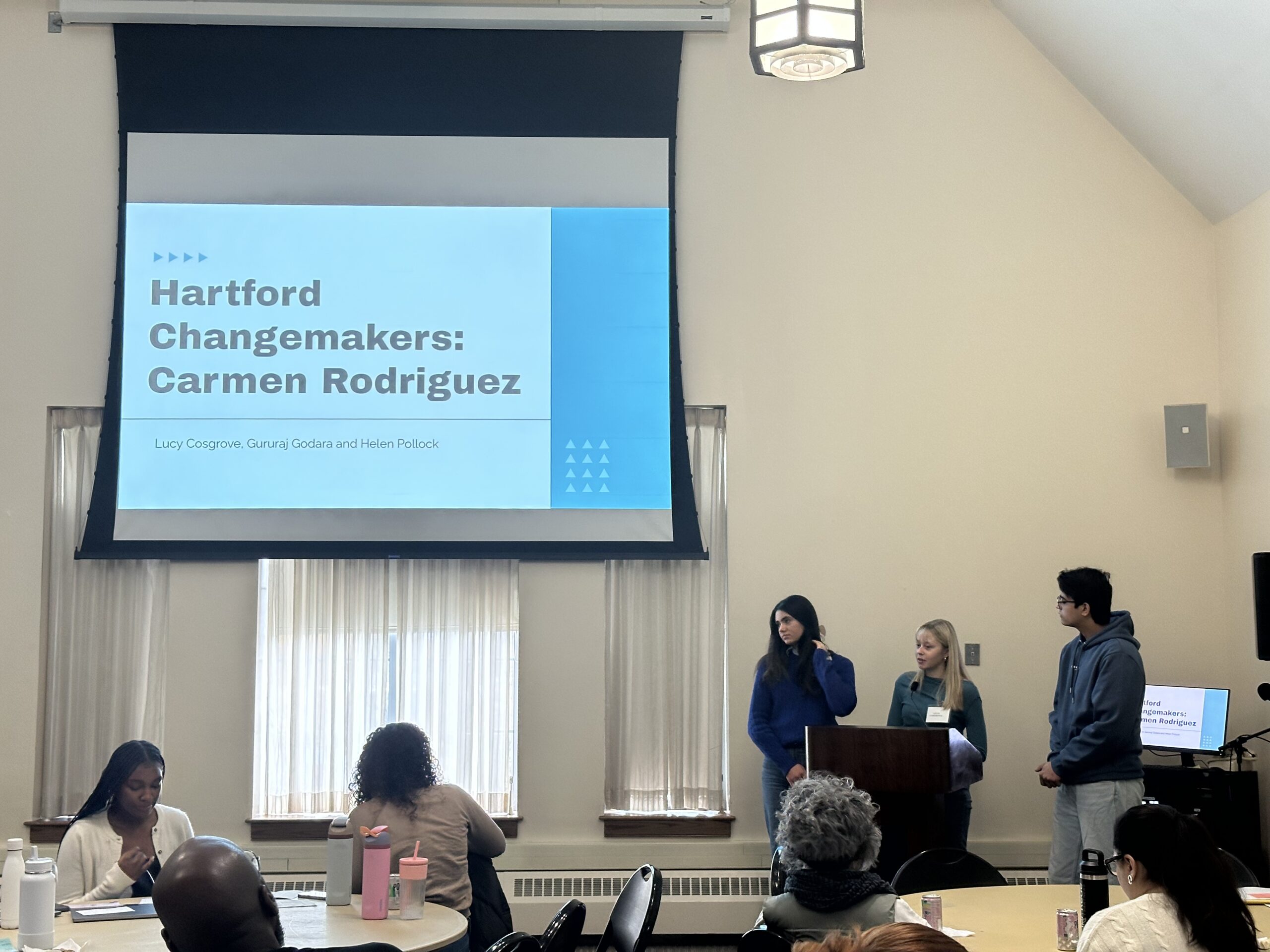
Building on the program’s ongoing partnership with the Hartford History Center, Professor Castillo once again integrated community-based archival research into the CACT curriculum. This semester, Community Action students worked in small teams to develop new profiles for the Hartford Changemakers collection—an online archive honoring Black, Latinx, and Indigenous individuals whose work has shaped Hartford. The research process was supported by Maureen Heher, Historical Research Specialist at the Hartford Public Library, who assisted students in navigating archival materials and developing responsible research practices. Through hands-on archival research and conversations with family members, friends, and community partners, students traced the lives and legacies of local changemakers. This project reflects CACT’s emphasis on place-based learning, inviting students to engage directly with Hartford’s history and residents and to build meaningful connections to the city from the start of their time at Trinity.
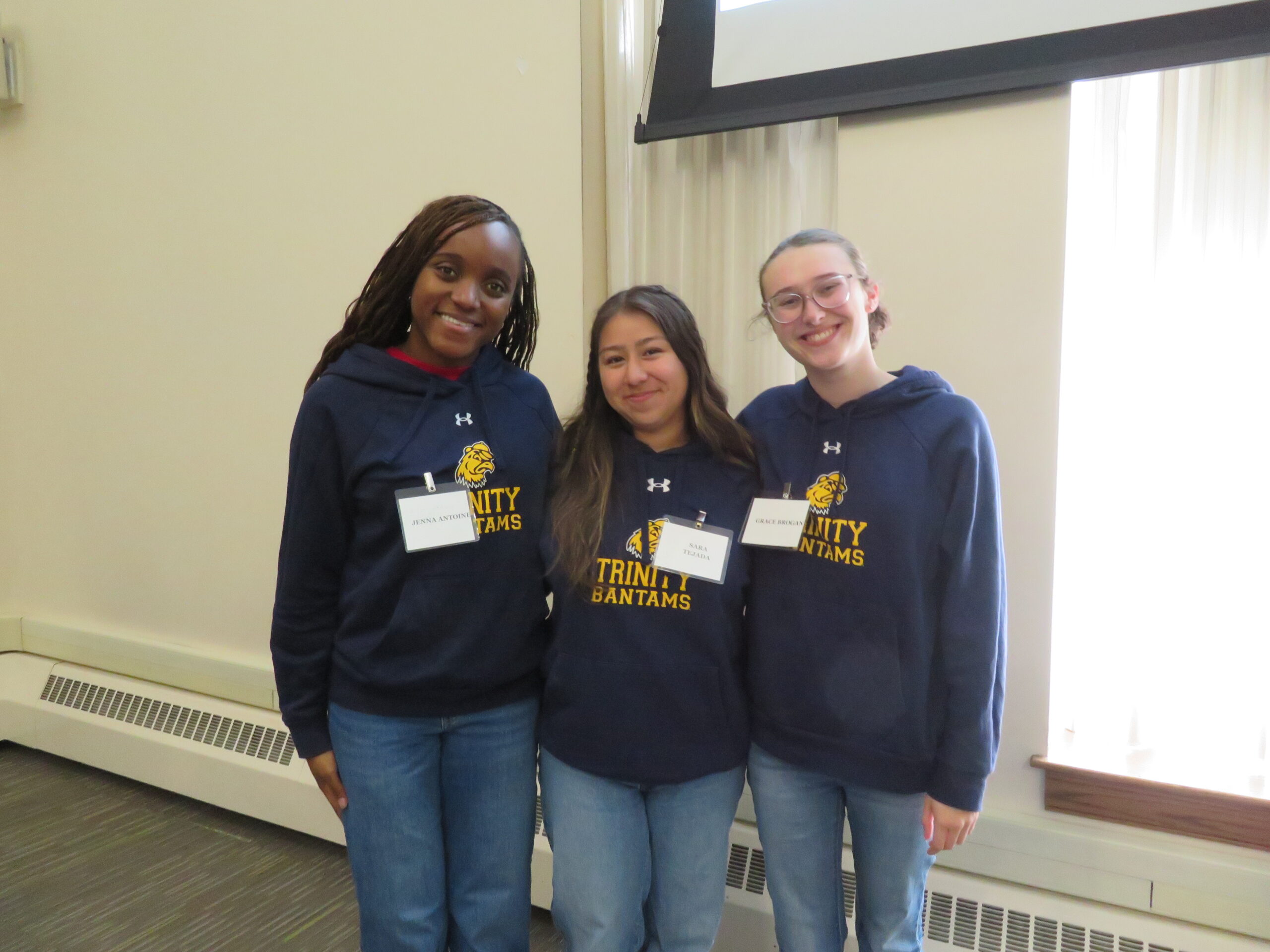
Reflecting on her students’ work, Professor Castillo shared, “As a transplant to Hartford myself, it’s such a privilege to learn alongside my students about the city’s rich history of activism and social change. We learned together that meaningful social change can happen both in highly visible ways and in smaller practices of community empowerment and care.”
As a mentor for this year’s Community Action Gateway cohort—and as a former CACT student who completed this project in Fall 2022—I observed how thoughtfully students engaged with the Hartford Changemakers Project. Throughout the semester, students learned to approach research beyond traditional academic sources, often piecing together narratives through unconventional methods such as community memory, informal conversations, and, in some cases, online social media profiles maintained by the Changemakers or their families. This process required creativity, discernment, and ethical care, pushing students to think critically about credibility, representation, and storytelling in the digital age. More than compiling facts, students learned how to listen, contextualize, and honor lived experience, recognizing that community history is preserved not only in archives but in everyday spaces where people share their lives. Through their work, students developed a deeper connection to Hartford and a clearer understanding of how research, when done responsibly, can itself be a form of social change.
Students presented their research on the Changemakers on November 13, 2025, in the Rittenberg Lounge. The event was attended by Trinity faculty, staff, and students, as well as Hartford community partners and the friends and family of the Changemakers. Read more about each Changemaker below. Each Changemaker’s profile will be added to the Hartford Changemakers website by early 2026.
Carmen Rodriguez (1935–2018)
Carmen Rodriguez was a Hispanic social activist who advanced educational equity and Latino political empowerment in Hartford, serving as President of the Hartford Board of Education and the last Executive Director of La Casa de Puerto Rico. Her leadership strengthened Hartford’s Puerto Rican and Hispanic communities and affirmed cultural identity as a source of power.
Gregory Tate (1952–2012)
Gregory Tate was an artist and advocate who co-founded the HartBeat Ensemble, using theater to spark social dialogue and amplify marginalized voices. His community-centered work addressing race, labor, and inequality left a lasting mark on Hartford’s cultural and civic life.
John Robert Allen (1937–2015)
John Robert Allen was a media trailblazer who founded the Northend Agents Newspaper in 1974, Connecticut’s longest-running African American newspaper. Through journalism and community advocacy, he amplified Black voices and fostered civic pride across generations in Hartford.
Lebert “Gee” Lester (1967–2024)
Lebert “Gee” Lester was a barber, mentor, and community advocate who transformed his barbershop, It’s a Gee Thang, into a space for connection, mentorship, and dignity within Hartford’s Black community. Through service, advocacy, and care, he uplifted generations of young people.
Margaret “Margaux” Helen Hayes (1956–2024)
Margaret “Margaux” Hayes was a jazz singer and community organizer who used music to foster healing, connection, and awareness around social and environmental issues. She was actively involved in Hartford’s cultural and educational spaces, including the Hartford Jazz Festival, Charter Oak Cultural Center, and community-based arts and healing groups.