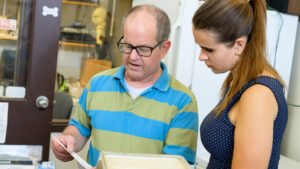
Trinity Summer Research Students Work with Faculty Mentors ‘Inside and Outside of the Lab’
Content
Story
Posted
Category
Academics
Trinity College students have many opportunities to engage in research, both on and off campus. These experiences include close collaborations with professors from all academic divisions; research conducted with community partners in the greater Hartford region; participation in clinical research projects at area medical centers; and independent, student-designed research projects.
In addition to pursuing research during the academic year, more than 100 Trinity students spent part of summer 2026 engaged in research projects with faculty members in the arts, humanities, sciences, and social sciences.
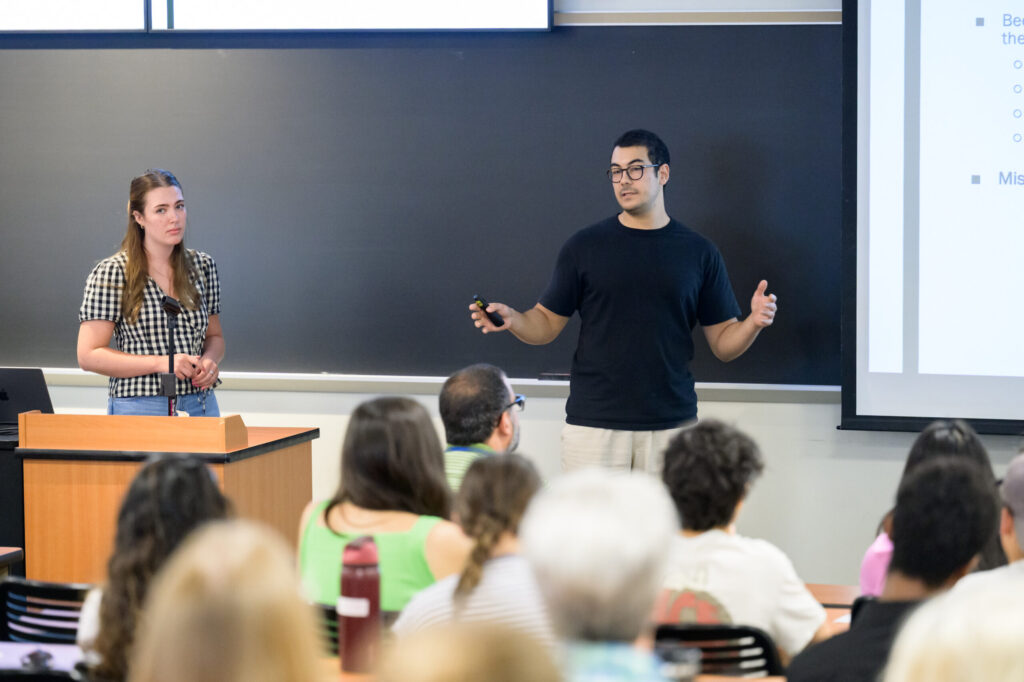
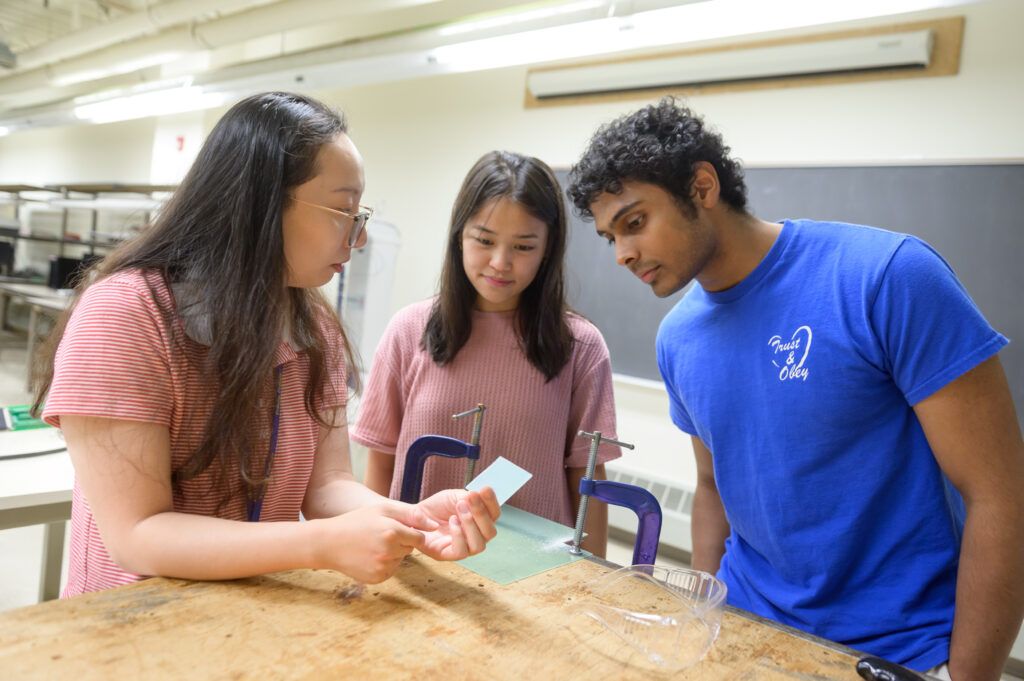
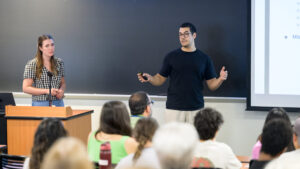
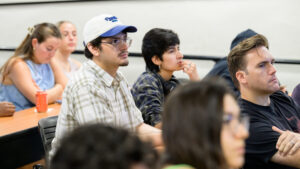
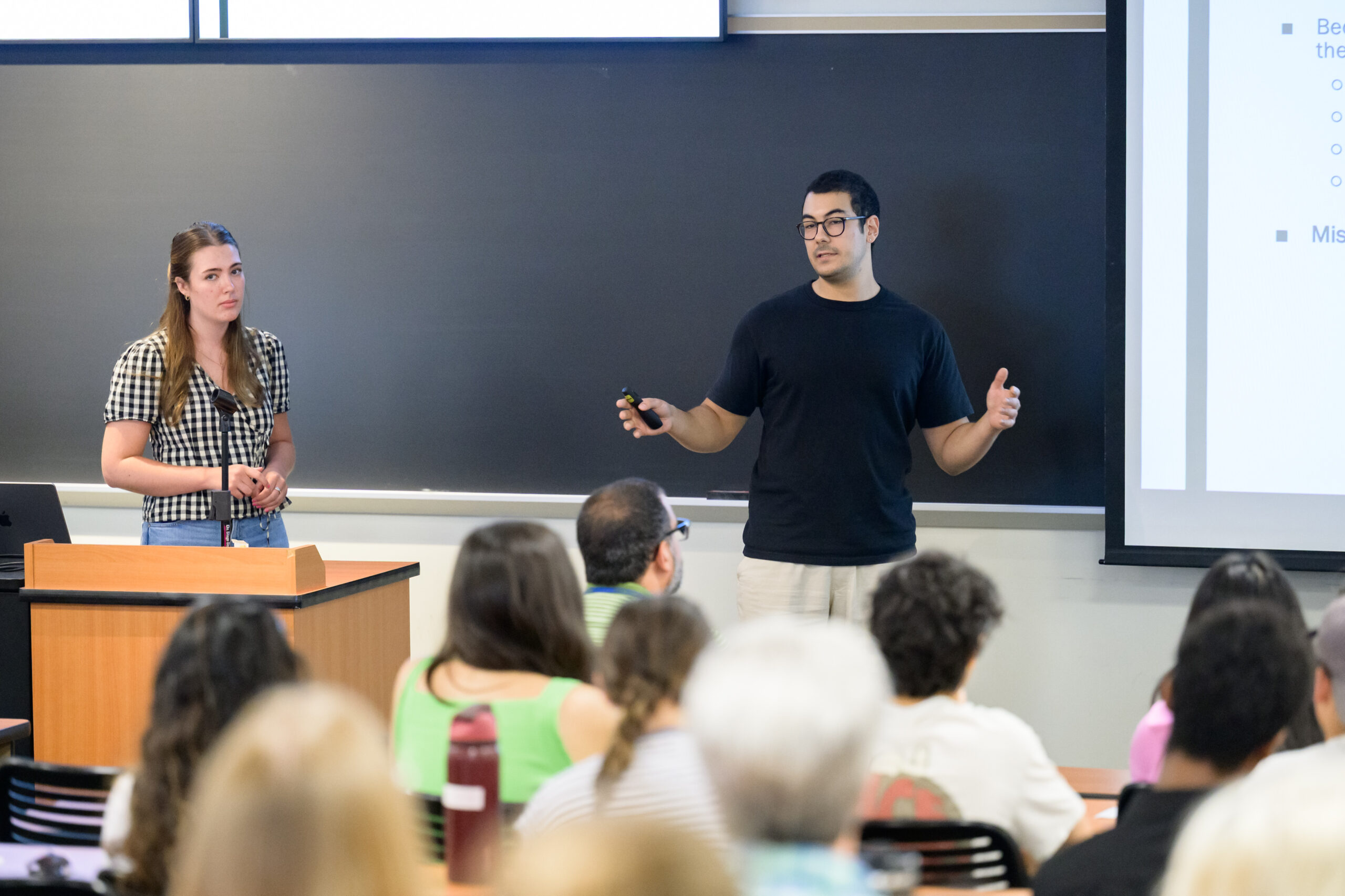
Students Anna Reese Carlton ’28 (left) and Meric Yasar ’28 present their summer physics research at the STEM Summer Research Presentations on July 9, 2026. Photos by Nick Caito.
Trinity’s Summer Research Program supports intensive student involvement in ongoing faculty research. Students receive a stipend for eight to 10 weeks of research work, as well as on-campus housing. Students also are eligible to earn co-curricular credit for summer research work through the Trinity Plus Curriculum. At the conclusion of the research period, students are required to submit a summary of their work, and they are encouraged to present the results of their work at the College’s Fall Research Symposium, held in September.
Below is a small sample of Trinity students’ summer 2026 research experiences.
Art History
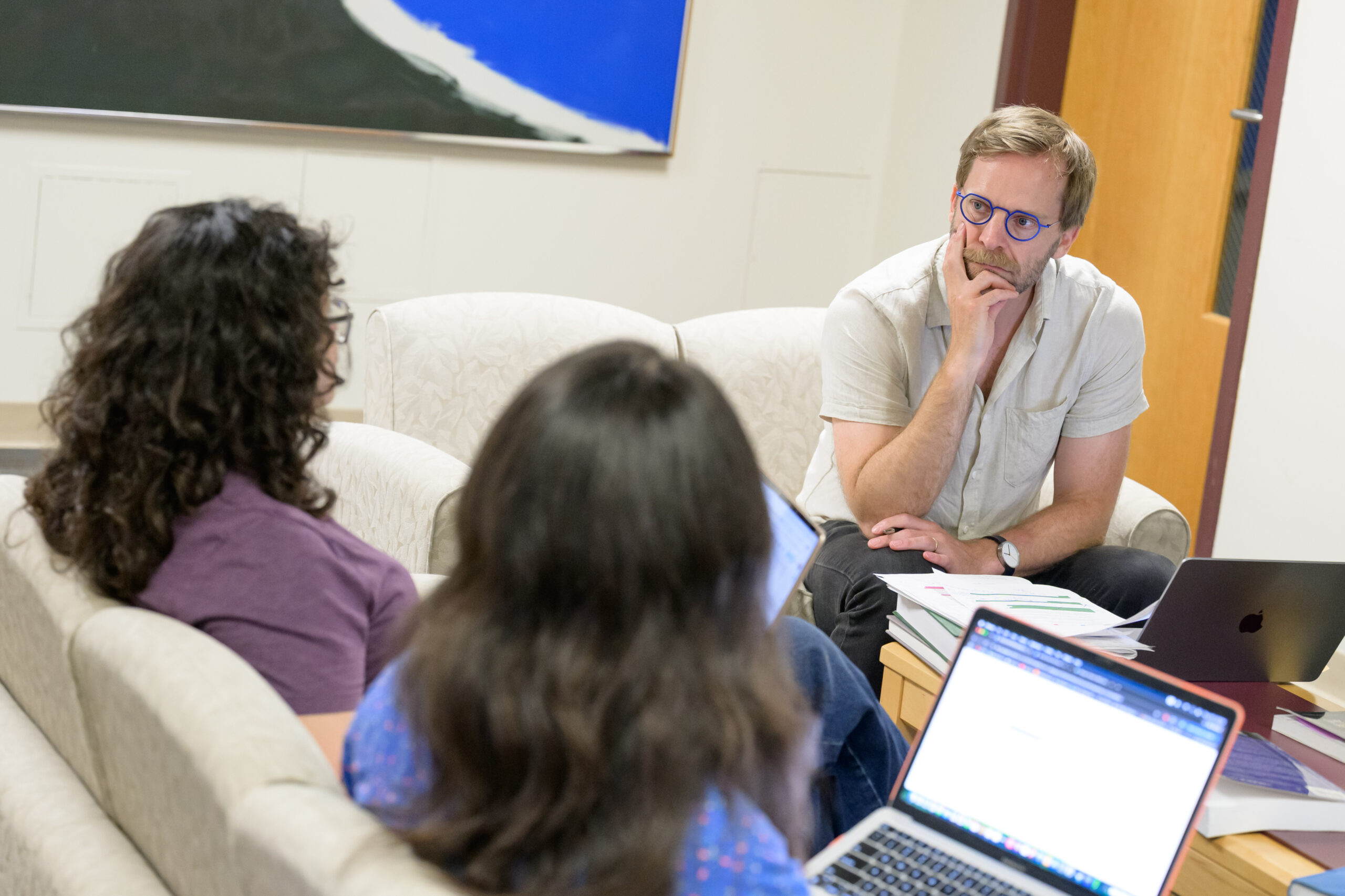
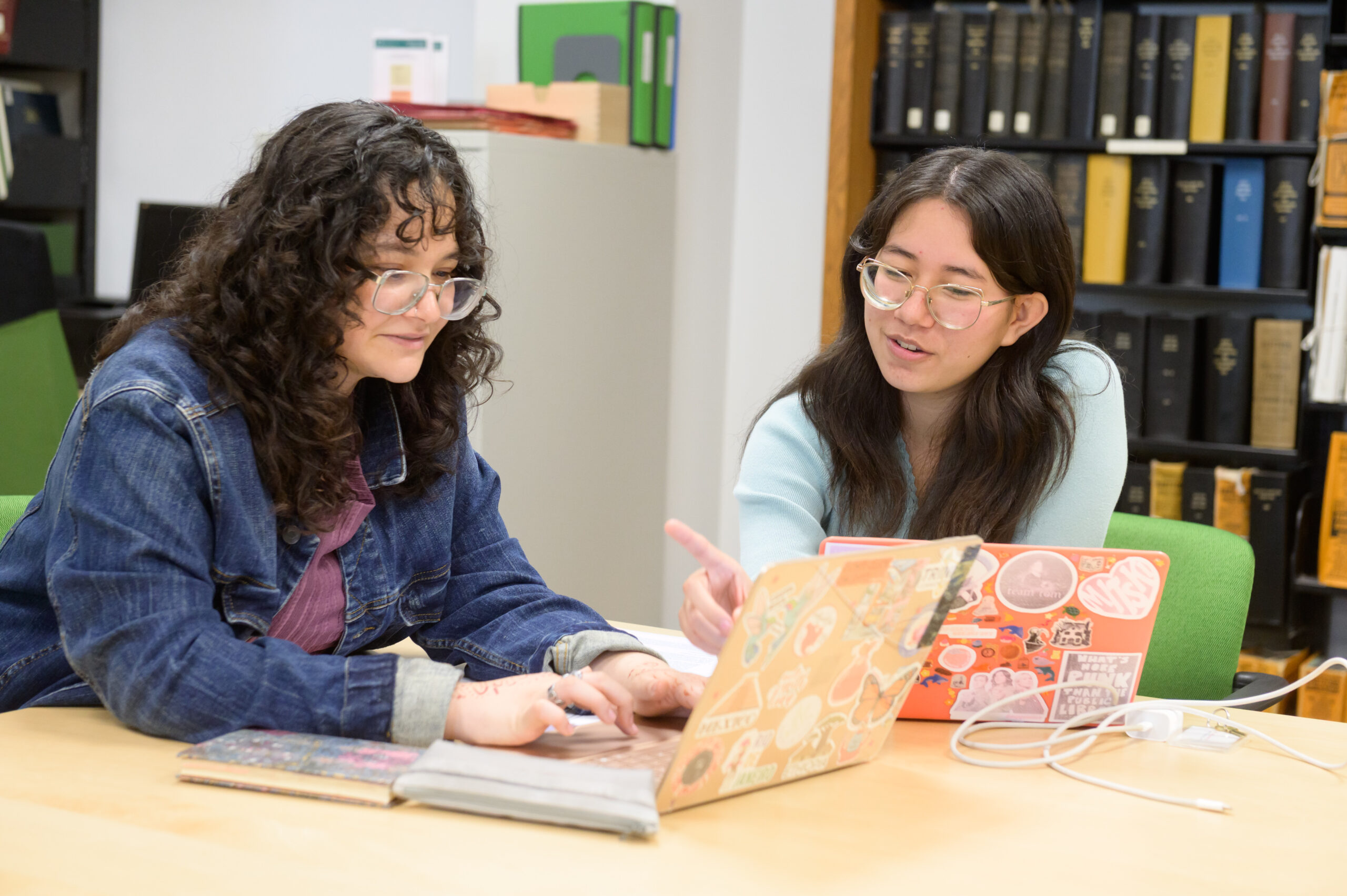
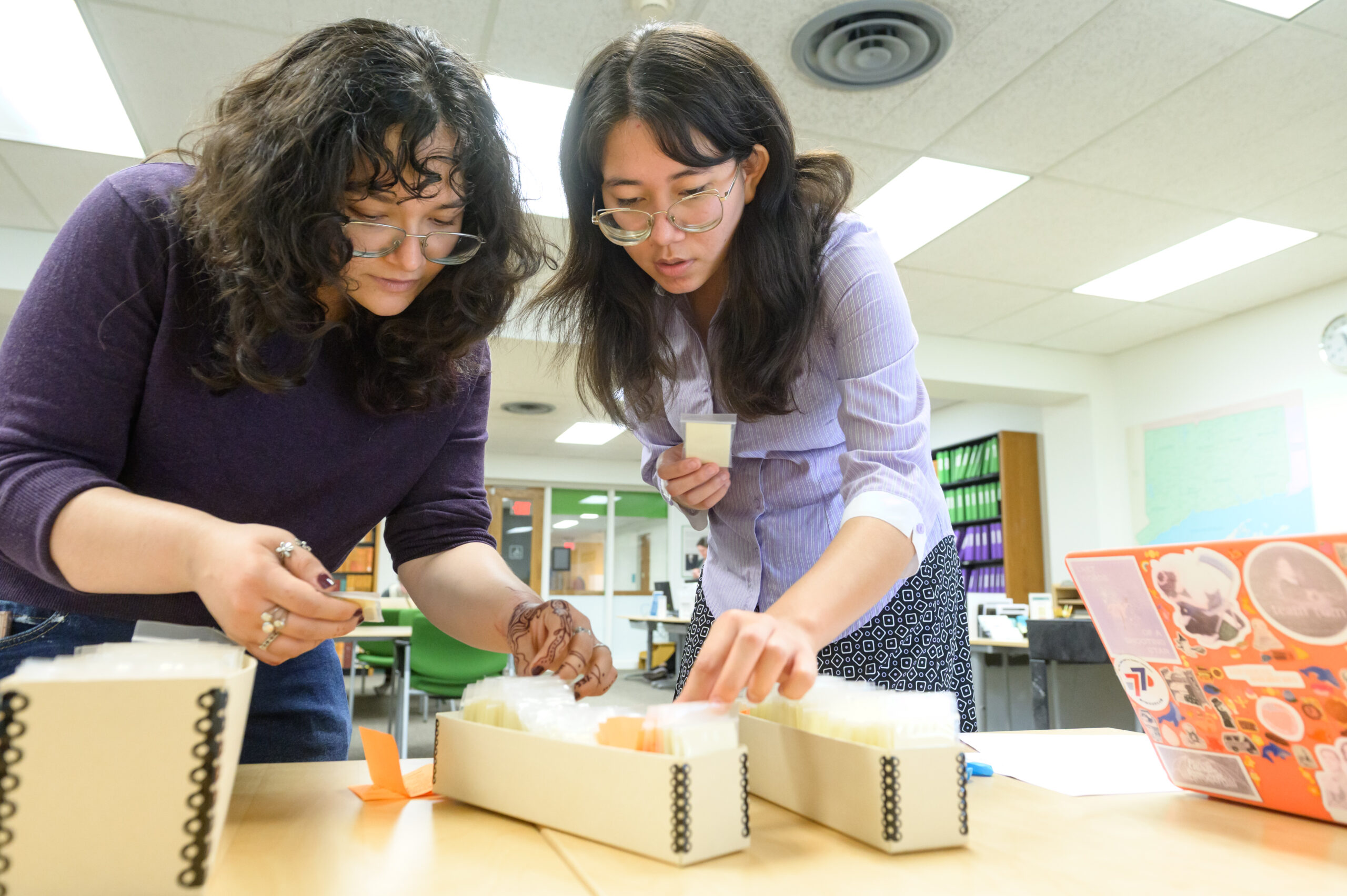
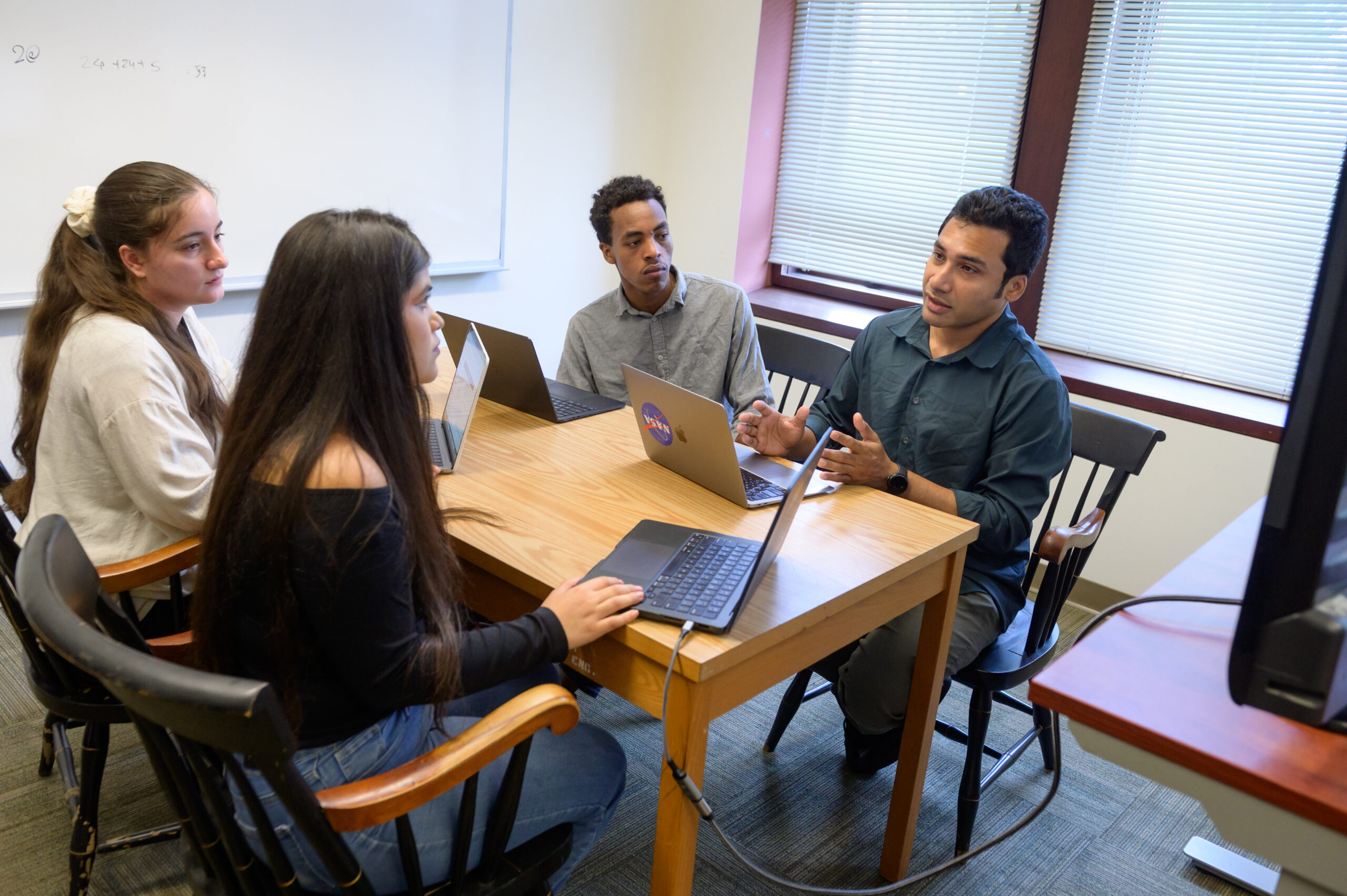
Students Alejandra Gutierrez ’28 and Maya Sasaki-George ’28 worked with Associate Professor of Fine Arts Michael J. Hatch on a Public Humanities Collaborative summer research project. One half of their time was spent with a curator at the Connecticut Museum of Culture and History, where they worked on refining and updating the museum’s Connecticut LGBTQ+ history digital project. The other half of their time was spent working with Hatch to develop a new course on exhibitions and curating. The seminar will build on the success of an exhibition curated by Hatch’s students last spring at Trinity’s Widener Gallery.
Watch the video below to hear more from Hatch and the student researchers. Video by Nick Caito.
Biology
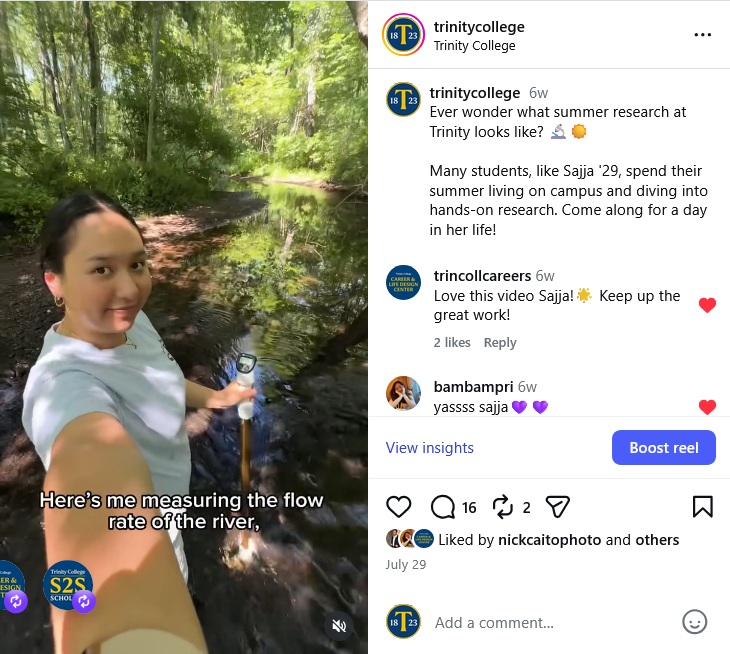
Sajja Ranjit ’29 conducts research at the Tankerhoosen River. Courtesy of Sajja Ranjit ’29.
Yasmin Barnes ’27 and Sajja Ranjit ’29 worked with Associate Professor of Biology Benjamin J. Toscano studying “Downstream Effects of Predators on Herbivore Grazing in Streams.” The research investigates whether an antibiotic treatment changes how freshwater snails behave when exposed to predator cues. Ranjit said, “By observing the behavior, we’re hoping to better understand how pathogens may influence predator avoidance behavior.” Some research for Barnes’ senior thesis took place at the nearby Tankerhoosen River.
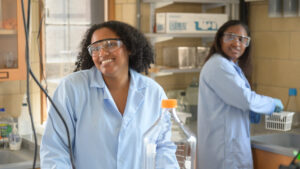
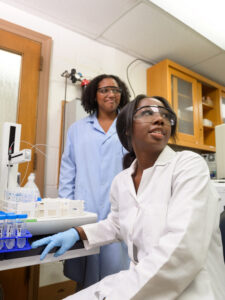
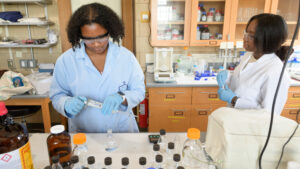
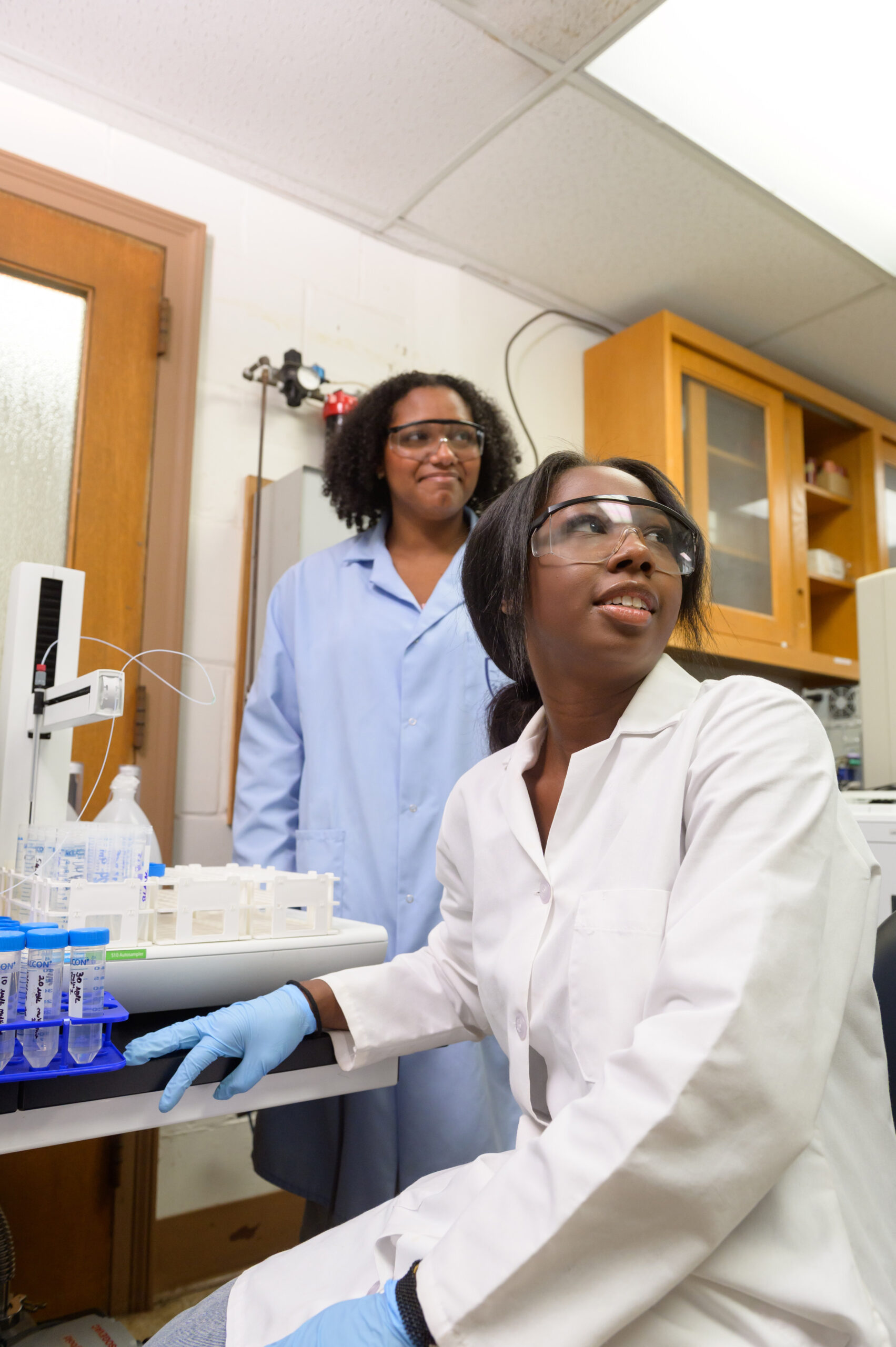
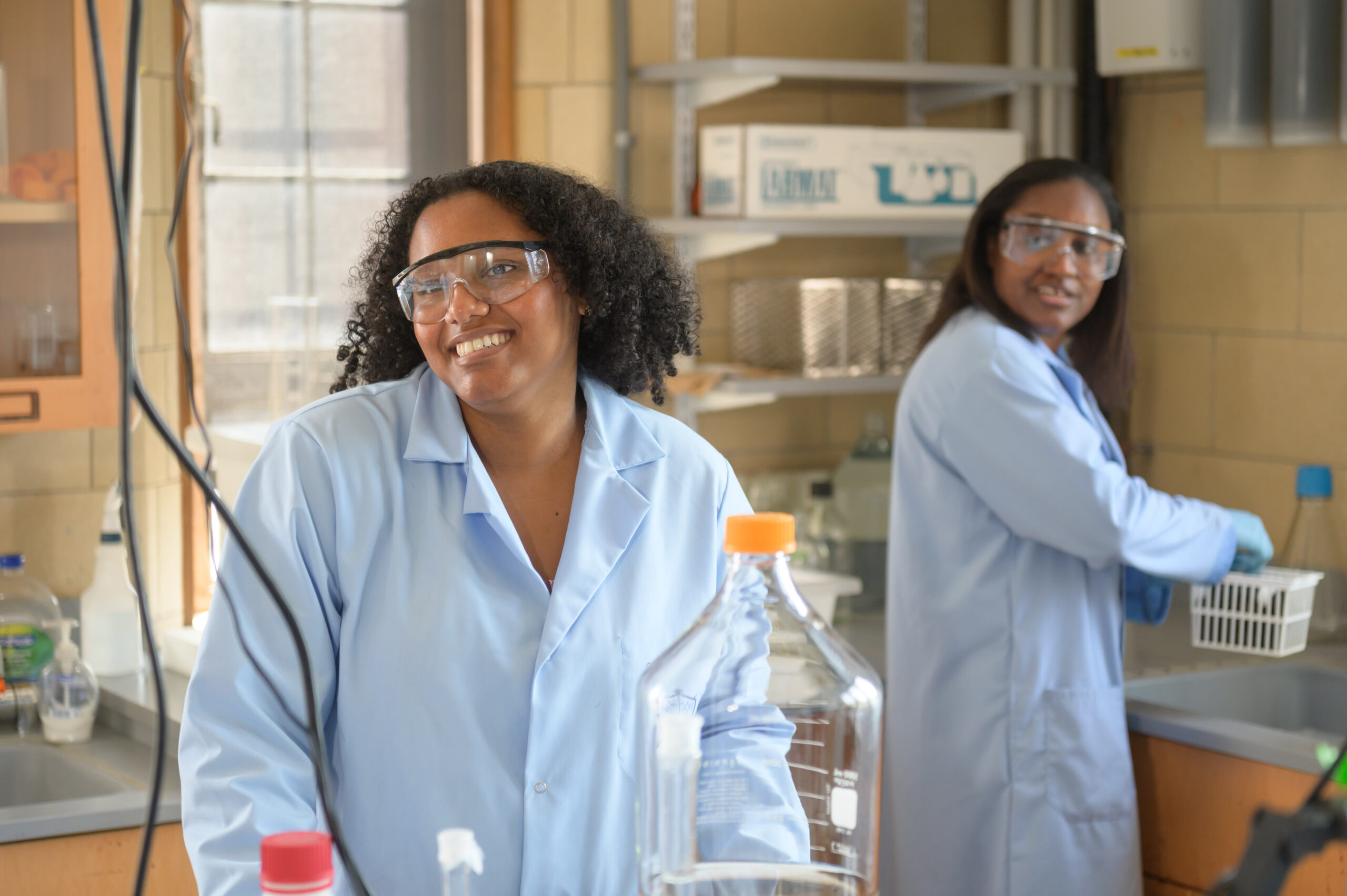
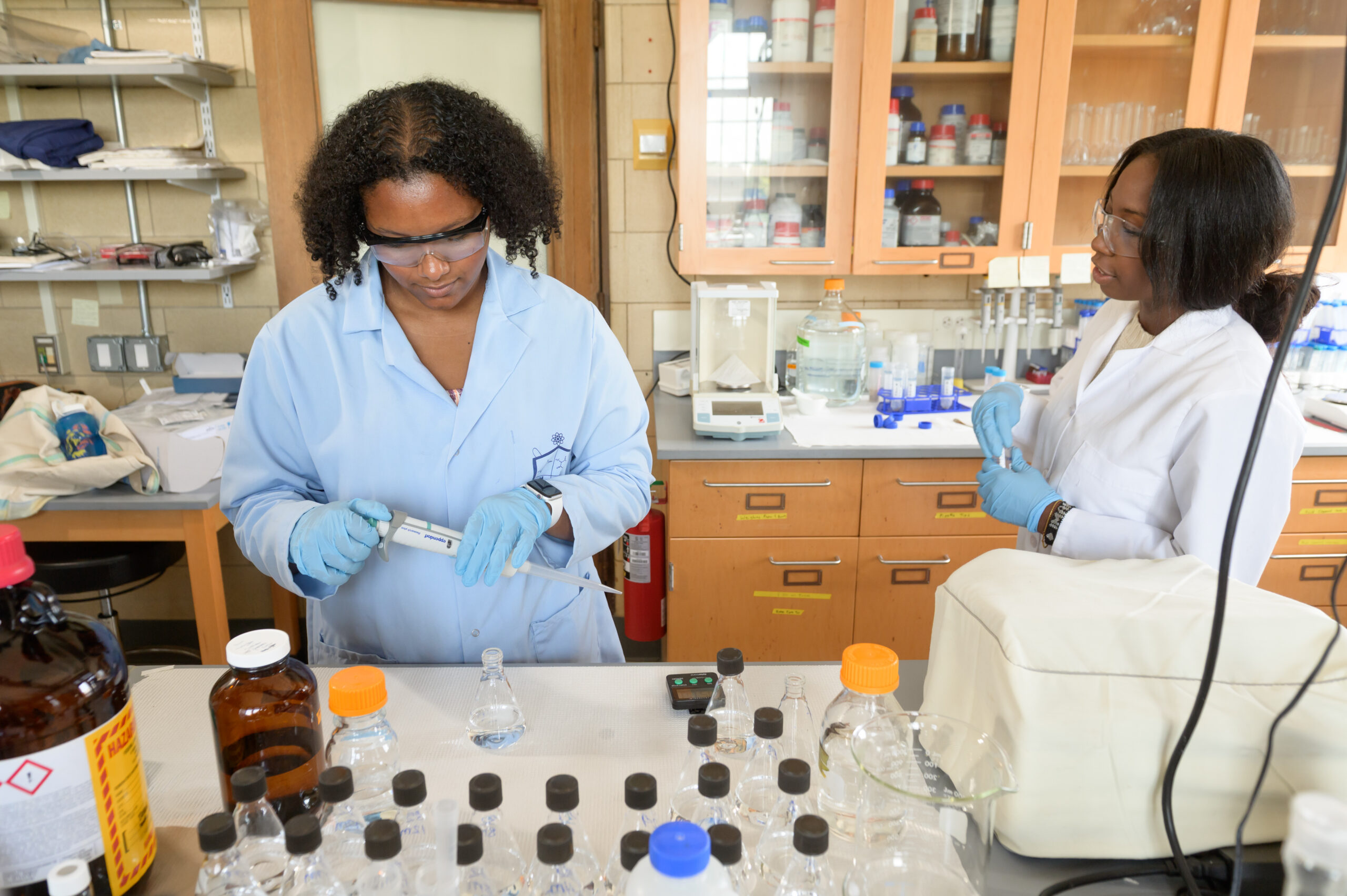
Samiya Johnson ’27 and Cindy Rodriguez ’27 analyzed water samples from urban ponds as part of their summer research with Associate Professor of Environmental Science and Chemistry Arianne A. Bazilio. “Ponds are among the most biodiverse and abundant freshwater ecosystems and also hold exceptional societal value, especially in urban areas,” Bazilio said. “However, urban ponds have been understudied historically and often experience poor water quality because of pollution from impervious surfaces.”
Previous work by Associate Professor of Environmental Science Amber L. Pitt has shown elevated levels of mercury in ponds in the Greater Hartford area. Over the summer, students collected water and sediment samples from local ponds and analyzed them for various water quality parameters, including heavy metals and nutrients. Rodriguez said, “I really like working collaboratively, inside and outside of the lab… I’m newer in the lab, so it’s been great to have mentors to help me.”
Bazilio and her students share more about their summer research in the video below. Video by Helder Mira.
Computer Science
Jackie Garcia Alvarado ’28, Sitora Abdulofizova ’29, and Talakinet Wabelo ’29 work with Assistant Professor of Computer Science Chandranil Chakraborttii on addressing the ‘Verification Gap.’
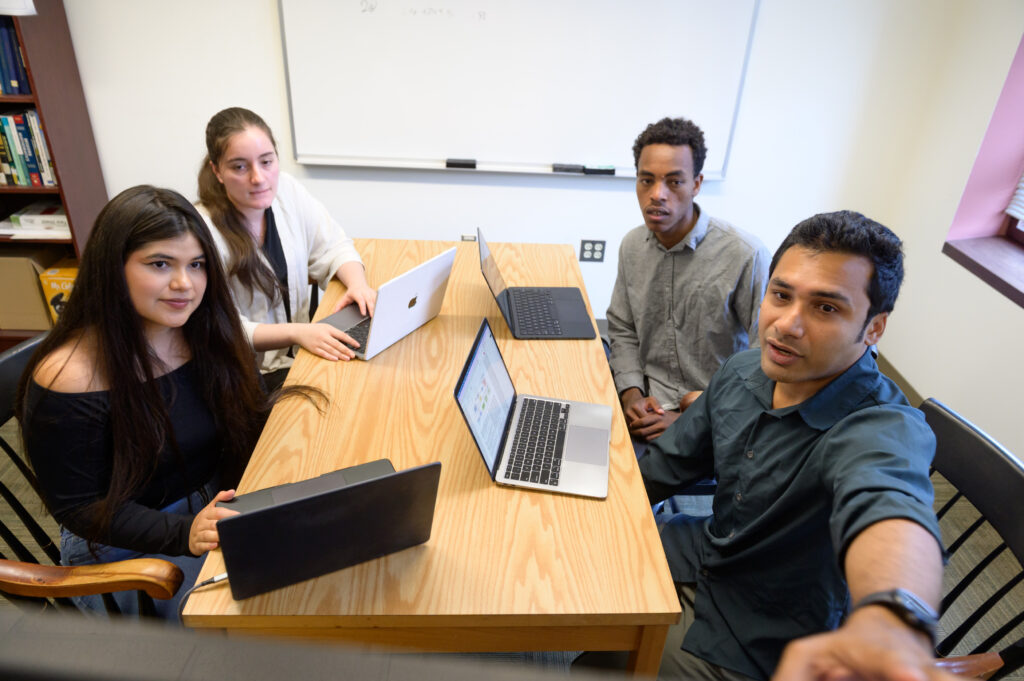
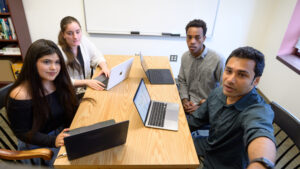
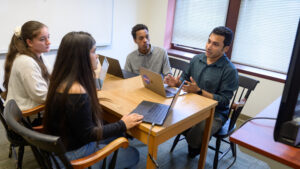
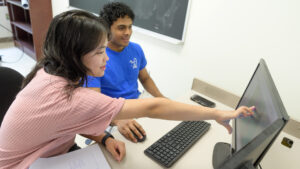
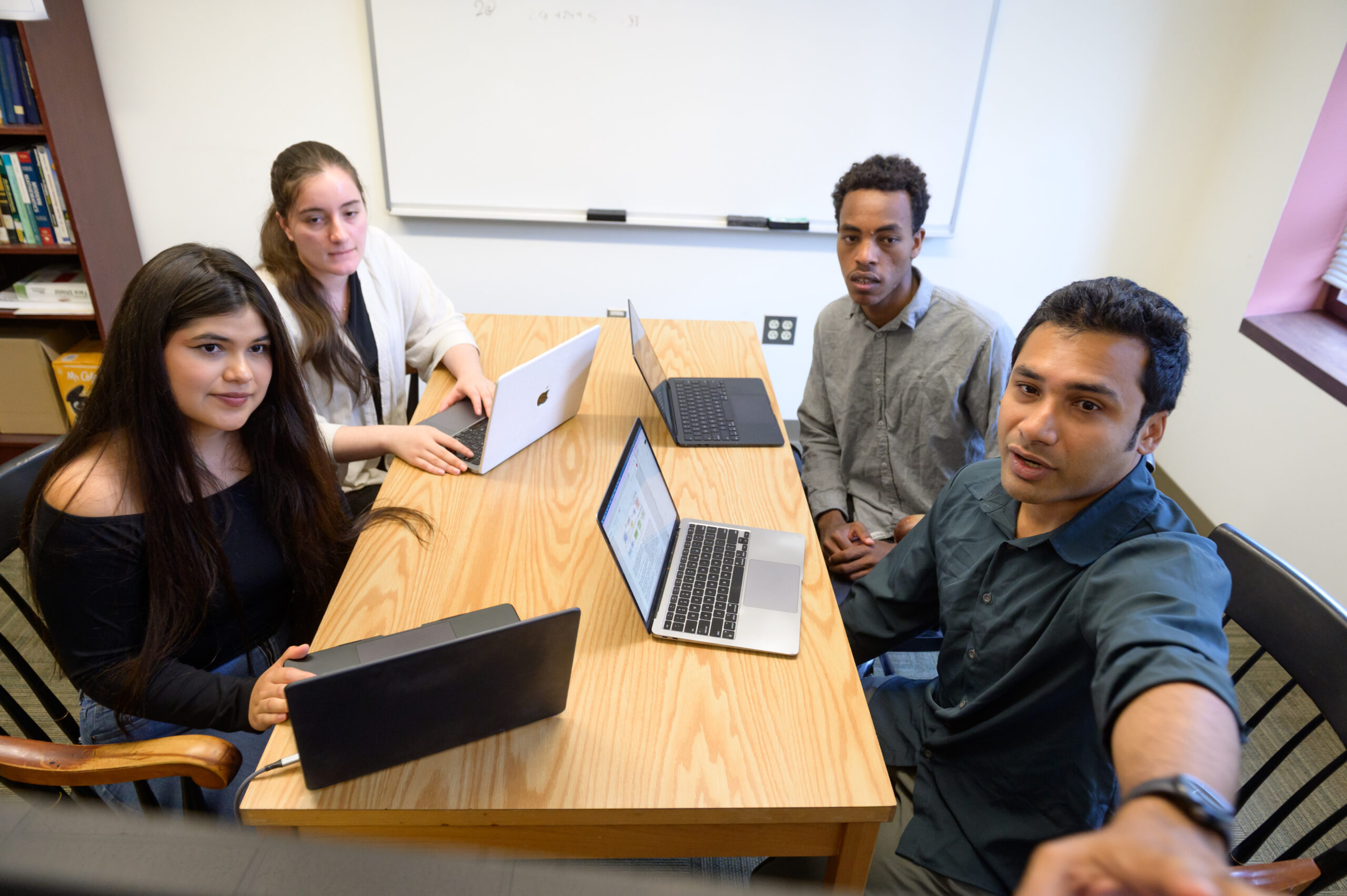
Sitora Abdulofizova ’29, Jackie Garcia Alvarado ’28, and Talakinet Wabelo ’29 worked this summer with Assistant Professor of Computer Science Chandranil Chakraborttii. “This project addresses the ‘Verification Gap’—the disconnect between a software program claiming data is deleted and its actual physical persistence in remote storage,” Chakraborttii said. “By targeting RAG-based enterprise AI systems using HNSW vector databases, we aim to turn data privacy and deletion from an unverifiable software notification into a hardware-enforced guarantee.”
See more photos in the gallery below.
Engineering
Assistant Professor of Engineering Ruoxing Gao works on a summer research project with Jamila Hussaini ’27 and Joshua Hartman ’28.
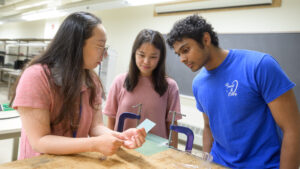
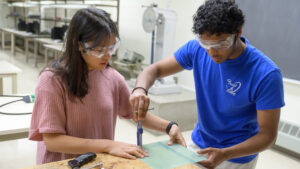
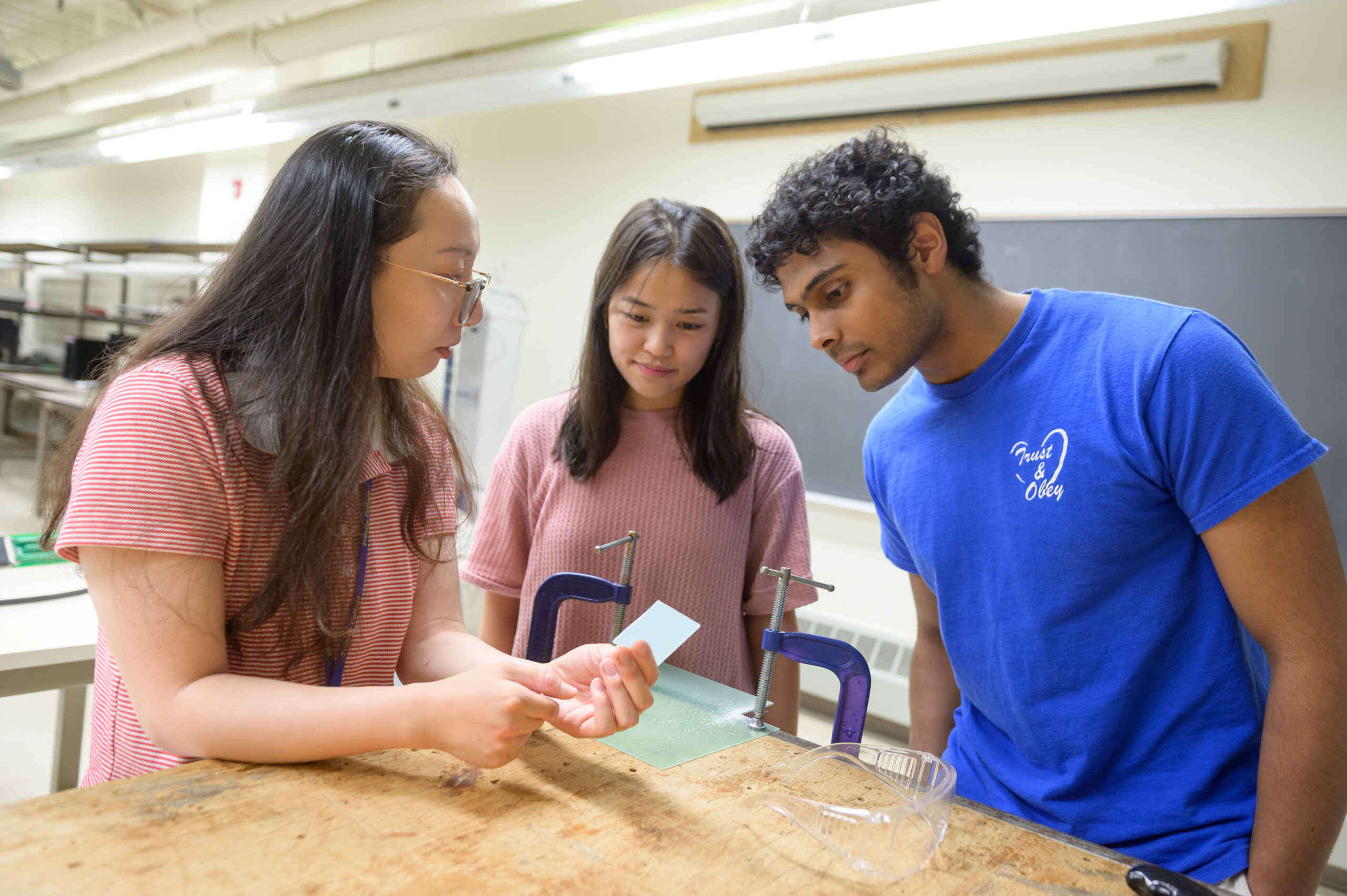
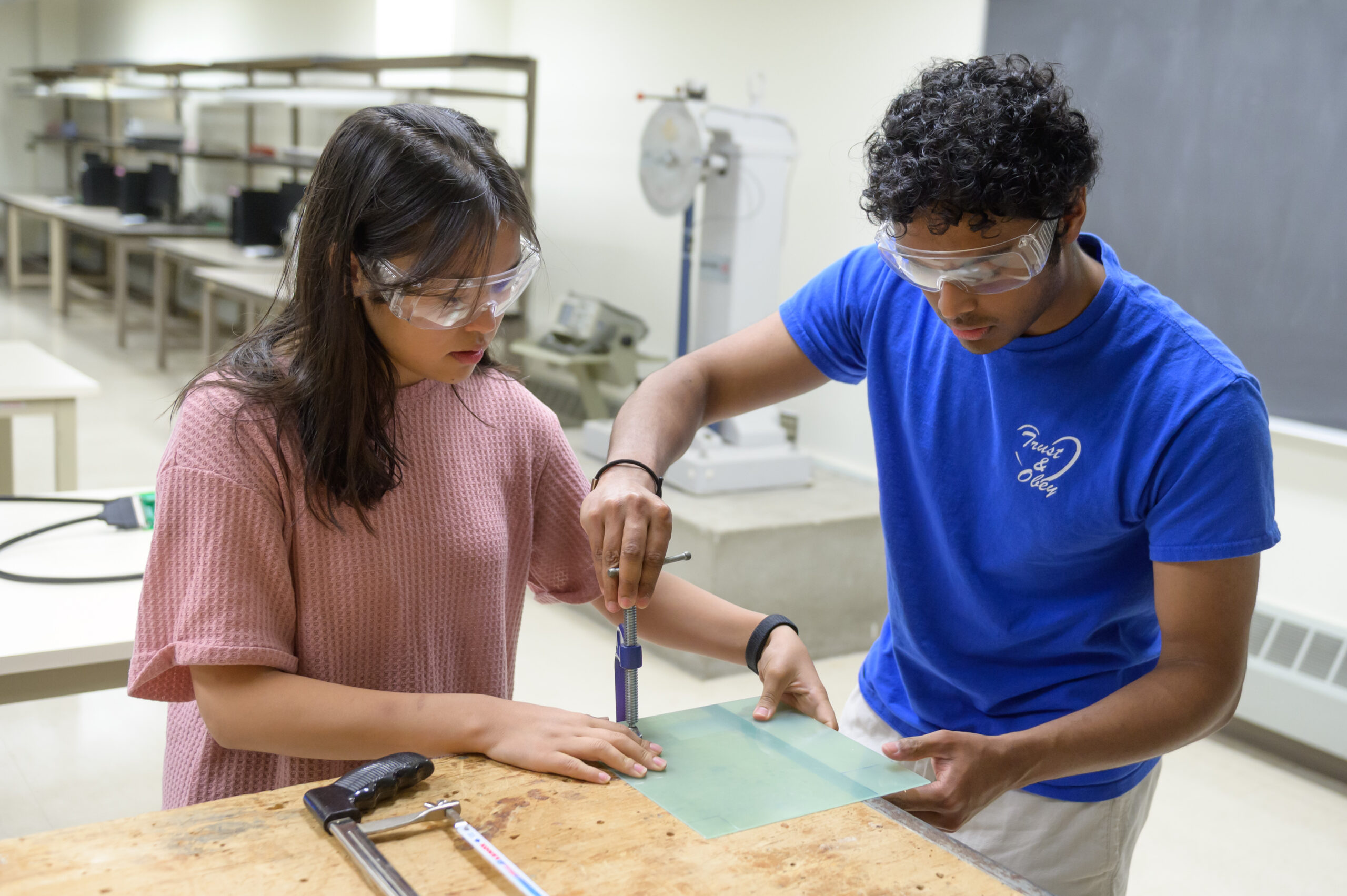
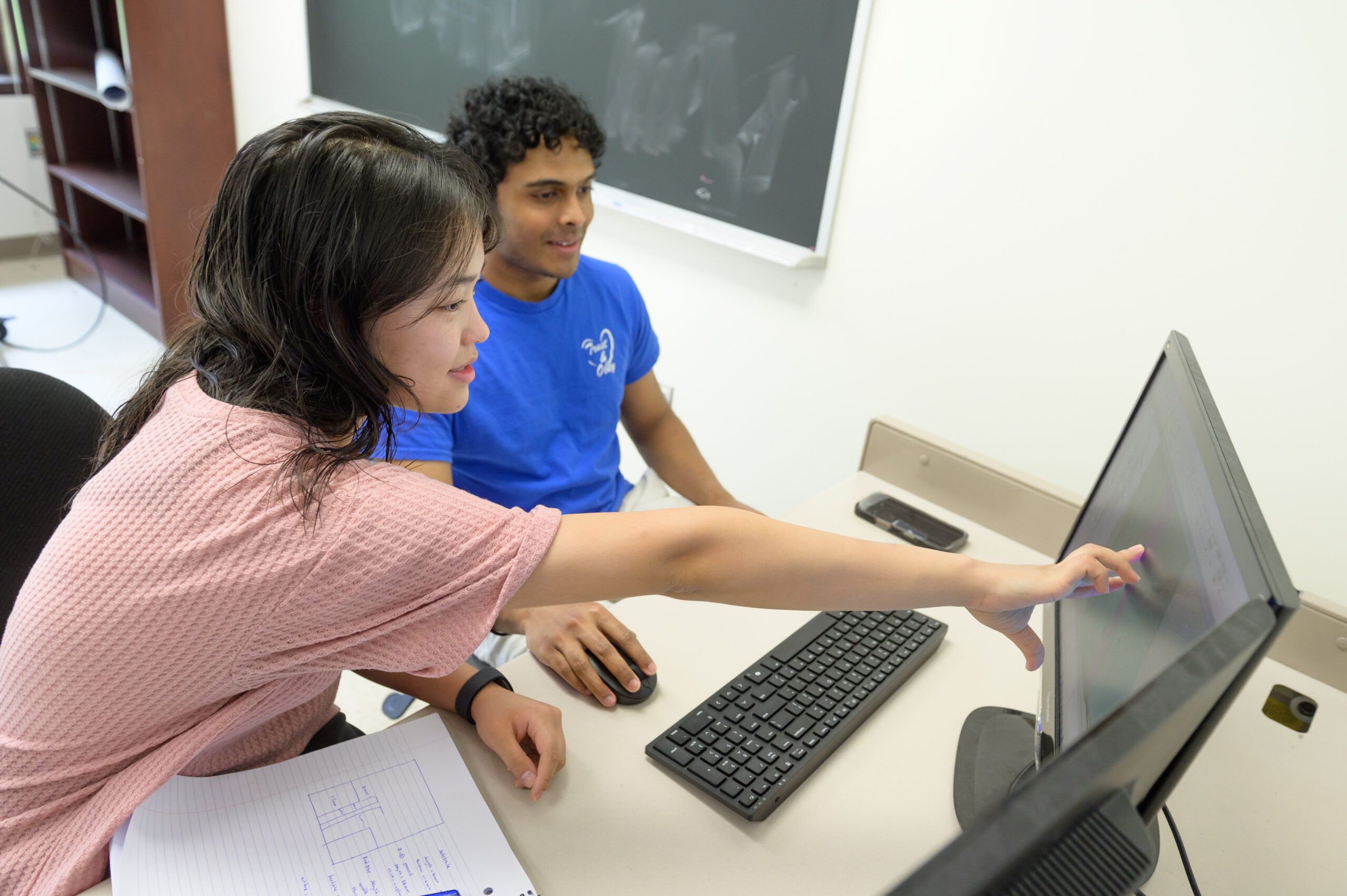
Jamila Hussaini ’27 and Joshua Hartman ’28 worked with Assistant Professor of Engineering Ruoxing Gao. “The project focuses on designing and prototyping a small antenna that could be used for wearable or body-centric wireless applications,” Gao said. “The students worked on antenna modeling and simulation using HFSS, then moved into prototype fabrication and measurement, including building printed antenna prototypes and testing their performance using a vector network analyzer.”
See more photos in the gallery below.
Summer Research 2026
1/13
Alejandra Gutierrez ’28 and Maya Sasaki-George ’28 meet with Associate Professor of Fine Arts Michael J. Hatch. Photos by Nick Caito.
2/13
Alejandra Gutierrez ’28 and Maya Sasaki-George ’28 review layout designs of a new web page for the Connecticut Museum of Culture and History devoted to the history of LGBTQ+ rights in Connecticut as part of their Public Humanities Collaborative summer research.
3/13
4/13
Cindy Rodriguez ’27 and Samiya Johnson ’27 analyze water samples for the presence of various metals and pollutants as part of their summer research project with Associate Professor of Environmental Science and Chemistry Arianne Bazilio.
5/13
Cindy Rodriguez ’27 works in the lab with Associate Professor of Environmental Science and Chemistry Arianne Bazilio.
6/13
Cindy Rodriguez ’27 and Samiya Johnson ’27 analyze water samples for the presence of various metals and pollutants as part of their summer research project with Associate Professor of Environmental Science and Chemistry Arianne Bazilio.
7/13
Jackie Garcia Alvarado ’28, Sitora Abdulofizova ’29, and Talakinet Wabelo ’29 work with Assistant Professor of Computer Science Chandranil Chakraborttii on addressing the ‘Verification Gap.’
8/13
Sitora Abdulofizova ’29, Jackie Garcia Alvarado ’28, and Talakinet Wabelo ’29 work with Assistant Professor of Computer Science Chandranil Chakraborttii on addressing the ‘Verification Gap.’
9/13
Assistant Professor of Engineering Ruoxing Gao works on a summer research project with Jamila Hussaini ’27 and Joshua Hartman ’28.
10/13
Jamila Hussaini ’27 and Joshua Hartman ’28 conduct summer research in engineering.
11/13
Jamila Hussaini ’27 and Joshua Hartman ’28 conduct summer research in engineering.
12/13
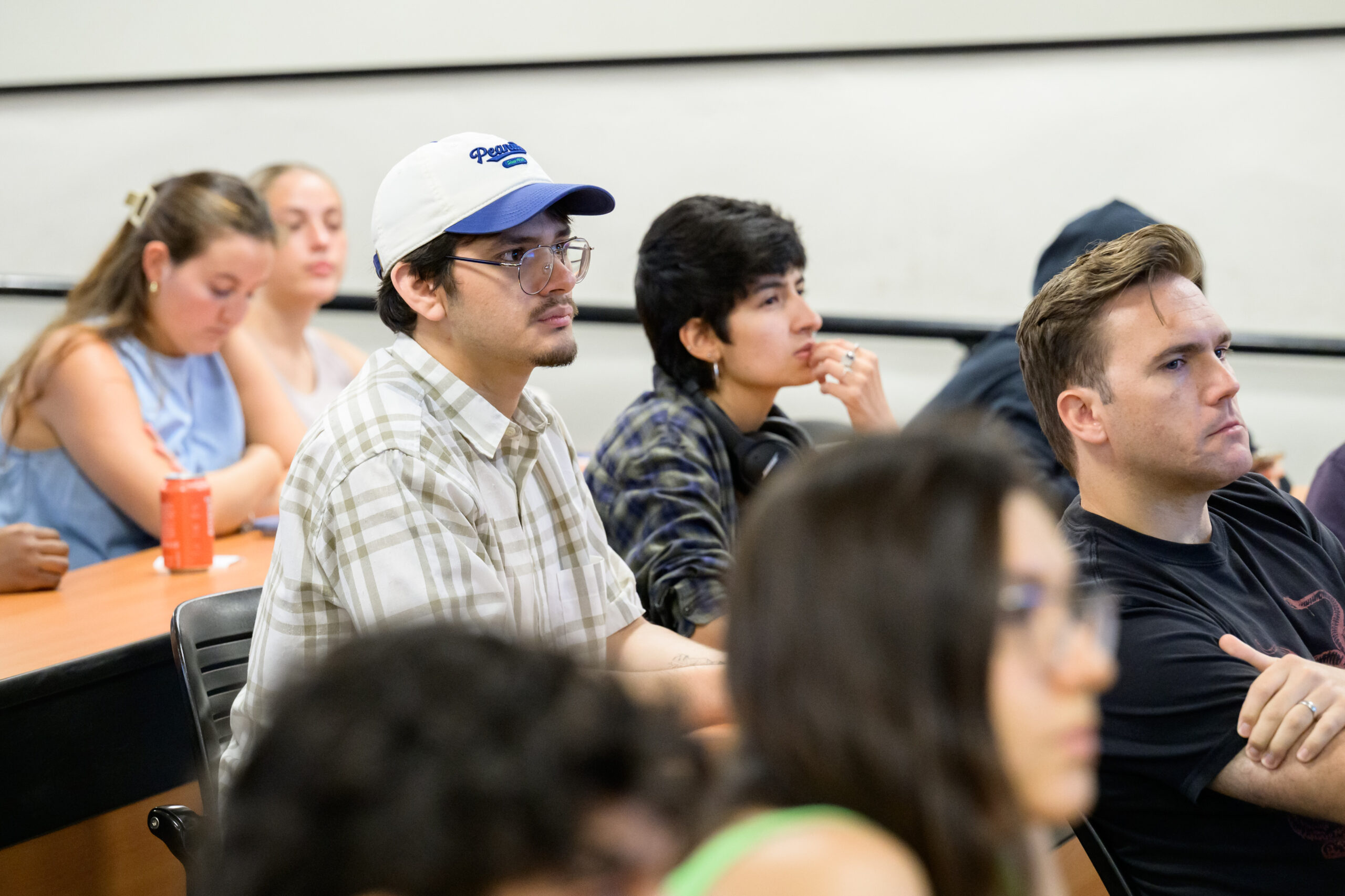
Students Anna Reese Carlton ’28 (left) and Meric Yasar ’28 present their summer research, “A Statistical Physics Framework for Predicting Processor Temperature Dynamics,” investigating ways to more efficiently cool AI data centers. STEM Summer Research Presentations were held on July 9, 2026.
13/13
Summer Research Presentations were held on July 9, 2026.
This year’s cohort of President’s Fellows includes some of Trinity’s most accomplished seniors. These 32 student scholars from the Class of 2027 have compiled exemplary academic records in their years at the College.
The Trinity College community gathered for a documentary film screening and panel discussion with alumna Julia Hoppock ’06, an associate producer of People vs. Politics, as part of Voter Education Week.
The grant for Susan A. Masino, Paul E. Raether Distinguished Professor of Applied Science, and David N. Ruskin, research associate professor, will provide summer research opportunities for Trinity students.
Associate Professor of Classical Studies Vincent E. Tomasso, whose first-year seminar is reading Homer’s epic poem, will give a presentation as part of Odyssey Day this fall. Read more about why he says The Odyssey still resonates today.