Trinity Students Reflect on Connecticut Forum Discussion of Environmental Issues
Content
Story
Posted
By
Eh Wah Wah ’28
Category
Hartford
Trinity students recently attended “The Future of the Environment,” a panel discussion hosted by The Connecticut Forum, a nonprofit organization that brings together voices in public discourse to foster thoughtful conversations on pressing social, political, and cultural issues. Trinity is an education partner of the Forum, supporting its mission to encourage the free and active exchange of ideas.
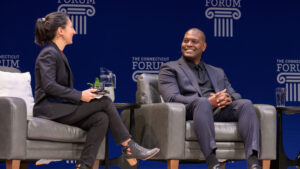
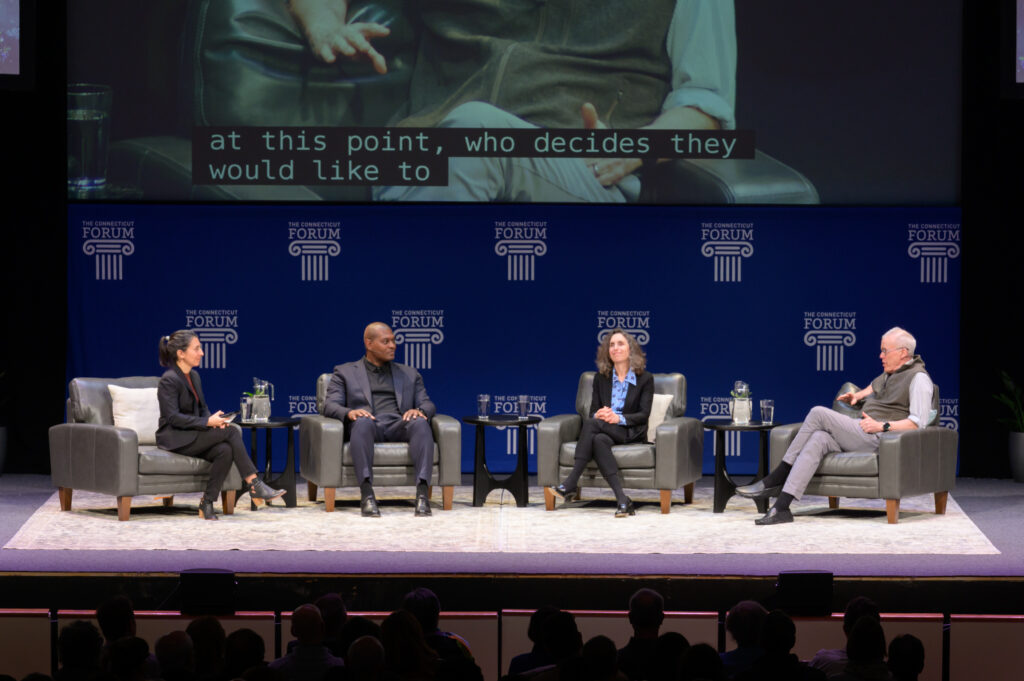
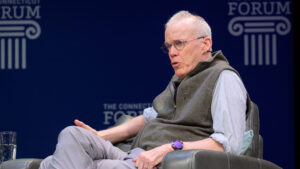
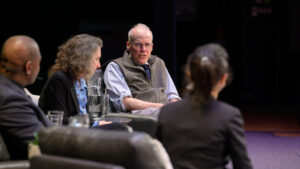
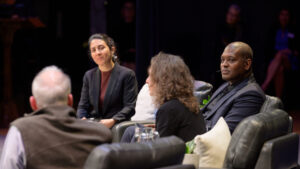
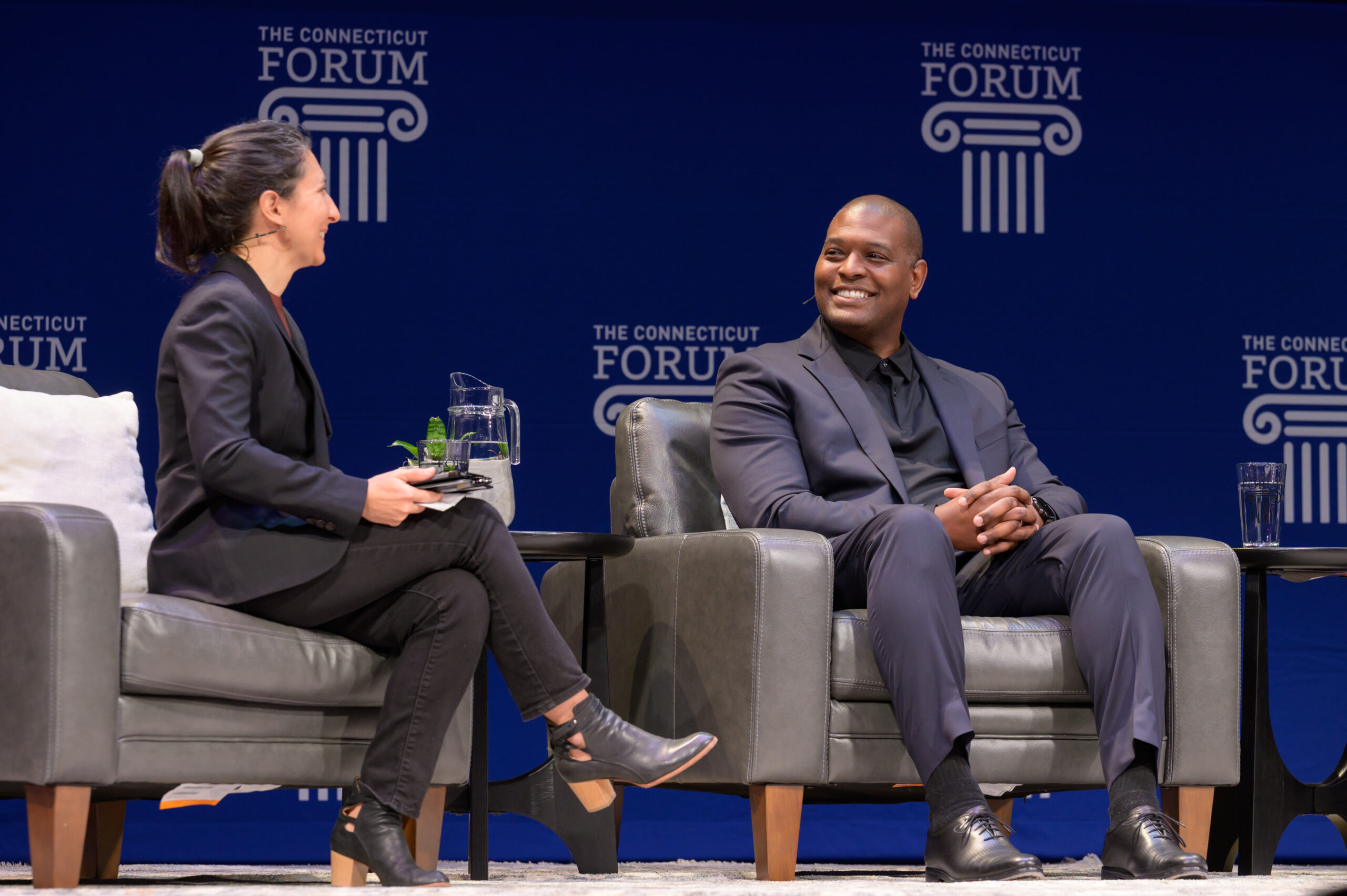
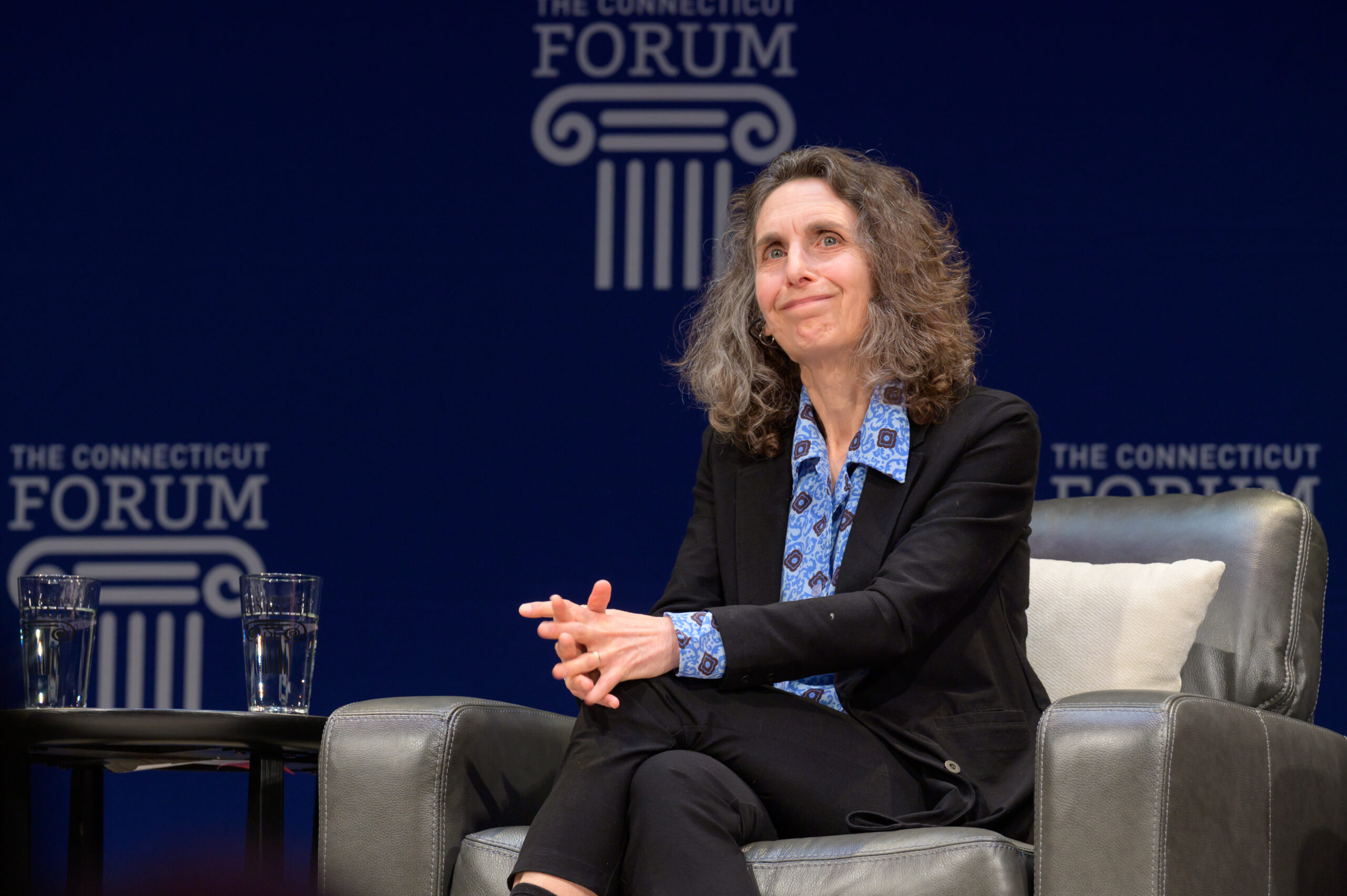
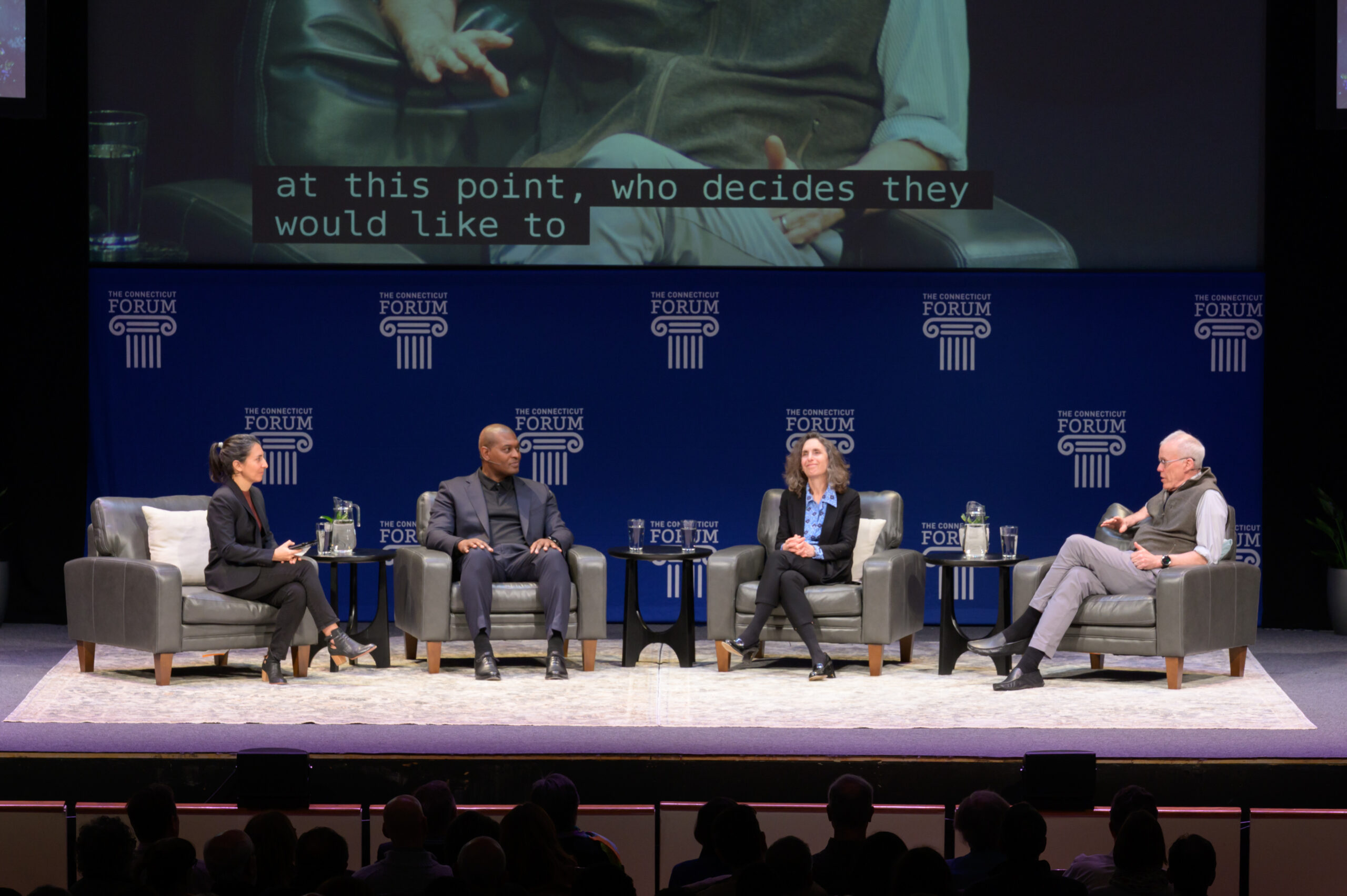
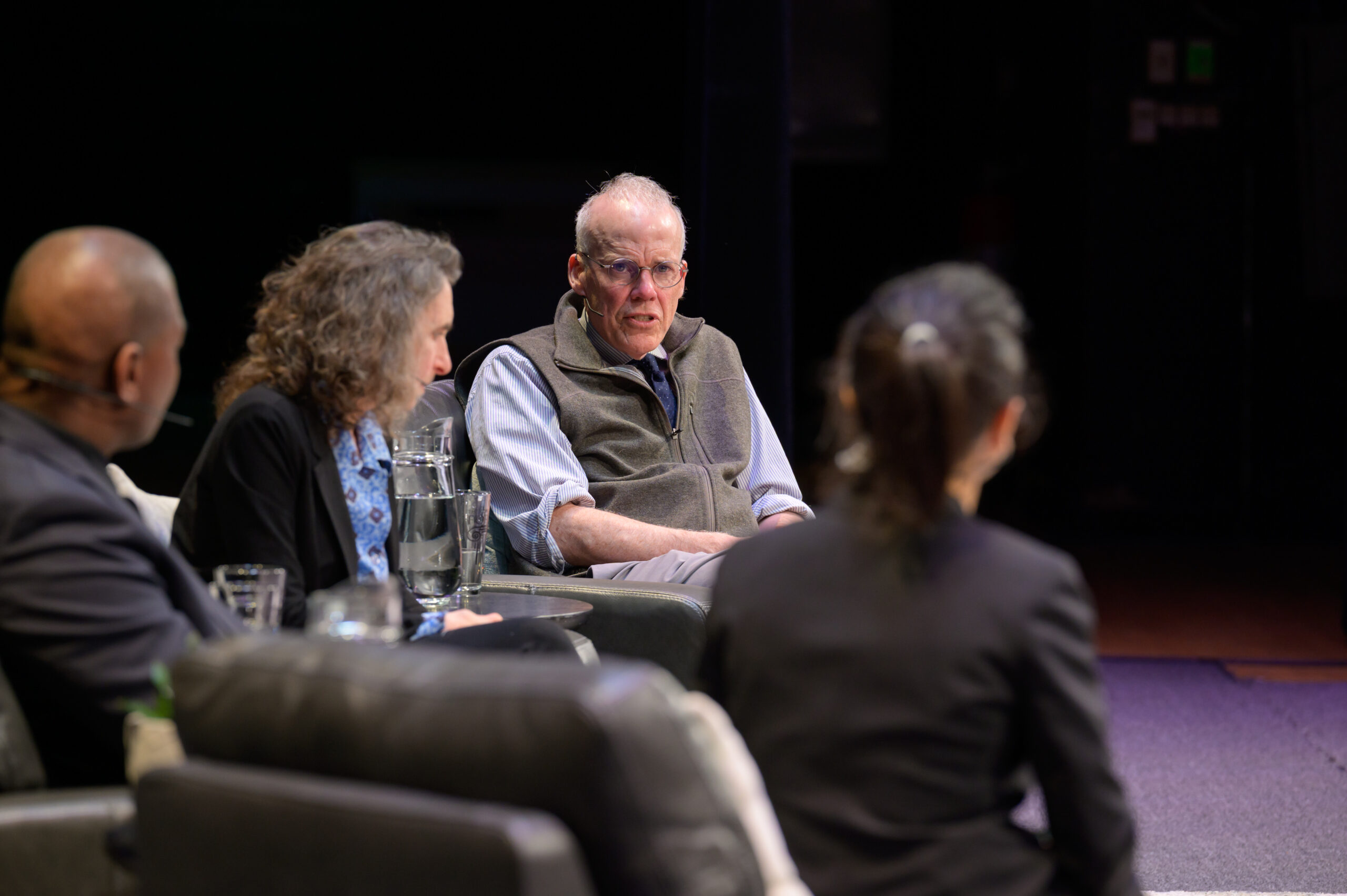
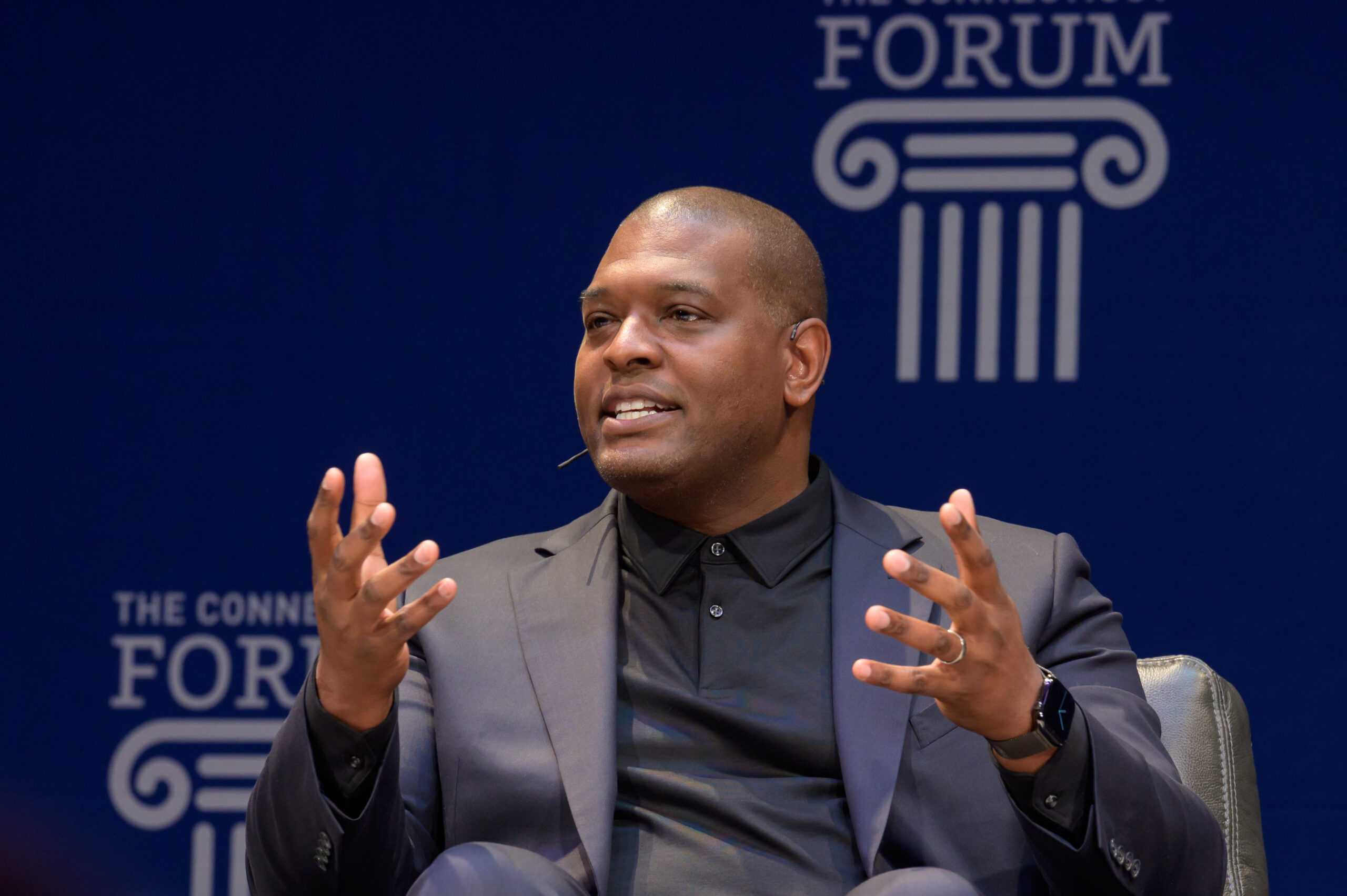
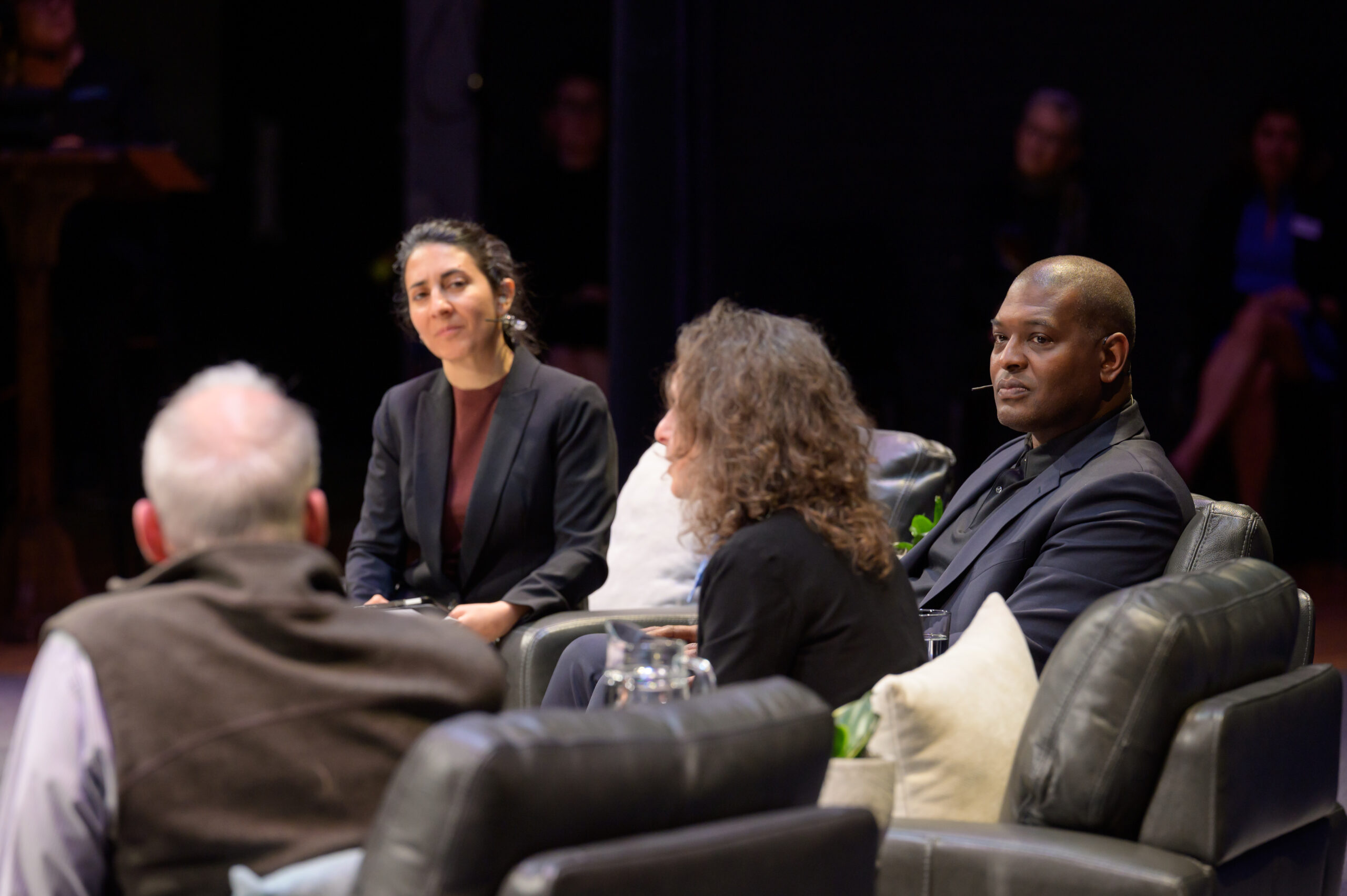
Flora Lichtman, Michael Regan, Elizabeth Kolbert, and Bill McKibben at The Connecticut Forum. Photos by Nick Caito, courtesy of The Connecticut Forum.
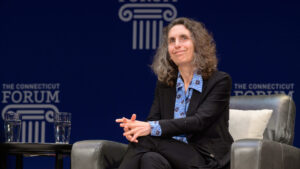
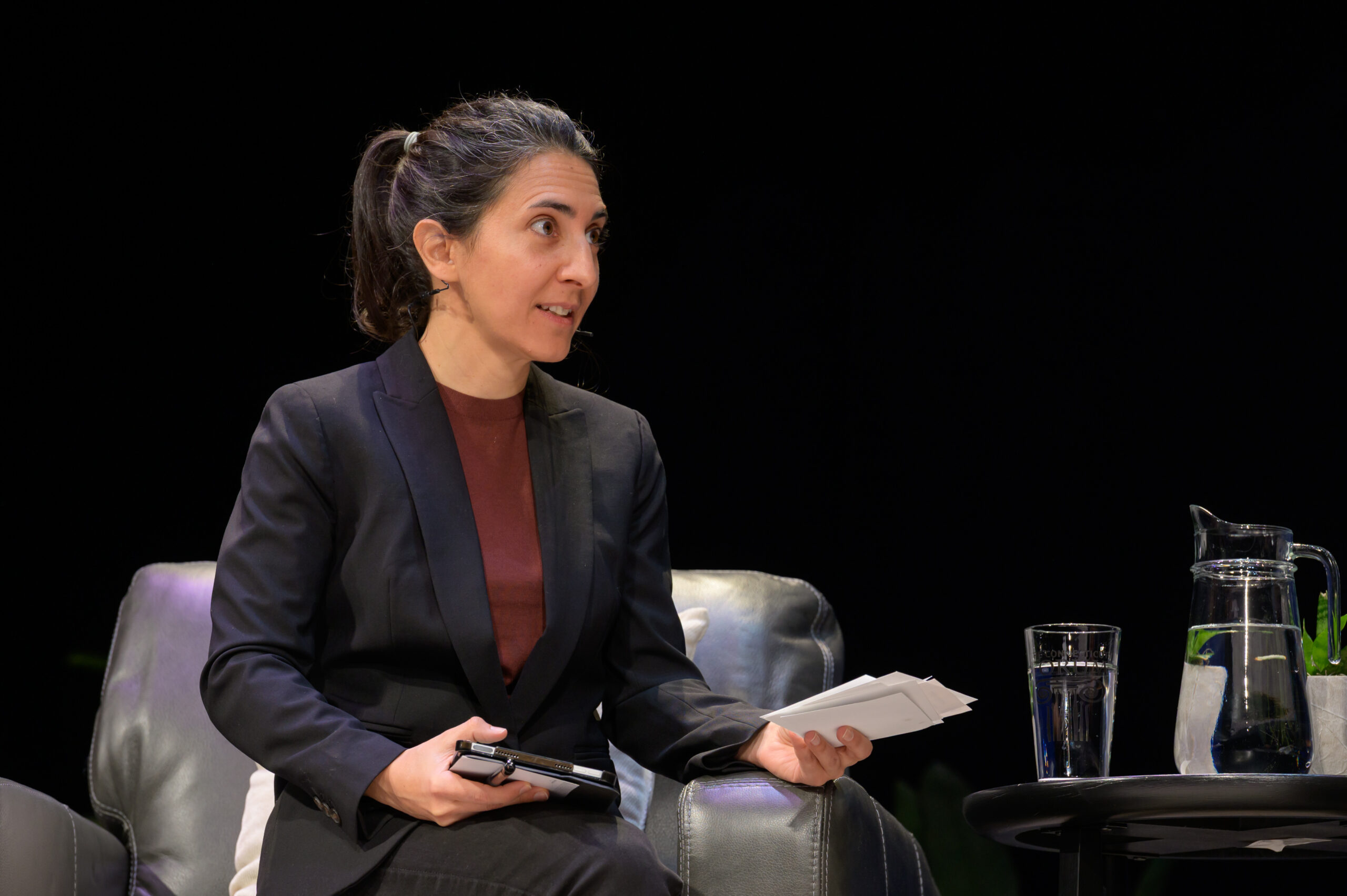
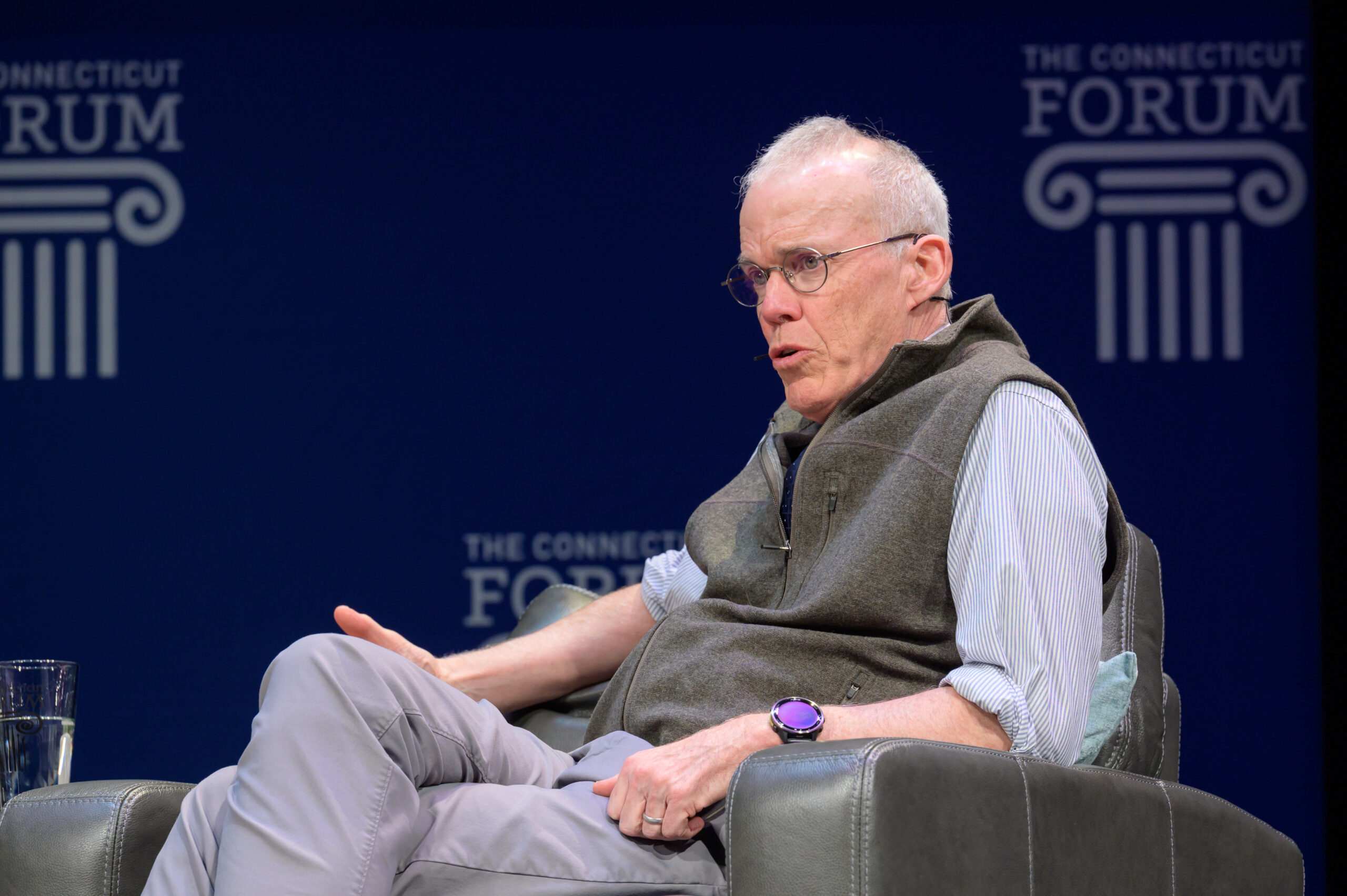
Held on March 12, 2026, the event was included as part of the College’s “Night Out in Hartford,” which provided students with transportation to dinner and to the Bushnell Performing Arts Center in Hartford, where the discussion took place. The panel featured Michael Regan, 16th administrator of the U.S. Environmental Protection Agency; Bill McKibben, author, educator, environmentalist; and Elizabeth Kolbert, Pulitzer Prize-winning science writer and journalist. The discussion was moderated by Flora Lichtman, host of Science Friday.
The evening began with a focus on progress within Connecticut, where towns are embracing sustainability as a point of pride. Still, the tone of the event was far from simple optimism. When asked how they felt after years of working in environmental fields, the speakers offered a range of responses. Regan was hopeful that progress was possible. Kolbert expressed concern, pointing to mounting ecological losses as evidence that climate change is accelerating even beyond what we immediately see.
McKibben said his frustration with the current situation centered on what he described as deliberate political inaction and the undermining of climate science, even at a moment when solutions are more accessible than ever. “For the first time, we have the tools we need to be making huge progress,” McKibben added. “If we wanted to, we could be moving ahead at light speed across the planet in a way that we haven’t been able to do before.” The panelists agreed that the issue is no longer technological innovation, but political will and systemic change.
The discussion also touched on how conversations about climate change should be framed. Regan emphasized the importance of making the issue more personal by connecting climate change to everyday concerns, such as rising insurance costs, public health challenges, and severe weather. “We may not be meeting people where they are,” Regan said, noting that many Americans are focused on “kitchen table issues.” He added that while it is important to communicate the urgency of the crisis, it is equally important to highlight opportunity and action. “I think we have to begin to really articulate how dire the situation is while also being very intentional about talking about potential opportunity and the window that we have to take advantage of,” he said.
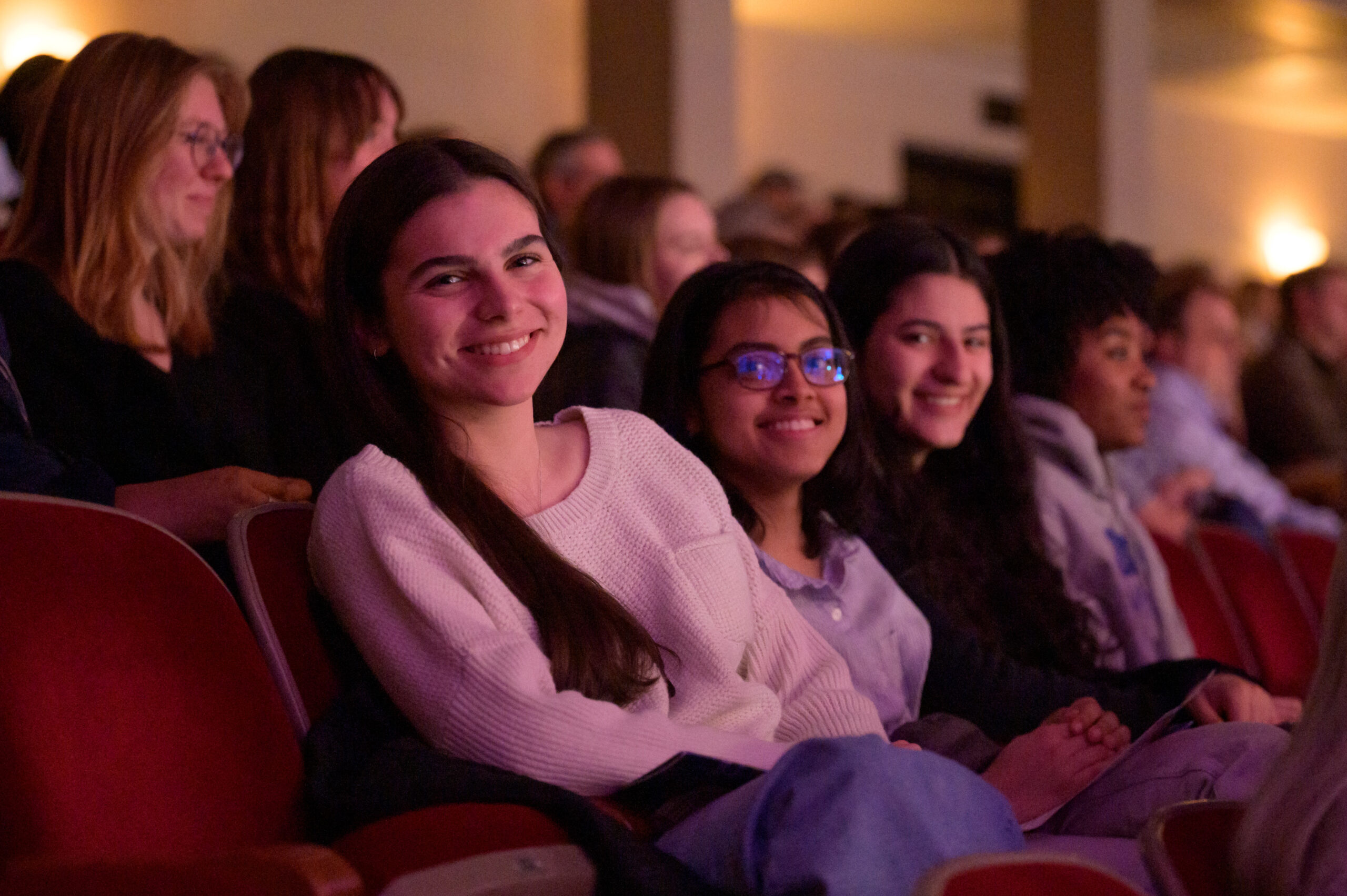
Members of the Trinity College community at the Connecticut Forum panel discussion, “The Future of the Environment.”
For students in attendance, the discussion connected classroom learning with real-world application. Eleanor Harper ’24, an environmental science major who learned about the event from her “Conservation Biology” instructor, Associate Professor of Environmental Science Amber L. Pitt, said hearing from experienced professionals added depth to topics she has studied. “The speakers touched on a lot of issues… but added their own lived experiences and stories about things I’ve only heard about in class,” Harper said.
Scarlett Coke ’29, an intended biology major who is also in Pitt’s class, said the event was thought-provoking. “The talk made me think about how I can better advocate for change, the state of our environment, and the importance of putting power into the right hands in this country right now,” Coke said.
Harper added, “It was great as a student to hear from people who have been in the field for so long and have done so much important research, and who remain hopeful even in the current situation.”
Pitt said that she hoped her students who attended the Connecticut Forum event learned that they don’t have to follow a particular career path to make a positive difference for environmental and human health. “As demonstrated by the panelists, they could tackle environmental issues as advocates, policymakers, writers, and beyond,” Pitt said. “I also hope that they learned that there is a path forward for protecting the environment and human health and wellbeing.”
Liliana Polley IDP’21, M’23, executive director of Trinity’s Center for Hartford Engagement and Research (CHER), said that Trinity students working with CHER as Community Engagement Fellows organized this “Night Out in Hartford” and other outings. “These events provide an excellent opportunity for Trinity students to engage more deeply with Hartford as both a learning environment and a community,” Polley said. “By attending events like the Connecticut Forum and enjoying local restaurants and cultural venues, students can expand their perspectives beyond campus, support the local economy, and build a stronger connection to the city. These experiences are crucial in helping students view themselves as active participants in Hartford, rather than as visitors.”
1/11
Flora Lichtman with Michael Regan at The Connecticut Forum. Photos by Nick Caito, courtesy of The Connecticut Forum.
2/11
Elizabeth Kolbert
3/11
Flora Lichtman, Michael Regan, Elizabeth Kolbert, and Bill McKibben at The Connecticut Forum.
4/11
Flora Lichtman
5/11
Bill McKibben
6/11
The Connecticut Forum hosted the panel discussion, “The Future of the Environment.”
7/11
Michael Regan
8/11
The Connecticut Forum hosted the panel discussion, “The Future of the Environment.”
9/11
Members of the Trinity College community at the Connecticut Forum panel discussion, “The Future of the Environment.”
10/11
Members of the Trinity College community at the Connecticut Forum panel discussion, “The Future of the Environment.”
11/11
Members of the Trinity College community at the Connecticut Forum panel discussion, “The Future of the Environment.”
Trinity’s Summer Research Program supports intensive student involvement in ongoing faculty research. More than 100 Trinity students spent part of summer 2026 engaged in research projects with faculty mentors.
Through collaborative partnerships across campus, in Hartford, and beyond, Trinity’s Pre-Orientation Programs foster awareness, care, connection, conversations, and experiences as a community.
Trinity College’s Austin Arts Center and its resident theater company, HartBeat Ensemble, will present Athol Fugard’s South African drama “A Lesson from Aloes” from October 8 through October 17, 2026.