Academic support at Trinity College goes well beyond students meeting with faculty members during office hours. Peer tutoring gives students the opportunity to learn from each other as they build both skills and community.
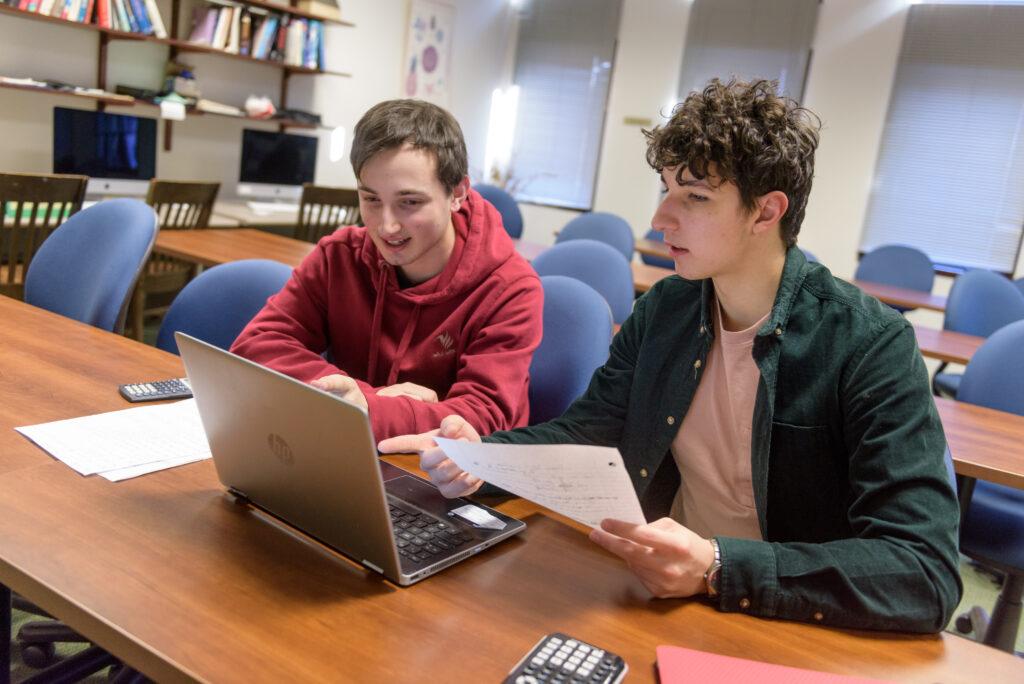
Overseeing a network of peer tutoring centers on campus, the Center for Academic and Experiential Advising’s Academic Resource Collaborative supports the academic success of all students. The ARC comprises the Aetna Quantitative Center, the Blume Language and Culture Learning Center, the Library Peer Research Center, Subject Based Tutoring, and The Writing Center.
Tennyson O’Donnell, senior director of academic resources, said that peer tutoring relationships at Trinity are mutually beneficial. “Students receiving this assistance are learning how to ask the right questions and are figuring out how to learn as they go. It’s a unique learning experience,” said O’Donnell, who also is the director of the Allan K. Smith Center for Writing and Rhetoric, Allan K. Smith Principal Lecturer in English Composition, and director of the First-Year Seminar Program.
The tutors have a lot to gain, as well, O’Donnell added. “It widens their networks of peers, allows them to share their expertise, and increases opportunities to learn about different subjects they haven’t taken courses in,” he said. “Working in peer tutoring centers helps students feel connected to the community.”
Amiira Ibraahim ’26 said that being a subject-based peer tutor has allowed her to connect with students from a wide range of majors, interests, and backgrounds. “I love being able to share strategies and resources that have helped me succeed in my own courses, and I always look forward to those ‘aha’ moments when something finally clicks for a student,” Ibraahim said. “Each time I explain a concept, I find that I understand the material more deeply, which makes the experience both meaningful and enriching. I also really value the sense of community among co-tutors; everyone is supportive, collaborative, and always ready to help.”
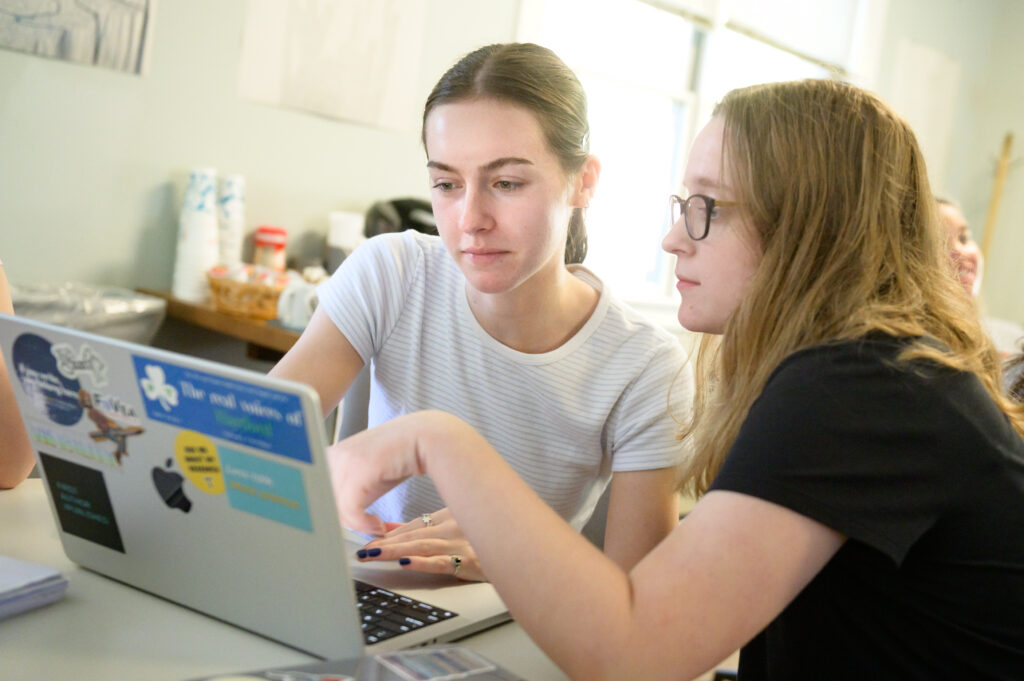
Jennah Simpson ’27 added that working at The Writing Center has allowed her to make connections across campus. “Both my fellow tutors and the students that come through the door have their own unique views. I love being a Writing Associate because I get to learn something each shift, whether it be about writing or from the content of a paper,” Simpson said.
Kamilla Volkova ’26 finds it rewarding to serve as a subject-based tutor. “I think, no matter what they study, the main skills that students learn through the center is understanding what they need help with, and having courage to ask for help from the peer-tutoring center,” Volkova said.
Building real connections and learning how to think are benefits of peer tutoring that cannot be replicated by artificial intelligence, O’Donnell said. “Your peers have things to offer you as live human beings,” he said. “Peer tutors are about teaching the process; AI is all about the product. It won’t understand you and support you as an individual.”
Paulina Campanella ’27, a tutor in the Blume Language and Culture Learning Center, said that she appreciates learning different approaches to the work from fellow tutors. “Every student brings different perspectives and experiences, and this tutoring has made me value foreign language study even more,” Campanella said. “Blume is a truly valuable resource and community on campus.”
Cass Cronin ’26 supports navigating the research process through the Peer Research Center. “Through helping students find strong, reliable academic sources, teaching them how to use Trinity’s interlibrary loan system, and guiding them through purchase request forms, I have seen how access to the right tools can make a significant difference in students’ success,” Cronin said. “The center allows me to have meaningful academic conversations with peers about how research is conducted and communicated. These experiences have not only deepened my understanding of effective research strategies, but have also made me a more thoughtful student and a more effective peer mentor.”
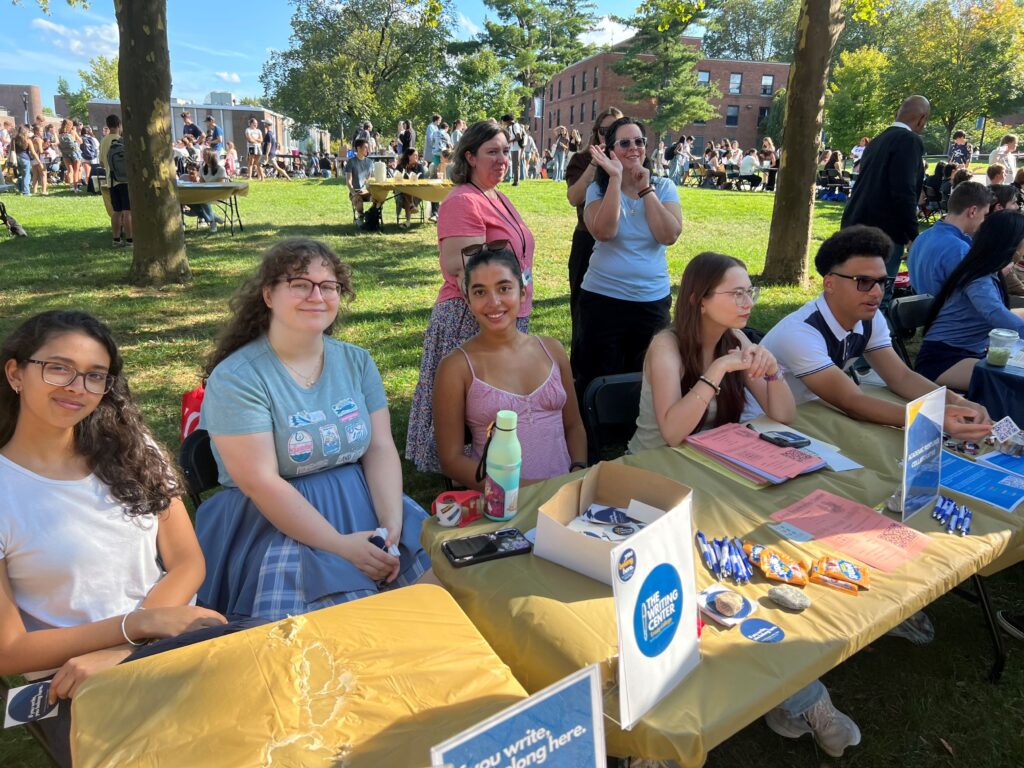
Throughout the fall 2025 semester, peer tutors were active across campus by answering questions, building relationships, and raising awareness about available academic support. Tutors and the center directors expanded their reach by participating in events including the Resource Fair, the Majors and Minors Fair, Snacks and Support, Halloween on Vernon Street, and many other campus gatherings. During these events, the centers strengthened their campus presence and reaffirmed their commitment to creating an accessible, welcoming, and supportive learning environment.
Each year, new students receive training to become tutors, O’Donnell said. The Writing Center, for example, runs a semester-long course for Writing Associates, while language tutors receive training alongside Teaching Assistants. “There’s a rigorous process to be selected and trained as a peer tutor in each center,” O’Donnell said.

Peer tutors also have professional development opportunities, including an annual Peer Tutor Conference. The November 2025 conference created a shared space for tutors to learn how to better support students both within and beyond tutoring sessions. Haben Abraham ’10, LCSW, the director of Trinity’s Counseling and Wellness Center, and Lauren Diana, Title IX coordinator, led discussions to teach tutors how to recognize signs of student distress, respond with care, and connect peers to appropriate campus resources.
To learn more about how to receive academic support from a peer or how to become a peer tutor, visit the Academic Resource Collaborative website or contact one of the peer tutoring centers:
Aetna Quantitative Center
Kaitlyn Gingras—Director, Aetna Quantitative Center and Lecturer in Mathematics
Preston Walker—Lecturer in the Aetna Quantitative Center and Mathematics Department
Blume Language and Culture Learning Center
Aidali Aponte-Aviles—Senior Lecturer in Language and Culture Studies
Library Peer Research Center
Rose Beranis—Research & Instruction Librarian, Wellness and Experiential Learning
Subject Based Tutoring
Tennyson O’Donnell—Director, Allan K. Smith Center for Writing and Rhetoric; Allan K. Smith Principal Lecturer in English Composition; Senior Director, Academic Resources; Director, First Year Seminar Program
Bridget Abbott—Coordinator, Subject Based Tutoring Center; Administrative Assistant, Allan K. Smith Center for Writing and Rhetoric/English
The Writing Center
James Truman—Director of Peer Tutoring in Writing; Senior Lecturer, Allan K. Smith Center for Writing and Rhetoric