Trinity Students Present Summer Research at Annual Symposium
Content
Story
Posted
By
Cate Griffin ’27
Category
Academics
Trinity College’s 21st annual Summer Research Symposium featured the work of students who completed research over the summer of 2026 through the Summer Research Program.
More than 100 students spent part of the summer working with faculty members and other mentors on research projects in the arts, humanities, sciences, and social sciences, and were required to submit a summary of their work at the end of their research period. The fall symposium allowed these students to showcase their findings and research processes.
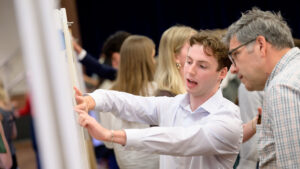
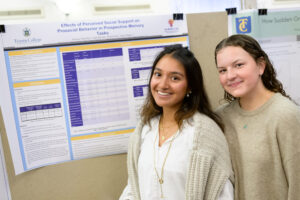
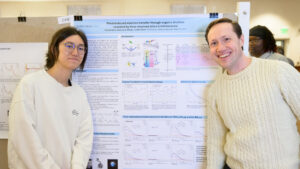
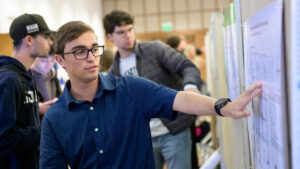
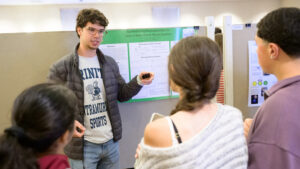
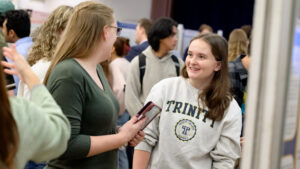
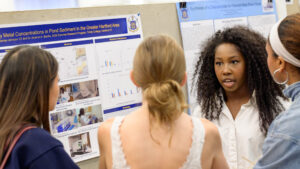
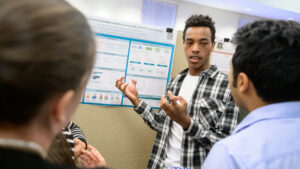
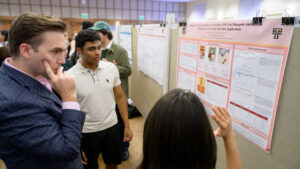
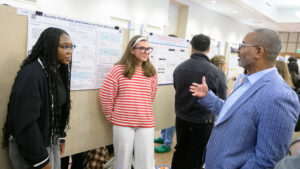
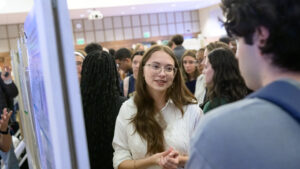
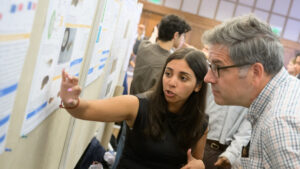
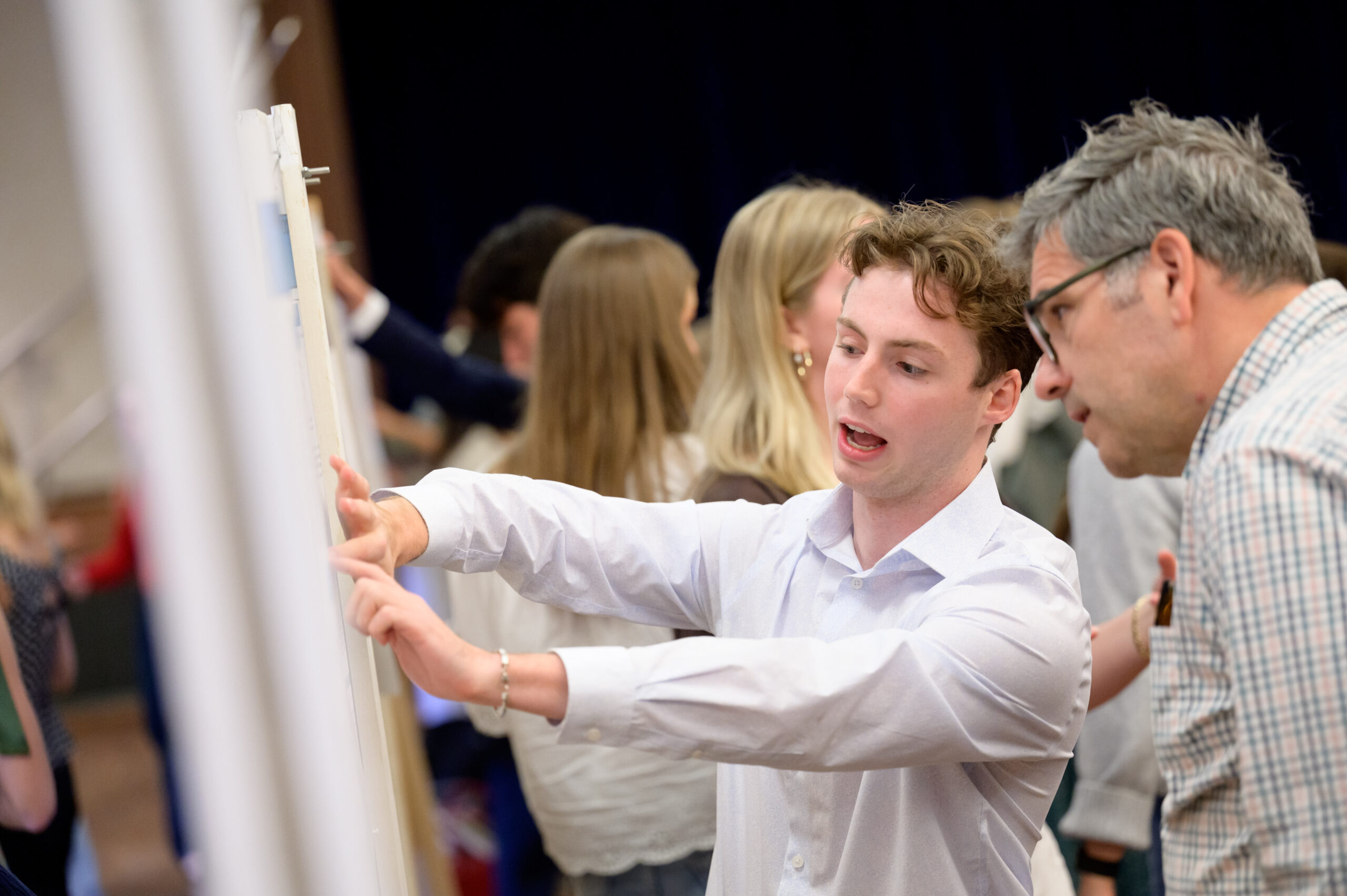
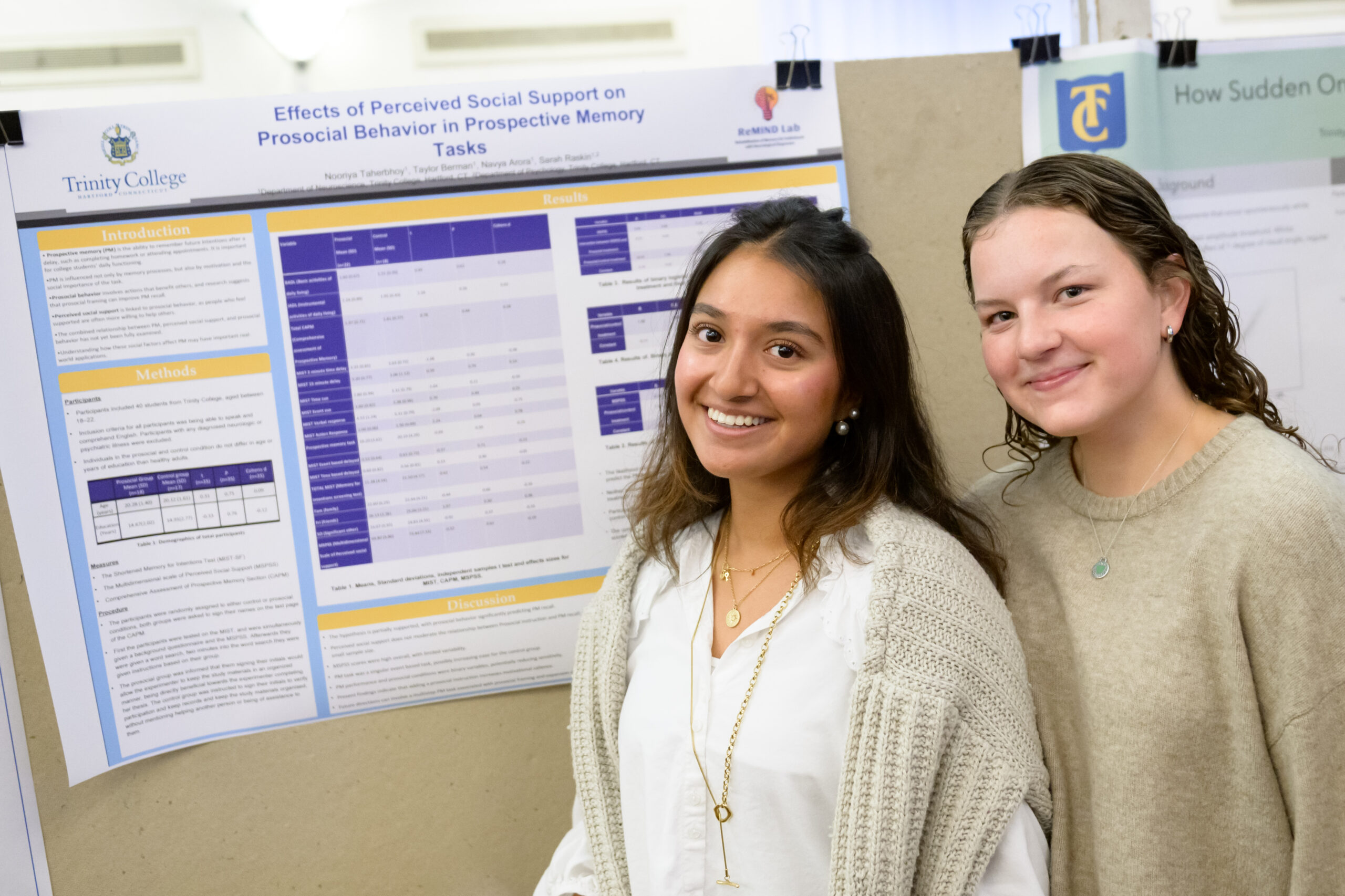
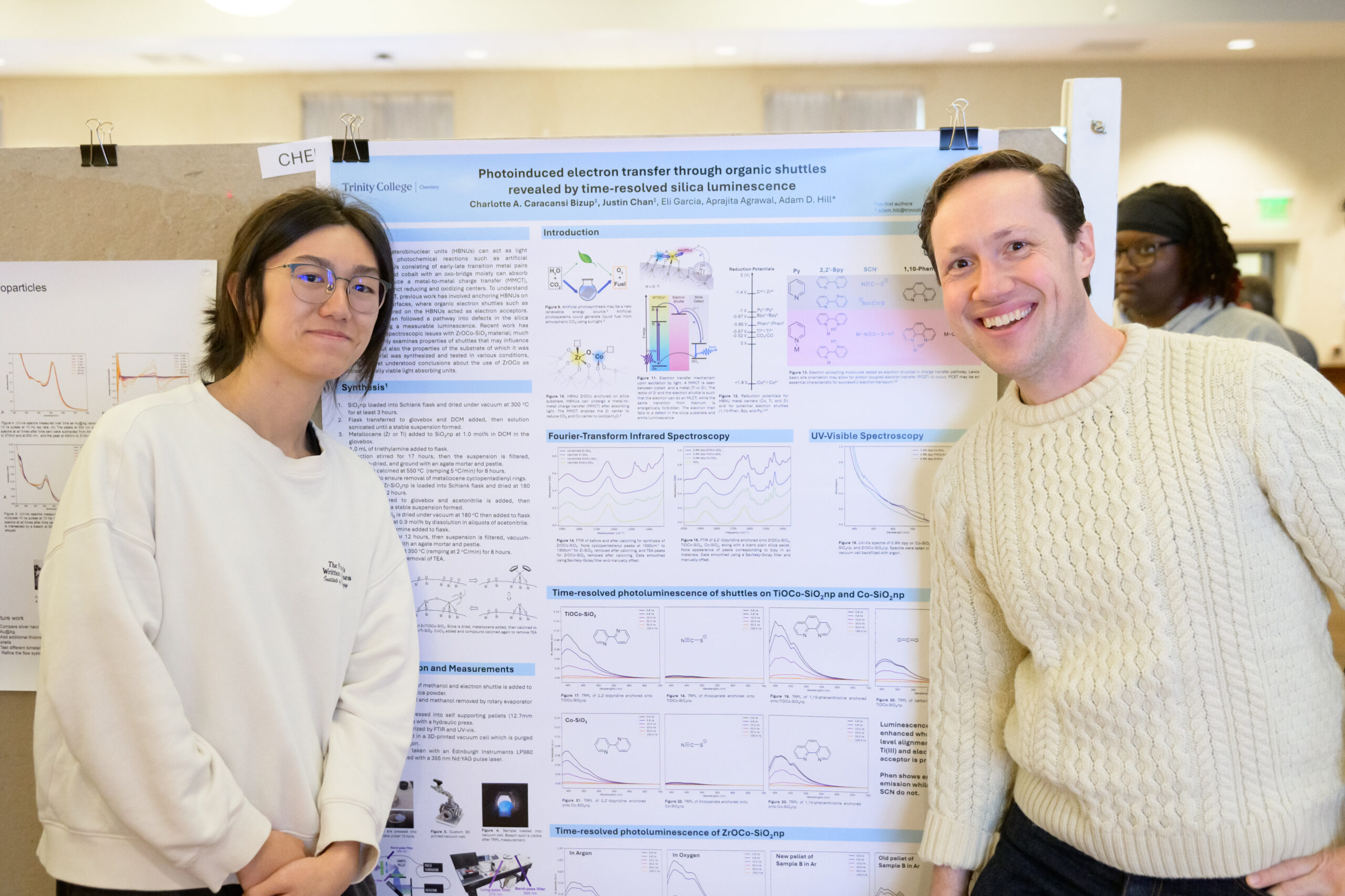
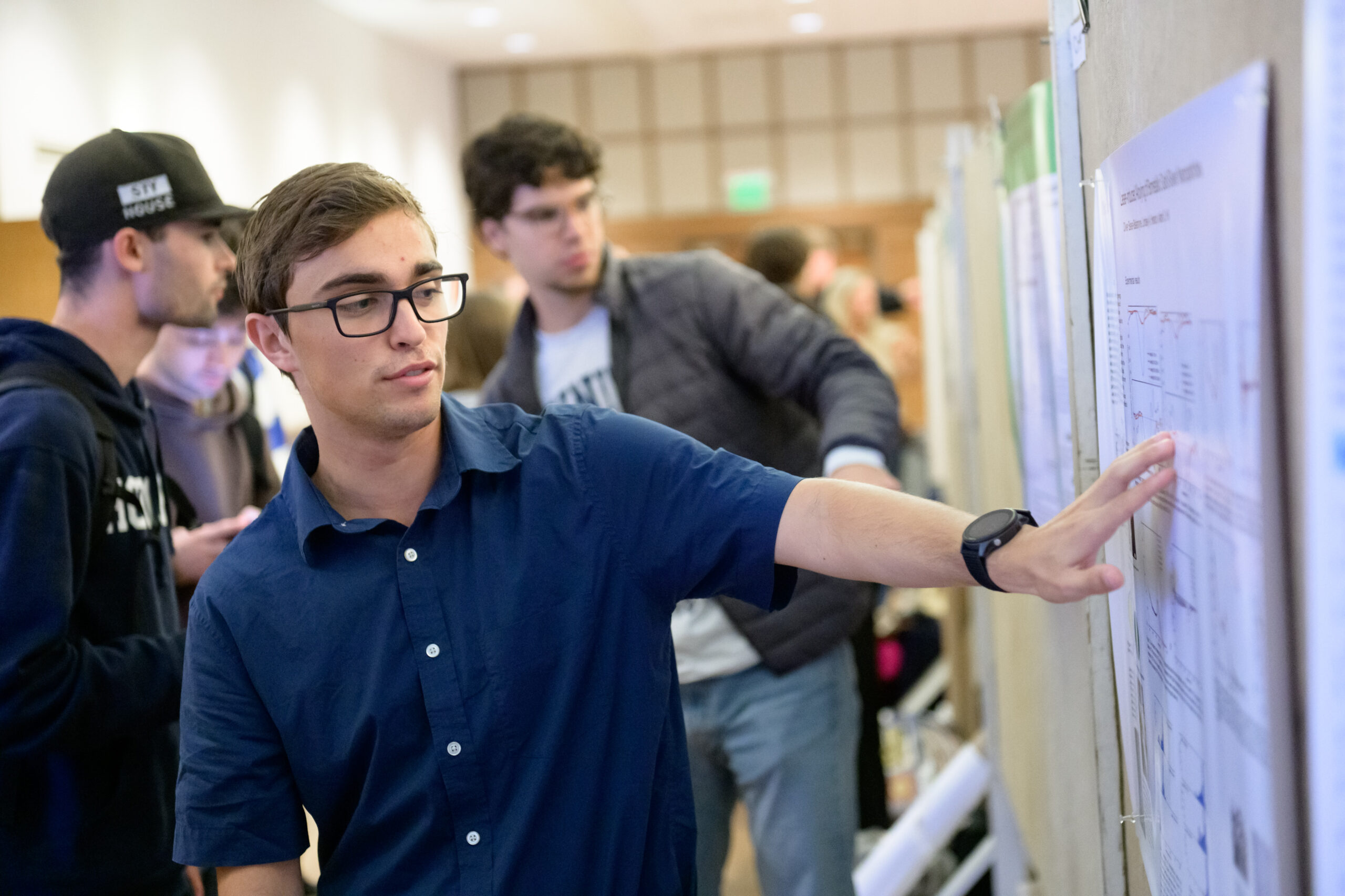
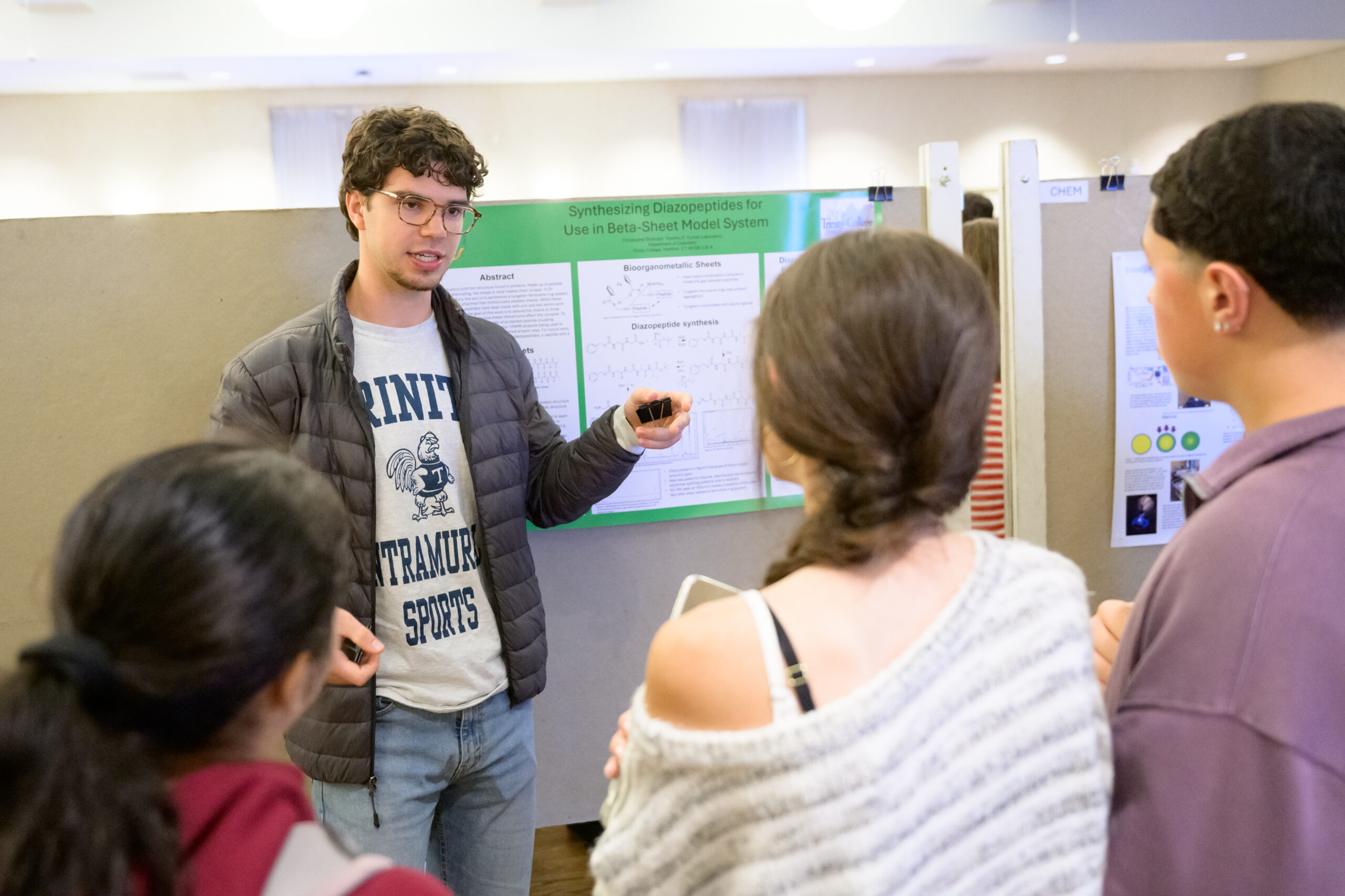
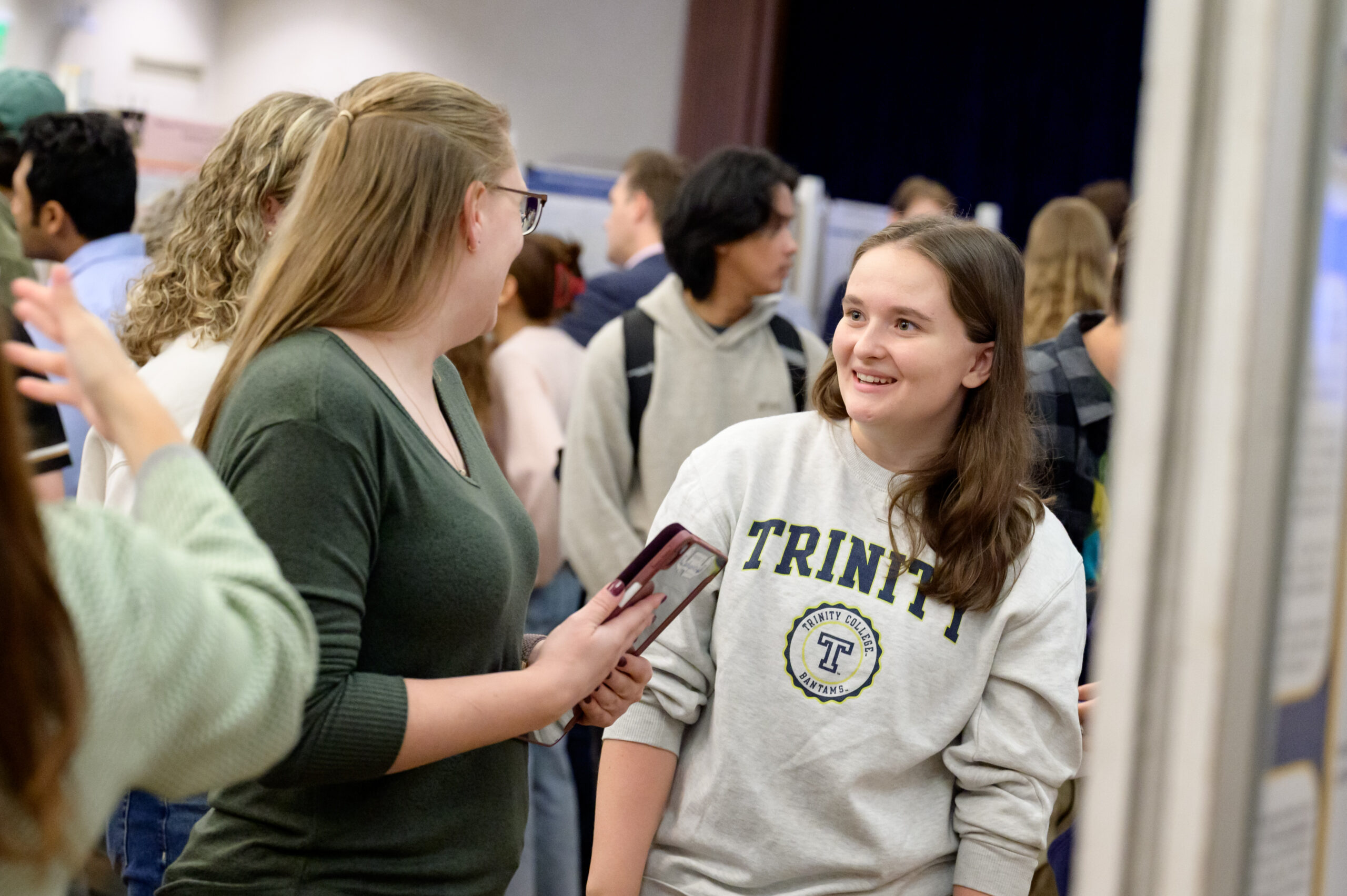
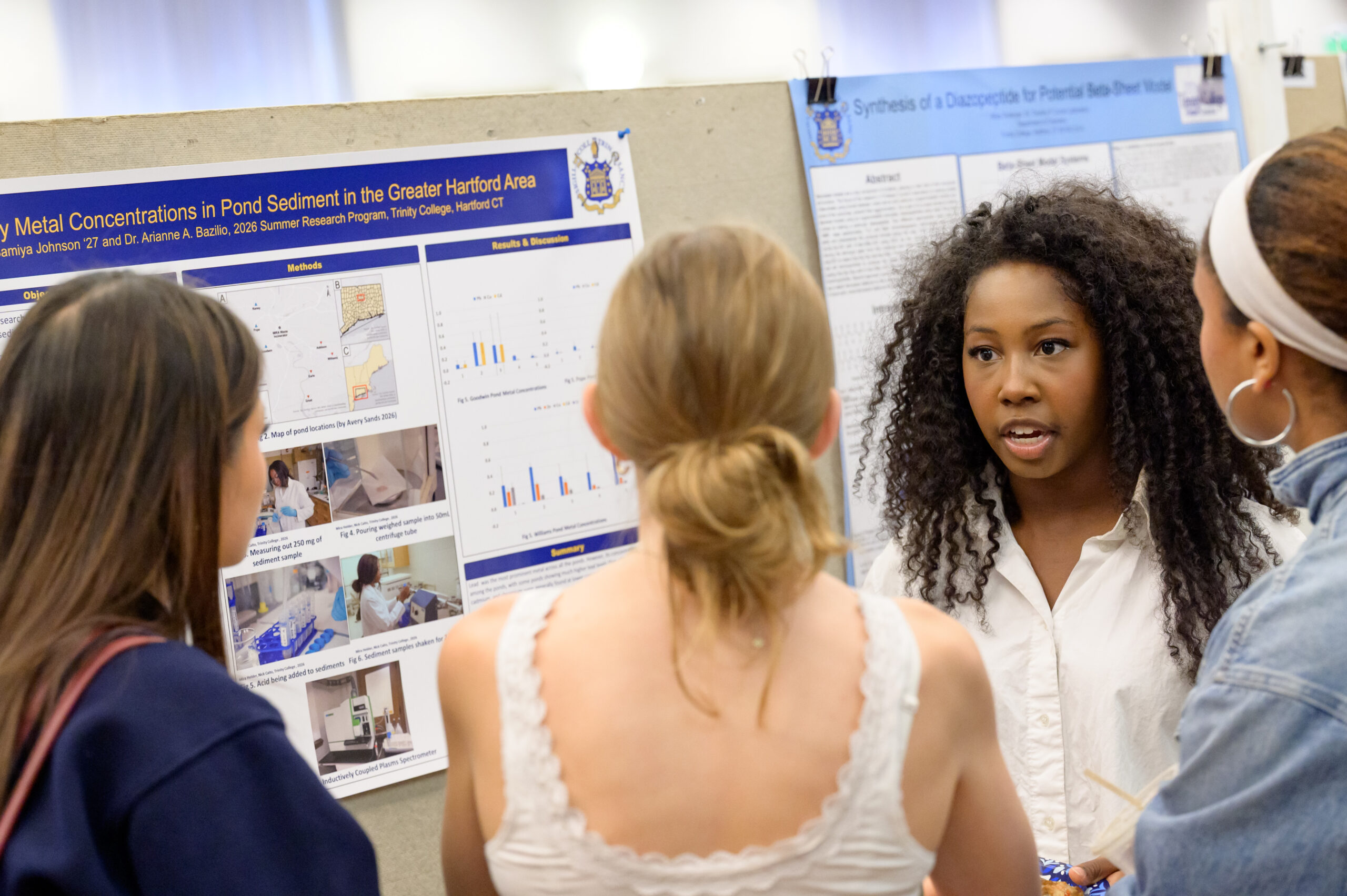
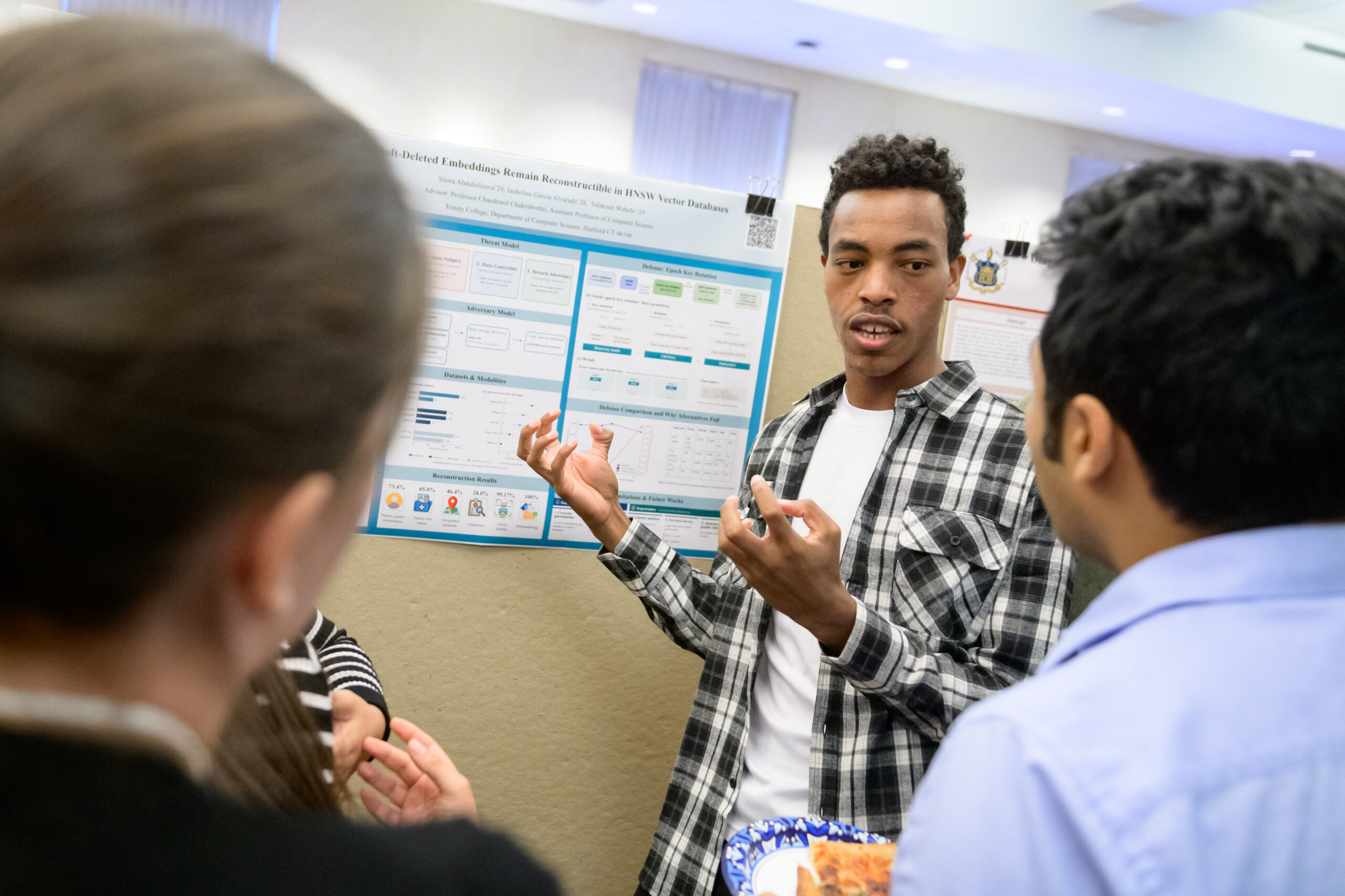
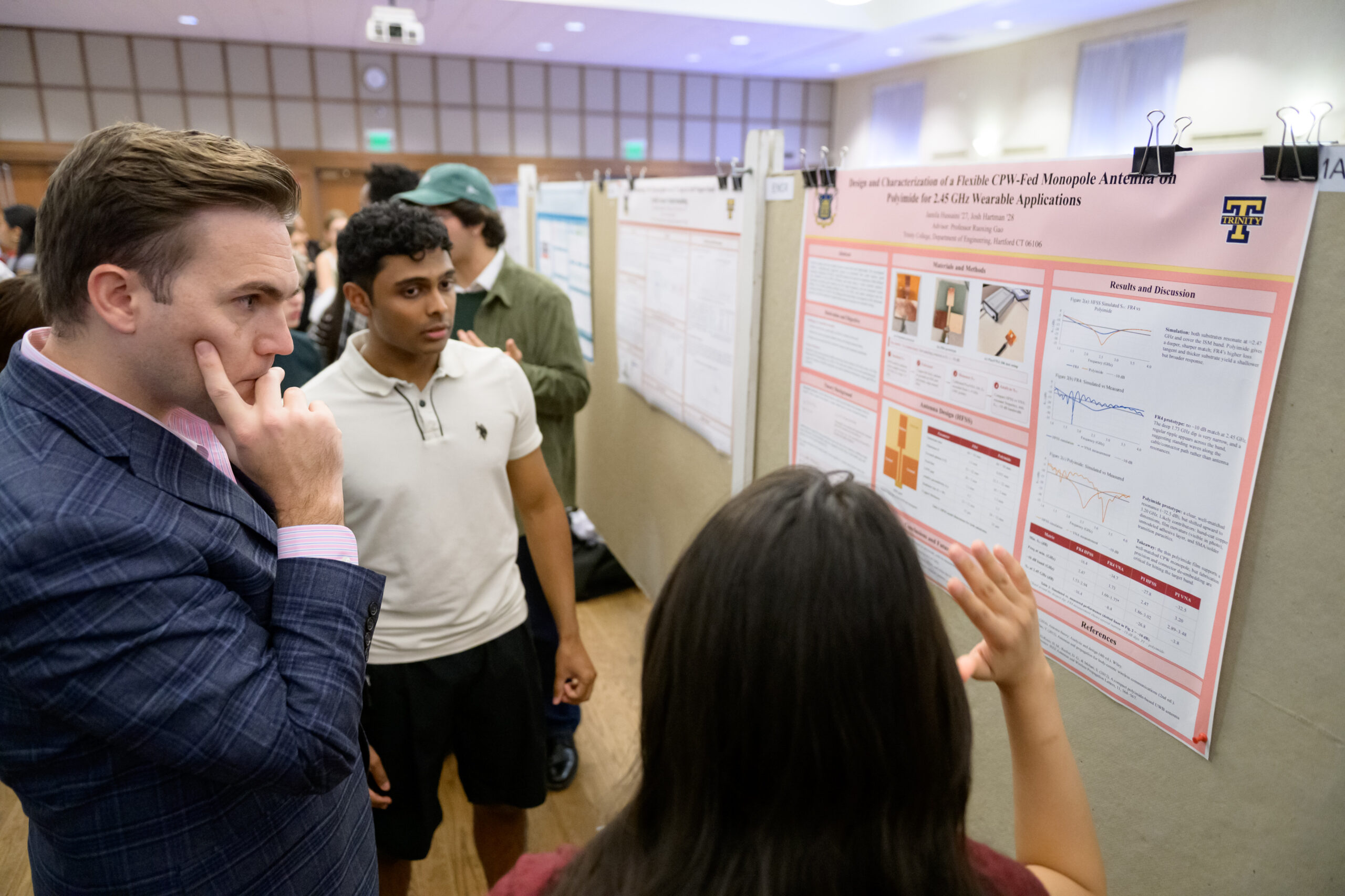
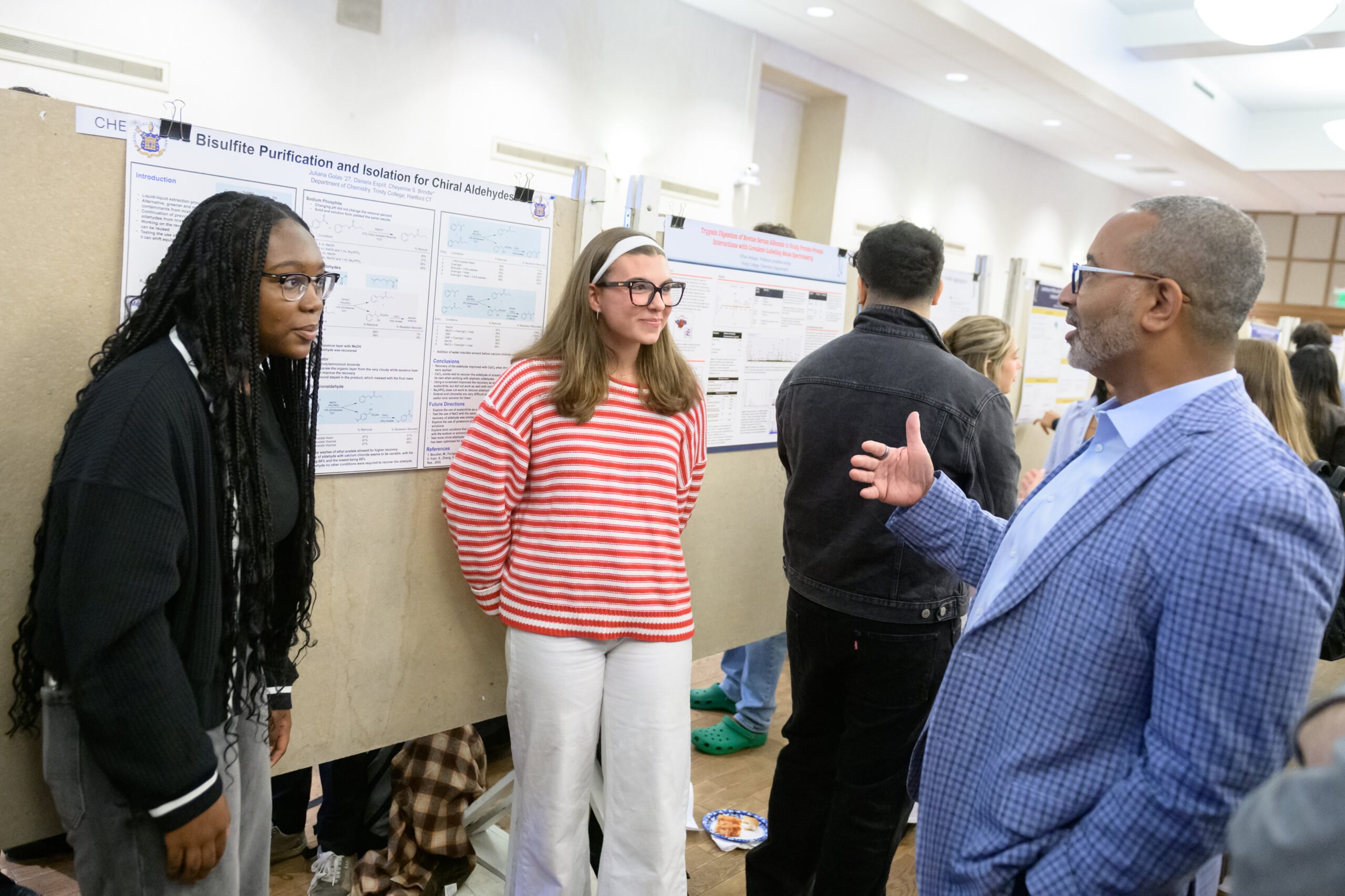
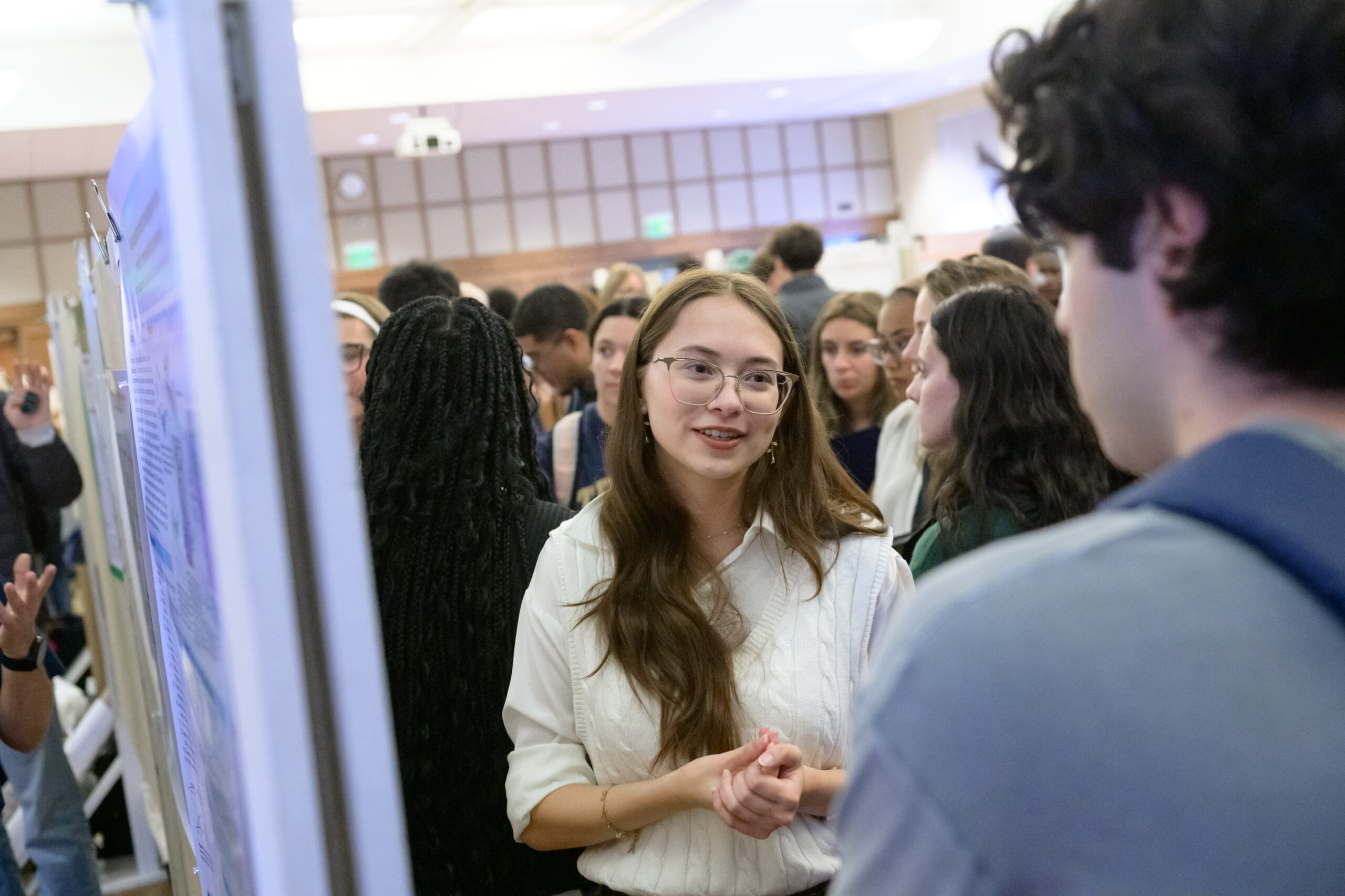
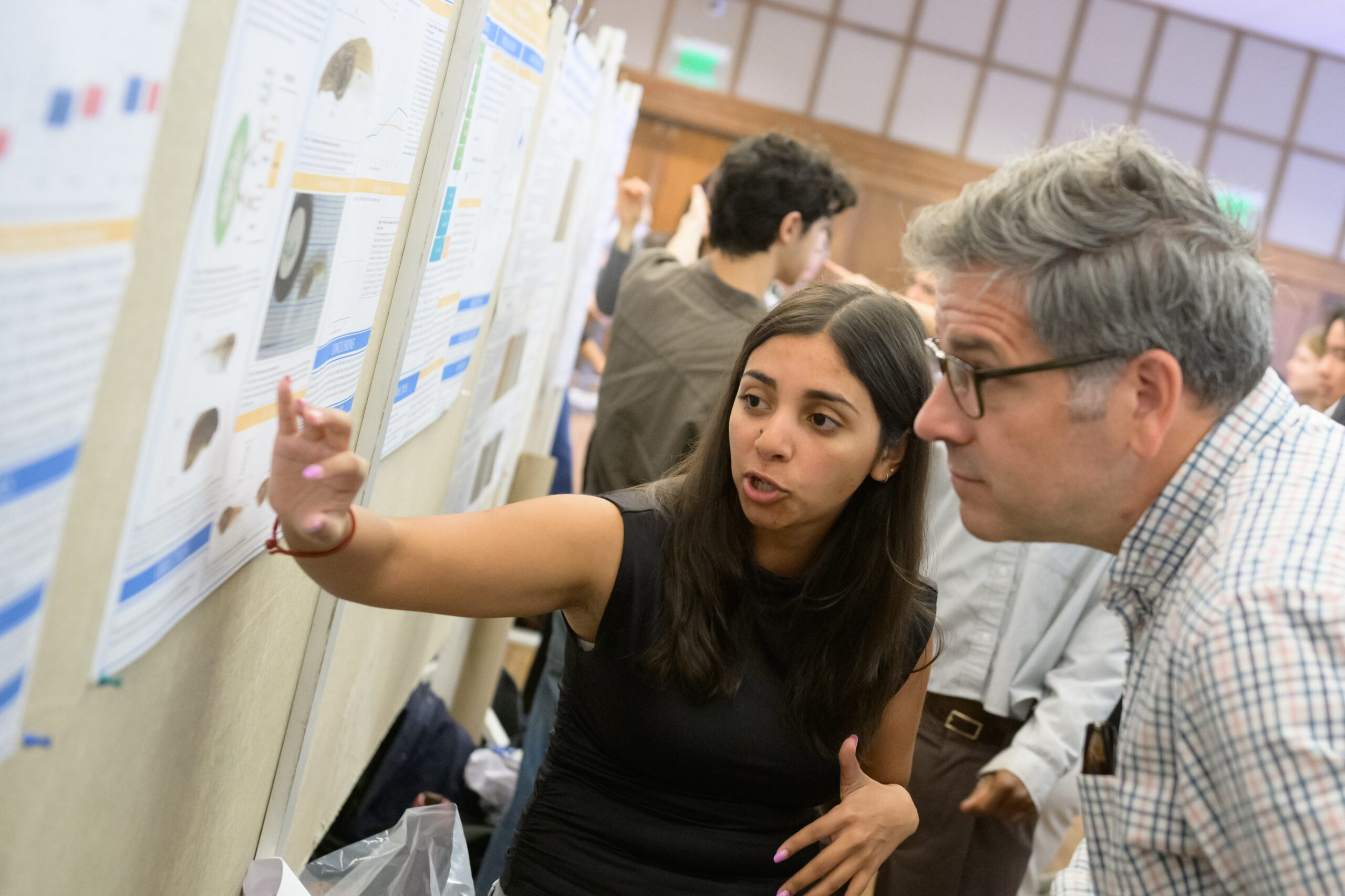
Students present their work at Trinity College’s 21st annual Summer Research Symposium. Photos by Nick Caito.
Students from disciplines ranging from engineering to English presented 49 posters describing their work to the Trinity community on September 24 in the Washington Room of Mather Hall.
Below, student researchers share how their summer experiences relate to their studies at Trinity and to their future career goals.
Emma Boyce ’27 and Elsa LeStage ’27
Majors: English Research topic: The Touch of God: Radical Theology in the Margins of the English Mirror of Simple Souls
Research summary: LeStage: We conducted research of a medieval manuscript called The Mirror of Simple Souls, which was the first and only medieval text to result in the burning of a woman at the stake. We looked at all the differences in the text through several editions of the manuscript. We kept an eye on different patterns, and we would come together and discuss what these patterns mean in a contemporary and a medieval context.
Connections to future careers: LeStage: I’m writing a thesis that is going to contain parts of this text in relation to our modern understanding of medieval marriage and women’s relation to God in the context of broader medieval gender dynamics. I also hope to go to grad school, so I think this will definitely be relevant to further medieval research. Boyce: Similarly, I have an interest in medieval studies in relation to queer theory. I’m also writing a thesis that has to do with medieval texts in dialogue with contemporary poetry. So this research has to do with my thesis, as well as grad school, too.
Sara Ingrey ’27
Major: Biochemistry Research topic: Synthesis and Intramolecular Hydrogen Bonding in Peptide Derivatives of Aconitic Acid
Research summary: We’re interested in beta proteins because the main cause for neurodegenerative diseases, like Alzheimer’s or Parkinson’s, is them clumping up together. We’re trying to design a new model that won’t clump together, and we realized that we found a novel reaction. These compounds are forming a trimer, which is three of them coming together and forming another molecule. We studied their structure and found that they had hydrogen bonds, which was exciting.
Connections to a future career: In the future, I want to go into research, and I would love to continue in organic chemistry. We published this research over the summer, and it was my first paper published as a co-author. I was really excited to be able to conclude the project and then get to publish it and contribute to the scientific world.
Spencer Rooney ’27
Major: Neuroscience Research topic: Rewarding Effects of Cocaine in a Rodent Model of Attention-Deficit/Hyperactivity Disorder: Role of Dopamine Signaling
Research summary: My lab is interested in the extent to which dopamine pathway alterations underlie the higher rates of substance use disorders seen among adolescents with ADHD, especially females. For my senior honors project, I designed a conditioned place preference (CPP) protocol to assess cocaine-induced reward experienced by adolescent female spontaneously hypertensive rats (SHRs) and control Sprague-Dawley (SD) rats, and preliminary results show both strains can successfully develop a CPP to cocaine. We are now beginning to induce designer receptor expression in the reward center of the dopamine pathway via stereotaxic injections of viral vectors, allowing us to inhibit the area and attribute any subsequent changes in the cocaine-induced CPP of SHRs vs. SD rats to ADHD-like dopamine system pathology.
Connections to a future career: I want to work as a neurologist. This research could inform potential treatment plans that could be targeted at adolescents with ADHD to help reduce risk of substance use or provide better treatment for substance use.
Harper Rosenzweig ’29
Major: Undeclared Research topic: A Translational Approach to Understanding Early-Onset Psychosis
Research summary: As a COACH Research Intern in Dr. Gonzalez-Heydrich’s Developmental Neuropsychiatry Clinic at Boston Children’s Hospital and Harvard Medical School, I studied how psychosis that begins before age 18 can reveal its underlying biological causes. The program follows each patient through a discovery cycle linking clinical assessments, brain and cognitive measures, genome sequencing, and patient-derived neurons, with findings feeding back into care. I retrieved and organized patient data across six studies and shadowed clinical visits, building on a prior summer in Dr. Catherine Brownstein’s Manton Center Gene Discovery Core, so I could follow this research from genome to clinic.
Connections to a future career: I’m studying neuroscience at Trinity, and the teachers here have been so engaged and interested in my research, which has helped me integrate the information I’ve learned from my internship into what I’m learning in class. I also want to be a principal investigator, because from interning at a hospital, I have found that everything starts with a question and rarely ends with an answer. I want to ask more questions and get closer to an answer.
See a video and more photos below. Video by Helder Mira; Photos by Nick Caito.
1/12
Students present their work at Trinity College’s 21st annual Summer Research Symposium. Photos by Nick Caito.
2/12
Students present their work at Trinity College’s 21st annual Summer Research Symposium.
3/12
Students present their work at Trinity College’s 21st annual Summer Research Symposium.
4/12
Students present their work at Trinity College’s 21st annual Summer Research Symposium.
5/12
Students present their work at Trinity College’s 21st annual Summer Research Symposium.
6/12
Students present their work at Trinity College’s 21st annual Summer Research Symposium.
7/12
Students present their work at Trinity College’s 21st annual Summer Research Symposium.
8/12
Students present their work at Trinity College’s 21st annual Summer Research Symposium.
9/12
Students present their work at Trinity College’s 21st annual Summer Research Symposium.
10/12
Students present their work at Trinity College’s 21st annual Summer Research Symposium.
11/12
Students present their work at Trinity College’s 21st annual Summer Research Symposium.
12/12
Students present their work at Trinity College’s 21st annual Summer Research Symposium.
Associate Professor of Classical Studies Vincent E. Tomasso, whose first-year seminar is reading Homer’s epic poem, will give a presentation as part of Odyssey Day this fall. Read more about why he says The Odyssey still resonates today.
A page of 15th century text—hidden for more than 100 years in an uncatalogued scrapbook in the Watkinson’s archives—has connections to famed printer Johannes Gutenberg and may represent one of the earliest generations of European printing.
The digital humanities website Public Art CT—sponsored in part by Trinity College and created by a Trinity faculty member—has received a 2026 Award of Excellence from the American Association for State and Local History (AASLH).
Trinity alumna Teodora “Tea” Brnović ’24 and Associate Professor of Sociology Alyson K. Spurgas recently had a co-authored article published in the October 2026 issue of Social Science & Medicine.