Meet the Professors: Get to know new faculty in the Economics Department – Armando Alvarez
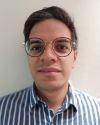 Interview with Professor Armando Álvarez
Professor Armando Álvarez arrived at Trinity in Fall 2025. During the 2026-7 academic year, he will teach ECON 202 Current Macroeconomic Issues, ECON 368 Macroeconomics of National Accounts, as well as his new senior seminar, ECON 431 Money, Inflation, and Financial Instability.
Q: How did you become interested in economics?
AA: In high school, I learned about and lived through the financial crisis and wanted to better understand what happened and how it affected the global economy and my country, El Salvador.
Q: What fields of economics are you interested in?
AA: Macroeconomics, monetary economics, and political economy.
Q: Would you please describe a recent paper?
AA: I construct a macroeconomic model using Foley’s circuit of capital to explain endogenous money and the contradictions that might emerge with it, such as inflation and financial instability. This model makes explicit the supply constraints arising from the time required to produce goods and services. In that sense, although aggregate demand plays an important role in guiding the economy, its expansion is limited by production time.
Q: Tell us about some elective courses you are teaching this year, and what are these courses about?
AA: ECON 202 Current Macroeconomic Issues: in this course we will discuss inflation, financial instability, international trade and tariffs, and public debt. Students will find theoretical tools to follow current debates on macroeconomics, understand how this affects us, and what are the potential policies that could be implemented according to different economic perspectives. In ECON 368 Macroeconomics of National Accounts, we will learn the interrelation of the different economic sectors through national accounts. Students will learn applied methods to understand interindustry relationships and the connection between the real and the financial sectors. In ECON 431 Money, Inflation and Financial Instability, we will discuss different perspectives on the role of money and credit in a self-organized market economy and the potential contradictions that emerge from them.