AI and Academic Integrity
Every student should familiarize themselves with Trinity’s academic integrity guidelines. These guidelines and resources are based on the Student Handbook. A downloadable and printable version of the information below is available. According to Trinity’s Student Integrity Contract:
Our academic community can only thrive if each of us maintains the highest standards of academic integrity. Intellectual honesty is doing our own work and fully crediting the work of others if we use their ideas in our own work. Each student is responsible for knowing what constitutes intellectual honesty in every examination, quiz, paper, lab report, or academic exercise submitted for evaluation at Trinity College.
Academic Integrity Fact Sheet
Why Is Academic Integrity Important?
Integrity is the practice of consistently aligning your values with your choices and action. It shapes both reputation and trustworthiness. You will be expected to act with integrity across many contexts in your life, personally and professionally, and that includes your academic work in college. But don’t think of academic integrity as something that’s purely “academic.” It’s practice for living, working, and leading in the world.
Academic integrity helps to ensure that you’re learning and fulfilling your potential. Developing lifelong capacities — to think independently and critically, to communicate and express yourself, and to work collaboratively with others as part of a community — takes practice and feedback. Learning is ultimately a process. When you skip the risks and hard work of learning, you’re cheating yourself and harming the trust that others have placed in you.
What Does Academic Integrity Require?
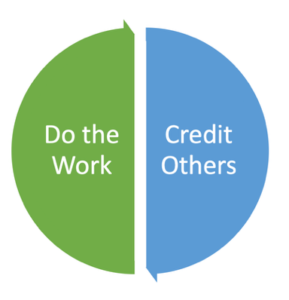
Exercising academic integrity means taking full responsibility for the work you submit. Remember: do the work or give others credit. In practice, this requires understanding what constitutes academic dishonesty and avoiding it. When you’re not sure about what is expected, speak to your professor or, for general questions, reach out to Trinity’s Research Librarians who are specialized in academic integrity practices.
What Constitutes Academic Dishonesty?
The following forms of academic dishonesty, based on the Student Handbook policy, should be avoided consistently across all forms of academic work, including for every exam, paper, lab report, assignment, or course requirement. This extends to using AI inappropriately, as per the guidelines below.
- Cheating or Facilitating Cheating. Never copy someone else’s work or let someone else copy your work; never circulate or use unauthorized materials relating to an exam.
- Plagiarism. Never present another’s words, ideas, or work as your own; never paraphrase closely without credit; never fail to credit the ideas, words, data, or work of others.
- Unauthorized Collaboration. Never consult or collaborate in ways that your professor has expressly prohibited, including with AI; when in doubt, ask your professor what is allowed.
- Falsification. Never produce work or content that is intentionally false. And note that you are responsible for the reliability of the work and data you submit.
- Misrepresenting Authorship. Never submit work you did not prepare or do work for another student; this includes submitting work prepared by AI without permission or proper disclosure.
- Multiple Submissions. Never submit the same or similar work for two courses without permission.
Guidelines for Using Artificial Intelligence (AI) Responsibly in Academic Work
Determine When It Is Appropriate to Use AI
Part of developing AI literacy and fluency is determining the appropriateness of when and how to use AI.
Consistent with the practice across higher education, and Trinity’s commitment to academic freedom, every faculty member will decide, based on the learning goals they have set for their students, whether or how AI can be used in a course to advance student learning. Students are assured their professors are learning about AI; thinking deeply about pedagogy, or the most effective ways of teaching their students; and that student learning is the top priority. When a faculty member limits the use of AI in a course, it’s because they believe it will interfere with—not advance or support—learning in that context.
Responsible use of AI also requires respecting confidentiality, copyright, and intellectual property. Students should never place course or other materials in AI without consent. These are proprietary in nature; and distributing them could infringe copyright or a faculty member’s intellectual property.
Disclose & Document Your Use of AI
When using AI, always disclose and document. Below are some guidelines for doing this effectively but be sure to check with your professor.
- Attribute & Cite Sources. Use this guide from Brown University for attributing and citing AI sources, unless your professor has instructed you to do otherwise.
- Disclosure Statement. Provide a disclosure statement, with the specific AI tools used, date and tool used, brief description of how and what you used AI for, and how you verified information.
- Reflection. Consider including a reflection statement on why you used AI, what alternatives you considered, and what you learned.
- Keep copies. Be sure to keep careful records of the process not just the output, including the name and version of any AI tool used. This means keeping a copy of the prompts you used or the transcript of your exchange with AI. Should a professor question your use of AI or you be accused of violating academic integrity, producing a clear record of your workflow is essential.
Evaluate AI Outputs Critically
Students are always responsible for the quality of their work in a course, including in matters of accuracy, reasoning, and compliance with course requirements. When AI is permitted, students should evaluate the quality of AI output. AI cannot think independently; it produces inaccuracies, falsifications, hallucinations; and it can be biased. It requires human oversight. Use your liberal arts education to think critically and independently before using AI responsibly.
Assert Human Agency
When AI interferes with your ability to develop your own distinctively human capacities (cognitive, expressive, or social), you are trading in shortcuts in the here and now for a lifelong investment in yourself as an agile and resilient person. Assert your agency in an AI world by using AI responsibly.
Take this self-assessment quiz on your own to gauge your dependence on AI.