Professor Receives Grant Award from Council of Independent Colleges
Content
Story
Posted
Category
Faculty
Trinity College Professor of History Scott Gac recently received a grant award for a research project in collaboration with the Stowe Center for Literary Activism. The History and Legacies of American Slavery Grant from the Council of Independent Colleges supports the efforts of independent colleges and their communities to better understand the complex histories and legacies of American slavery.
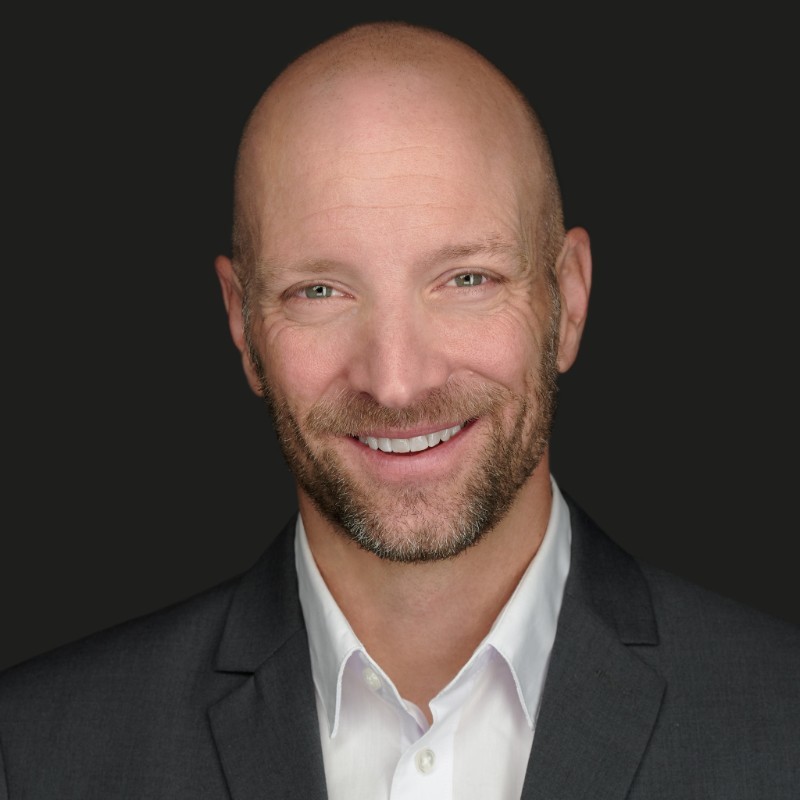
Professor of History Scott Gac
According to the grant proposal by Gac and the Stowe Center for Literary Activism, “Our project investigates Black Hartford from 1800–1830—the decades bracketing the 1823 founding of Washington College (now Trinity College)—to illuminate how slavery’s legal remnants and social afterlives shaped everyday life, politics, education, religion, and culture in lower New England. Although Connecticut adopted gradual emancipation in 1784, enslavement and unfree labor practices persisted in the state into the 1830s and 1840s. Simultaneously, as free Black communities grew in the state, new modes of anti-Black exclusion hardened: the 1818 state constitution disenfranchised Black men; colonization campaigns pressed for Black removal; and efforts to suppress Black schooling and antislavery expression intensified. Within this repressive climate, Hartford’s Black residents built churches, schools, businesses, literary and artistic cultures, and anticolonization activism. Centering these voices, the project traces how Black Hartfordites negotiated power, asserted personhood, and created vibrant public life in the very years a new Episcopal college took root and a young Harriet Beecher taught at the Hartford Female Seminary (1829-1832).
“For Trinity College, 1800–1830 is foundational to institutional identity and place. Understanding the College’s emergence amid gradual emancipation, Black civic formation, and white-led exclusion clarifies the local conditions that structured campus-city relations from the outset. The Primus Project—a campus-based initiative increasingly focused on recovering Black lives connected to Trinity and Hartford—provides the research engine and ethical framework for this work.
“For the community partner, the Stowe Center for Literary Activism, the research links directly to Hartford’s early 19th-century literary culture and to Black-led critiques that prefigured later antislavery writing. For Hartford residents, this research restores names, neighborhoods, institutions, and debates that continue to shape civic memory, educational equity, and cultural life.
“Public-facing deliverables—podcast, public forum, and community education modules—will translate archival findings into usable local history. Together, we shine new light on the era of Northern emancipation and the ways systems of slavery—North and South—shaped life in New England.”
Projects funded by this grant must include a public-facing component and a collaboration between a CIC member institution and at least one community-based organization, such as a local museum or historical society, a public library, a school district, a civic organization, or another college or university in the region. The CIC said that projects that combine original undergraduate research and public-facing activities were strongly preferred.
Project teams from the selected institutions will participate in a workshop on the public history and memory of American slavery in June 2026.
This grant program is supported by the Mellon Foundation.
The Trinity College community gathered for a documentary film screening and panel discussion with alumna Julia Hoppock ’06, an associate producer of People vs. Politics, as part of Voter Education Week.
The grant for Susan A. Masino, Paul E. Raether Distinguished Professor of Applied Science, and David N. Ruskin, research associate professor, will provide summer research opportunities for Trinity students.
Associate Professor of Classical Studies Vincent E. Tomasso, whose first-year seminar is reading Homer’s epic poem, will give a presentation as part of Odyssey Day this fall. Read more about why he says The Odyssey still resonates today.
More than 100 Trinity students spent part of the summer working with faculty members and other mentors. The fall symposium allowed these students to showcase their findings and research processes.