When the four-part PBS documentary series Black and Jewish America: An Interwoven History premieres on February 3, 2026, viewers will be invited to consider a complex, often misunderstood story of cooperation, conflict, and shared struggle. Trinity College faculty member Cheryl Greenberg, Paul E. Raether Distinguished Professor of History, Emerita, is among the scholars providing historical context and expert commentary in the series.
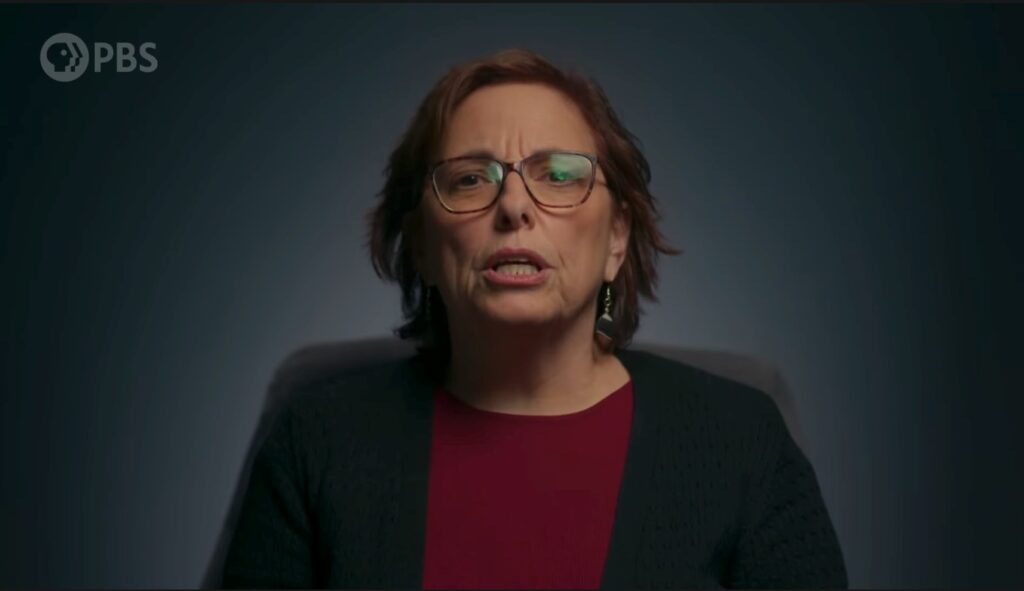
Cheryl Greenberg in ‘Black and Jewish America: An Interwoven History.’
The television documentary traces centuries of interaction between African American and Jewish American communities, with a particular focus on the 20th century. Greenberg said that the series aims to move beyond simplified narratives and, instead, present a historically grounded account of how the two groups have worked together, clashed, and evolved alongside one another.
“It’s about the history of the very complicated relationship between African Americans and Jewish Americans,” said Greenberg, whose research helped shape the series. “Most of the interactions have been positive and active, but some have been negative. The documentary explores all the complications of that relationship.”
Greenberg—who began teaching at Trinity in 1986 and retired in 2023—is a historian of African American political action. She hadn’t begun researching Black-Jewish relations until about 1990, when she met Henry Louis (“Skip”) Gates Jr., the host and executive producer of the documentary series, while she was doing a research fellowship at Harvard University. Gates invited Greenberg to be part of a group of scholars working on various topics, and she has worked closely with him since then. When Gates began developing the PBS documentary, he asked Greenberg to join its advisory board. Greenberg added that Trinity alumna Dyllan McGee ’93 is an executive producer of the series.
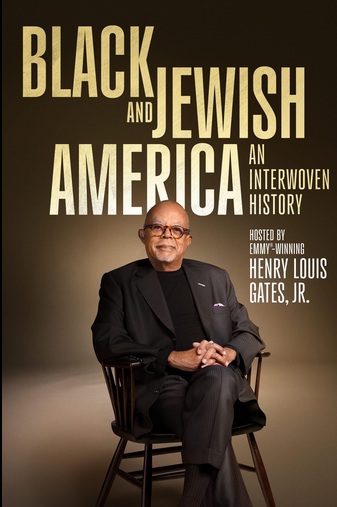
‘Black and Jewish America: An Interwoven History’ premieres February 3, 2026.
Although she has worked on other subjects throughout her career, Greenberg said, “I keep coming back to this topic because it’s an issue that people are really interested in.”
One of the central themes Greenberg emphasizes in the series is the coexistence of political alliance and economic pressure. During the Civil Rights movement, Jewish Americans and Jewish organizations played a significant role in supporting African Americans in their political struggles, Greenberg said. She explained that this alliance was shaped in part by Jewish Americans’ own experiences with antisemitism and discrimination. At the same time, class-based strain between the groups complicated solidarity.
“You’ve got these tensions and political alliances running at the same time,” Greenberg said. “So the subject of Black-Jewish relations is always hot. That’s what’s kept the subject going.”
Greenberg said she was dedicated to ensuring the documentary resisted one-sided portrayals. She explained that popular discussions of Black-Jewish relations often swing between extremes: either depicting the communities as seamless allies or as fundamentally opposed.
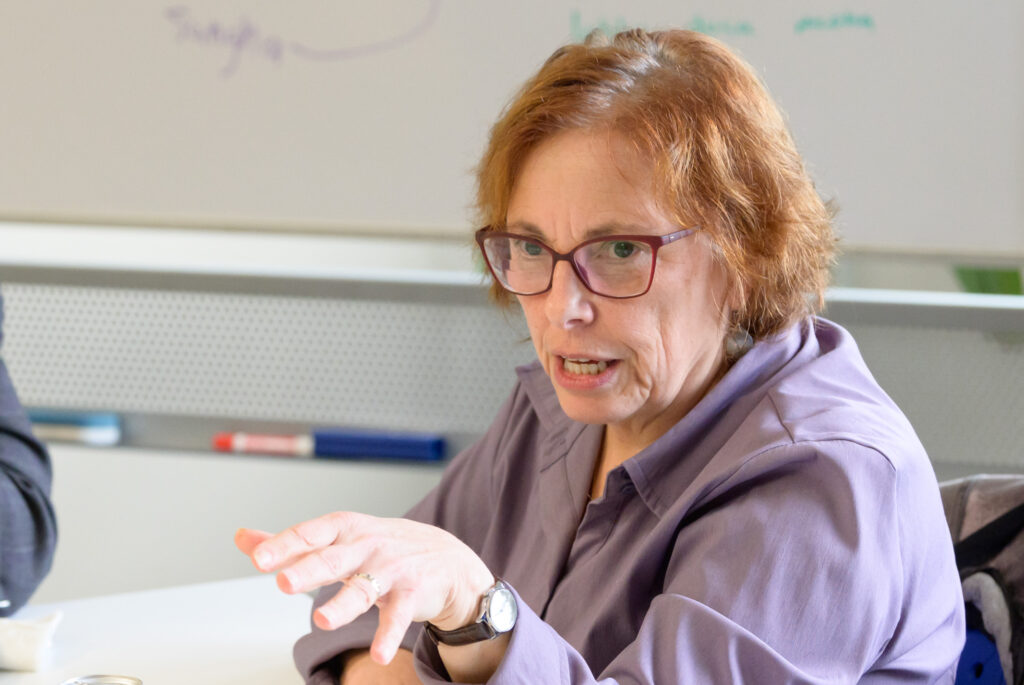
Cheryl Greenberg speaks at Trinity College in 2025.
“The truth lies exactly in the middle,” Greenberg said. “I was really committed, in this project, that the nuances came through, that it was both good and bad… that despite all the tensions, it is incredible what they were able to do when they worked together.”
These themes also were central to Greenberg’s teaching during her years at Trinity: “Everything I taught at Trinity came back to the Black community and its relationship with political action, power, community, and civil rights,” she said. “The Black-Jewish relationship was really part of that larger project… I was always teaching about the political relationships African Americans forge with other communities.”
Greenberg said that her work emphasizes that, “In the current age, it’s so important to remember that you don’t have to agree with people all the time… that you can find common cause, even when you’re not getting along in other ways.”
As the series airs weekly on PBS each Tuesday throughout the month of February at 9:00 p.m., Greenberg hopes the documentary helps viewers recognize the Black-Jewish relationship as a model of collaboration despite differences.
“For Trinity, I hope that my teaching there and the teaching of so many of my colleagues who are still there has communicated exactly this idea—that political action is possible, and that people who work together can achieve great change,” she said.
Watch the trailer for Black and Jewish America: An Interwoven History here.
The digital humanities website Public Art CT—sponsored in part by Trinity College and created by a Trinity faculty member—has received a 2026 Award of Excellence from the American Association for State and Local History (AASLH).
A book by Associate Professor of American Studies Juliet Nebolon was named a co-winner of the 2026 Association for Asian American Studies (AAAS) History Book Award.
Ewa Syta, Charles A. Dana Research Associate Professor of Computer Science and chair of Trinity’s Computer Science Department, has been named among the 46 finalists for the Connecticut Technology Council’s 21st annual Women of Innovation awards.
Trinity alumna Teodora “Tea” Brnović ’24 and Associate Professor of Sociology Alyson K. Spurgas recently had a co-authored article published in the October 2026 issue of Social Science & Medicine.