Phishing campaigns in higher education using “tax” in the subject line have more than doubled since January. This is deliberate. Attackers exploit the credibility of messages about refunds or urgent tax issues. The Information Security team employs advanced detection tools, but some emails may still reach your inbox.
Phishing emails about tax refunds are increasing in higher education. Scammers target messages about refunds or urgent tax issues because they seem credible. Understand why this matters and what signs to watch for.
Learn about how the IRS contacts taxpayers.
Why it matters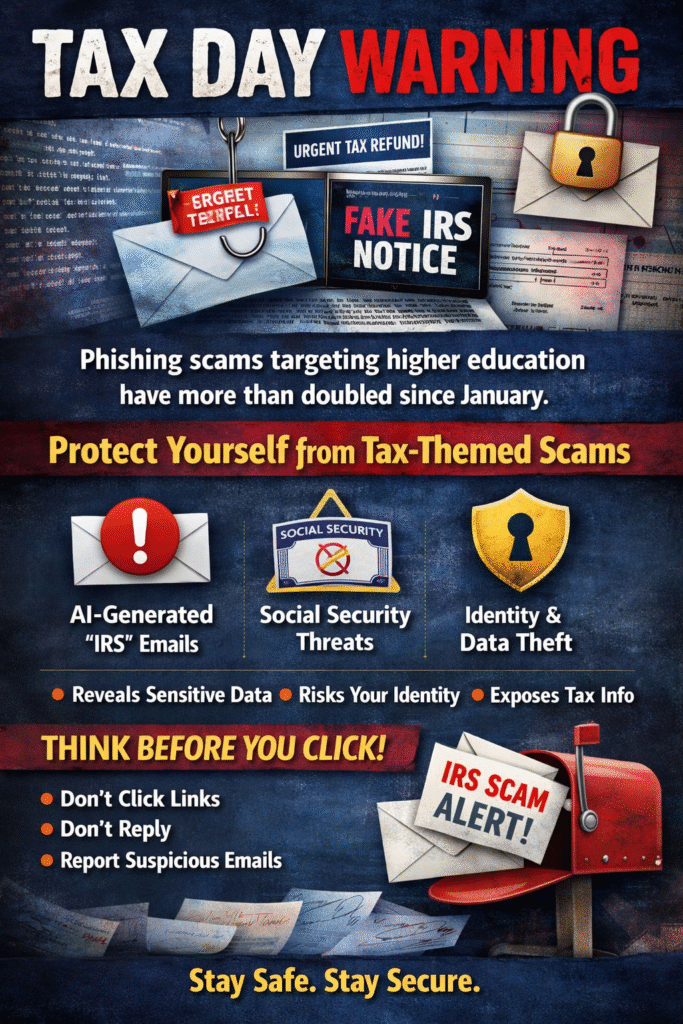
Engaging with tax-related scam emails can:
- Reveal sensitive university data
- Put your personal identity at risk
- Expose your tax information to fraud
What to watch for
AI-enhanced “IRS” emails
Scammers use AI to make emails look professional. They may mention refunds, missing forms, or account problems.
Any message that pressures you to act immediately is a warning. When in doubt, use the Phish Alert Button to submit the email for review.
Social Security scare tactics
Fraudsters posing as the Social Security Administration may:
- Claim that your Social Security number is tied to criminal activity
- Say your benefits are suspended
- Demand immediate verification of personal information
Government impersonation scams are consistently among the most reported frauds.
Urgency is their strategy. Slowing down is yours. Be cautious and skeptical of emails like these.
What you can do
If you get a suspicious tax-related email:
- Do not click any links
- Do not reply
- Report suspicious messages in your Trinity inbox