The next chapter
The Inauguration of Daniel G. Lugo, Trinity’s 23rd president
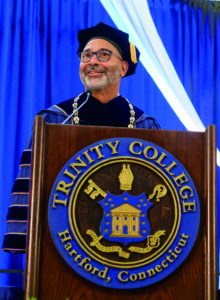
“I offer an important message to the Trinity community,” President Daniel G. Lugo said during his Inaugural Address. “We must no longer whisper our pride. In an age when higher education must prove its value, Trinity will proclaim it. We do not simply educate; we cultivate leaders of conscience and consequence.”
Students, alumni, faculty and staff members, trustees, family members, community partners, honored guests, and delegates from higher education institutions from across the nation gathered on October 18, 2025, in the George M. Ferris Athletic Center’s Ray Oosting Gymnasium to celebrate Lugo’s installation as the 23rd president of Trinity College.
Chair of the Board of Trustees Lisa Bisaccia ’78, who led the ceremony, said, “This occasion marks a milestone in Trinity’s 202-year history—the passing of the torch that will light Trinity’s future.”
Greetings were offered by the Board of Trustees; Hartford Mayor Arunan Arulampalam on behalf of the City of Hartford; Trinity faculty, staff, alumni, parents, and students; and the Academy, represented by C. Andrew McGadney, president of Knox College in Galesburg, Illinois.
Arulampalam said that the stories of Trinity and the City of Hartford are deeply intertwined. “It’s an incredible history of coexistence and mutual benefit,” he said. He described Lugo as an “innovative, compassionate, and visionary leader” who is already working on developing new partnerships with the city.
Faculty Secretary Garth A. Myers, Paul E. Raether Distinguished Professor of Urban International Studies and director of the Center for Urban and Global Studies, spoke on behalf of the faculty. “We commend you for dedicating your career to leading liberal arts colleges,” Myers said. “With a spirit of shared purpose, we stand united with you and look forward to collaborating on Trinity’s next generation of excellence.”
Manuela Rodés ’26, president of Trinity’s Student Government Association, delivered a greeting from the students. “What excites us most about President Lugo is his vision for a Trinity that is not only academically excellent but also inclusive, innovative, and deeply connected to the world around us,” Rodés said.
McGadney—Lugo’s friend and former colleague—said that he referred to Lugo as “the smartest person in the room” when they worked together at Colby College. McGadney said of Lugo, “As a first-generation college graduate, he knows firsthand the transformative power of a liberal arts education and will work tirelessly to ensure current and future Trinity students experience that power.”
Lugo was officially presented by Walter Harrison ’68, H’18, vice chair of Trinity’s board and president emeritus of the University of Hartford: “Devoted to liberal learning; admired by his faculty and staff colleagues at his previous institutions; experienced in understanding and excelling in two critically important functional areas for any college—that is, admissions and advancement; and a proven presidential leader with a record of accomplishment and success, Dan Lugo is the right leader at the right time,” Harrison said.
Bisaccia presided over the investiture of the president before Lugo delivered his Inaugural Address, which touched on the strengths of Trinity’s faculty, students, and alumni, as well as its connections with Hartford and its commitment to academic freedom. “Education is not just a ladder but a bridge between where we begin and the full measure of who we might become,” Lugo said. “It is with a spirit of gratitude that I look to our future and that I invite you to do the same. Be the believers who forge the path for Trinity to achieve its fullest potential. . . . To all who believe in Trinity’s promise, hear me clearly: The time is now, the work is ours, and the future is bright.”
Celebratory events
Inauguration Weekend happenings also included a pair of cross-disciplinary academic symposia and a performance on Friday, October 17, with Trinity College’s leading scholars and artists engaged with audiences to examine the possibilities of human creativity and to discuss ways to bridge knowledge and practice to advance society.
Welcome remarks were delivered at each symposium by Garth A. Myers, faculty secretary and Paul E. Raether Distinguished Professor of Urban International Studies and director of the Center for Urban and Global Studies. Myers introduced the day’s programming as a way inspire a robust exchange of ideas about the future of both the liberal arts and higher education.
Symposium I: Human Creativity
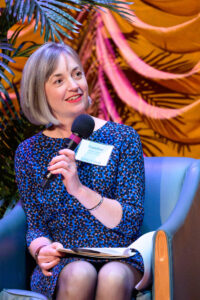
This symposium explored the role of creativity as an essential human practice. Faculty from across disciplines reflected on how creativity shapes their scholarship and teaching, the complex and evolving role of technology, and the value of preparing all students to think creatively in a digital world.
Panelists:
- Sarah Bilston, Paul E. Raether Distinguished Professor of English
- Pablo Delano, Charles A. Dana Professor of Fine Arts
- Kent D. Dunlap, Thomas S. Johnson Distinguished Professor of Biology
- Ewa Syta, Charles A. Dana Research Associate Professor of Computer Science
Moderator: Laura J. Holt ’00, professor of psychology
Inauguration Performance: The Art and Science of Awe
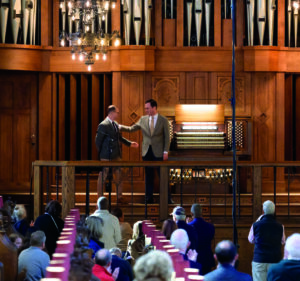
Trinity’s iconic Chapel was the setting for a performance by Christopher Houlihan ’09, John Rose Distinguished College Organist, director of Chapel music, and artist-in-residence. Commentary was delivered by Michael A. Grubb, associate professor of psychology, based on his seminar, “Exploring Awe,” which was offered in collaboration with Houlihan at Trinity’s Rome campus during J-Term 2025 and was scheduled to be offered again in 2026. Grubb said that this unique collaboration is an example of how the arts and sciences can meet.
Symposium II: Bridging Knowledge and Practice
The second symposium explored the bridging of knowledge and practice as a hallmark of a distinctive liberal arts education. Award-winning teacher-scholars from Trinity’s faculty discussed their boundary-spanning work and its public impact, whether in Hartford, nationally, or globally.
Panelists:
- Davarian L. Baldwin, Paul E. Raether Distinguished Professor of American Studies
- Shafqat Hussain, George and Martha Kellner Chair in South Asian Studies
- Michelle Kovarik, Dr. Henry A. DePhillips Jr. Professor of Chemistry
- Kevin J. McMahon, John R. Reitemeyer Professor of Political Science
Moderator: Jennifer M. Regan-Lefebvre, professor of history
The Inaugural Address
The following is an excerpt from President Daniel G. Lugo’s Inaugural Address. Read the full speech.
We are certainly of this time and of this place, literally. Trinity and Hartford have always shared one story—one destiny.
In 1872, when Hartford sought land for the new State Capitol, it turned to Trinity. The proposal divided opinion in our community. Some wanted the College to leave Hartford and maybe relocate to New Haven or New York. But Hartford’s citizens—in an extraordinary act of civic faith—voted three to one to invest $600,000, an enormous sum in 1872, to keep Trinity here. That vote bound the College and the city together in shared purpose.
 Out of that moment rose this campus—the best example of Victorian Gothic collegiate architecture, built on open farmland, a true symbol of rebirth. From that partnership came nearly two centuries of mutual growth and service. Faculty helped found the Connecticut Museum of Culture and History; students served the city in every way; and Hartford gave the College its energy and edge.
Today, we must rise together again. Mayor Arulampalam, I am honored to share this moment with you. Your leadership in building a vibrant, equitable Hartford is an inspiration. I look forward to working with you, the City Council, all of our civic and business leaders, and nonprofit partners to realize Hartford’s next renaissance.
There is no fence high enough to separate Trinity from Hartford—and no reason we should ever need one that could. Hartford is not our backdrop; it is our partner. When Hartford rises, Trinity soars.
We gather in a time of challenge: a hypercompetitive environment for a declining population of prospective students, rising costs and constricted funding, and growing skepticism about higher education’s worth. But challenge is actually nothing new for Trinity.
In 1837, a financial panic swept the nation. Banks failed. College endowments evaporated. Trinity’s faculty went unpaid. The College—then Washington College—stood on the brink of collapse. But our founders refused to close the doors. They traveled the state, parish by parish, seeking help. They endured. They believed.
From that near‑ruinous experience, Trinity was reborn stronger and more determined. That grit and resilience is part of who we are.
So take this as a clarion call. We are all critics sometimes, but we also must be believers. When others question higher education’s relevance, we will respond not with defensiveness but with demonstrations of excellence. We will strengthen belonging and access, ensuring every student finds both challenge and a home here. We will renew our civic engagement. We will innovate with courage.
We have faced true calamity in our history—and we did not yield. We will not yield now in the face of headwinds.
All of this leads to one conviction: To ensure we move forward, we must be focused and in alignment about our common purpose. We must move as one Trinity, united.
Now is the time for everyone who loves this College—students, faculty, staff, alumni, parents, and neighbors—to unite behind its mission. Regardless of our politics, our profession, or our background, we share one truth: faith in Trinity’s power to transform lives.
In a time when outrage often replaces dialogue, Trinity will stand for academic freedom and civil discourse. We will model the conversation our democracy needs—not by avoiding disagreement, but by engaging it with mutual respect and reason.
The next decade will be one of great disruption in higher education. Unfortunately, many, many colleges and universities will falter, while a few will lead. Our unity—our shared purpose—will determine which we become.
If we unite, if we lead, if we love Trinity more than we fear change, we will not simply endure. Together, we will define the next century of liberal arts excellence.
Scenes from the Ceremony
Scenes from the Ceremony
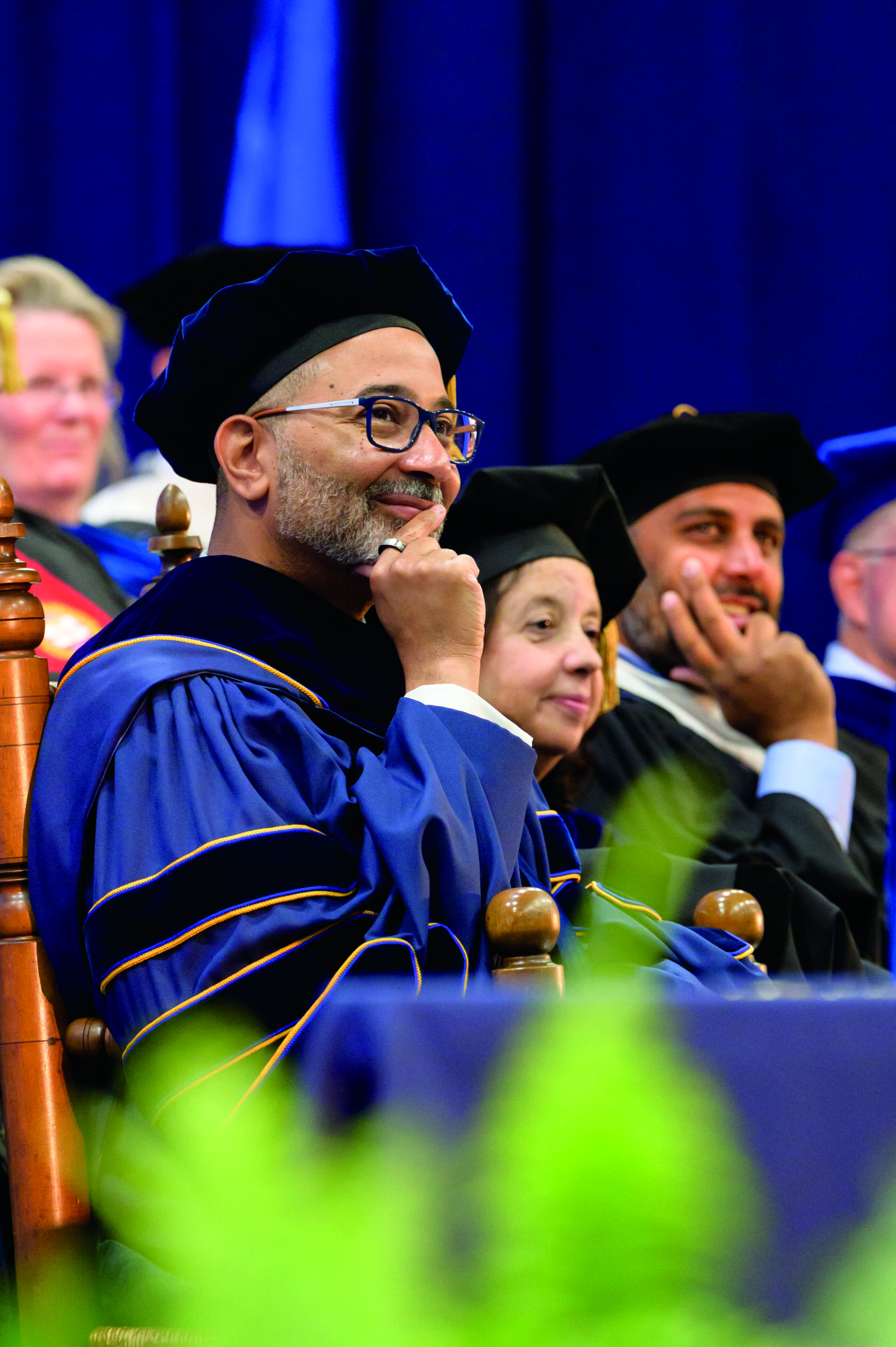
President Daniel G. Lugo
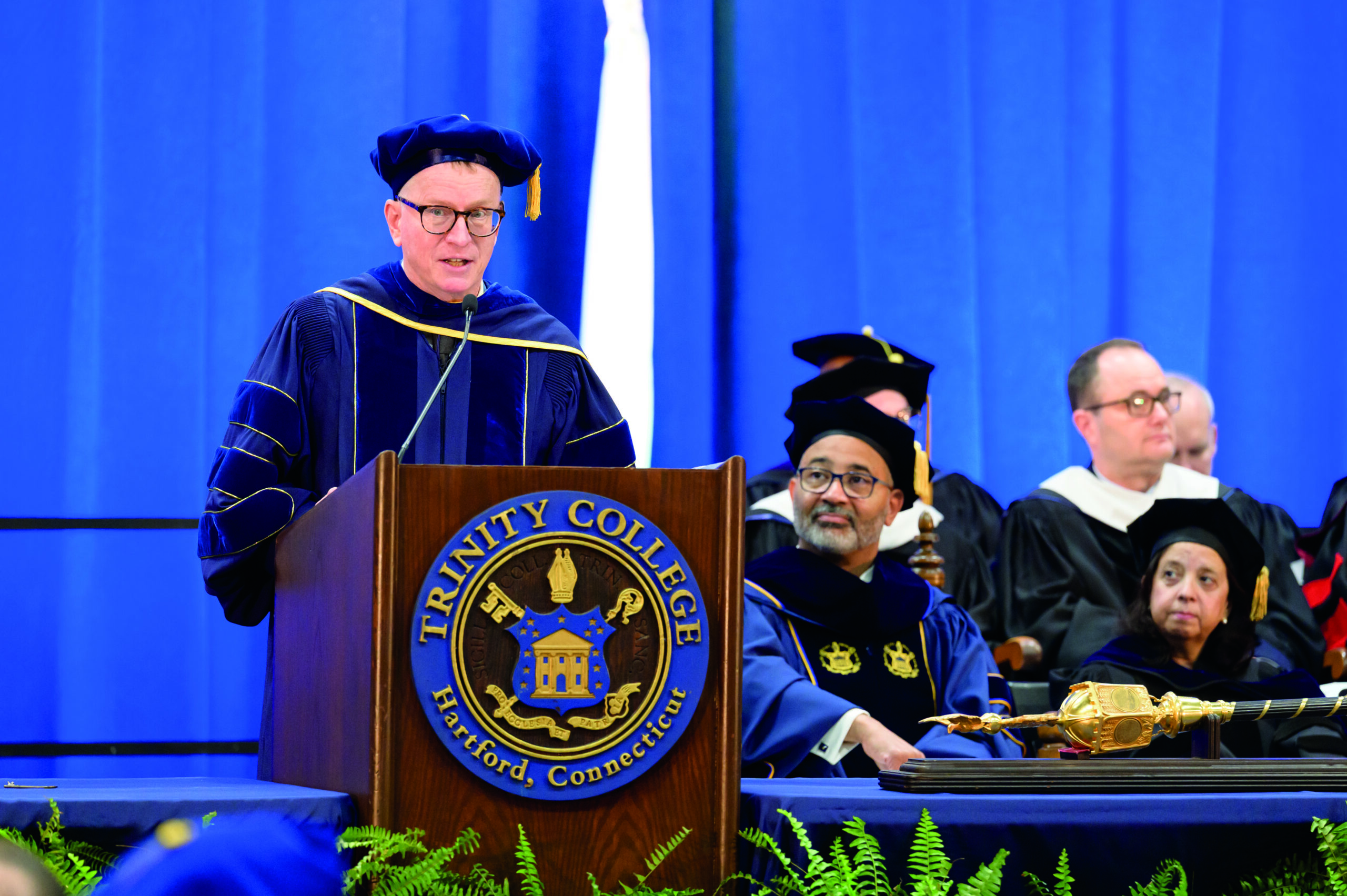
Faculty Secretary Garth A. Myers
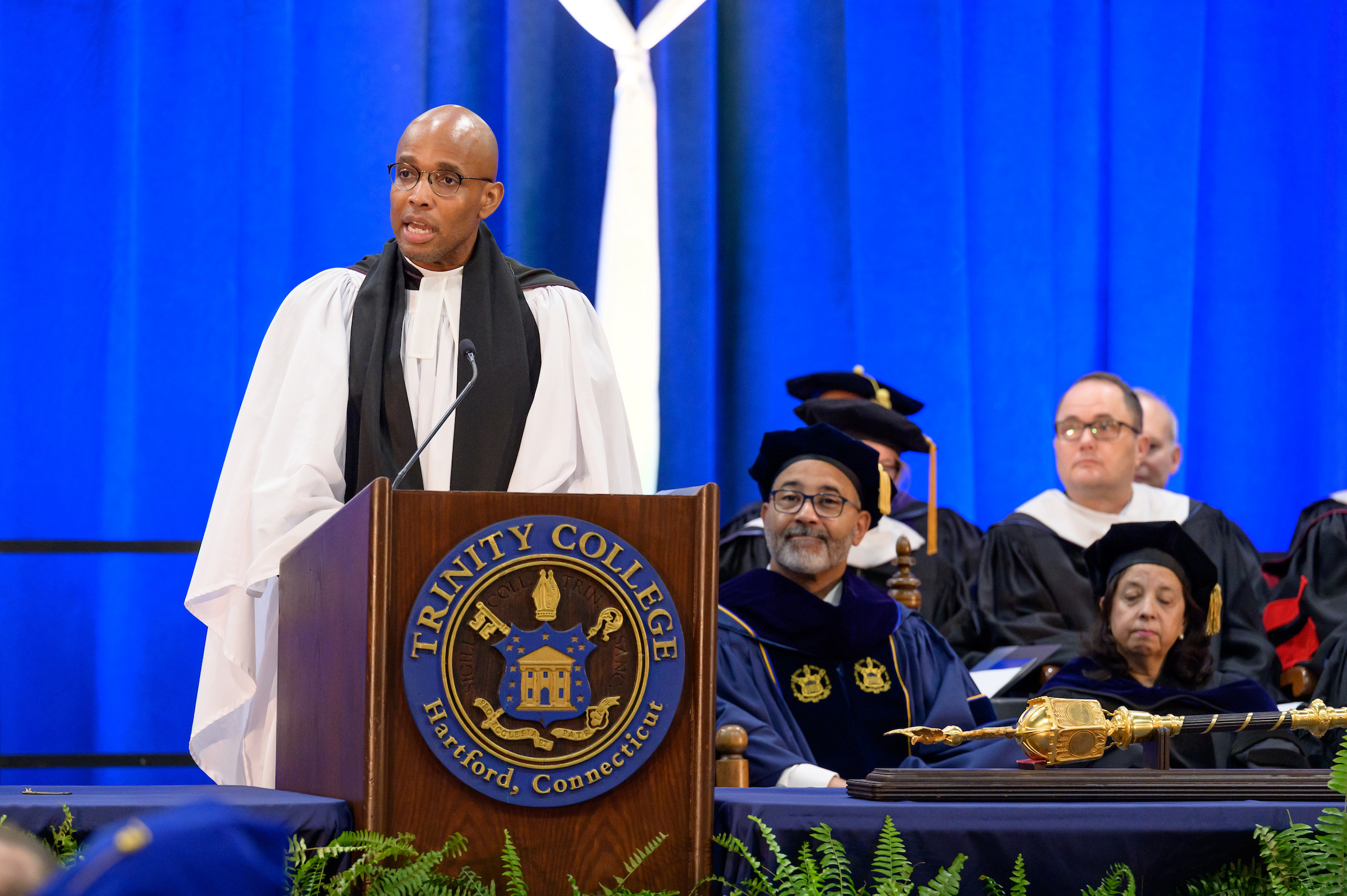
Chaplain to the College Marcus George Halley
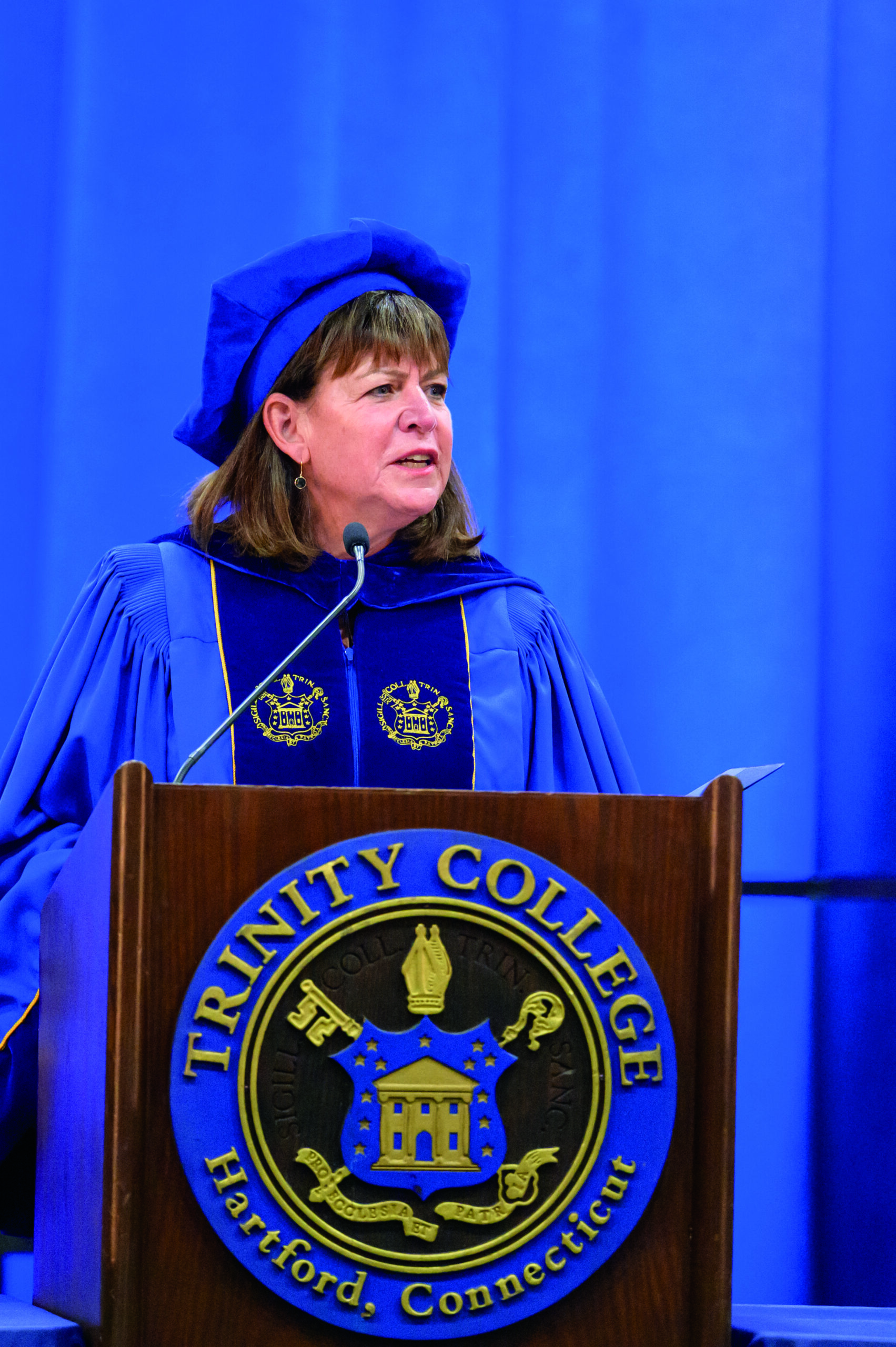
Board of Trustees Chair Lisa Bisaccia ’78
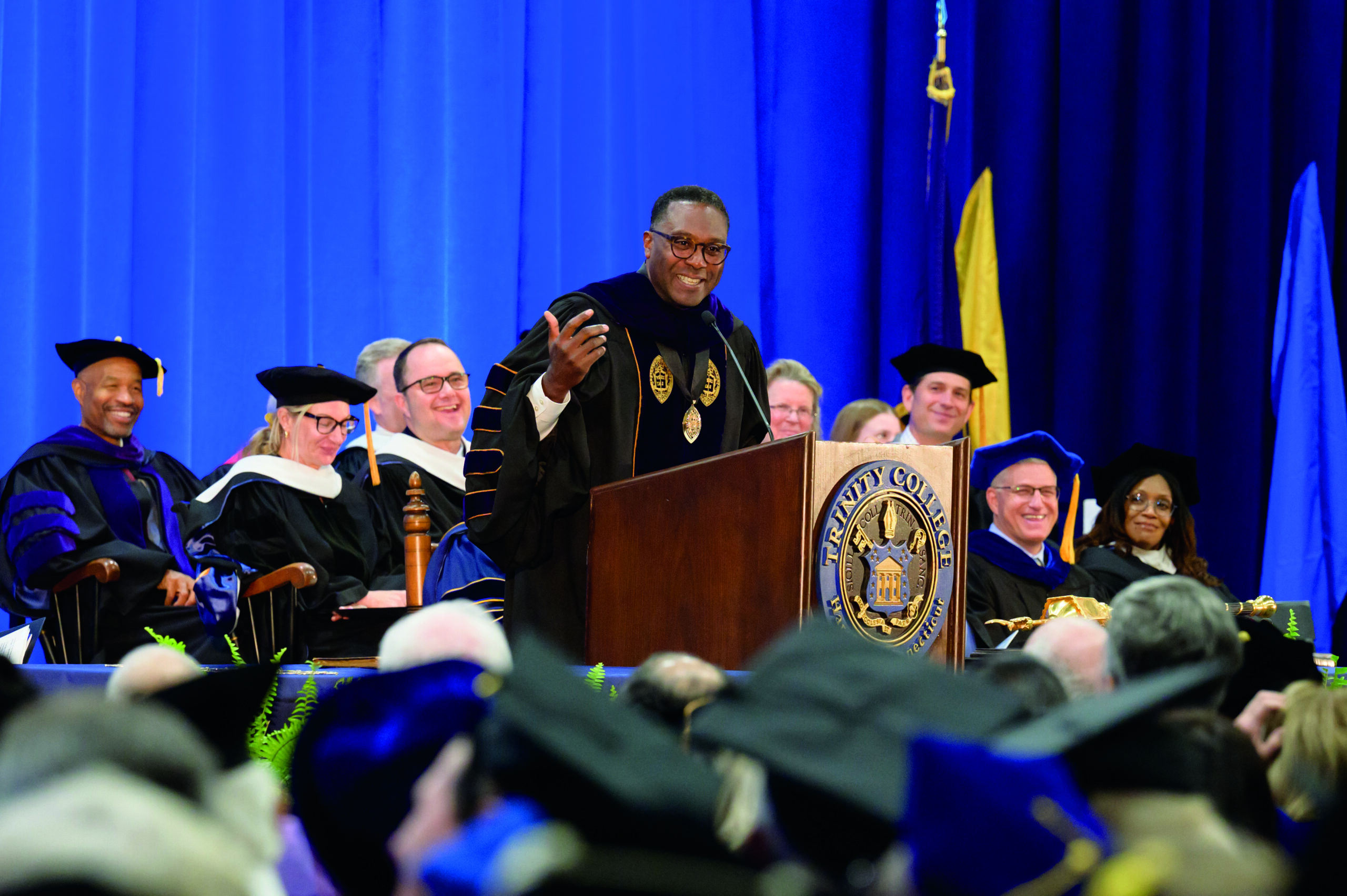
Knox College President C. Andrew McGadney
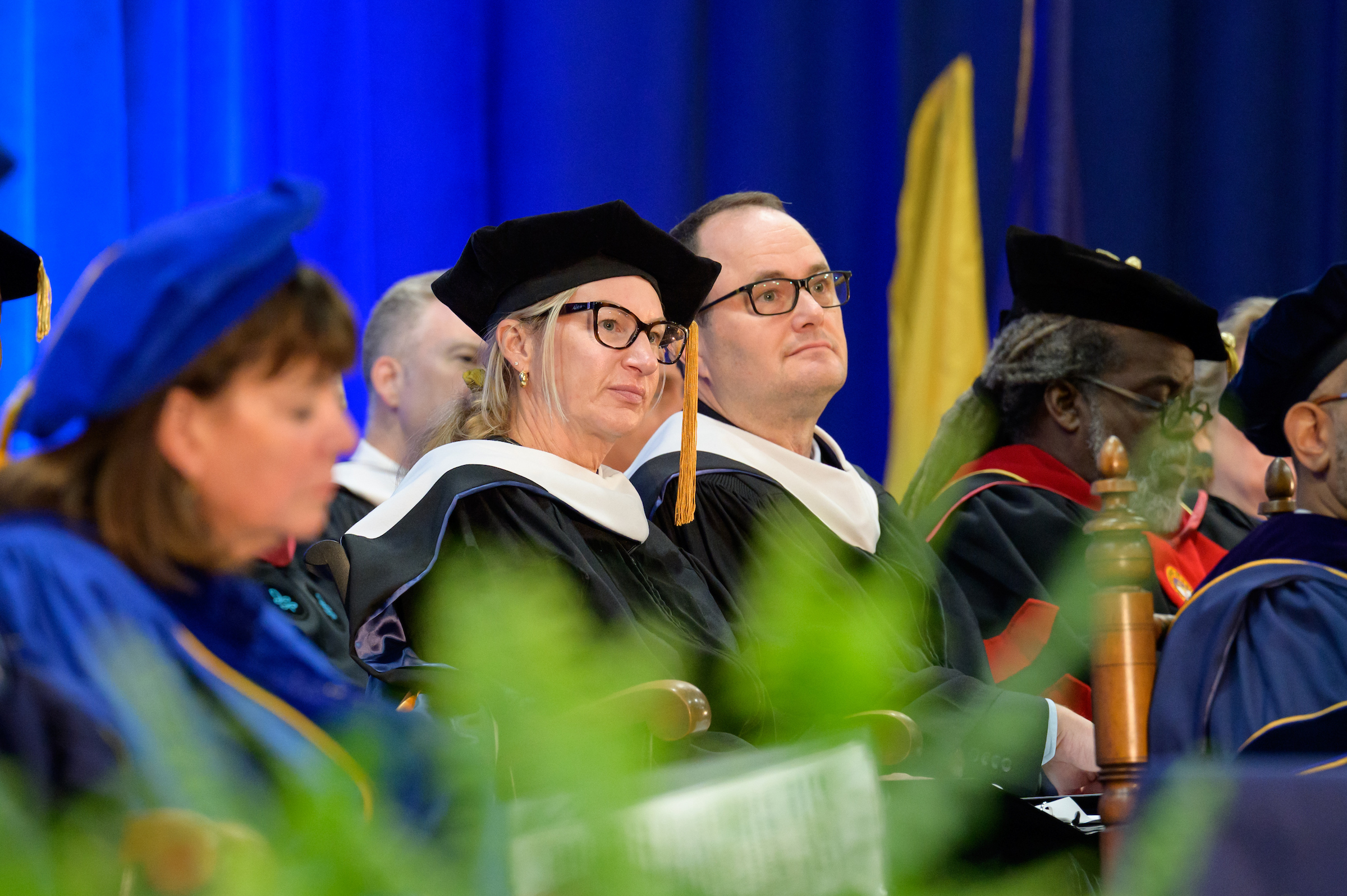
Julie and Ben Fawcett P’28, ’29
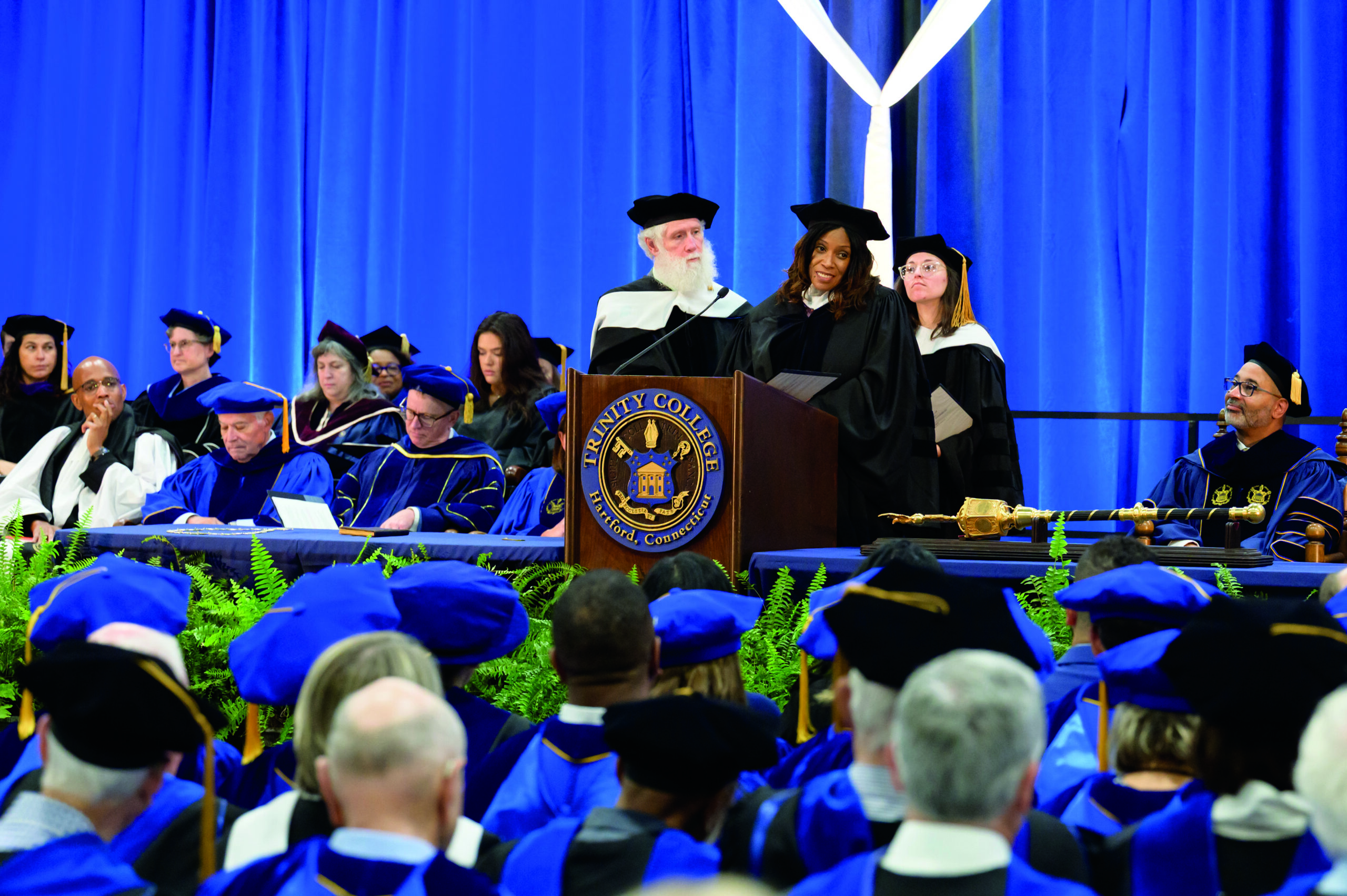
Staff members Jim McLaren III, Elizabeth Landell-Simon, and Benny Bauer
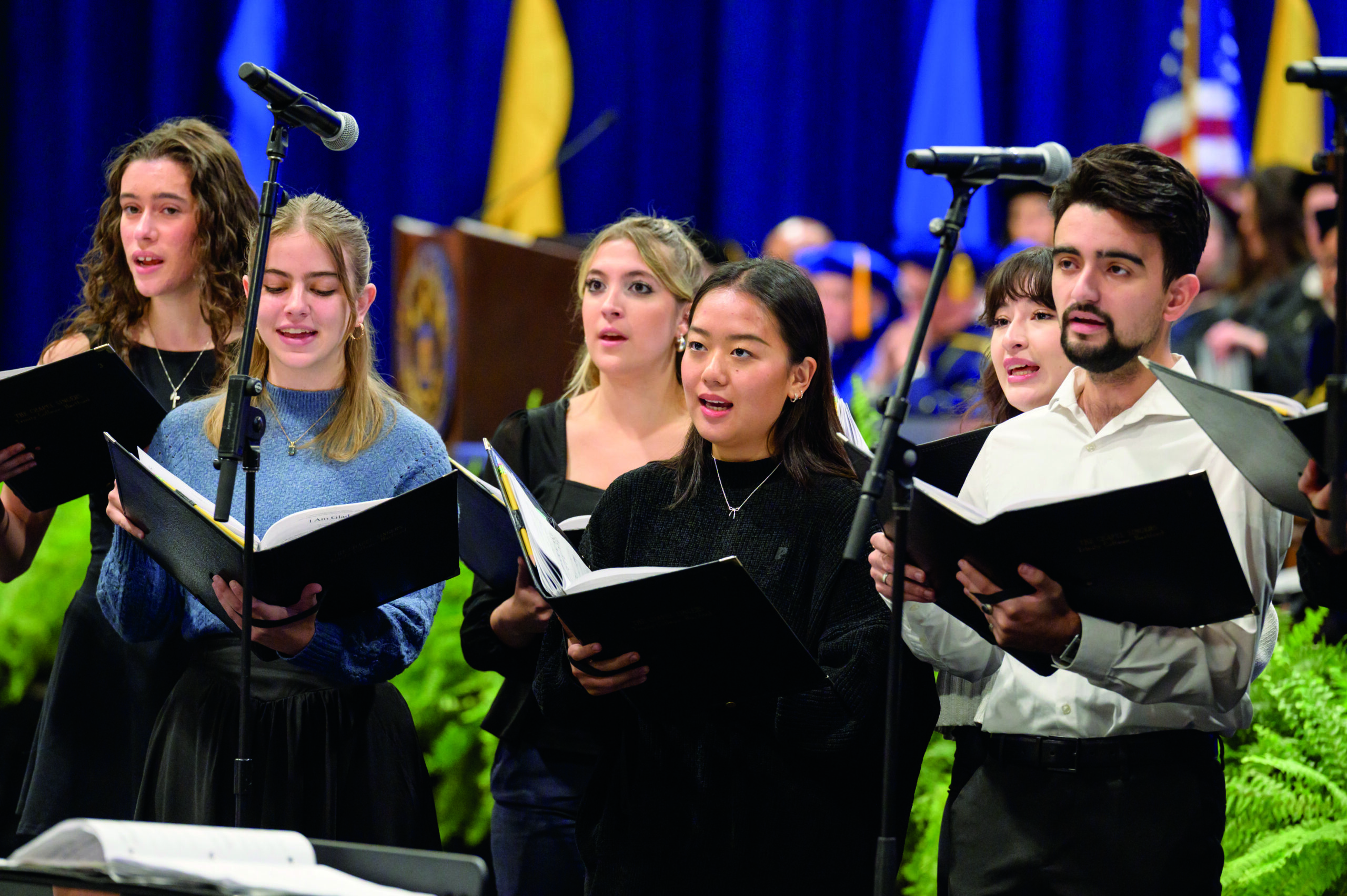
The Chapel Singers
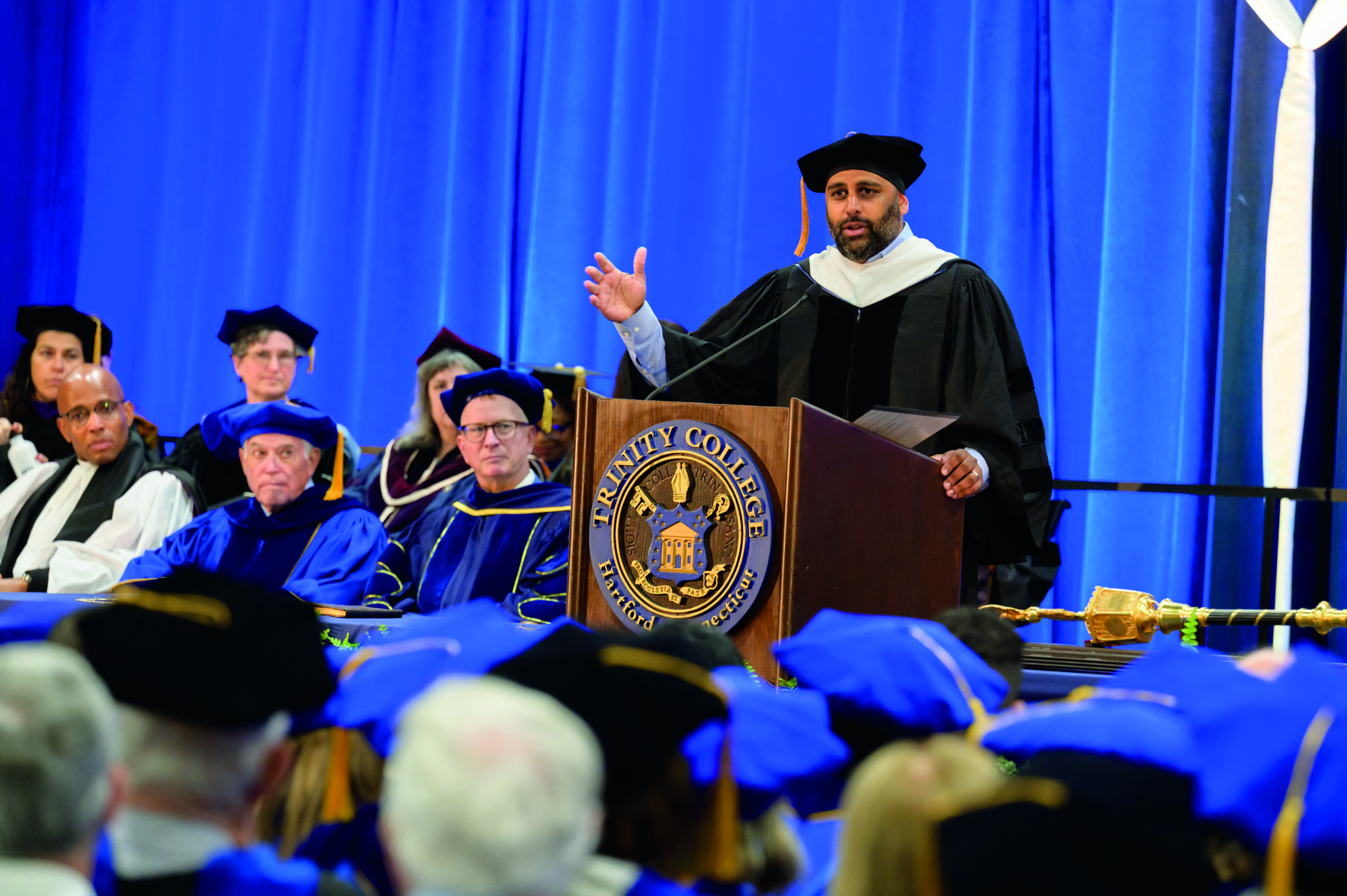
Hartford Mayor Arunan Arulampalam
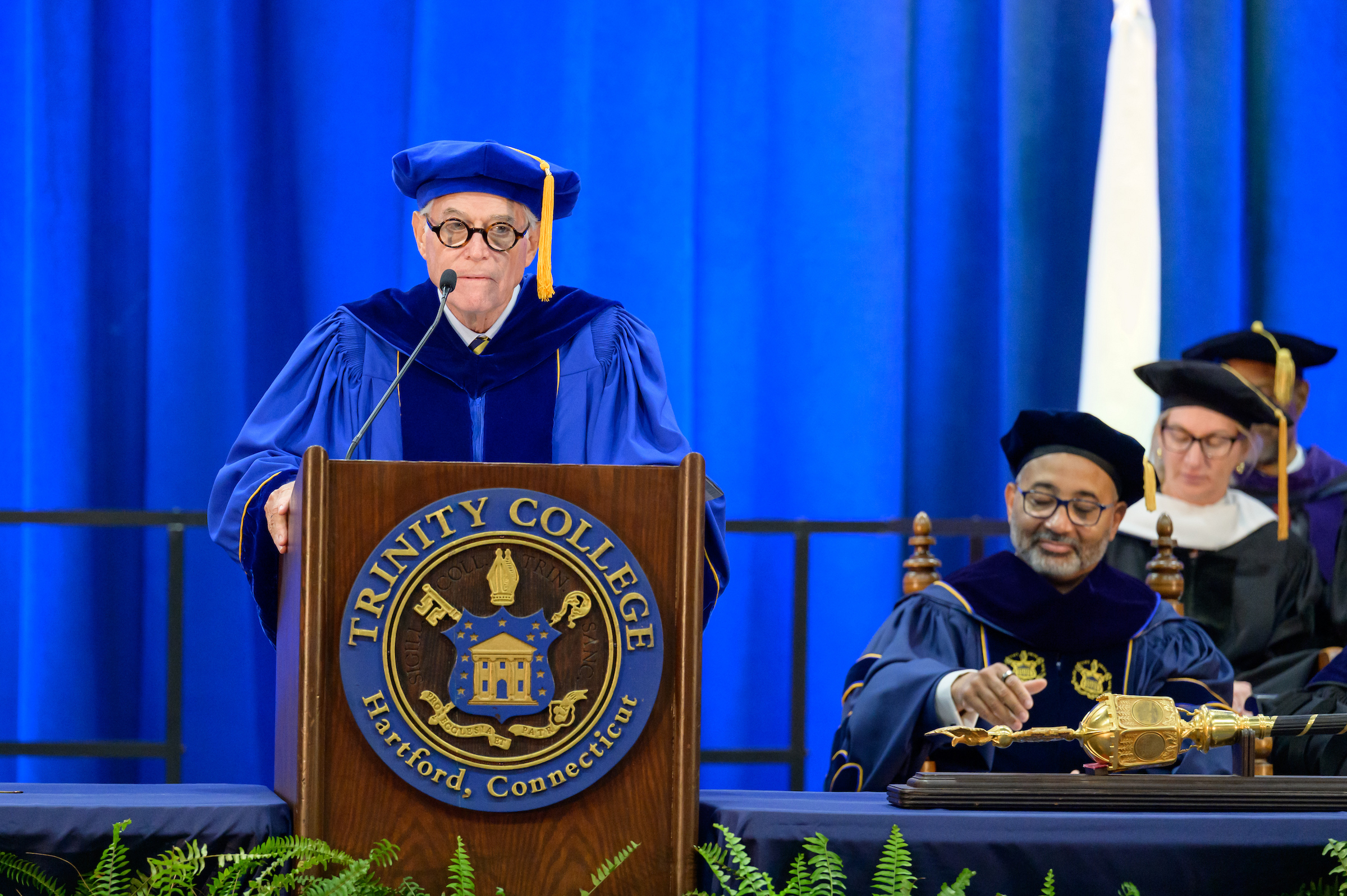
Board of Trustees Vice Chair Walter Harrison ’68, H’18
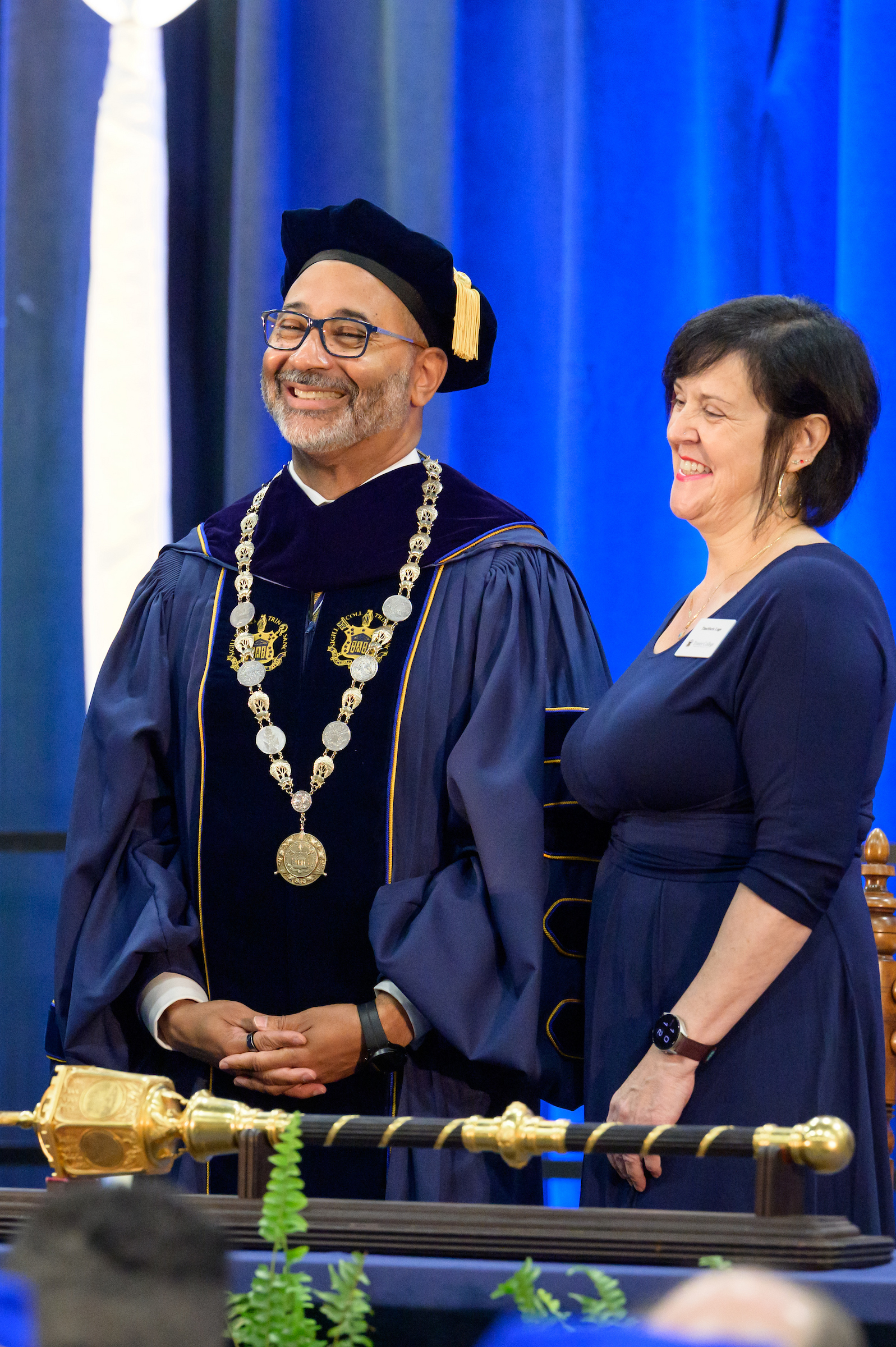
President Dan Lugo and wife TinaMarie Lugo
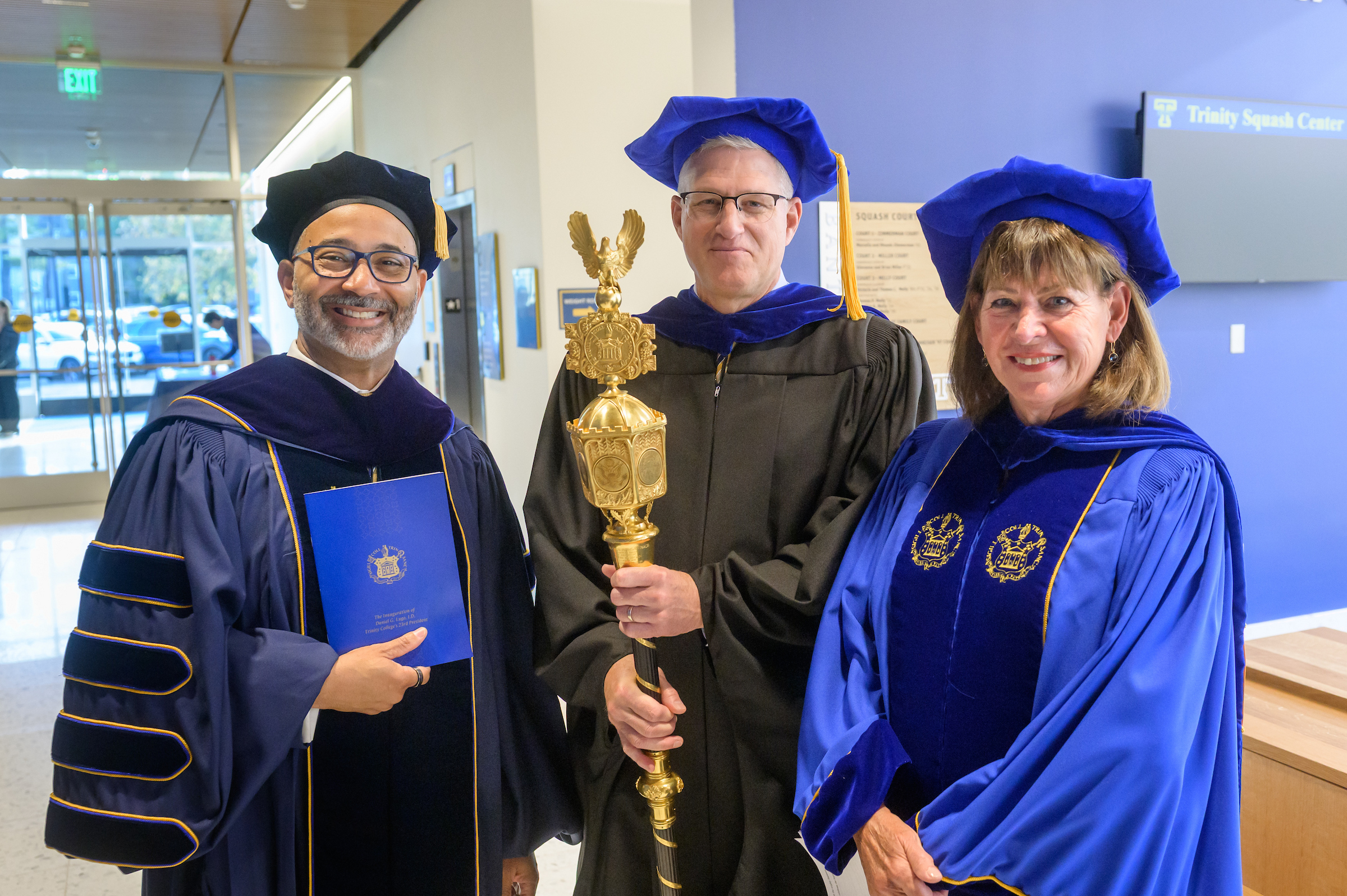
President Dan Lugo, Vice President for Student Life Joe DiChristina, and Board Chair Lisa Bisaccia

The Presidential Collar
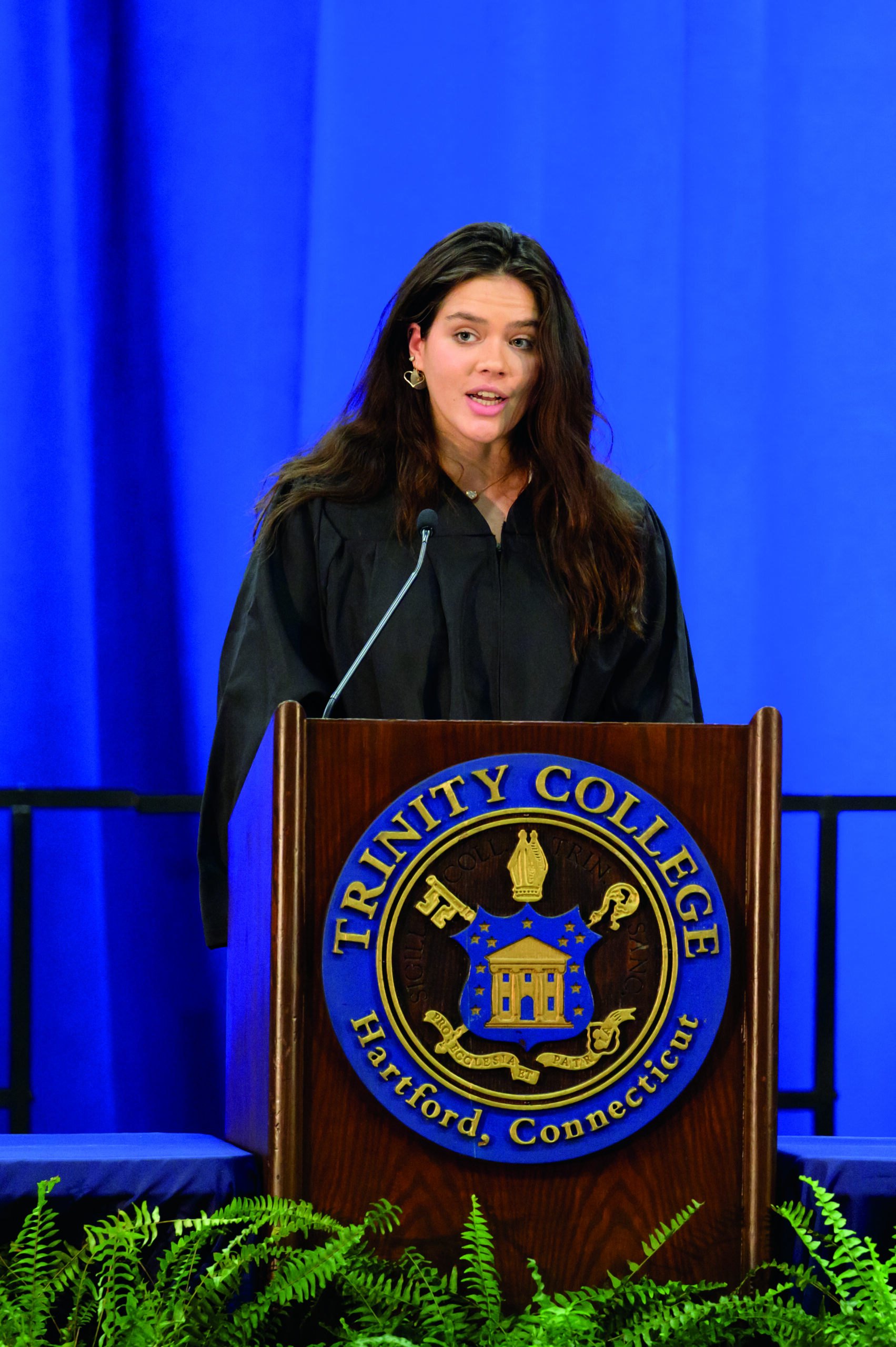
Student Government Association President Manuela Rodés