Nilsson Holguin ’05
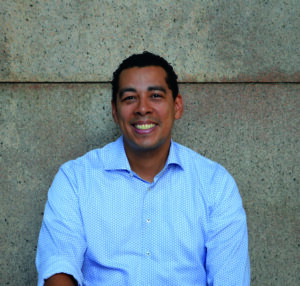 DEGREES: Engineering, with a concentration in biomedical engineering; M.S., Ph.D. in biomedical engineering, Stony Brook University
JOB TITLE: Assistant professor, Department of Orthopedics, Icahn School of Medicine at Mount Sinai
FAVORITE TRINITY MEMORY: I joined the Ultimate Frisbee team that was organized by an industrious first-year student. I had never played or even knew what it was when he was talking about it in the hall of Little Dormitory, which at the time was designated for first-year students interested in science and belonging to the Interdisciplinary Science Program (ISP) run by Professor Alison Draper. I had a blast with these guys; we traveled to other schools to compete and generally have fun.
What was your path to your current position? After the excitement of earning my Ph.D. in biomedical engineering, I decided to pursue a postdoctoral fellowship in the Department of Orthopaedic Surgery at Washington University in St. Louis, where I learned how to use genetic animal models to clarify the role of molecular pathways in the adaptation of bone and cartilage to mechanical forces. Then, I joined the Departments of Mechanical Engineering and Anatomy, Cell Biology and Physiology at Indiana University Indianapolis for my first faculty position.
What do you do in your role? At Mount Sinai, my team and I use pharmacological and genetic approaches to better understand and regenerate the spine from adaptations due to aging, injury, sex, and genetics. As principal investigator (PI), my overall goal is to develop treatment strategies for the intervertebral disc of the spine to limit chronic back pain. A PI writes grants to support the research, publishes innovative research, mentors the next generation of rising research and medical students, and educates the public on how the work impacts their lives.
What do you enjoy most about what you do? There are many aspects about my profession that I enjoy related to the scientific discovery and action process, such as interpreting data that my trainees or trainees from other research groups acquire and determining the next potential experiment to dive deeper into the problem, which subsequently leads to further exciting questions. Mentorship is a growing passion that I find very rewarding, where I play a supporting role in the career of budding scientists. But the most exciting part of being a scientist is when everyone on the team—all of us, myself included—experience the “aha!” moment. We all get excited and rejuvenated to pursue the work.
What challenges do you face? Funding is a persistent challenge that researchers from all fields face, and while the current times have added new challenges, there has never been a more exciting time to do research with all the new technologies available to better understand and cure diseases.
A nonscientific intersectional challenge I faced as I pursued my scientific career is related to my socioeconomic background. I was educated and worked at some of the most prestigious institutions, and I have “rubbed elbows” with some amazing scientists, but as an early-stage investigator, I did not realize all the cultural capital I was missing and how that difference was impacting my scientific growth. I recognize it much better now and decided to act on it by serving as chair for the Belonging, Opportunity, and Access (BOA) Committee of the American Society for Bone and Mineral Research (ASBMR), which is the premier worldwide society for clinicians and scientists studying bone and mineral metabolism. As chair, I was able to implement programs and initiatives that promoted equitable opportunities for all of its members. It was one of the most challenging but rewarding experiences of my career to date, and I highly encourage that early-stage investigators interested in studying musculoskeletal tissues become involved in ASBMR because science is strengthened by its community.
Did you have a professor who was particularly influential? I had amazing professors at Trinity. Erik Vogt in philosophy, Joseph Palladino and Joe Bronzino in engineering, and Mark Silverman in physics all in their own way showed me that delivery of a message can be as important as the message itself. They were excellent teachers who valued and recognized the listener. More specifically, Dr. Vogt’s lectures were some of the most impactful because they were not related to science per se, but how he explained the material made it so much more approachable and piercing.