Volunteer Spotlight
Randolph “Randy” Lee ’66
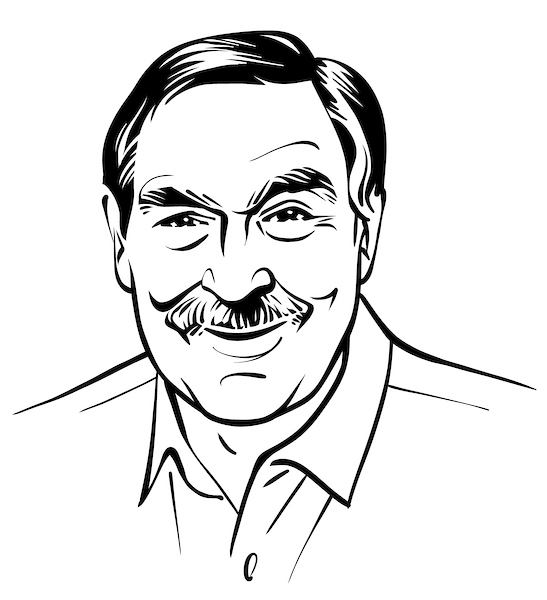
Growing up in the suburbs of Philadelphia in the shadow of World War II, Randolph “Randy” Lee ’66 developed an early interest in politics. His high school yearbook dubbed him “Senator Lee.” When he arrived at Trinity College in the fall of 1962, he planned to major in government.
“That lasted about one class,” he says. “There wasn’t anything negative about it. It’s just that I took a psychology course and really loved that.”
Lee also loved everything about Trinity, particularly the wide latitude it afforded to explore new interests and to immerse himself in campus life.
“Trinity both encourages that and makes it very easy to get involved,” Lee says. “If there’s something a student wants to do that isn’t there already, the College has always been very cooperative to make it work.”
A rock-and-roll junkie, Lee hosted a Friday night show on WRTC, the College’s radio station. He played squash with friends and worked a part-time job in Trinity’s Public Relations Office, where one of his favorite assignments was photographing campus after snowfalls.
The greatest impact, however, came in the classroom. Lee’s first psychology course, “Abnormal Psychology,” was taught by Professor George Higgins, the inaugural director of what is now Trinity’s Counseling and Wellness Center. In Higgins, Lee found a mentor who helped shape his academic and professional path.
After earning a B.A. in psychology, Lee pursued a doctorate in clinical psychology at the University of Massachusetts Amherst. In 1969, Higgins helped him secure an internship as assistant director of Trinity’s center, and after Lee received a Ph.D. the following year, he stayed at the College, teaching in the Psychology Department and working alongside Higgins as a counselor.
Lee remained on Trinity’s faculty for 54 years, succeeding Higgins as director of the center and teaching every semester until retiring in 2023. Outside the classroom, he was a constant presence on campus, becoming a familiar voice at home football games as the public address announcer.
When a program pairing faculty liaisons with each team was launched, Lee volunteered and became the liaison for women’s squash. The role was meant to be modest: Support the team, and help students navigate academics.
“In general, my style is never to get halfway involved in anything,” Lee says. “If I take something on, I jump in with both feet.”
Head Coach Wendy Bartlett quickly saw that for herself. “Randy was a major component of the women’s squash team for over 23 years,” says Bartlett, who retired in 2024. “He was an integral part of the team, coming to practices and every match. Most importantly, he was always there for me, each player, and the team through all the ups and downs––never wavering in his support, caring, and positive attitude.”
Bartlett eventually asked Lee to become the assistant coach, a volunteer role he held until his retirement. “It’s probably the single thing I most enjoyed,” Lee says. “I loved my counseling work, I loved being a therapist, but in terms of sheer joy, I really loved coaching.”
That same passion defines Lee’s engagement as an alumnus. “Anything that Trinity would ever ask of me, I would do,” he says.
He has attended most of his Reunions and long served as a class agent. Today, he serves as both president and secretary of the Class of 1966. And as his milestone Reunion approaches, Lee is preparing to make a gift that reflects the role Trinity has played in shaping his path and hopes to encourage his classmates to do the same.
Lee credits the College with laying the foundation for his life––lasting relationships, an invaluable education, and a fulfilling career. “That’s the reason I’m trying to work to get the class to give a more significant gift,” he says. “What Trinity has given me . . . I couldn’t possibly make it up to them.”
—Eliott Grover