Instruments
To be an outstanding chemist in the 21st century you need to understand and be able to use current instruments used to analyze chemical samples. The Trinity Chemistry Department has an impressive collection of modern instruments that faculty and students use, both in the laboratory courses and in the research lab. The department has three dedicated instrumentation labs in Clement 122, 213, and 317.
The Chemistry Department’s instruments are available for use by other scientists, either from the other science departments at Trinity, or from other local colleges and businesses. Anyone wishing to use one of our instruments should make arrangements with the department chair.
Listed below are some of the instruments available for faculty and student use at Trinity.
Spectroscopic Instruments

UV-Visible and Fluorescence Spectrometers
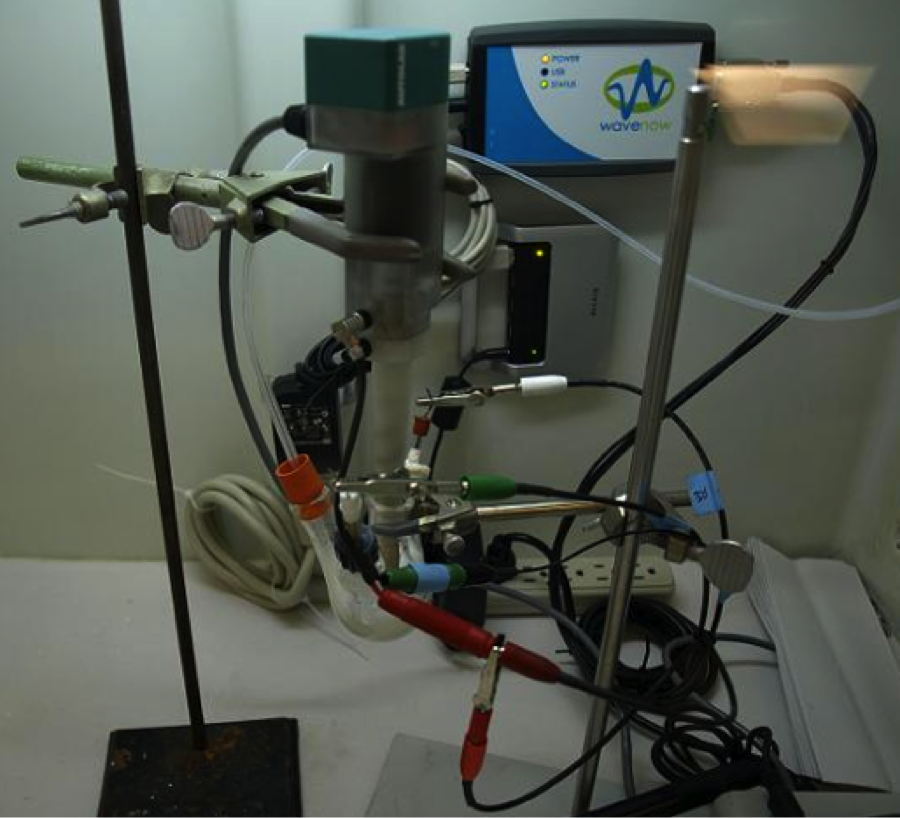
The diode array detector simultaneously monitors changes in UV-visible absorbance at multiple wavelengths, making it useful for kinetic analyses. Students use this instrument in Analytical Chemistry (CHEM 311), Instrumental Methods of Chemical Analysis (CHEM 312), Physical Chemistry I (CHEM 309), and Physical Biochemistry (CHEM 316). Location: Clement 122.
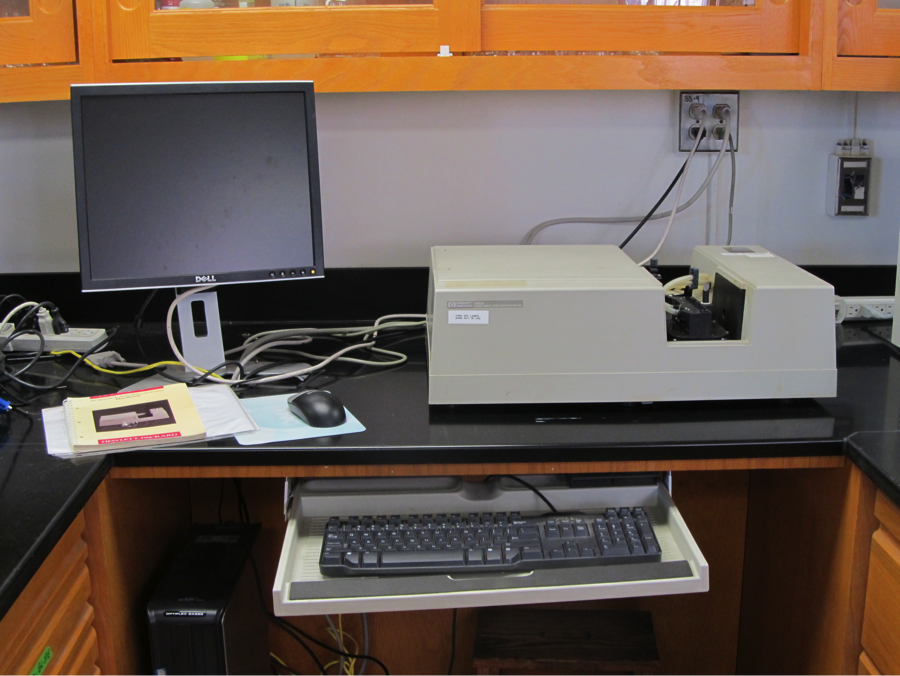
This dual-beam UV-visible spectrometer measures UV-visible absorbance across the ultraviolet and visible regions of the spectrum. Students use this instrument in Analytical Chemistry (CHEM 311), Instrumental Methods of Chemical Analysis (CHEM 312), Physical Chemistry I (CHEM 309), and Physical Biochemistry (CHEM 316). Research students working with Professors Hanson and Hill use this instrument. Location: Clement 122.
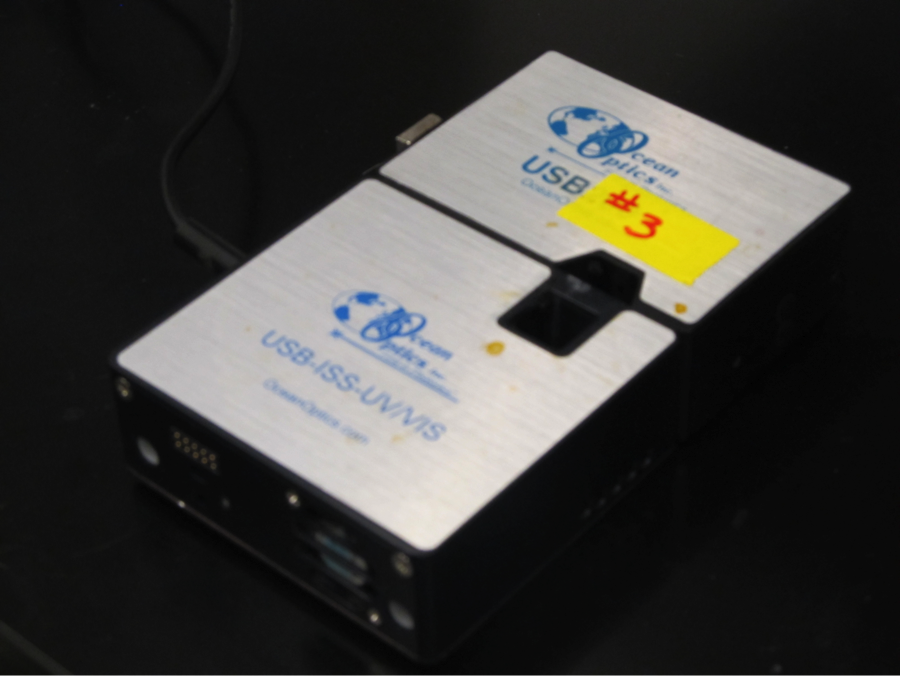
These miniature UV-visible spectrometers measure absorbance and have a compact design that allows them to be moved easily between laboratories. Students use these instruments in Introductory Chemistry I (CHEM 111), Introductory Chemistry II (CHEM 112), Environmental Chemistry (CHEM 230), and Analytical Chemistry (CHEM 311). Location: Clement 213 and Clement 207.
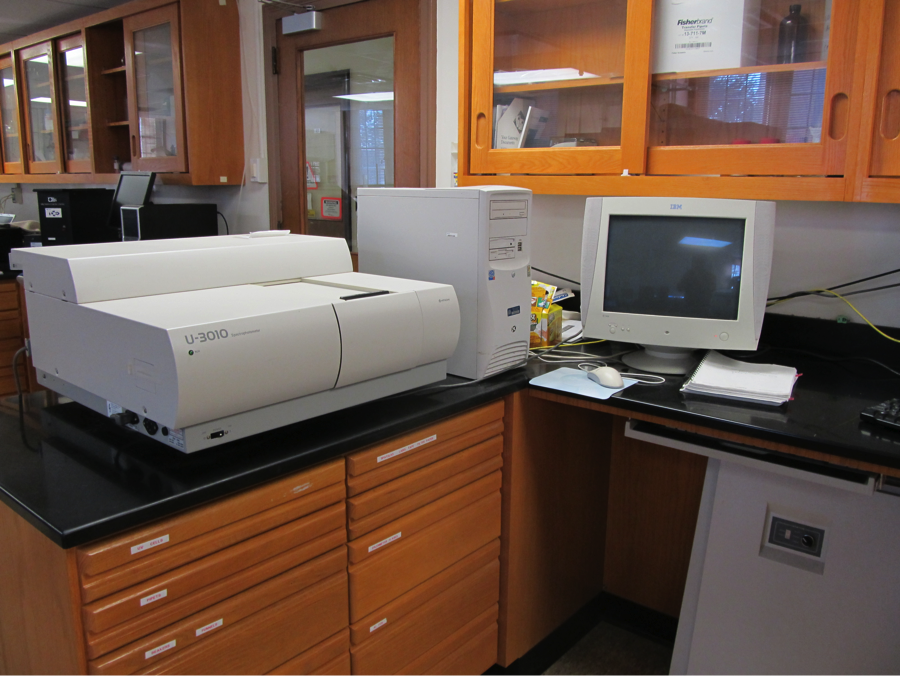
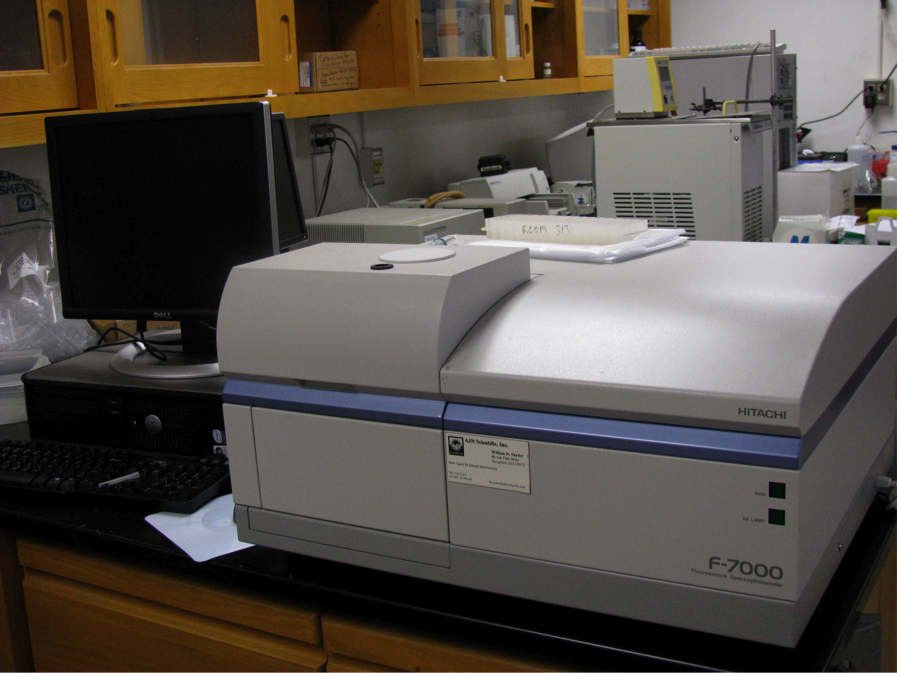
This fluorescence spectrophotometer measures light emission from chemical and biological samples. Students use this instrument in Instrumental Methods of Chemical Analysis (CHEM 312). Location: Clement 122.
This plate reader can make UV-visible absorbance and fluorescence measurements of samples in standard well plates. It is particularly used for rapid analysis of many samples. Students use this instrument in Analytical Chemistry (CHEM 311), Instrumental Methods of Chemical Analysis (CHEM 312), and Biological Chemistry (CHEM 317). Research students working with Professors Ashby and Kovarik use this instrument. Location: Clement 122.
Infrared and Raman Spectrometers
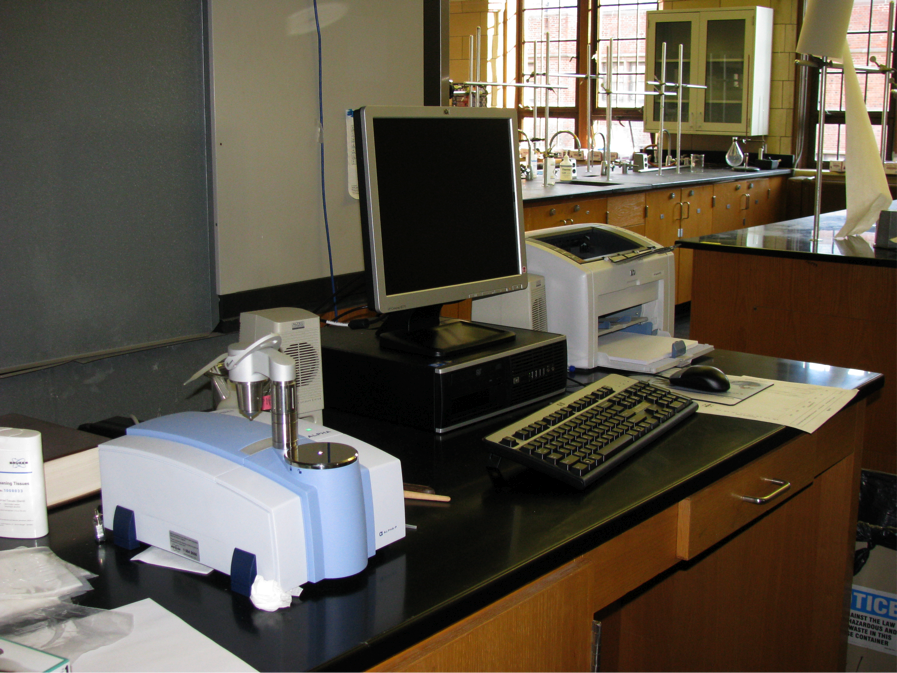
This spectrometer measures the infrared absorbance spectra of solids, liquids, and solutions using attenuated total reflectance. Students use this instrument in Elementary Organic Chemistry I (CHEM 211) and Elementary Organic Chemistry II (CHEM 212). Research students working with Professors Curran, DePhillips, and Parr use this instrument. Location: Clement 301.
This spectrometer measures infrared absorbance using salt plates, solution cells, or attenuated total reflectance and includes an infrared microscope for microscale analysis. Students use this instrument in Instrumental Methods of Chemical Analysis (CHEM 312). Research students working with Professors DePhillips and Hill use this instrument. Location: Clement 122.
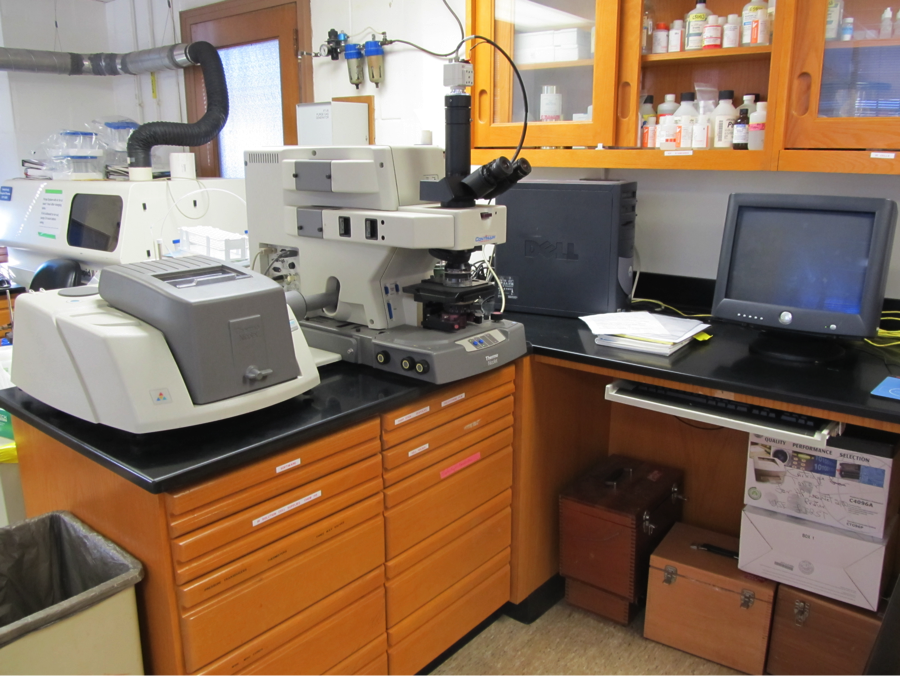
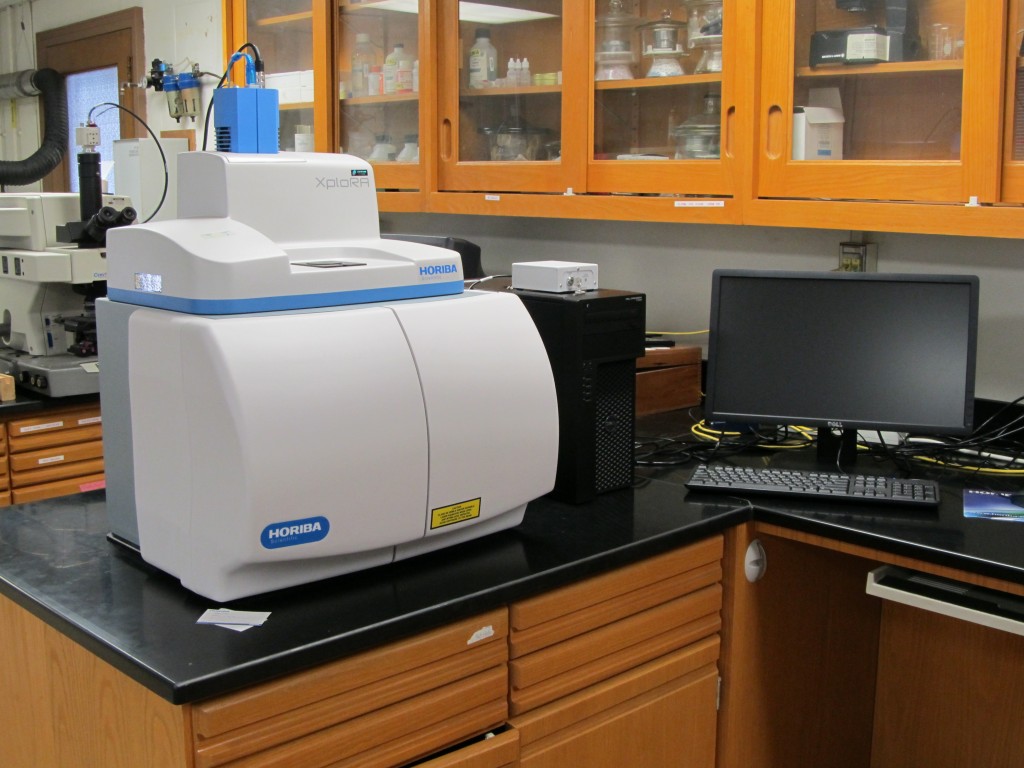
This confocal Raman microscope measures Raman spectra and enables microscopic chemical analysis of samples. Students use this instrument in Instrumental Methods of Chemical Analysis (CHEM 312) and Physical Biochemistry (CHEM 316). Research students working with Professors DePhillips, Hanson, and Hill use this instrument. Location: Clement 122.
Polarimeters and Circular Dichroism Spectrometers
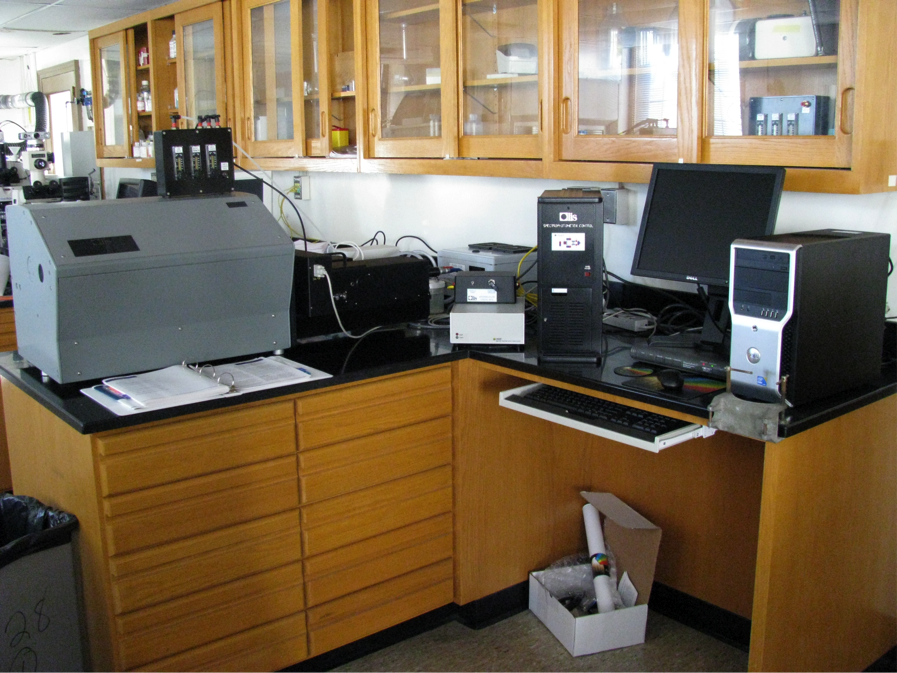
This circular dichroism spectrometer measures the chiral optical properties of molecules and is commonly used to assess protein secondary structure. It is also able to conduct stopped flow experiments. Students use this instrument in Physical Biochemistry (CHEM 316). Research students working with Professor Curran use this instrument. Location: Clement 122.
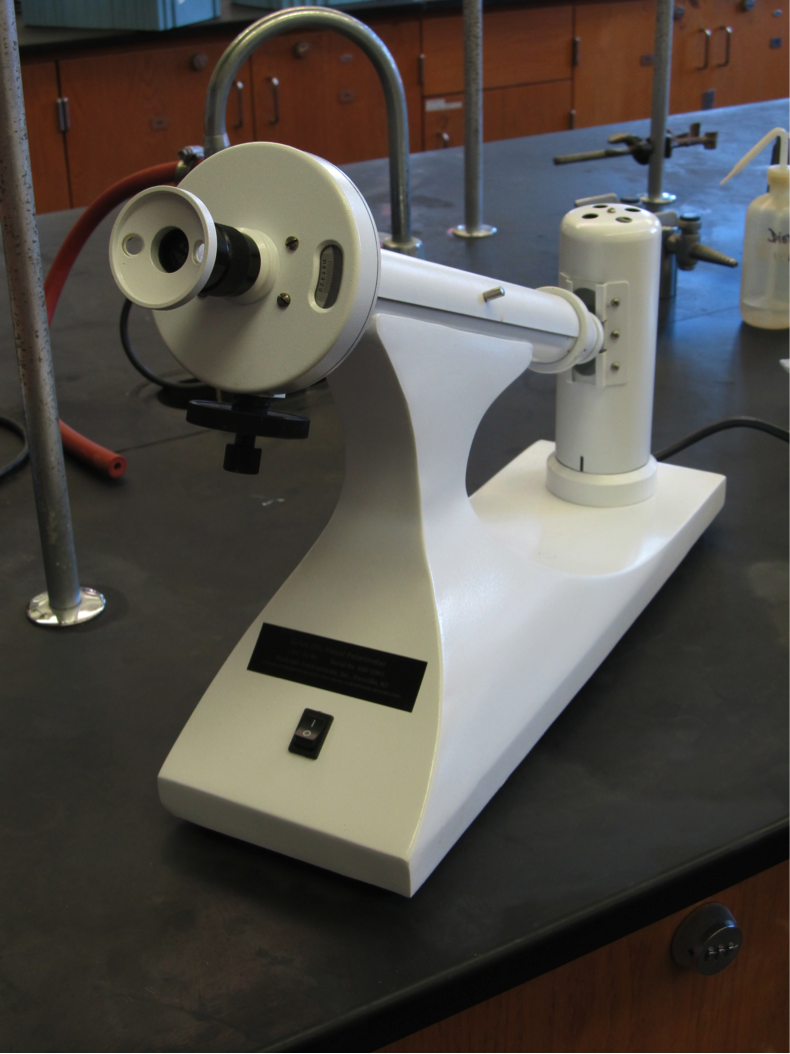
This visual polarimeter measures the optical rotation of chiral compounds. Students use this instrument in Elementary Organic Chemistry I (CHEM 211) and Elementary Organic Chemistry II (CHEM 212). Location: Clement 301.
This digital polarimeter measures the optical rotation of chiral compounds and can determine the ratio of mirror-image forms using plane-polarized light. Research students working with Professor Brindle use this instrument. Location: Clement 122.
Nuclear Magnet Resonance Spectrometers
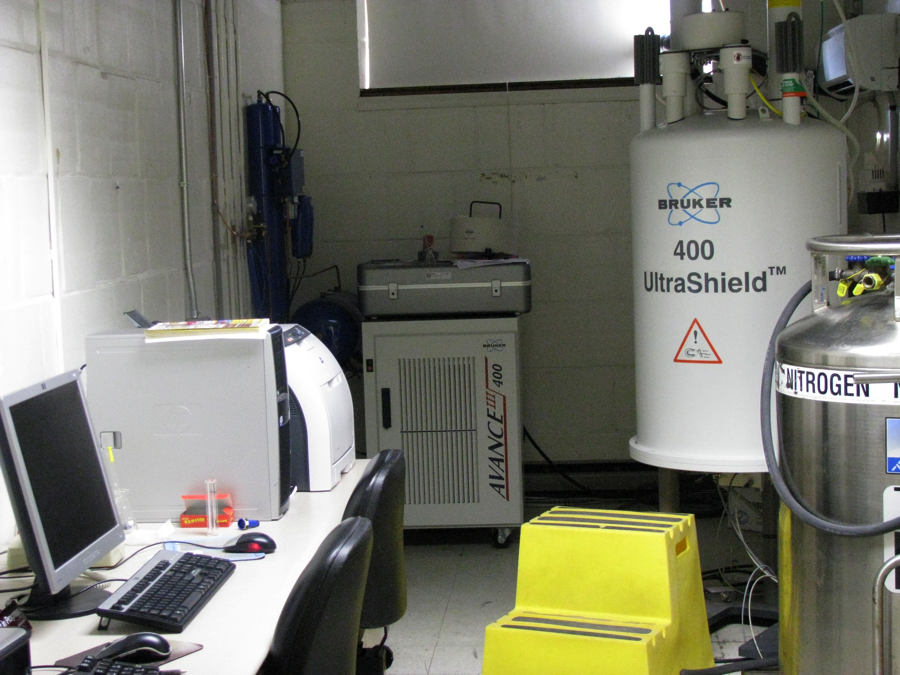
This nuclear magnetic resonance spectrometer provides information about molecular structure based on how nuclei in the molecule relax in the presence of a magnetic field. Students use this instrument in Elementary Organic Chemistry I (CHEM 211), Elementary Organic Chemistry II (CHEM 212), and Instrumental Methods of Chemical Analysis (CHEM 312). Research students working with Professors Brindle, Curran, Gemmel, Hanson, and Parr use this instrument. Location: Clement 127.
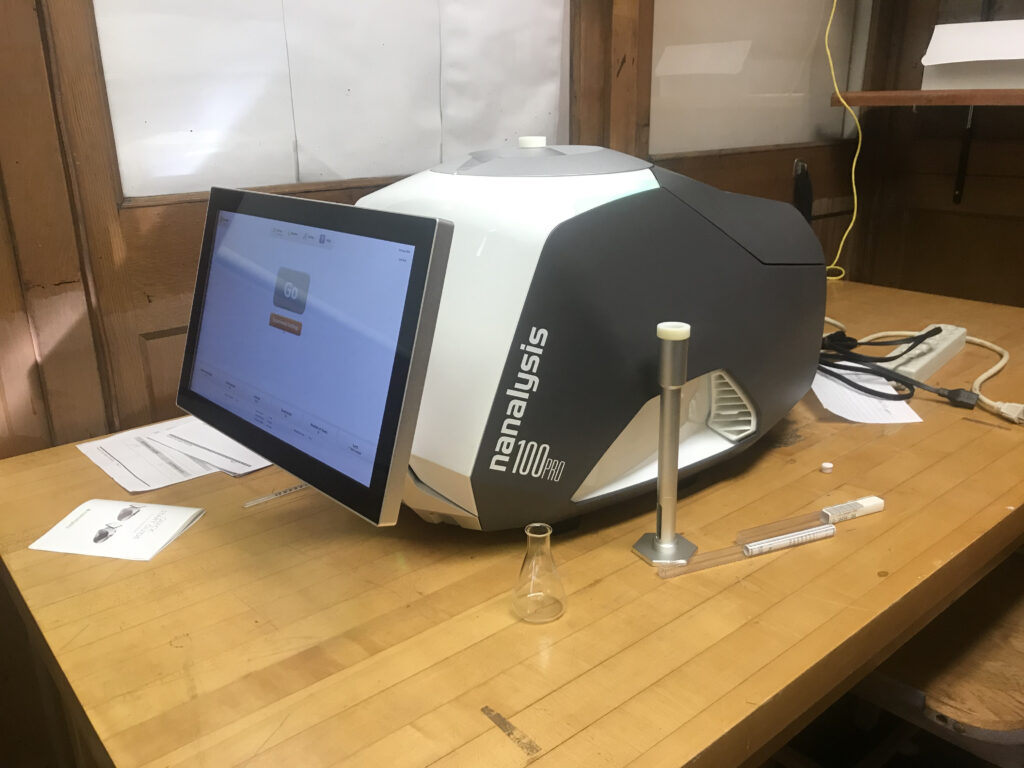
This benchtop nuclear magnetic resonance spectrometer determines molecular structure. Students use this instrument in Elementary Organic Chemistry I (CHEM 211) and Elementary Organic Chemistry II (CHEM 212). Location: Clement 301A.
Separations and Mass Spectrometry Instruments
Separations Systems
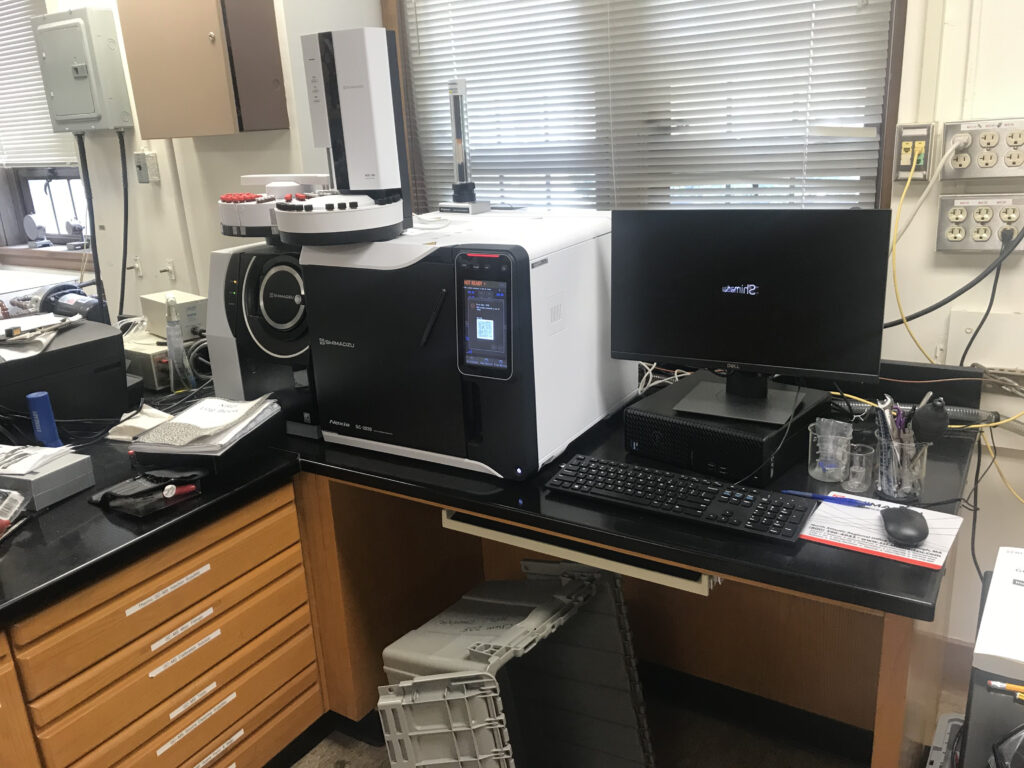
This gas chromatograph-mass spectrometer separates and identifies chemical compounds using gas chromatography and electron impact mass spectrometry. Students use this instrument in Analytical Chemistry (CHEM 311) and Instrumental Methods of Chemical Analysis (CHEM 312). Research students working with Professor Brindle use this instrument. Location: Clement 122.
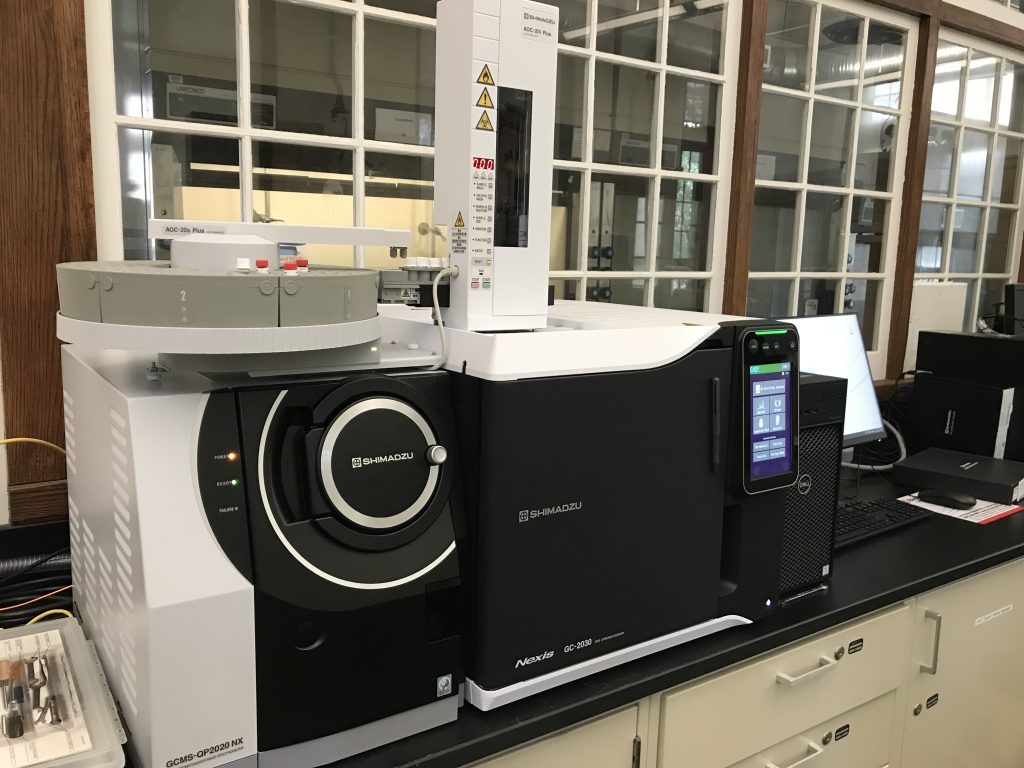
This gas chromatograph-mass spectrometer analyzes compounds produced in the organic chemistry laboratories and in organic chemistry research using electron impact mass spectrometry. Students use this instrument in Elementary Organic Chemistry I (CHEM 211) and Elementary Organic Chemistry II (CHEM 212). Location: Clement 301A.
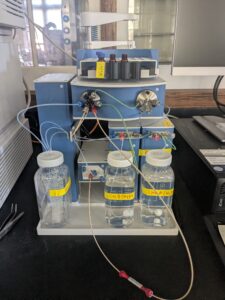
This portable LC system can be used for rapid separations and demonstrations. It is used in Analytical Chemistry (CHEM 311). Location: Clement 317.
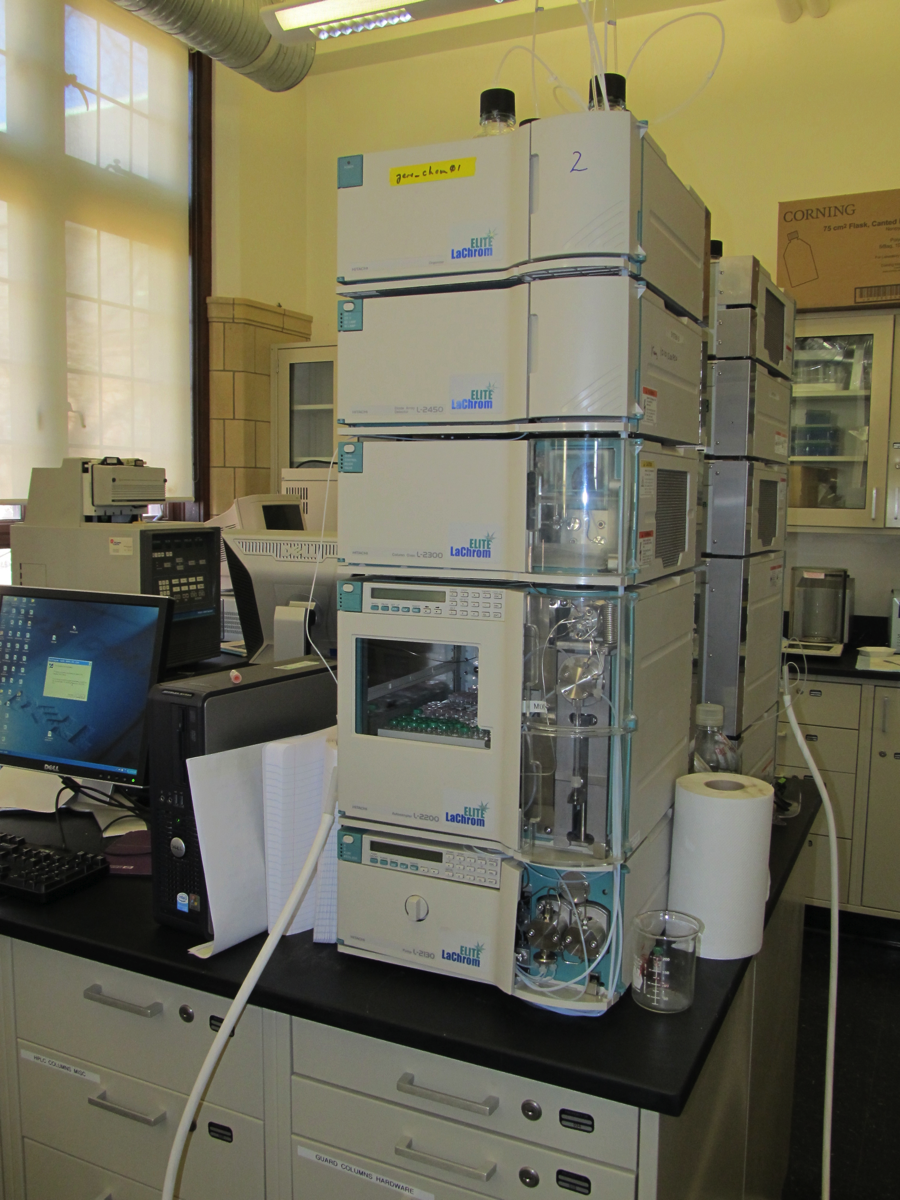
The Chemistry Department maintains three high-performance liquid chromatographs equipped with variable-wavelength UV-visible or diode array detectors, autosamplers, column ovens, and analytical or semi-preparative capabilities. Students use these instruments Analytical Chemistry (CHEM 311). Research students working with Professor Puljung use these instruments. Location: Clement 317 and Clement 213.
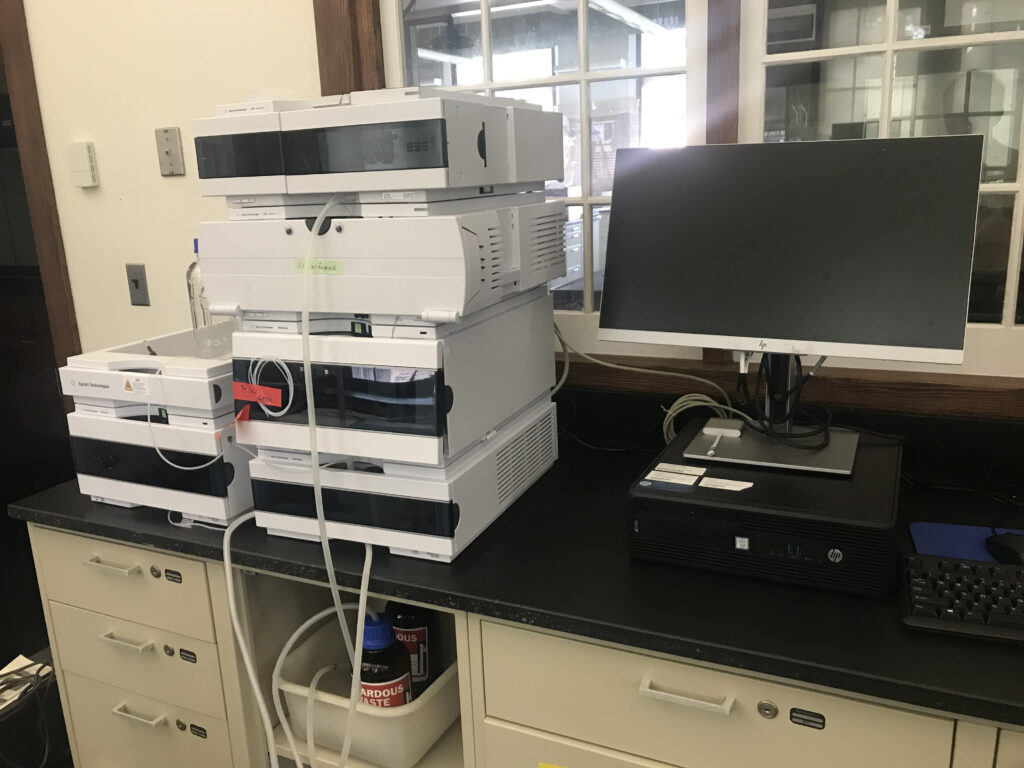
This ultra-high-performance liquid chromatograph separates complex mixtures with high speed and resolution. Students use this instrument in Analytical Chemistry (CHEM 211). Research students working with Professor Ashby use this instrument. Location: Clement 317C.
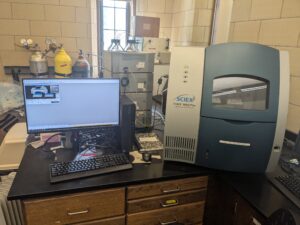
This capillary electrophoresis system separates analytes based on size and charge and is equipped with an autosampler, cooling system, photodiode array detector, and laser-induced fluorescence detector. Students use this instrument in the project laboratories for Analytical Chemistry (CHEM 311) and Instrumental Methods of Chemical Analysis (CHEM 312). Research students working with Professor Kovarik use this instrument. Location: Clement 317.
Mass Spectrometry
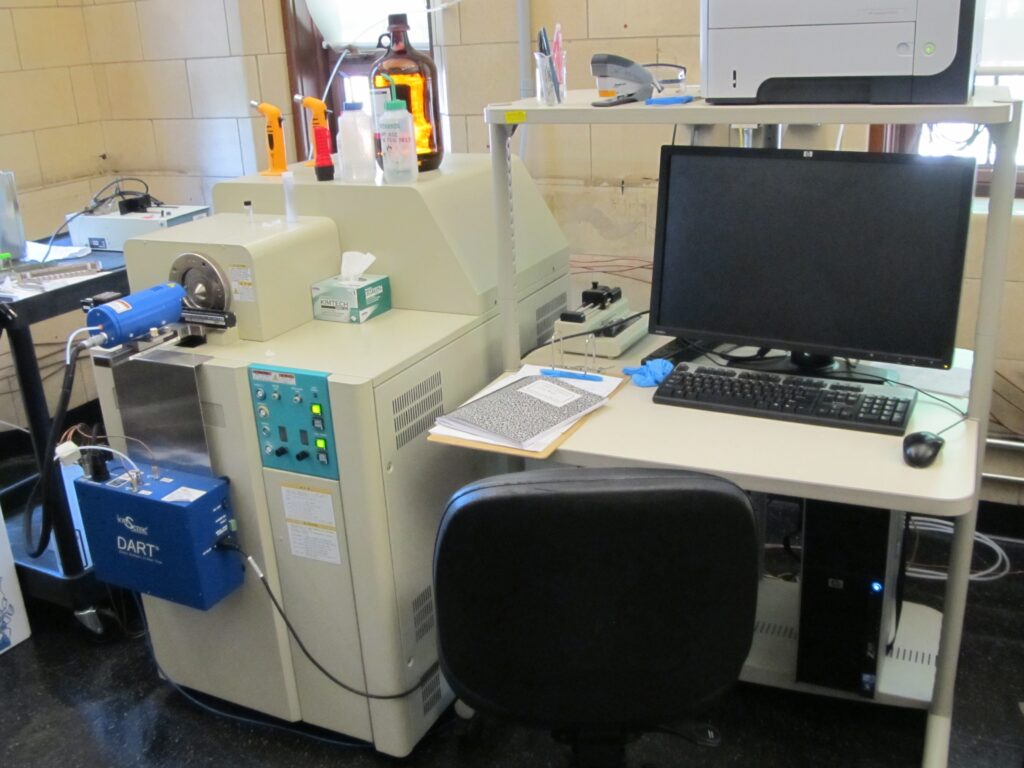
This mass spectrometer identifies and characterizes chemical compounds using an ambient pressure ion source called DART. This allows samples to be characterized with limited sample preparation. Students use this instrument in Instrumental Methods of Chemical Analysis (CHEM 312). Research students working with Professors Brindle, DePhillips, and Kovarik use this instrument. Location: Clement 317.
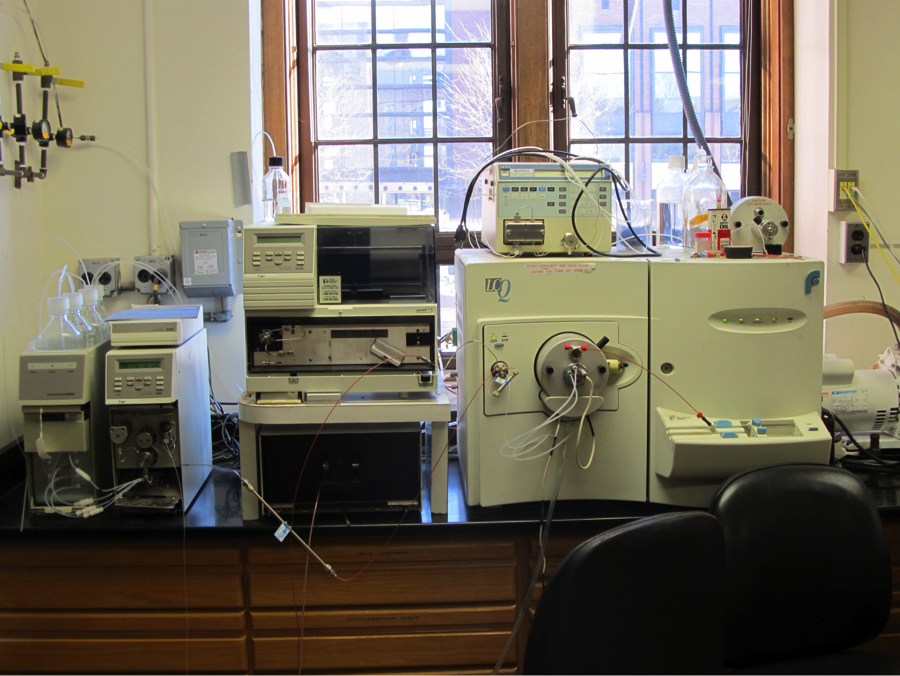
This mass spectrometer uses electrospray ionization to send liquid samples directly into an ion trap mass analyzer for mass analysis. Students use this instrument in Instrumental Methods of Chemical Analysis (CHEM 312). Research students working with Professor Curran use this instrument. Location: Clement 122.
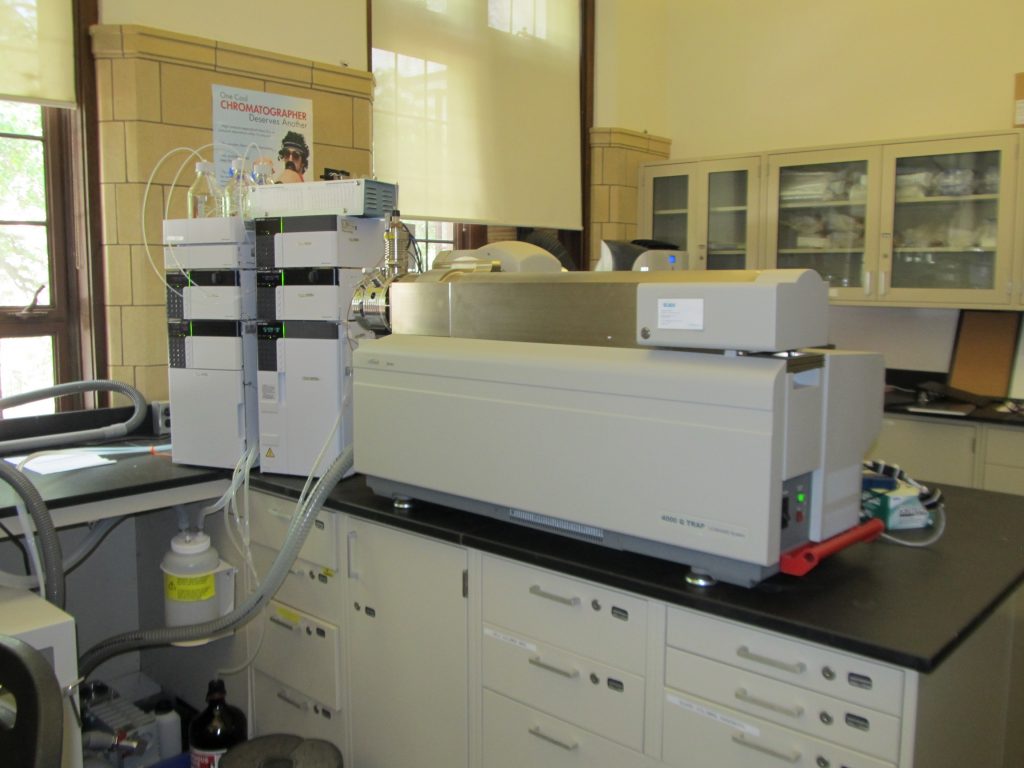
This liquid chromatograph-mass spectrometer combines a Hitachi high-performance liquid chromatograph with a QTRAP mass spectrometer to separate and identify chemical compounds. The mass spectrometer can also be operated independently of the chromatograph and do tandem MS-MS analysis. Students use this instrument in Instrumental Methods of Chemical Analysis (CHEM 312). Research students working with Professors Ashby and Bazilio use this instrument. Location: Clement 317.
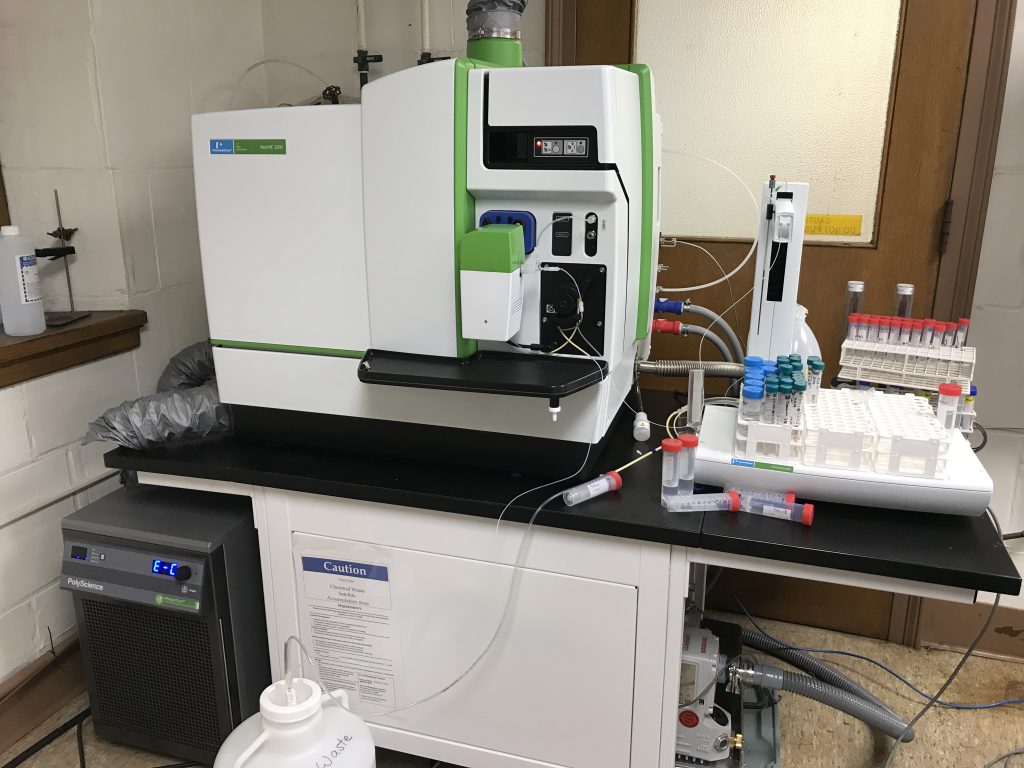
This inductively coupled plasma mass spectrometer detects and identifies trace metals in a wide variety of samples. Students use this instrument in Environmental Chemistry (CHEM 230) and Instrumental Methods of Chemical Analysis (CHEM 312). Research students working with Professors Bazilio and Kovarik use this instrument. Location: Clement 122.
Additional Instruments
X-Ray Methods
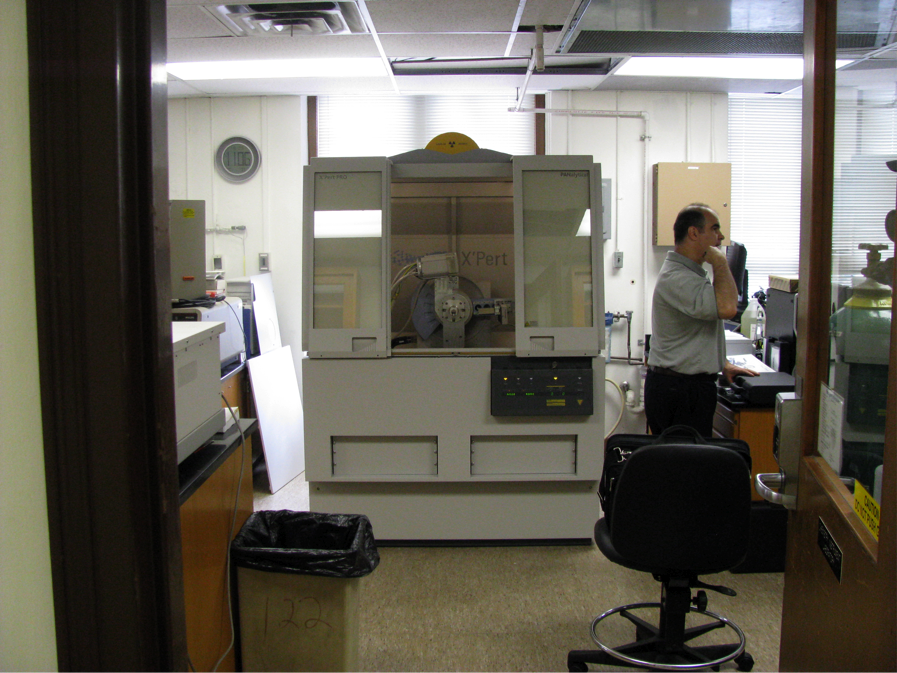
This x-ray diffractometer determines the crystal structures of solid materials based on how the deflect X-ray light. Students use this instrument in Descriptive Inorganic Chemistry (CHEM 314). Research students working with Professors Geiss and Gourley (Environmental Science) use this instrument. Location: Clement 122.
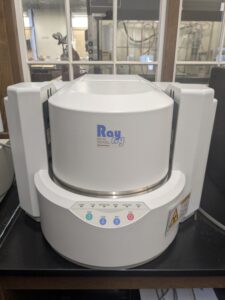
The spectrometer provides information about the elemental composition of samples based on secondary X-rays emitted from the sample when it is exposed to X-ray light. Students can use this instrument for laboratory projects in Instrumental Methods of Chemical Analysis (CHEM 312). Research students working with Professors Gourley (Environmental Science) and Hill use this instrument. Location: Clement 213.
Instrumentation for Sample Preparation and Synthesis
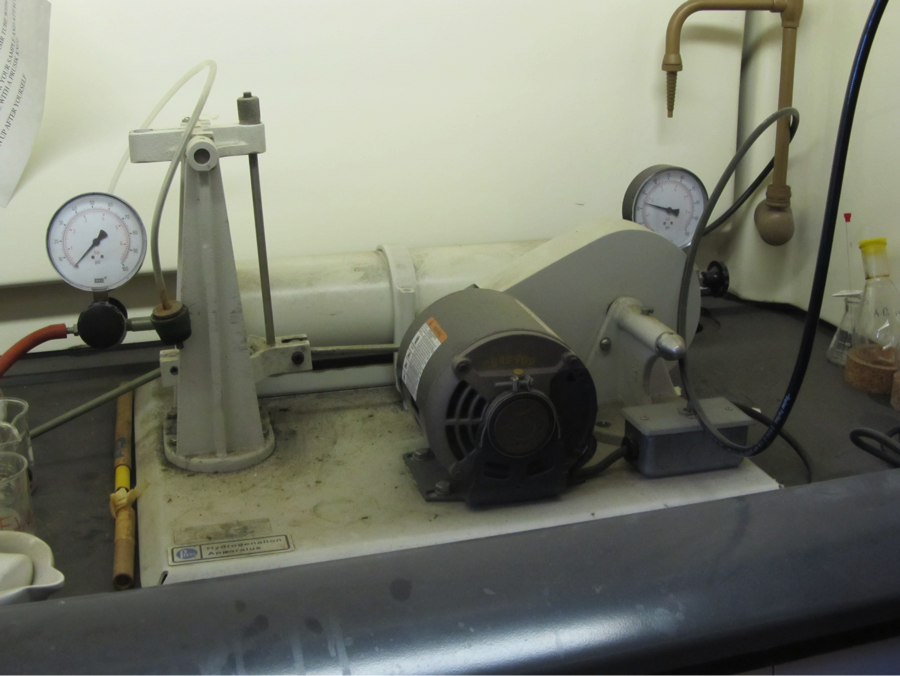
This hydrogenation apparatus adds hydrogen to organic molecules. Research students working with Professor Curran use this instrument. Location: Clement 317.
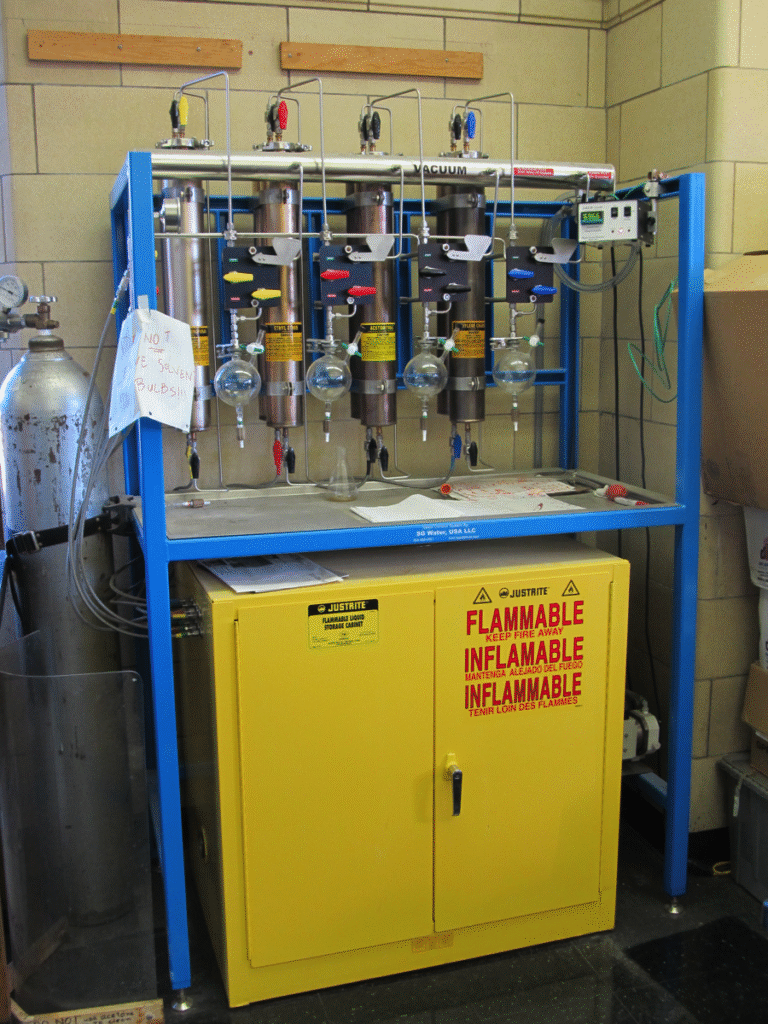
This solvent dispensing system provides dry ether, tetrahydrofuran (THF), methylene chloride, and acetonitrile for laboratory use. Location: Clement 301.
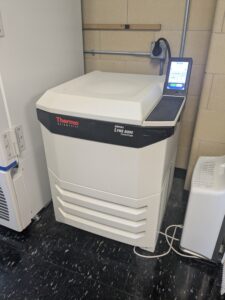
This ultracentrifuge separates large biomolecules such as proteins and DNA from biological samples. The unit has refrigeration for processing temperature sensitive samples. Students use this instrument in Physical Biochemistry (CHEM 316) and Biological Chemistry (CHEM 317). Location: Clement 207.
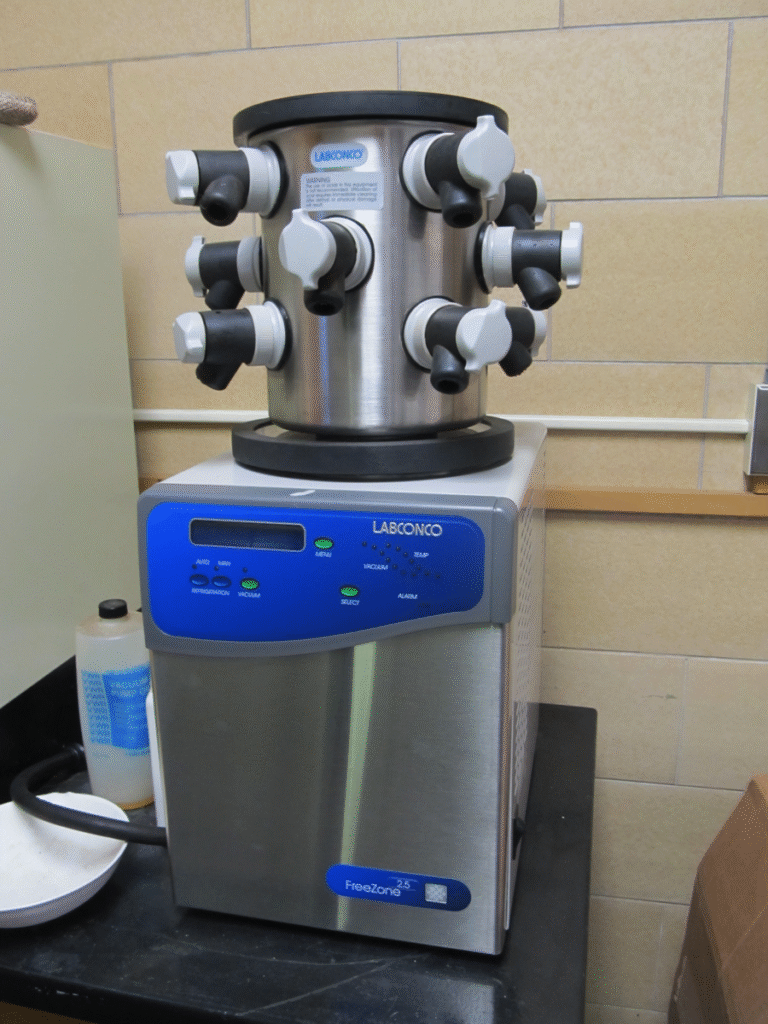
This freeze dryer removes solvents from samples by lyophilization, making it useful for purifying compounds isolated from biological sources. Students use this instrument in Physical Biochemistry (CHEM 316). Location: Clement 207.
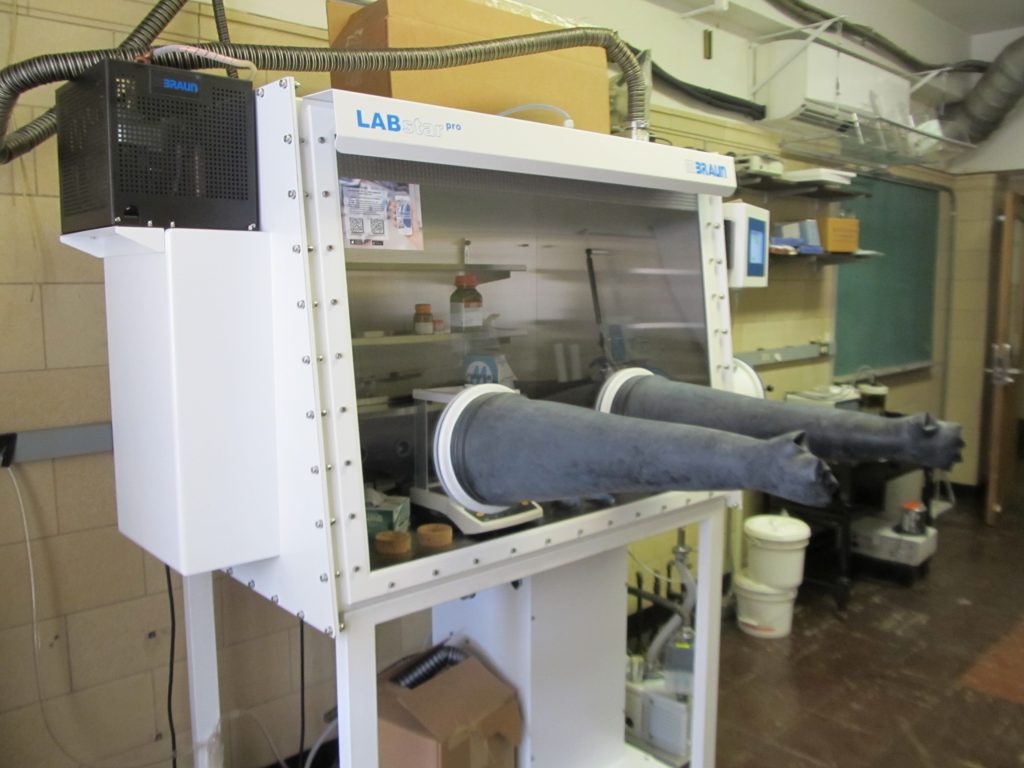
This glove box provides an inert atmosphere for handling air- and moisture-sensitive chemicals. Research students working with Professors Brindle, Hill, and Parr use this instrument. Location: Clement 112.
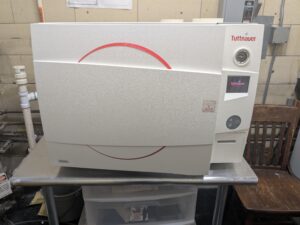
This autoclave sterilizes laboratory equipment and materials for research and teaching laboratories. Research students working with Professors Bazilio, Gemmel, Kovarik, and Puljung use this instrument. Location: Clement 207.
Thermal Analysis
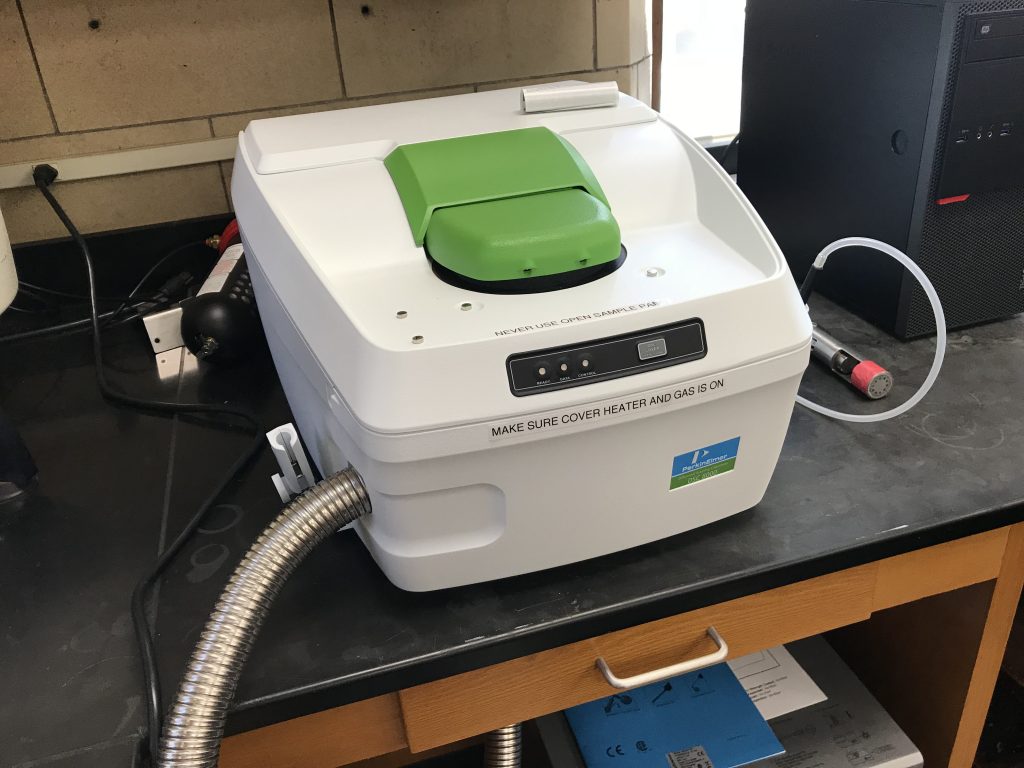
This differential scanning calorimeter measures the heat absorbed or released as a sample undergoes a phase change. Students use this instrument in Physical Chemistry I (CHEM 309). Location: Clement 207.
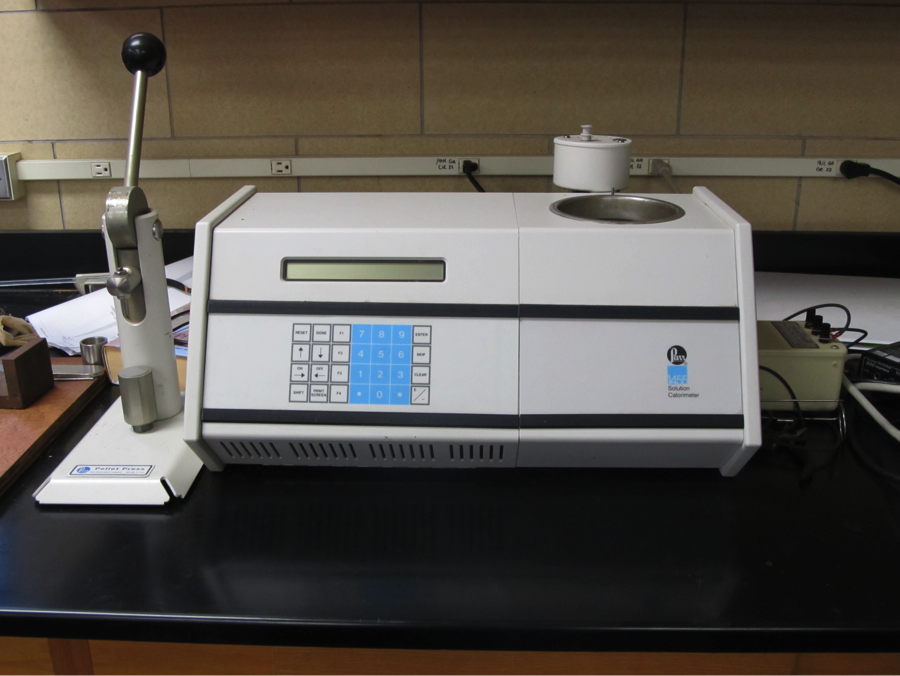
This solution calorimeter measures the heat absorbed or released during reactions in solution. Students use this instrument in Physical Chemistry I (CHEM 309). Location: Clement 207.
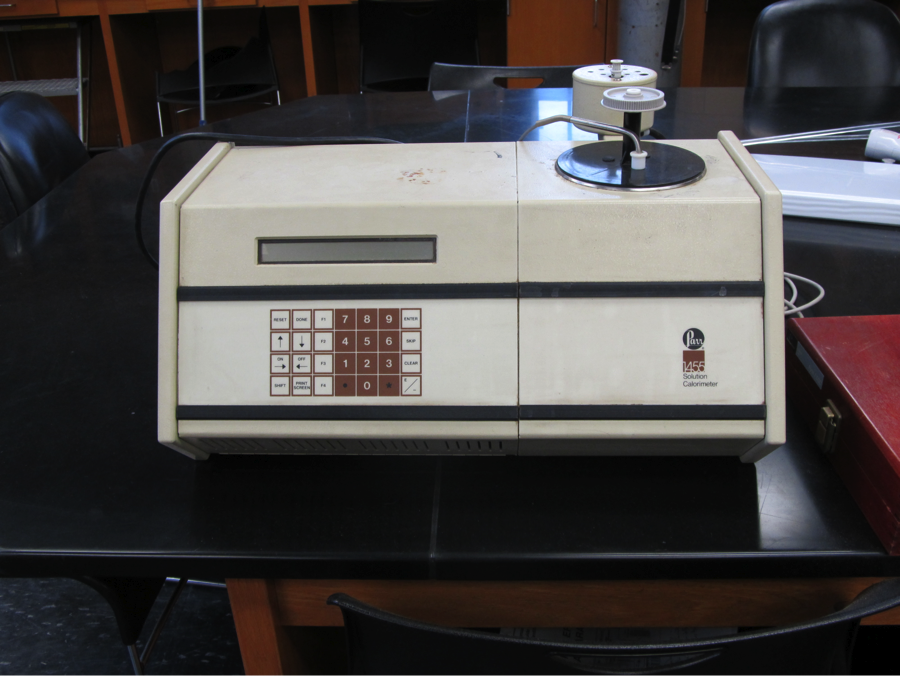
This bomb calorimeter measures the heat of combustion of a sample. Students use this instrument in Physical Chemistry I (CHEM 309). Location: Clement 207.
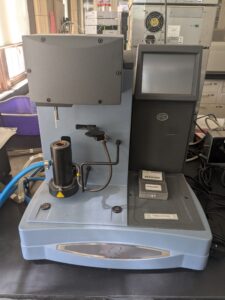
Thermogravimetric analysis tracks the mass of a sample as a function of temperature. Samples can lose or gain mass due to decomposition or reaction with air, giving information about their composition. Students use this instrument in Instrumental Methods of Chemical Analysis (CHEM 312). Location: Clement 317.
Electrochemistry
This potentiostat controls the applied voltage and measures the resulting current to characterize the oxidation and reduction behavior of chemical systems. Students use this instrument in Instrumental Methods of Chemical Analysis (CHEM 312). Research students working with Professor Puljung use this instrument. Location: Clement 122.