Scientist and Educator to Receive 2026–27 Trinity College President’s Medal for Science and Innovation
Content
Story
Posted
Category
Announcement
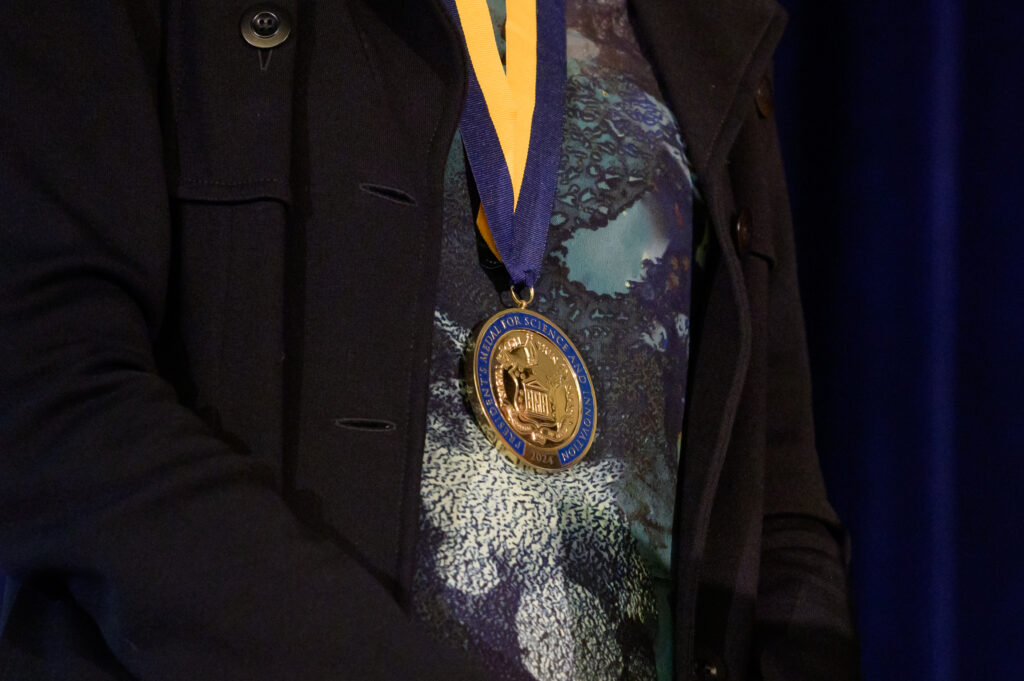
Internationally recognized scientist and educator Emily R. Derbyshire ’02 will receive the 2026–27 Trinity College President’s Medal for Science and Innovation, which recognizes individuals who have made significant contributions through STEM fields.
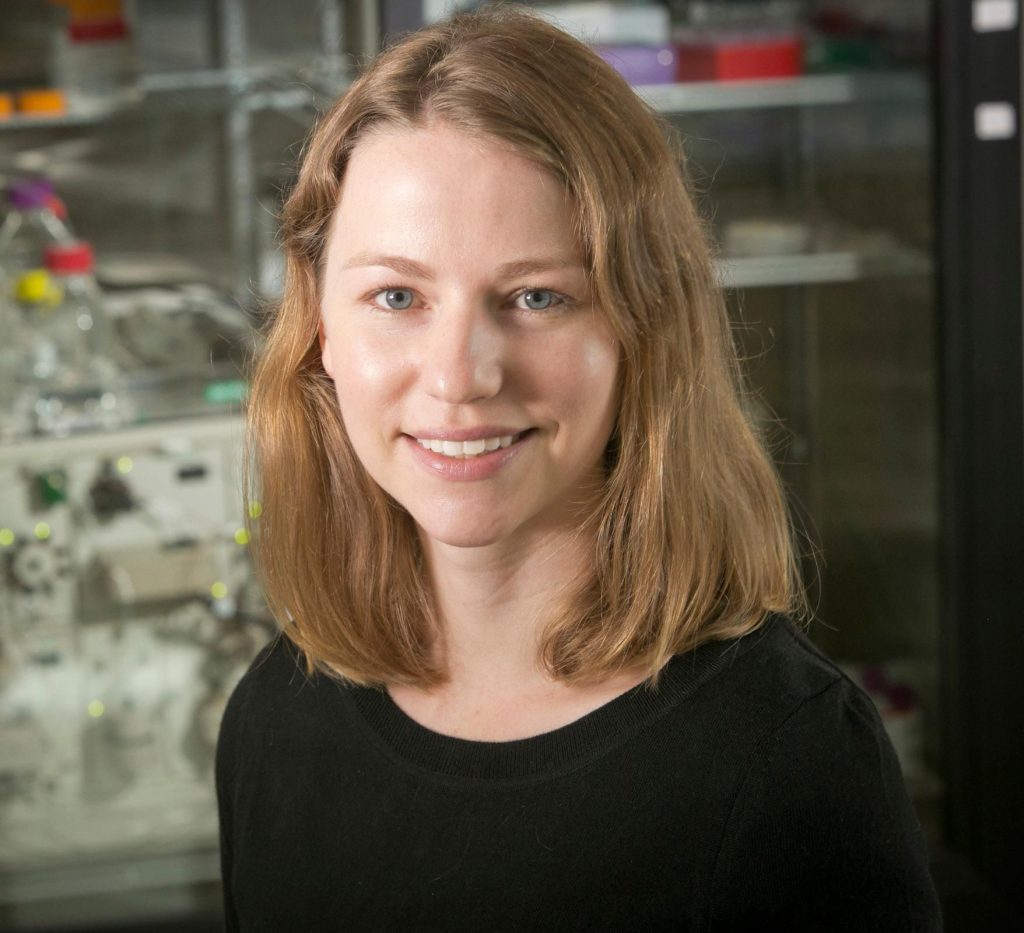
Derbyshire is the Pelham Wilder Distinguished Professor of Chemistry at Duke University, where she also holds appointments in molecular genetics and microbiology and cell biology. Her pioneering research at the intersection of chemistry and biology is advancing the understanding of infectious diseases and opening new avenues for therapeutic discovery.
Emily R. Derbyshire ’02
Trinity College President Daniel G. Lugo will present Derbyshire with the award on Thursday, February 4, 2027, when the Trinity community will gather to celebrate her accomplishments. Additional details about the award ceremony and opportunities to engage with Derbyshire on campus will be shared in the coming weeks.
“Derbyshire exemplifies the intellectual curiosity, interdisciplinary thinking, and commitment to serving others that define a Trinity education,” Lugo said in a letter to the Trinity community. “Her achievements are a tremendous source of pride for Trinity and an inspiration to all who believe in the power of education, discovery, and innovation to shape a better future.”
A leading researcher in chemical biology, Derbyshire has dedicated her career to addressing critical global health challenges, particularly malaria, a devastating disease that disproportionately affects vulnerable populations around the world.
As principal investigator of the Derbyshire Laboratory at Duke, she leads an interdisciplinary research program investigating how malaria parasites invade, survive, and develop within human cells. By combining innovative chemical and biological approaches, her team seeks to identify vulnerabilities in these parasites that could lead to new strategies for preventing and treating infection.
Derbyshire’s groundbreaking research has earned numerous prestigious honors, including the National Institutes of Health Director’s New Innovator Award, the Alfred P. Sloan Research Fellowship, the Camille Dreyfus Teacher-Scholar Award, and the American Chemical Society Infectious Diseases Young Investigator Award. In 2024, she was elected a fellow of the American Association for the Advancement of Science, recognizing her distinguished contributions to scientific advancement.
A chemistry major who graduated with honors from Trinity in 2002, Derbyshire went on to earn a Ph.D. from the University of California, Berkeley, and to pursue postdoctoral research at Harvard Medical School before joining Duke’s faculty. Throughout her career, she has demonstrated the value of interdisciplinary inquiry while educating and mentoring the next generation of scientists.
“For our Trinity community, Derbyshire’s accomplishments carry special meaning,” Lugo said. “Her journey from our classrooms and laboratories to the forefront of scientific research demonstrates what is possible when a strong liberal arts foundation is paired with intellectual ambition, creativity, and purpose. Her career is a powerful example of the leaders of conscience and consequence we aspire to cultivate at Trinity.”
The Trinity College President’s Medal for Science and Innovation
The President’s Medal for Science and Innovation was created during the College’s Bicentennial year in 2023 to highlight the significance of the sciences at Trinity. The medal recognizes a prominent, internationally renowned individual in science, technology, engineering, or mathematics who has influenced STEM with marked success and who represents the liberal arts ideal of empowering humanity through the sciences.
The President’s Medal for Science and Innovation Advisory Committee, made up mostly of prominent STEM faculty members at Trinity, leads the selection process and ultimately recommends a small pool of highly qualified candidates to the president of the College. Recipients are not necessarily graduates of Trinity but have made lasting contributions to their field.
The previous recipients of the President’s Medal for Science and Innovation were: Eric Fossum ’79, H’14, the John H. Krehbiel Sr. Professor for Emerging Technologies in the Thayer School of Engineering at Dartmouth College, where he also serves as director of Thayer’s Ph.D. Innovation Program and vice provost for entrepreneurship and technology transfer; Kaja LeWinn ’98, professor of psychiatry and behavioral sciences at the University of California, San Francisco; and pediatrician and geneticist D. Holmes Morton, M.D., IDP’79, H’90.
The Trinity College football team will advance to the NCAA Division III National Championship tournament for the first time in program history, after winning a tie-breaker draw with Amherst and Wesleyan.
Trinity College has begun the process of building a new strategic plan, Trinity 2040, and is seeking input from members of the Trinity community. The plan’s workstreams are focused on the Arts and STEM, the Learner Lifecycle, and the Neighborhood.
Trinity College faculty members were recognized for their outstanding achievements in scholarship, teaching, service, and leadership at the 2026 Faculty Excellence Awards ceremony, held October 29 in Mather Hall’s Washington Room.
Trinity College’s endowment has grown to more than $1 billion for the first time in the history of the institution. Trinity joins an elite group of fewer than 200 colleges and universities in the country with endowments exceeding $1 billion.