Several members of the Trinity College faculty have recently received grant awards to support their academic pursuits. Among those faculty members honored with grant awards in the summer and fall of 2026 are:
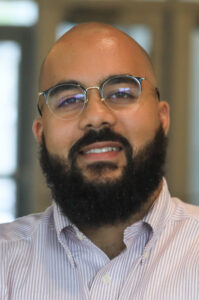 Lucius Couloute, assistant professor of sociology, received a Sherwood Foundation grant through the University of Pennsylvania to work on his Second Chance Stipends Pilot project studying the longitudinal impact of guaranteed income in the lives of formerly incarcerated people. This project will examine how direct cash assistance impacts housing, recidivism, family reintegration, social stigma, economic mobility, and other factors, among those returning home from prison.
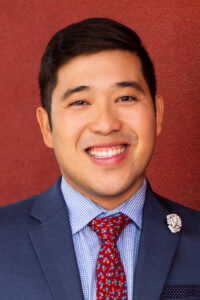 Dang Do, assistant professor of political science, received a 2026 Mellon Emerging Faculty Leaders award from the Institute of Citizens and Scholars. This award supports research on how marginalized communities, particularly racial minorities, achieve representation with systems that often exclude them. It will support completion of Do’s book, Voices of Color: The State-Level Dynamics of Racial Minority Interest Group Lobbying.
Do also recently received a grant from the Greater Hartford Gives Foundation (formerly the Hartford Foundation for Public Giving) for his Hartford Voter Captains Project as part of the foundation’s 2026 Civic Education and Civic Participation funding stream. The grant will support the recruitment and training of Voter Captains who will mobilize their social networks through narrative-based outreach, personal and community stories, and peer-to-peer voter mobilization. Project goals include increasing voter turnout and engagement in Hartford among contacts reached by Voter Captains, strengthening Voter Captains’ confidence to speak about voting, and increasing voter turnout in neighborhoods and surrounding areas reached through the project.
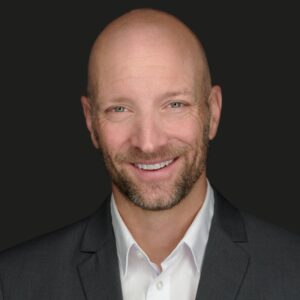 Scott Gac, professor of history, received a supplemental grant from the Council of Independent Colleges and the Mellon Foundation to digitize archival materials central to their Histories and Legacies of American Slavery-funded project, After Slavery, Contested Rights: Black Hartford’s Civic Worlds, 1800-1830. A collaboration between Trinity and the Stowe Center for Literary Activism, this supplemental award will expand the reach of the grant received by the partnership the prior year.
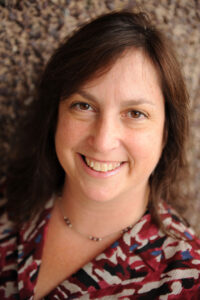 Sarah A. Raskin, associate dean for faculty development and Charles A Dana Professor of Psychology and Neuroscience, is part of a three-year collaborative grant from the National MS Society for the project, “Compensatory Cognitive Strategy Use in Multiple Sclerosis.” This collaboration includes a Trinity alumna from 2009. The project seeks to create a mobile health-based self-management program for cognitive and memory deficits in people with MS, who will be active partners in program development. The overall goal is to implement cognitive strategy training within an MS-specific self-management program by modifying existing software architecture to integrate natural language processing (NLP) operations.
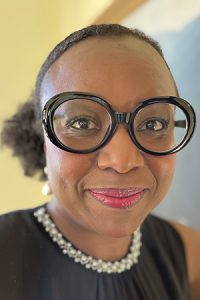 Sally Bernardina Seraphin, assistant professor of neuroscience, received a Fred Karush Endowed Library Readership from the Marine Biological Laboratory Woods Hole Oceanographic Institution Library to support her research project, “Progress in Developmental Neuroscience: From E.E. Just, to the Present, and Beyond.” The project investigated the scientific and intellectual legacy of Ernest Everett Just (1883–1941), a pioneering African American experimental embryologist. Drawing on archival materials at the MBL/WHOI Library, Seraphin examined Just’s influence on modern biological thought through citation networks, historical course curricula, and pedagogical influence maps. The project also explored Just’s early contributions to feminist critiques of biological theory and the ethical implications of his emphasis on organism–environment interdependence, cooperation, and biological agency. Seraphin’s findings were recently incorporated in her book chapter, “Unglazing and Ungrading: A Path for Decolonizing Neuroscience,” in the forthcoming Oxford University Handbook of Undergraduate Neuroscience.
Learn more about grants awarded to members of the Trinity College community on the Grants Office website here.