Trinity Alumnus Peter Eisler ’85 Wins Pulitzer for National Reporting
Content
Story
Posted
By
Andrew J. Concatelli
Category
Alumni
Trinity College alumnus Peter Eisler ’85 has won the 2026 Pulitzer Prize for National Reporting, earning recognition for work he produced with a team of journalists at Reuters.
The Pulitzer citation said that the prize was awarded to the staff of Reuters—notably Ned Parker, Linda So, Peter Eisler, and Mike Spector—for “The Revenge of Donald Trump,” a series of stories “documenting how the president used the U.S. government and the influence of his supporters to expand executive power and exact vengeance on his foes.”
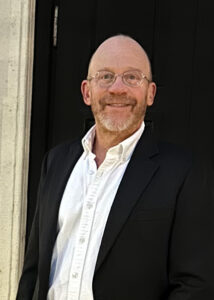
Peter Eisler ’85
Columbia University awards Pulitzer Prizes for achievements in journalism, arts, and letters each year in 23 categories. Last year, Trinity alumna Andrea Wise ’11 was part of a team at ProPublica that won the 2025 Pulitzer Prize for public service.
Eisler was taking his dog for a walk when he learned about the award. “My phone started to explode with messages,” he said. “The first thing I saw was an alert from our family thread—one of our sons said, ‘OMG!! Dad, you won the Pulitzer!’ It was a very nice way to find out.”
Based in Washington, D.C., Eisler specializes in investigative projects on U.S. national affairs. After 40 years as a reporter, he said a Pulitzer wasn’t something he was anticipating. “You do the best you can and try to do good work,” he said. “This was an incredibly competitive category, with a lot of terrific reporters writing meaningful stories about the administration, so I didn’t have a lot of expectations.”
Eisler believes his team’s work may have resonated with the Pulitzer judges for several reasons. “I think what stood out about this particular project was the way that we documented and quantified the scale of the president’s campaign of retribution,” he said. “Instead of just saying, ‘We found 470-plus targets of retribution by Trump and his allies in the administration,’ we actually listed the targets and what was done. I think that gave the series more impact.”
The award-winning series also told the stories of the individuals and institutions that landed in the administration’s crosshairs, Eisler said. “We were determined to get as much of that reporting on the record as possible,” he added. “We contacted hundreds of people, businesses, institutions, and organizations, and getting them to talk about their experiences and the impact of the retribution they suffered was an enormous challenge.”
Being a reporter was not Eisler’s goal when he was at Trinity. He earned a B.A. in English, but, he said, “I had no particular interest in journalism. I did everything wrong: I didn’t write for The Tripod, I didn’t have any internships, I didn’t publish anything, I didn’t get a summer job working at a newspaper. When I graduated, I wasn’t sure what I wanted to do.”
After working in construction and building trails for the U.S. Forest Service, Eisler secured a tryout as a local reporter in Connecticut. “Before the interview, my Trinity adviser, [the late Professor of English Dirk A.] “Dutch” Kuyk, had given me a few pointers: put the most important thing at the top and work your way down,” he said. “He gave me a good sense of how news stories are structured, and when they gave me a reporting test, I knew enough to get a foot in the door. I had to start very low on the career ladder and work my way up.”
Peter Eisler ’85
Some Trinity courses that sparked Eisler’s interests in history and politics included “Literature of the Counterculture” and “Literature of the Depression,” among others. “The lessons Trinity taught me about being inquisitive and open to new ideas propelled me at every step. Trinity sparked my intellectual curiosity—it’s where I learned to enjoy learning,” he said. “The experience at Trinity of being shoulder to shoulder with and working alongside people of various backgrounds and varied perspectives was enormously important.” Read more about Eisler’s time at Trinity in a Q&A in The Trinity Reporter.
Eisler remembers loving journalism from the minute he started his first job. “It was interesting, you got to go out and interview fascinating people, and no two days were the same,” he said. “And you could see the impact of your work, even at the local level, immediately. You learned about the power of journalism to right wrongs and to expose problems. My interest has always been in how public policy does or doesn’t serve the people it’s supposed to serve.”
The importance of journalism, Eisler said, is to help people understand the truth about what’s happening in the world around them. “There is so much misinformation and disinformation floating around that it is very difficult for people to sort through what they’re hearing and to find the truth,” he said. “An informed public is one of the most critical components, if not the most critical component, of a healthy democracy. People can’t make good decisions if they don’t have good information.”
According to Eisler, news literacy—discerning fact-based, sourced reporting from opinion and conjecture—should be part of every student’s education. “It is critically important for colleges and universities to be equipping students with the skills that they need to be educated and thoughtful news consumers,” he said. “I think that news literacy is a core skill on par with being able to write or do basic math, and one that people need to have today if our democracy is going to continue to survive and thrive.”
Eisler said that he encourages talented, committed, ambitious students to look at journalism as a potential career path. “It is a challenging time, but it is also a very important time to be producing well-researched, accurate, well-documented journalism,” he said. “I think our democracy really depends on it.”
Academy Award-winning filmmaker Will McCormack ’96 returned to Trinity College recently for a screening of his latest film, the 2026 comedy-drama The Invite, and a conversation in which he discussed his writing process and the magic of movies.
Restaurateur Danny Meyer ’80, H’24, P’20 returned to Trinity College to help launch TrinTalks, a new series of campus conversations in which alumni share stories about how Trinity shaped their career trajectories.
The Trinity College community gathered for a documentary film screening and panel discussion with alumna Julia Hoppock ’06, an associate producer of People vs. Politics, as part of Voter Education Week.
The Hockey News follows the story of Dominique DiDia ’12 and Kim Weiss ’11, who met as Trinity teammates and now are general manager and coach of the new Professional Women’s Hockey League team in Las Vegas.