As a student, I always seek to connect with my professors in different ways. I believe that each member of the Trinity College faculty offers a unique perspective shaped by their experiences as researchers and educators. I deeply admire my professors who place a great emphasis on what I see as the goal of education: to mold students into people who are responsible and engaged with the world around them.
One of the things I most appreciate about studying at a small liberal arts college with intimate class sizes is that I can learn from my professors not only in the classroom, but also during their office hours or through quick catch-up walks after class. There is always something new I can take away: the name of a scholar whose work I can read, a new school of thought, a podcast, or a book.
Here, I’ve asked some Trinity professors to recommend interesting books to students and other members of the College community. I hope this can encourage students and professors to engage through reading and the exchange of ideas about topics that are important to them and to the world.
The Emperor of Gladness by Ocean Vuong
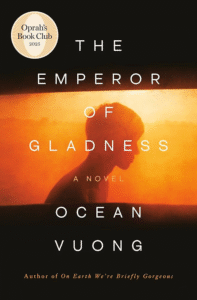 The novel draws, in part, on Vuong’s experience working in a fast-casual dining establishment, the same place I worked when I was younger. His humorous and poignant descriptions of the environment and of relationships with co-workers capture aspects of that experience in ways I never could. Vuong also addresses addiction without making it the centerpiece of the story, a difficult but realistic portrayal of how addiction often operates in everyday life. Finally, the novel is both local and inspirational: Vuong was raised in Hartford and was a first-generation college student who went on to earn degrees from Manchester Community College, Brooklyn College, and NYU, eventually receiving a MacArthur “Genius” Grant. Although the novel does not trace those later achievements, readers sense that the protagonist will land on his feet despite considerable adversity!
The Anxious Generation by Jonathan Haidt
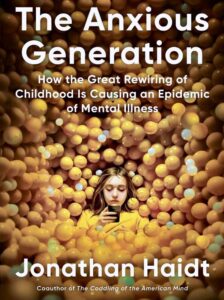 Haidt examines the impact of smartphone use on the well-being of Gen Z. As both a psychologist and a parent of teenagers, I am deeply interested in how near-constant engagement with technology (particularly social media) is shaping the current generation of adolescents and young adults. This fall, I reread the book with my first-year seminar and appreciated hearing students’ thoughtful reactions to Haidt’s research and recommendations. I encourage teens, young adults, and adults to read this book together and discuss where they agree, where they disagree, and what role we want smartphones, social media, and AI to play in our educational and personal lives.
North Sun: Or, The Voyage of the Whaleship Esther by Ethan Rutherford and The Lost Orchid:A Story of Victorian Plunder & Obsession by Sarah Bilston
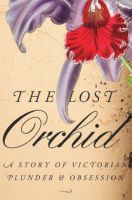 These are two books by my colleagues in the English Department, Associate Professor of English Ethan Rutherford and Paul E. Raether Distinguished Professor of English Sarah Bilston. Although I haven’t yet read them, both have received glowing reviews and were honored with accolades. How fortunate I am to be at a place like Trinity, surrounded by such talented and creative colleagues. [Read more about Rutherford’s and Bilston’s books.]
 From Timothy R. Landry, Associate Professor of Anthropology and Religious Studies
In Sorcery’s Shadow: A Memoir of Apprenticeship among the Songhay of Niger by Cheryl Olkes and Paul Stoller
 I first read In Sorcery’s Shadow as an undergraduate, and it completely changed the way I thought about what it means to learn from others. Paul Stoller travels to Niger to study among the Songhay and quickly discovers that knowledge isn’t something you observe from the outside. Real knowledge is something you step into, sometimes uncomfortably. By becoming a sorcerer’s apprentice, he learns that understanding comes through vulnerability, trust, and lived experience. This book opened my eyes to new ways of seeing the world and reminded me how deeply similar we all are, even across profound and meaningful differences.
Braiding Sweetgrass: Indigenous Wisdom, Scientific Knowledge and the Teachings of Plants by Robin Wall Kimmerer
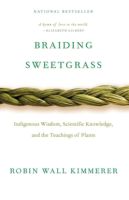 Braiding Sweetgrass not only changed the way I do anthropology, but it also helped me to reimagine what it means to be a person in the world. Robin Wall Kimmerer, a Potawatomi botanist and professor, invites us to see ourselves not as separate from the environment, but as part of a living network of relationships with plants, animals, land, and one another. Through Indigenous wisdom and scientific insight, she shows how listening to the more-than-human world can transform how we live, learn, and care. This book gently reshaped how I understand knowledge, responsibility, and reciprocity.
Custodians of Wonder: Ancient Customs, Profound Traditions, and the Last People Keeping Them Alive by Eliot Stein
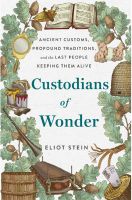 Custodians of Wonder is a meditation on what we risk losing in a post-industrial world where speed and efficiency often replace care, craft, and deep knowledge. Through rich storytelling, Eliot Stein reveals the beauty of human creativity and the fragile cultural worlds that sustain it. It asks why these practices disappear and what it costs us when they do. In the end, it reminds us that “the world can be a wondrous place,” and that one of the greatest uses of a life may be to devote it to something that outlasts us.
 From Seth M. Markle, Associate Professor of History and International Studies
Birth of a Dream Weaver: A Writer’s Awakening by Ngũgĩ wa Thiong’o
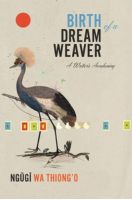 Ngũgĩ is my favorite writer. His passing this past March hit me harder than I expected, which speaks to the profound impact his novels, plays, essays, and memoirs have had on me. I was first introduced to his work when I was in college majoring in English with a concentration in creative writing and African literature. Birth of a Dream Weaver was his third memoir, and it chronicles his life as a college student at Makerere University in Uganda. It is a lovely story of becoming; of finding and embracing a passion for storytelling and pursuing it to the fullest extent.
Homegoing by Yaa Gyasi
 I’ve spent my academic career studying Africa and its meaning and significance to African American culture and politics. I read this book practically in one sitting, spell-bounded by how Gyasi traces the story of two Ghanaian half-sisters separated by the transatlantic slave trade in 1700s and what happens to them and their descendants over multiple generations in the U.S. and Ghana up to the present day. Reading this book motivated and inspired me to investigate my own family genealogy. By far my favorite novel published in the last 10 years.
The Best American Travel Writing 2020 edited by Robert MacFarlane and series editor Jason Wilson
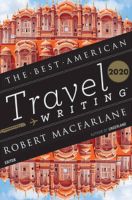 I love to travel thanks in large part to studying abroad when I was in college in late 1990s. Since then, I’ve made travel a core part of my life, having visited over 15 countries across Europe, Asia, Africa, and the Caribbean. These collections of creative nonfiction essays have really helped me be a more confident, adventurous, and conscientious traveler. The 2020 edition of this book series is one I’ve recently revisited, as it offers insightful and nostalgic glimpses into the world right before the COVID pandemic radically transformed the meaning of travel.
Bay of Pigs: The Untold Story by Peter H. Wyden
 Fantastic journalism. A story of hubris, arrogance, and tunnel vision by very intelligent and highly educated people (the best and brightest?) who believed they could predict the outcome of every step of a complicated endeavor. Aside from the deep moral and ethical lessons, this book embedded in me a devout belief that risk and failure analysis and contingency planning must be required for anything serious (I try to teach this to my students). And it has been horrifying to watch this story repeated many times since. (A Bright Shining Lie, by Neil Sheehan, is the best at telling this story, but I learned it from reading Bay of Pigs first.)
Physics: Concepts and Connections by Art Hobson
 In my opinion, the worst-named book I’ve come across. But, in my opinion, does the best job of conveying the history and development of humankind’s beliefs and understandings of the physical world, from the incredibly wrong beliefs of Ancient Greece that sadly lasted for two millennia, all the way to the controversies and eventual acceptance of modern quantum physics. The story told in Chapter 3 has had a permanent and profound impact on me, a story of courage, determination, hard work, persistence, and precision, but especially courage. The courage to speak the truth, and ask the questions that people are afraid to ask, despite what others may do or think or say. One cannot overestimate the importance of leadership, and Copernican transformations are possible.
Ending the War on Drugs: A Solution for America by Dirk Chase Eldredge
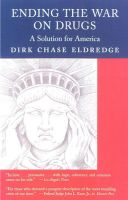 Ending the War on Drugs is a fantastic education about the illegal drug problem in the U.S. through the 1990s, and an equally fantastic presentation of what to do about it. Sadly, all of it still applies today, and everyone should read it. When I read it 25 years ago, it changed my thinking about a lot of things, and I still think of it often. It fueled my passion for quantitative analysis and harm reduction in public policy, and was a major factor in my getting involved in politics.
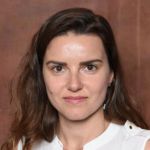 From Betul Mutlugun, Assistant Professor of Economics
Outliers: The Story of Success by Malcolm Gladwell
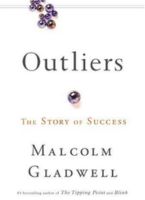 We often talk about the “secret” to success, but there is no simple recipe. Intelligence, hard work, networks, and wealth, even more so today, matter; and sometimes luck enters the picture as well, much like Tyche, the Greek goddess of fortune, quietly appearing and disappearing, leaving us discouraged when it’s nowhere in sight. What I like about Outliers is that it doesn’t offer a formula for success, but a different way of thinking about how opportunity, timing, and structure shape outcomes. My favorite chapters, The Beatles and “The 10,000-Hour Rule,” along with “Rice Paddies and Math Tests,” point to a shared lesson: there is no shortcut to success, and progress comes from perseverance. When Tyche finally does arrive, what matters most is being ready.
A Room of One’s Own by Virginia Woolf
 A Room of One’s Own is a book about women and writing, focusing on the social and economic conditions that make creative work possible, and what it has historically meant for women to think and produce. Woolf approaches these questions not by offering fixed conclusions, but by showing how material constraints and everyday exclusions shape whose voices endure. I keep returning to this book. One reason is how relevant it still feels, as rereading it over time makes visible both the progress that has been made and the moments of stagnation. The other is Woolf’s stream-of-consciousness style, in which thoughts wander, circle, and digress before landing somewhere sharp, often with a sense of humor, mirroring the way our own minds work.
Circe by Madeline Miller
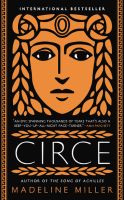 Humans once used “mythos” to explain what “logos,” rational thought and systematic reasoning, could not yet explain. Stories created a shared language that helped make sense of human experience. Most of us already recognize the familiar figures of Greek mythology: Zeus, Ares, Athena, and others. What I love about Circe is the way it turns a marginal figure into the center of a story about endurance, solitude, and becoming oneself. Even if you don’t know Greek mythology, the book is easy to follow, because so many ideas and words we use in everyday life are rooted in these myths.
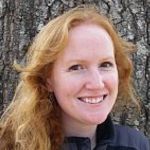 From Amber L. Pitt, Associate Professor of Environmental Science
The Island of Sea Women by Lisa See
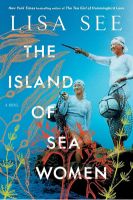 The Island of Sea Women is an exceptionally well-researched, haunting, historical fiction about the Hanyeo women of Jeju Island (Korea). The Hanyeo are a matriarchal society of free divers who support themselves and their families by sustainably harvesting sea life by hand. As someone whose research has her spending a lot of time underwater studying aquatic species, I’ve long been fascinated with the Hanyeo, who have physiological adaptations for enduring lengthy free dives in extremely cold water. The story follows two Hanyeo from childhood through adulthood which coincides with major sociopolitical upheavals in Korea, spanning from the Japanese occupation through WWII, the Korean War, and 2008. The protagonists’ relationship undergoes twists and turns, and their story offers a reminder that a person’s life isn’t always as easy or perfect as one may assume based on false assumptions and outward appearances.
The Feather Thief by Kirk Wallace Johnson
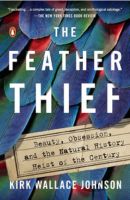 The Feather Thief is a true crime story of a thief who stole specimens of rare and extinct birds from the Natural History Museum at Tring, including ones collected by famed naturalist Alfred Russel Wallace, “The Father of Biogeography.” The feathers were sold on the black market for fly tying, the art of making lures that mimic insects and other common prey for catching fish. As a person who learned how to tie flies before I can remember as part of a sustainable and affordable way to catch dinner and as a conservation ecologist, I was both fascinated and disgusted by the tale of the obsessive, greedy subculture that exists within the world of fly tying.
The Home Place: Memoirs of a Colored Man’s Love Affair with Nature by J. Drew Lanham
 The Home Place is the author’s memoir of his life growing up in rural South Carolina with a deep love of nature which he turned into a career as an ornithologist and professor at Clemson University. I originally picked this book up because I knew Drew from my time at Clemson and had read his scientific publications, which helped me get familiarized with the unique features of the ecosystems I was working in around that area. Drew’s local ecological knowledge of that area is unmatched and was earned through his upbringing deeply immersed in the area’s wild spaces. Drew’s book is written with such rich prose that I found myself savoring every word. With this book, he proved he is a world class literary artist, as well as a world-renowned scientist—a feat that has since earned him the MacArthur Fellowship, also known as a “Genius Award.”
 From
From