Trinity College Professor Shows How Humans and Snow Leopards Can Coexist
Content
Story
Posted
Category
Academics
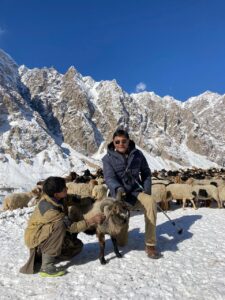
Professor Hussain, right, pictured in Northern Pakistan.
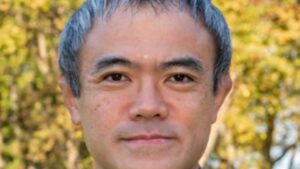
For more than 20 years, Trinity CollegeProfessor of Anthropology Shafqat Hussainhas dedicated his work to protecting the snow leopard species in Northern Pakistan. In 1999, Hussain created an insurance plan that provides economic incentives to regional farmers; the insurance safeguards snow leopards, one of the world’s most endangered species, from being killed in response to an attack on a farmer’s herd.
Project Snow Leopard, launched in Hussain’s home country, promotes the coexistence of humans and snow leopards. The project has three goals:
1. To create compensation for farmers, reducing economic loss
2. To construct predator-proof corrals for farmers
3. To monitor the snow leopard’s population through genetic analysis and camera trapping
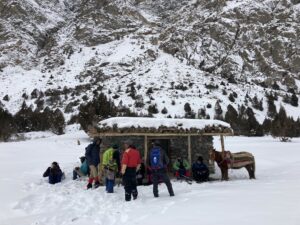
The Hushe Survey team
In 2006, with the help of a grant provided by the Rolex Awards for Enterprise, Hussain—a trained economist and environmental anthropologist—expanded the project to 10 additional valleys across Baltistan, impacting approximately 15,000 people. Today, the insurance plan has been adopted in India, Nepal, Bhutan, Afghanistan, and China. Through Hussain and his team’s work, the snow leopard population is now stable.
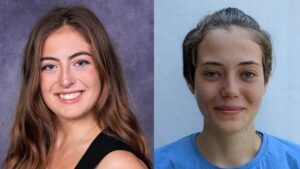
Breanna Pitta ’27 and Carla Schmidt ’27 were selected for the yearlong National Environmental Leadership Fellowship by the Rachel Carson Council to support environmental action in their communities.
Katsuya Izumi, senior lecturer in language and culture studies, has received a grant award from the Northeast Asian Council of the Association for Asian Studies to support research for an upcoming book.
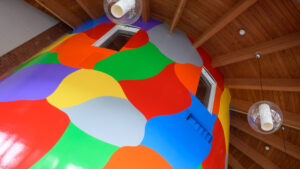
A striking and colorful piece of art in the Cornelia Center created by conceptual artist Sol LeWitt underwent a thorough restoration this summer, nearly three decades after its installation.
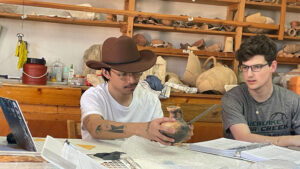
Trinity College students Augustin Millet ’28 and Noah R. Turner ’27 spent a month conducting archaeological research in Greece this summer alongside Associate Professor of Classical Studies Martha K. Risser.